



Community hub
Recent from talks
Knowledge base stats:
Talk channels stats:
Members stats:
Architecture of the United Kingdom
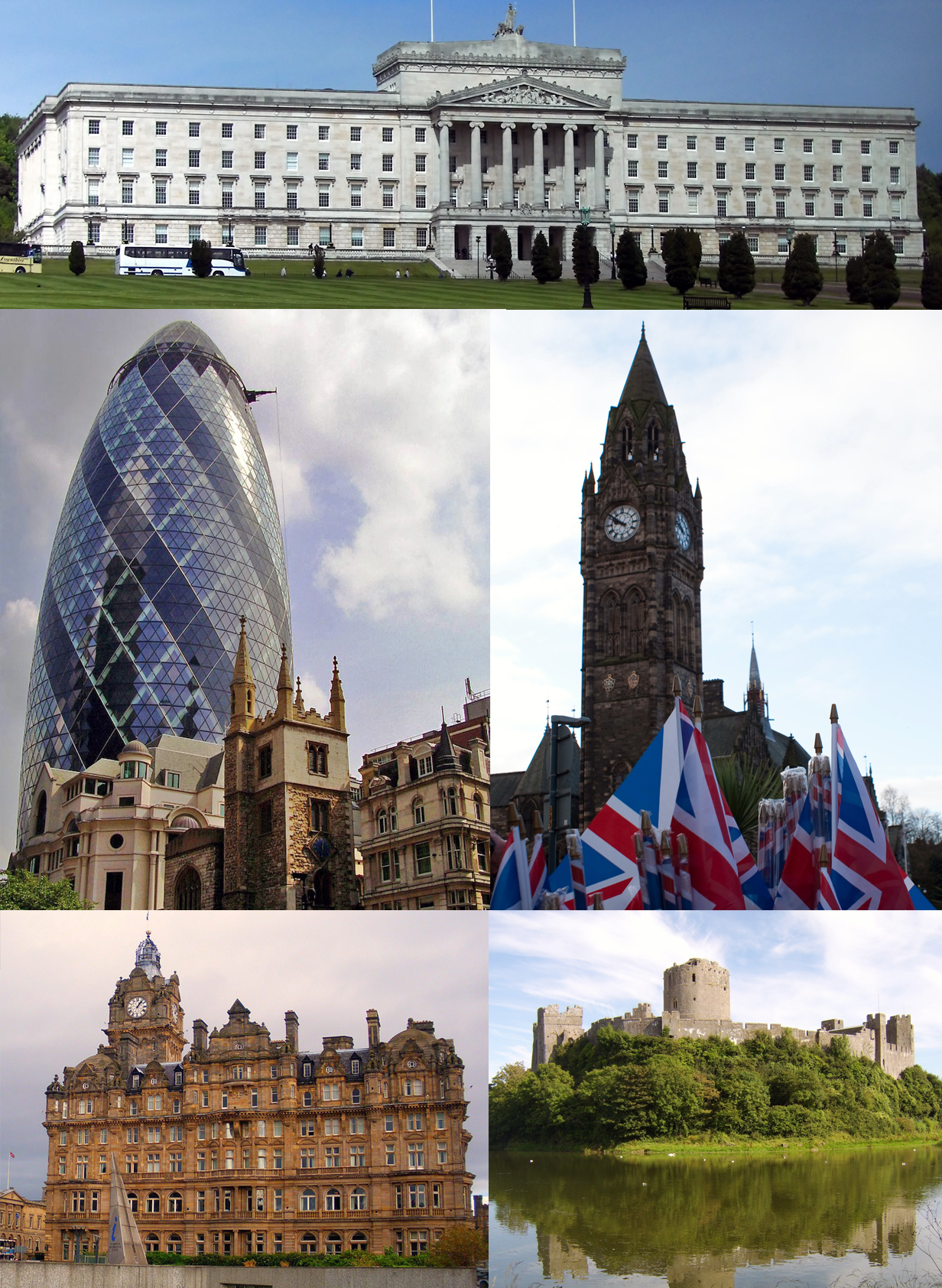
The architecture of the United Kingdom, or British architecture, consists of a combination of architectural styles, dating as far back to Roman architecture, to the present day 21st century contemporary. England has seen the most influential developments, though Ireland, Scotland, and Wales have each fostered unique styles and played leading roles in the international history of architecture. Although there are prehistoric and classical structures in the United Kingdom, British architectural history effectively begins with the first Anglo-Saxon Christian churches, built soon after Augustine of Canterbury arrived in Great Britain in 597. Norman architecture was built on a vast scale throughout Great Britain and Ireland from the 11th century onwards in the form of castles and churches to help impose Norman authority upon their dominions. English Gothic architecture, which flourished between 1180 until around 1520, was initially imported from France, but quickly developed its own unique qualities.
Throughout the United Kingdom, secular medieval architecture has left a legacy of large stone castles, with a concentration being found lining both sides of the Anglo-Scottish border, dating from the Wars of Scottish Independence of the 14th century. The invention of gunpowder and cannons made castles redundant, and the English Renaissance that followed facilitated development of new artistic styles for domestic architecture: Tudor style, English Baroque, Queen Anne Style, and Palladian. Georgian, Scots Baronial and Neoclassical architecture advanced after the Scottish Enlightenment, and since the 1930s various modernist forms appeared, though traditionalist resistance movements continue with support from Charles, Prince of Wales.
Beyond the United Kingdom, the influence of British architecture is evident in most of its former colonies and current territories across the globe. The influence is particularly strong in India, Bangladesh and Pakistan the result of British rule in India in the 19th and 20th centuries. The cities of Lahore, Mumbai, Kolkata, Dhaka and Chittagong have courts, administrative buildings and railway stations designed in British architectural styles. In the United Kingdom, a scheduled monument is a "nationally important" archaeological site or historic building, given protection against unauthorised change. A listed building is a building or other structure decreed as being of special architectural, historical or cultural significance; it is a widely used status, applied to around half a million buildings in the UK, enacted by provisions in the Town and Country Planning Act 1947 and the Town and Country Planning (Scotland) Act 1947.
Within the United Kingdom are the ruins of prehistoric structures and ancient neolithic settlements. The architecture of ancient Rome penetrated Roman Britain with "elegant villas, carefully planned towns and engineering marvels like Hadrian's Wall". After the Roman departure from Britain in around the year 400, Romano-British culture flourished but left few architectural remnants, partly because many buildings were made of wood, and partly because the society had passed into the Dark Ages. Similarly, Anglo-Saxons brought a "sophisticated building style of their own" to Britain, but little physical evidence survives because the principal building material was wood.
The Norman Conquest of England, which began in 1066, marked the introduction of large-scale stone-block building techniques to Britain. Norman architecture was built on a vast scale from the 11th century onwards in England, Wales and Ireland in the form of castles, such as the White Tower at the heart of the Tower of London, and Carrickfergus Castle in County Antrim, as well as Gothic churches and cathedrals, to help impose Norman authority upon their dominions. The Norman penetration of the Scottish nobility resulted in Scoto-Norman and Romanesque architecture too, examples being Dunfermline Abbey, St. Margaret's Chapel and St. Magnus Cathedral.
Throughout Britain and Ireland, simplicity and functionality prevailed in building styles. Castles, such as Alnwick Castle, Caernarfon Castle and Stirling Castle served military purpose and their battlements and turrets were practical solutions to medieval warfare. Under the feudal system that dominated Britain, fitness for purpose characterised domestic structures, particularly for the lower classes. For many, houses were "dark, primitive structures of one or two rooms, usually with crude timber frames, low walls and thatched roofs. They weren't built to last. And they didn't". Although primarily homes, manor houses of the Late Middle Ages, were designed with achieving respect and maintaining status through their hospitality and lordship rather than the grandeur of their buildings. In the Kingdom of England, Perpendicular style gained preference for civic and church structures throughout much of the Middle Ages. King's College Chapel in Cambridge, which started in 1446 and was completed in 1515, marks the period of transition between Perpendicular and Tudor style architecture.
Between 1500 and 1660 Britain experienced a social, cultural and political change owing to the Union of the Crowns (the accession of James VI, King of Scots, to the throne of England) and the Protestant Reformation. Although Britain became more unified and stable, it became more isolated from continental Europe. Catholic monasteries were closed, and their lands were redistributed, creating new "rich and ambitious" landowners. The architecture of Britain this period reflects these changes; church building declined dramatically, supplanted by the construction of mansions and manor houses. Clergyman William Harrison noted in his Description of England (1577), "Each one desireth to set his house aloft on the hill, to be seen afar off, and cast forth his beams of stately and curious workmanship into every quarter of the country."
A greater sense of security led to "more outward-looking buildings", as opposed to the Medieval, inward facing buildings constructed for defence. However, owing to troublesome relations with Catholic Europe, the free exchange of ideas was difficult meaning new Renaissance architecture was generally slow to arrive in Britain. Increasingly isolated from the continent, landowners relied on new architectural books for inspiration, as well as surveyors to interpret designs. This allowed for much more in the way of the ornamental facades of Italianate architecture to penetrate the architecture of Great Britain; room sizes were increased (as an expensive commodity), and there was also a general move towards balanced and symmetrical exteriors with central entrances, all used as statements of wealth. Medieval Gothic architectural forms were gradually dropped, and mansions and other large domestic buildings became "varied and playful". Ultimately drawing upon ancient Hellenistic art, Inigo Jones is credited as Britain's first classically inspired architect, providing designs as "sophisticated as anything being built in Italy", such as Queen's House and Banqueting House, both in London. For the majority of the people of Great Britain however, domestic buildings were of poor design and materials, meaning few examples from the early modern period have survived. Most buildings remained tied to the locality, and local materials shaped buildings. Furthermore, the buildings of the 16th century were also governed by fitness for purpose. However, more stable and sophisticated houses for those lower down the social scale gradually appeared, replacing timber with stone and, later, brick. The arrival of Flemish people in the 16th and 17th centuries introduced Protestant craftsmen and pattern-books from the Low Countries that also prompted the multiplication of weavers' cottages.
Hub AI
Architecture of the United Kingdom AI simulator
(@Architecture of the United Kingdom_simulator)
Architecture of the United Kingdom
The architecture of the United Kingdom, or British architecture, consists of a combination of architectural styles, dating as far back to Roman architecture, to the present day 21st century contemporary. England has seen the most influential developments, though Ireland, Scotland, and Wales have each fostered unique styles and played leading roles in the international history of architecture. Although there are prehistoric and classical structures in the United Kingdom, British architectural history effectively begins with the first Anglo-Saxon Christian churches, built soon after Augustine of Canterbury arrived in Great Britain in 597. Norman architecture was built on a vast scale throughout Great Britain and Ireland from the 11th century onwards in the form of castles and churches to help impose Norman authority upon their dominions. English Gothic architecture, which flourished between 1180 until around 1520, was initially imported from France, but quickly developed its own unique qualities.
Throughout the United Kingdom, secular medieval architecture has left a legacy of large stone castles, with a concentration being found lining both sides of the Anglo-Scottish border, dating from the Wars of Scottish Independence of the 14th century. The invention of gunpowder and cannons made castles redundant, and the English Renaissance that followed facilitated development of new artistic styles for domestic architecture: Tudor style, English Baroque, Queen Anne Style, and Palladian. Georgian, Scots Baronial and Neoclassical architecture advanced after the Scottish Enlightenment, and since the 1930s various modernist forms appeared, though traditionalist resistance movements continue with support from Charles, Prince of Wales.
Beyond the United Kingdom, the influence of British architecture is evident in most of its former colonies and current territories across the globe. The influence is particularly strong in India, Bangladesh and Pakistan the result of British rule in India in the 19th and 20th centuries. The cities of Lahore, Mumbai, Kolkata, Dhaka and Chittagong have courts, administrative buildings and railway stations designed in British architectural styles. In the United Kingdom, a scheduled monument is a "nationally important" archaeological site or historic building, given protection against unauthorised change. A listed building is a building or other structure decreed as being of special architectural, historical or cultural significance; it is a widely used status, applied to around half a million buildings in the UK, enacted by provisions in the Town and Country Planning Act 1947 and the Town and Country Planning (Scotland) Act 1947.
Within the United Kingdom are the ruins of prehistoric structures and ancient neolithic settlements. The architecture of ancient Rome penetrated Roman Britain with "elegant villas, carefully planned towns and engineering marvels like Hadrian's Wall". After the Roman departure from Britain in around the year 400, Romano-British culture flourished but left few architectural remnants, partly because many buildings were made of wood, and partly because the society had passed into the Dark Ages. Similarly, Anglo-Saxons brought a "sophisticated building style of their own" to Britain, but little physical evidence survives because the principal building material was wood.
The Norman Conquest of England, which began in 1066, marked the introduction of large-scale stone-block building techniques to Britain. Norman architecture was built on a vast scale from the 11th century onwards in England, Wales and Ireland in the form of castles, such as the White Tower at the heart of the Tower of London, and Carrickfergus Castle in County Antrim, as well as Gothic churches and cathedrals, to help impose Norman authority upon their dominions. The Norman penetration of the Scottish nobility resulted in Scoto-Norman and Romanesque architecture too, examples being Dunfermline Abbey, St. Margaret's Chapel and St. Magnus Cathedral.
Throughout Britain and Ireland, simplicity and functionality prevailed in building styles. Castles, such as Alnwick Castle, Caernarfon Castle and Stirling Castle served military purpose and their battlements and turrets were practical solutions to medieval warfare. Under the feudal system that dominated Britain, fitness for purpose characterised domestic structures, particularly for the lower classes. For many, houses were "dark, primitive structures of one or two rooms, usually with crude timber frames, low walls and thatched roofs. They weren't built to last. And they didn't". Although primarily homes, manor houses of the Late Middle Ages, were designed with achieving respect and maintaining status through their hospitality and lordship rather than the grandeur of their buildings. In the Kingdom of England, Perpendicular style gained preference for civic and church structures throughout much of the Middle Ages. King's College Chapel in Cambridge, which started in 1446 and was completed in 1515, marks the period of transition between Perpendicular and Tudor style architecture.
Between 1500 and 1660 Britain experienced a social, cultural and political change owing to the Union of the Crowns (the accession of James VI, King of Scots, to the throne of England) and the Protestant Reformation. Although Britain became more unified and stable, it became more isolated from continental Europe. Catholic monasteries were closed, and their lands were redistributed, creating new "rich and ambitious" landowners. The architecture of Britain this period reflects these changes; church building declined dramatically, supplanted by the construction of mansions and manor houses. Clergyman William Harrison noted in his Description of England (1577), "Each one desireth to set his house aloft on the hill, to be seen afar off, and cast forth his beams of stately and curious workmanship into every quarter of the country."
A greater sense of security led to "more outward-looking buildings", as opposed to the Medieval, inward facing buildings constructed for defence. However, owing to troublesome relations with Catholic Europe, the free exchange of ideas was difficult meaning new Renaissance architecture was generally slow to arrive in Britain. Increasingly isolated from the continent, landowners relied on new architectural books for inspiration, as well as surveyors to interpret designs. This allowed for much more in the way of the ornamental facades of Italianate architecture to penetrate the architecture of Great Britain; room sizes were increased (as an expensive commodity), and there was also a general move towards balanced and symmetrical exteriors with central entrances, all used as statements of wealth. Medieval Gothic architectural forms were gradually dropped, and mansions and other large domestic buildings became "varied and playful". Ultimately drawing upon ancient Hellenistic art, Inigo Jones is credited as Britain's first classically inspired architect, providing designs as "sophisticated as anything being built in Italy", such as Queen's House and Banqueting House, both in London. For the majority of the people of Great Britain however, domestic buildings were of poor design and materials, meaning few examples from the early modern period have survived. Most buildings remained tied to the locality, and local materials shaped buildings. Furthermore, the buildings of the 16th century were also governed by fitness for purpose. However, more stable and sophisticated houses for those lower down the social scale gradually appeared, replacing timber with stone and, later, brick. The arrival of Flemish people in the 16th and 17th centuries introduced Protestant craftsmen and pattern-books from the Low Countries that also prompted the multiplication of weavers' cottages.