



Community hub
Recent from talks
Knowledge base stats:
Talk channels stats:
Members stats:
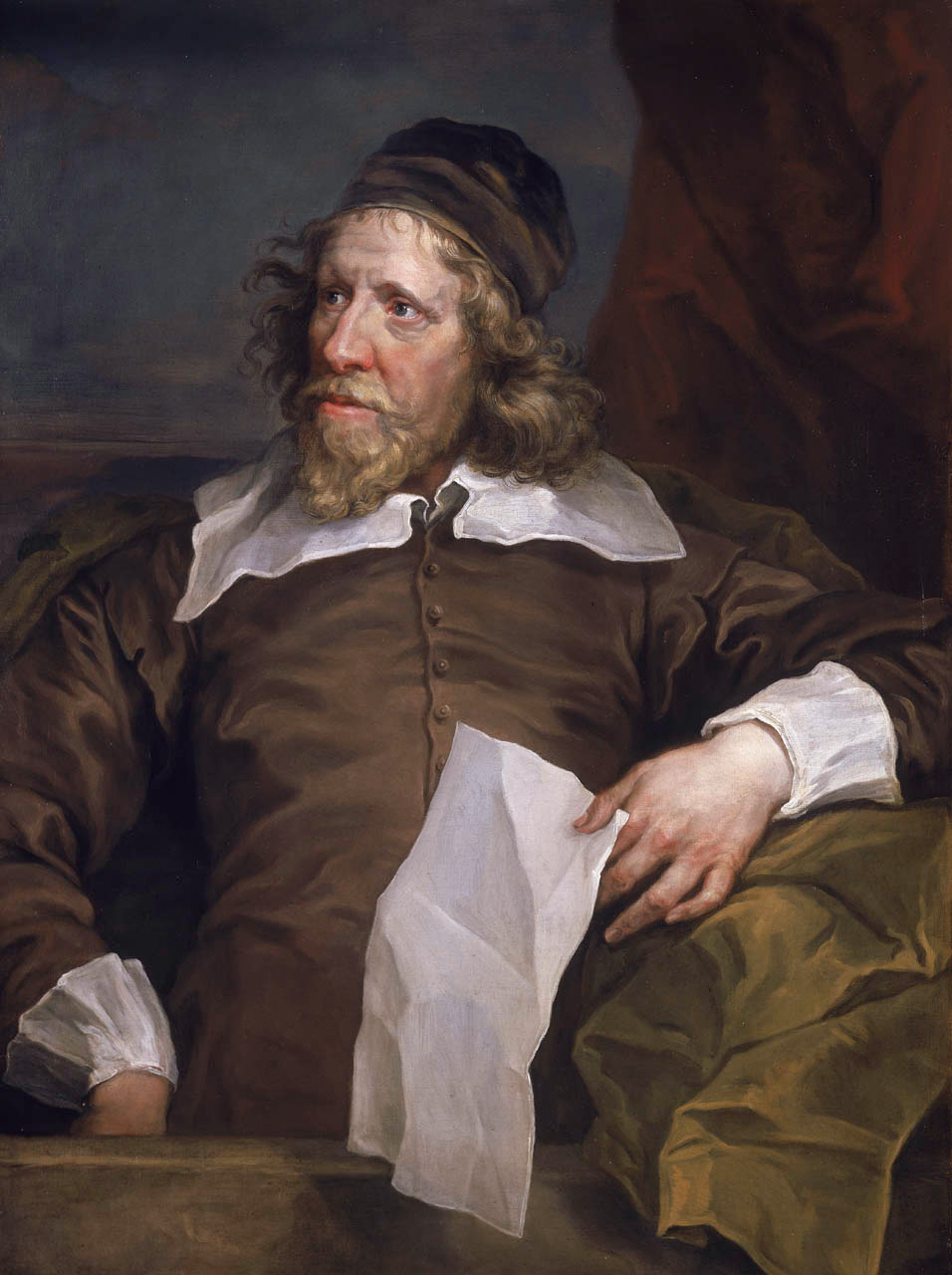
Inigo Jones
Inigo Jones (15 July 1573 – 21 June 1652) was an English architect who was the first significant architect in England in the early modern era and the first to employ Vitruvian rules of proportion and symmetry in his buildings. As the most notable architect in England, Jones was the first person to introduce the classical architecture of Rome and the Italian Renaissance to England. He left his mark on London by his design of single buildings, such as the Queen's House which is the first building in England designed in a pure classical style, and the Banqueting House, Whitehall, as well as the layout for Covent Garden square which became a model for future developments in the West End. He made major contributions to stage design by his work as a theatrical designer for several dozen masques, most by royal command and many in collaboration with Ben Jonson.
Beyond that he was born in Smithfield, London, as the son of clothworker Inigo Jones Snr., and baptised at the church of St Bartholomew-the-Less, little is known about Jones's early years. Later Welsh sources claim that the family was from Wales, and even that Inigo was originally named Ynir or Ynyr Jones, but no records from his own time indicate any family ties to Wales.
He did not approach the architectural profession in the traditional way, namely either by rising up from a craft or through early exposure to the Office of Works, although there is evidence that Christopher Wren obtained information that recorded Jones as an apprentice joiner in St Paul's Churchyard. At some point before 1603, a rich patron (possibly the Earl of Pembroke or the Earl of Rutland) sent him to Italy to study drawing after being impressed by the quality of his sketches. From Italy he travelled to Denmark where he worked for Christian IV on the design of the palaces of Rosenborg and Frederiksborg.
Jones first became famous as a designer of costumes and stage settings, especially after he brought "masques" to the stage. Under the patronage of Queen Anne of Denmark (the consort of King James I), he is credited with introducing movable scenery and the proscenium arch to English theatre. Between 1605 and 1640, he was responsible for staging over 500 performances, collaborating with Ben Jonson for many years, despite a relationship fraught with competition and jealousy: the two had arguments about whether stage design or literature was more important in theatre. (Jonson ridiculed Jones in a series of his works, written over two decades.) Over 450 drawings for the scenery and costumes survive, demonstrating Jones's virtuosity as a draughtsman and his development between 1605 and 1609 from initially showing "no knowledge of Renaissance draughtsmanship" to exhibiting an "accomplished Italianate manner" and understanding of Italian set design, particularly that of Alfonso and Giulio Parigi. This development suggests a second visit to Italy, c. 1606, influenced by the ambassador Henry Wotton. Jones learned to speak Italian fluently and there is evidence that he owned an Italian copy of Andrea Palladio's I quattro libri dell'architettura with marginalia that refer to Wotton. His architectural work was particularly influenced by Palladio. To a lesser extent, he also held to the architectural principles of the ancient Roman writer Vitruvius.
Jones's first recorded architectural design is for a monument to Frances, Lady Cotton, commissioned by Rowland Cotton, c. 1608–1611, at Norton-in-Hales, Shropshire, showing early signs of his classical intentions. In July 1606, Jones made scenery for a masque at Theobalds for the Earl of Salisbury. In the following years, Jones made drawings for the Earl of Salisbury's New Exchange in the Strand, where work commenced in June 1608, and the central tower of St Paul's Cathedral, displaying a similar practical architectural inexperience and immature handling of themes from sources including Palladio, Serlio and Sangallo. In 1609, having perhaps accompanied Salisbury's son and heir, Viscount Cranborne, around France, he appears as an architectural consultant at Hatfield House, making small modifications to the design as the project progressed, and in 1610, Jones was appointed Surveyor to Prince Henry. He devised the masques the Barriers and the Masque of Oberon for the Prince and was possibly involved in some alterations to St James's Palace.
On 27 April 1613, Jones was appointed the position of Surveyor of the King's Works and shortly after, embarked on a tour of Italy with the Earl of Arundel, destined to become one of the most important patrons in the history of English art. On this trip, Jones was exposed to the architecture of Rome, Padua, Florence, Vicenza, Genoa and Venice among others. His surviving sketchbook shows his preoccupation with such artists as Parmigianino and Andrea Schiavone. He is also known to have met Vincenzo Scamozzi at this time. His annotated copy of Palladio's Quattro libri dell'architettura also demonstrates his close interest in classical architecture: Jones gave priority to Roman antiquity rather than observing the contemporary fashion in Italy. He was probably the first native-born to study these Roman remains first hand and this was key to the new architecture Jones introduced in England and Wales.
Jones worked as a producer and architect for Masques from 1605 to 1640, but his most known work in this field came from his collaboration with poet and playwright Ben Jonson. Having worked together for fifteen years, the two debated and had disagreements about their line of work and about what was most integral in a masque. While Jonson argued that the most important aspect of a masque was the written word that the audience heard, Jones argued that the visual spectacle was the most important aspect, and that what the audience saw was more important. Jones also felt that the architect had just as much creative freedom and rights as the writer or poet of the masque. In defence of this Jones stated that masques were "nothing but pictures with light and motion," making little to note of the words spoken.
Jones's work on masques with Jonson is credited to be one of the first instances of scenery introduced in theatre. In his masques, curtains were used and placed in between the stage and the audience, and they were to be opened to introduce a scene. Jones was also known for using the stage and theatre space in its entirety, putting his actors throughout different parts of the theatre, such as placing them below the stage or elevating them onto a higher platform. Jones's settings on the stage also incorporated different uses of light, experimenting with coloured glasses, screens and oiled paper to create a softer source of light on the stage.
Hub AI
Inigo Jones AI simulator
(@Inigo Jones_simulator)
Inigo Jones
Inigo Jones (15 July 1573 – 21 June 1652) was an English architect who was the first significant architect in England in the early modern era and the first to employ Vitruvian rules of proportion and symmetry in his buildings. As the most notable architect in England, Jones was the first person to introduce the classical architecture of Rome and the Italian Renaissance to England. He left his mark on London by his design of single buildings, such as the Queen's House which is the first building in England designed in a pure classical style, and the Banqueting House, Whitehall, as well as the layout for Covent Garden square which became a model for future developments in the West End. He made major contributions to stage design by his work as a theatrical designer for several dozen masques, most by royal command and many in collaboration with Ben Jonson.
Beyond that he was born in Smithfield, London, as the son of clothworker Inigo Jones Snr., and baptised at the church of St Bartholomew-the-Less, little is known about Jones's early years. Later Welsh sources claim that the family was from Wales, and even that Inigo was originally named Ynir or Ynyr Jones, but no records from his own time indicate any family ties to Wales.
He did not approach the architectural profession in the traditional way, namely either by rising up from a craft or through early exposure to the Office of Works, although there is evidence that Christopher Wren obtained information that recorded Jones as an apprentice joiner in St Paul's Churchyard. At some point before 1603, a rich patron (possibly the Earl of Pembroke or the Earl of Rutland) sent him to Italy to study drawing after being impressed by the quality of his sketches. From Italy he travelled to Denmark where he worked for Christian IV on the design of the palaces of Rosenborg and Frederiksborg.
Jones first became famous as a designer of costumes and stage settings, especially after he brought "masques" to the stage. Under the patronage of Queen Anne of Denmark (the consort of King James I), he is credited with introducing movable scenery and the proscenium arch to English theatre. Between 1605 and 1640, he was responsible for staging over 500 performances, collaborating with Ben Jonson for many years, despite a relationship fraught with competition and jealousy: the two had arguments about whether stage design or literature was more important in theatre. (Jonson ridiculed Jones in a series of his works, written over two decades.) Over 450 drawings for the scenery and costumes survive, demonstrating Jones's virtuosity as a draughtsman and his development between 1605 and 1609 from initially showing "no knowledge of Renaissance draughtsmanship" to exhibiting an "accomplished Italianate manner" and understanding of Italian set design, particularly that of Alfonso and Giulio Parigi. This development suggests a second visit to Italy, c. 1606, influenced by the ambassador Henry Wotton. Jones learned to speak Italian fluently and there is evidence that he owned an Italian copy of Andrea Palladio's I quattro libri dell'architettura with marginalia that refer to Wotton. His architectural work was particularly influenced by Palladio. To a lesser extent, he also held to the architectural principles of the ancient Roman writer Vitruvius.
Jones's first recorded architectural design is for a monument to Frances, Lady Cotton, commissioned by Rowland Cotton, c. 1608–1611, at Norton-in-Hales, Shropshire, showing early signs of his classical intentions. In July 1606, Jones made scenery for a masque at Theobalds for the Earl of Salisbury. In the following years, Jones made drawings for the Earl of Salisbury's New Exchange in the Strand, where work commenced in June 1608, and the central tower of St Paul's Cathedral, displaying a similar practical architectural inexperience and immature handling of themes from sources including Palladio, Serlio and Sangallo. In 1609, having perhaps accompanied Salisbury's son and heir, Viscount Cranborne, around France, he appears as an architectural consultant at Hatfield House, making small modifications to the design as the project progressed, and in 1610, Jones was appointed Surveyor to Prince Henry. He devised the masques the Barriers and the Masque of Oberon for the Prince and was possibly involved in some alterations to St James's Palace.
On 27 April 1613, Jones was appointed the position of Surveyor of the King's Works and shortly after, embarked on a tour of Italy with the Earl of Arundel, destined to become one of the most important patrons in the history of English art. On this trip, Jones was exposed to the architecture of Rome, Padua, Florence, Vicenza, Genoa and Venice among others. His surviving sketchbook shows his preoccupation with such artists as Parmigianino and Andrea Schiavone. He is also known to have met Vincenzo Scamozzi at this time. His annotated copy of Palladio's Quattro libri dell'architettura also demonstrates his close interest in classical architecture: Jones gave priority to Roman antiquity rather than observing the contemporary fashion in Italy. He was probably the first native-born to study these Roman remains first hand and this was key to the new architecture Jones introduced in England and Wales.
Jones worked as a producer and architect for Masques from 1605 to 1640, but his most known work in this field came from his collaboration with poet and playwright Ben Jonson. Having worked together for fifteen years, the two debated and had disagreements about their line of work and about what was most integral in a masque. While Jonson argued that the most important aspect of a masque was the written word that the audience heard, Jones argued that the visual spectacle was the most important aspect, and that what the audience saw was more important. Jones also felt that the architect had just as much creative freedom and rights as the writer or poet of the masque. In defence of this Jones stated that masques were "nothing but pictures with light and motion," making little to note of the words spoken.
Jones's work on masques with Jonson is credited to be one of the first instances of scenery introduced in theatre. In his masques, curtains were used and placed in between the stage and the audience, and they were to be opened to introduce a scene. Jones was also known for using the stage and theatre space in its entirety, putting his actors throughout different parts of the theatre, such as placing them below the stage or elevating them onto a higher platform. Jones's settings on the stage also incorporated different uses of light, experimenting with coloured glasses, screens and oiled paper to create a softer source of light on the stage.