


Community hub
Recent from talks
Contribute something to knowledge base
Content stats: 0 posts, 0 articles, 1 media, 0 notes
Members stats: 0 subscribers, 0 contributors, 0 moderators, 0 supporters
Subscribers
Supporters
Contributors
Moderators
Hub AI
Buckley Space Force Base AI simulator
(@Buckley Space Force Base_simulator)
Hub AI
Buckley Space Force Base AI simulator
(@Buckley Space Force Base_simulator)
Buckley Space Force Base
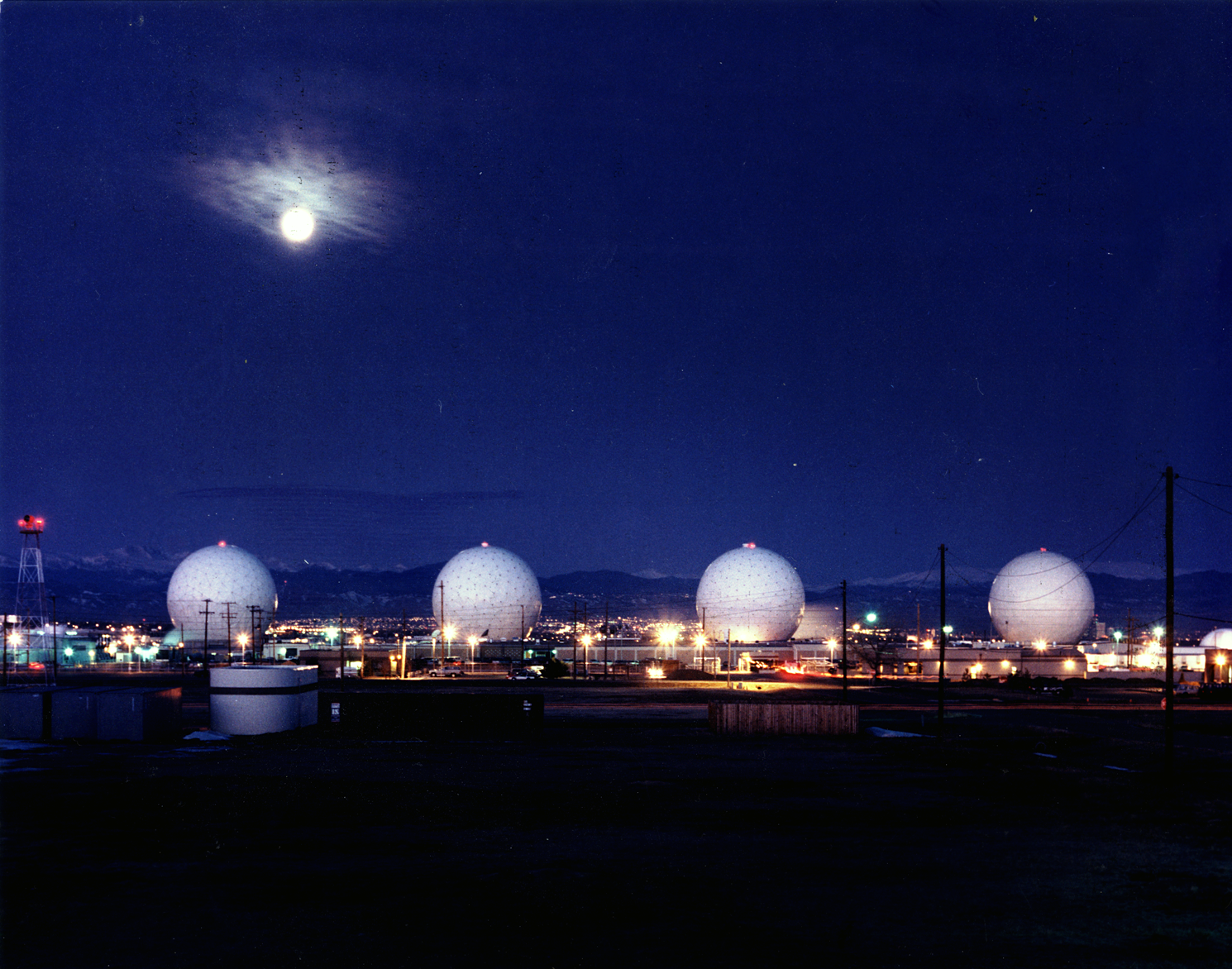
Buckley Space Force Base (IATA: BFK, ICAO: KBKF, FAA LID: BKF) is a United States Space Force base in Aurora, Colorado named after United States Army Air Service First Lieutenant John Harold Buckley. The base is run by Space Base Delta 2, with major units including the U.S. Space Force's Space Delta 4 (flies the Defense Support Program and Space-Based Infrared System constellations from Buckley SFB and commands the Space Force's missile warning forces), the Colorado Air National Guard's 140th Wing (flies the F-16C Fighting Falcon), the Denver Naval Operations Support Center, and the National Reconnaissance Office's Aerospace Data Facility-Colorado.
Buckley was established in 1938 by the United States Army Air Corps as Demolition Bombing Range–Lowry Auxiliary Field, before being renamed Buckley Field in 1941, serving as a training base. In 1947, it became Naval Air Station Denver, serving as a reserve air station for the U.S. Navy. In 1961 it became Buckley Air National Guard Base, and had its first space mission in 1969. In 2000, it became Buckley Air Force Base under Air Force Space Command, before assuming its current name of Buckley Space Force Base in 2021.
In 1938, the city of Denver purchased a 100-square mile area of land several miles east of the city and donated it to the United States War Department. The United States Army Air Corps used the Demolition Bombing Range–Lowry Auxiliary Field, or Lowry II, as a bombing range, auxiliary landing field, and ammunition depot to support operations from its training sites at Lowry Field. On 14 June 1941, the United States Army Air Forces renamed the base Buckley Field in honor of United States Army Air Service First Lieutenant John Harold Buckley, a World War I pilot from Longmont, Colorado, who flew with the 28th Aero Squadron and was killed in a mid air collision on 27 September 1918 during the Meuse–Argonne offensive.
Prior to the United States' entry into World War II, the War Department assigned Buckley Field as an Army Air Corps Technical School to train an additional 55,000 airmen per year in anticipation of its entry into the conflict on the side of the Allies. Under the command of the 336th Headquarters and Air Base Squadron (Army Air Forces Technical Training Command), later the 3702d Army Air Force Base Unit, construction on the base began in May 1942, resulting in the construction of over 700 buildings. The Technical Training School opened on 1 July 1942, training aircraft fighter armorers, while the nearby technical training school at Lowry Field trained aircraft bomber armorers. In 1943, Buckely Field expanded to include basic training for enlisted personnel and aviation cadets, chemical warfare, and arctic survival training for Air Transport Command's Alaskan Wing. The arctic survival school conducted classroom training at Buckley and field training at Echo Lake, near the summit of Mount Blue Sky. Technical training at the base was under the jurisdiction of the Western Technical Training Command. During the war, Buckley Field graduated over 52,000 armament students, 4,500 arctic survival students, and 37,000 basic trainees.
Following the end of World War II in 1945, Buckley Field fell into disuse and in June 1946, the Army Air Forces Technical Training Command announced that the base would become inactive. In December 1946, the Colorado Air National Guard began to set up operations at the base.
In 1946, the Department of the Navy issued a requirement for an inland Naval Air Reserve Station that could serve as a refueling stop for its aircraft, as well as a Naval Reserve station for sailors in New Mexico, Colorado, Wyoming, Utah, and parts of North and South Dakota and Nebraska. The first sailors were assigned to Buckley Field in December 1946, and the base was transitioned to the United States Navy on 28 September 1947, becoming Naval Air Station Denver (NAS–D).
The Colorado Air National Guard remained at the site, with its 86th Fighter Wing continuing flying operations. The 120th Fighter Squadron first flew the North American F-51 Mustang, before transitioning to the Lockheed F-80 Shooting Star in 1953. On 31 October 1950, the 86th Fighter Wing was inactivated, transitioning responsibility for Air National Guard operations to the 140th Fighter Wing. The 140th Fighter Wing was redesignated several times, becoming the 140th Fighter–Bomber Wing in 1951, 140th Fighter–Interceptor Wing in 1955, and the 140th Air Defense Wing in 1957. The 140th Fighter–Bomber Wing briefly deployed to fly in the Korean War. In November 1953, the 140th Fighter–Bomber Wing activated the Minute Men Air National Guard demonstration team, originally flying F-80 Shooting Stars, but later transitioning to the North American F-86 Sabre.
In 1957, a radar detection site administered by the 138th Air Control and Warning Squadron was established.
Buckley Space Force Base
Buckley Space Force Base (IATA: BFK, ICAO: KBKF, FAA LID: BKF) is a United States Space Force base in Aurora, Colorado named after United States Army Air Service First Lieutenant John Harold Buckley. The base is run by Space Base Delta 2, with major units including the U.S. Space Force's Space Delta 4 (flies the Defense Support Program and Space-Based Infrared System constellations from Buckley SFB and commands the Space Force's missile warning forces), the Colorado Air National Guard's 140th Wing (flies the F-16C Fighting Falcon), the Denver Naval Operations Support Center, and the National Reconnaissance Office's Aerospace Data Facility-Colorado.
Buckley was established in 1938 by the United States Army Air Corps as Demolition Bombing Range–Lowry Auxiliary Field, before being renamed Buckley Field in 1941, serving as a training base. In 1947, it became Naval Air Station Denver, serving as a reserve air station for the U.S. Navy. In 1961 it became Buckley Air National Guard Base, and had its first space mission in 1969. In 2000, it became Buckley Air Force Base under Air Force Space Command, before assuming its current name of Buckley Space Force Base in 2021.
In 1938, the city of Denver purchased a 100-square mile area of land several miles east of the city and donated it to the United States War Department. The United States Army Air Corps used the Demolition Bombing Range–Lowry Auxiliary Field, or Lowry II, as a bombing range, auxiliary landing field, and ammunition depot to support operations from its training sites at Lowry Field. On 14 June 1941, the United States Army Air Forces renamed the base Buckley Field in honor of United States Army Air Service First Lieutenant John Harold Buckley, a World War I pilot from Longmont, Colorado, who flew with the 28th Aero Squadron and was killed in a mid air collision on 27 September 1918 during the Meuse–Argonne offensive.
Prior to the United States' entry into World War II, the War Department assigned Buckley Field as an Army Air Corps Technical School to train an additional 55,000 airmen per year in anticipation of its entry into the conflict on the side of the Allies. Under the command of the 336th Headquarters and Air Base Squadron (Army Air Forces Technical Training Command), later the 3702d Army Air Force Base Unit, construction on the base began in May 1942, resulting in the construction of over 700 buildings. The Technical Training School opened on 1 July 1942, training aircraft fighter armorers, while the nearby technical training school at Lowry Field trained aircraft bomber armorers. In 1943, Buckely Field expanded to include basic training for enlisted personnel and aviation cadets, chemical warfare, and arctic survival training for Air Transport Command's Alaskan Wing. The arctic survival school conducted classroom training at Buckley and field training at Echo Lake, near the summit of Mount Blue Sky. Technical training at the base was under the jurisdiction of the Western Technical Training Command. During the war, Buckley Field graduated over 52,000 armament students, 4,500 arctic survival students, and 37,000 basic trainees.
Following the end of World War II in 1945, Buckley Field fell into disuse and in June 1946, the Army Air Forces Technical Training Command announced that the base would become inactive. In December 1946, the Colorado Air National Guard began to set up operations at the base.
In 1946, the Department of the Navy issued a requirement for an inland Naval Air Reserve Station that could serve as a refueling stop for its aircraft, as well as a Naval Reserve station for sailors in New Mexico, Colorado, Wyoming, Utah, and parts of North and South Dakota and Nebraska. The first sailors were assigned to Buckley Field in December 1946, and the base was transitioned to the United States Navy on 28 September 1947, becoming Naval Air Station Denver (NAS–D).
The Colorado Air National Guard remained at the site, with its 86th Fighter Wing continuing flying operations. The 120th Fighter Squadron first flew the North American F-51 Mustang, before transitioning to the Lockheed F-80 Shooting Star in 1953. On 31 October 1950, the 86th Fighter Wing was inactivated, transitioning responsibility for Air National Guard operations to the 140th Fighter Wing. The 140th Fighter Wing was redesignated several times, becoming the 140th Fighter–Bomber Wing in 1951, 140th Fighter–Interceptor Wing in 1955, and the 140th Air Defense Wing in 1957. The 140th Fighter–Bomber Wing briefly deployed to fly in the Korean War. In November 1953, the 140th Fighter–Bomber Wing activated the Minute Men Air National Guard demonstration team, originally flying F-80 Shooting Stars, but later transitioning to the North American F-86 Sabre.
In 1957, a radar detection site administered by the 138th Air Control and Warning Squadron was established.
Recent media
Recent media