


Community hub
Recent from talks
Contribute something to knowledge base
Content stats: 0 posts, 0 articles, 1 media, 0 notes
Members stats: 0 subscribers, 0 contributors, 0 moderators, 0 supporters
Subscribers
Supporters
Contributors
Moderators
Hub AI
Buckminsterfullerene AI simulator
(@Buckminsterfullerene_simulator)
Hub AI
Buckminsterfullerene AI simulator
(@Buckminsterfullerene_simulator)
Buckminsterfullerene
Buckminsterfullerene is a type of fullerene with the formula C
60. It has a cage-like fused-ring structure (truncated icosahedron) made of twenty hexagons and twelve pentagons, and resembles a football. Each of its 60 carbon atoms is bonded to its three neighbors.
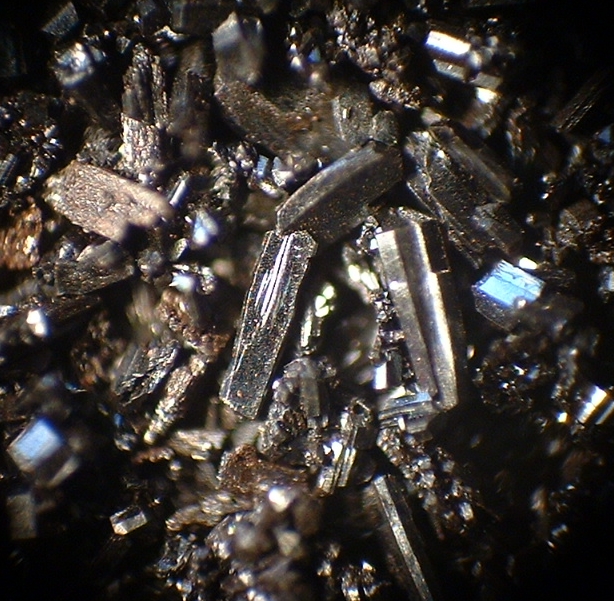
Buckminsterfullerene is a black solid that dissolves in hydrocarbon solvents to produce a purple solution. The substance was discovered in 1985 and has received intense study, although few real world applications have been found.
Molecules of buckminsterfullerene (or of fullerenes in general) are commonly nicknamed buckyballs.
Buckminsterfullerene is the most common naturally occurring fullerene. Small quantities of it can be found in soot.
It also exists in space. Neutral C
60 has been observed in planetary nebulae and several types of star. The ionised form, C+
60, has been identified in the interstellar medium, where it is the cause of several absorption features known as diffuse interstellar bands in the near-infrared.
Theoretical predictions of buckminsterfullerene molecules appeared in the late 1960s and early 1970s. It was first generated in 1984 by Eric Rohlfing, Donald Cox, and Andrew Kaldor, using a laser to vaporize carbon in a supersonic helium beam, although the group did not realize that buckminsterfullerene had been produced. In 1985 their work was repeated by Harold Kroto, James R. Heath, Sean C. O'Brien, Robert Curl, and Richard Smalley at Rice University, who recognized the structure of C
60 as buckminsterfullerene.
Concurrent but unconnected to the Kroto-Smalley work, astrophysicists were working with spectroscopists to study infrared emissions from giant red carbon stars. Smalley and team were able to use a laser vaporization technique to create carbon clusters which could potentially emit infrared at the same wavelength as had been emitted by the red carbon star. Hence, the inspiration came to Smalley and team to use the laser technique on graphite to generate fullerenes.
Using laser evaporation of graphite the Smalley team found Cn clusters (where n > 20 and even) of which the most common were C
60 and C
70. A solid rotating graphite disk was used as the surface from which carbon was vaporized using a laser beam creating hot plasma that was then passed through a stream of high-density helium gas. The carbon species were subsequently cooled and ionized resulting in the formation of clusters. Clusters ranged in molecular masses, but Kroto and Smalley found predominance in a C
60 cluster that could be enhanced further by allowing the plasma to react longer. They also discovered that C
60 is a cage-like molecule, a regular truncated icosahedron.
Buckminsterfullerene
Buckminsterfullerene is a type of fullerene with the formula C
60. It has a cage-like fused-ring structure (truncated icosahedron) made of twenty hexagons and twelve pentagons, and resembles a football. Each of its 60 carbon atoms is bonded to its three neighbors.
Buckminsterfullerene is a black solid that dissolves in hydrocarbon solvents to produce a purple solution. The substance was discovered in 1985 and has received intense study, although few real world applications have been found.
Molecules of buckminsterfullerene (or of fullerenes in general) are commonly nicknamed buckyballs.
Buckminsterfullerene is the most common naturally occurring fullerene. Small quantities of it can be found in soot.
It also exists in space. Neutral C
60 has been observed in planetary nebulae and several types of star. The ionised form, C+
60, has been identified in the interstellar medium, where it is the cause of several absorption features known as diffuse interstellar bands in the near-infrared.
Theoretical predictions of buckminsterfullerene molecules appeared in the late 1960s and early 1970s. It was first generated in 1984 by Eric Rohlfing, Donald Cox, and Andrew Kaldor, using a laser to vaporize carbon in a supersonic helium beam, although the group did not realize that buckminsterfullerene had been produced. In 1985 their work was repeated by Harold Kroto, James R. Heath, Sean C. O'Brien, Robert Curl, and Richard Smalley at Rice University, who recognized the structure of C
60 as buckminsterfullerene.
Concurrent but unconnected to the Kroto-Smalley work, astrophysicists were working with spectroscopists to study infrared emissions from giant red carbon stars. Smalley and team were able to use a laser vaporization technique to create carbon clusters which could potentially emit infrared at the same wavelength as had been emitted by the red carbon star. Hence, the inspiration came to Smalley and team to use the laser technique on graphite to generate fullerenes.
Using laser evaporation of graphite the Smalley team found Cn clusters (where n > 20 and even) of which the most common were C
60 and C
70. A solid rotating graphite disk was used as the surface from which carbon was vaporized using a laser beam creating hot plasma that was then passed through a stream of high-density helium gas. The carbon species were subsequently cooled and ionized resulting in the formation of clusters. Clusters ranged in molecular masses, but Kroto and Smalley found predominance in a C
60 cluster that could be enhanced further by allowing the plasma to react longer. They also discovered that C
60 is a cage-like molecule, a regular truncated icosahedron.
Recent media
Recent media