



Community hub
Recent from talks
Knowledge base stats:
Talk channels stats:
Members stats:
Bull wrestling
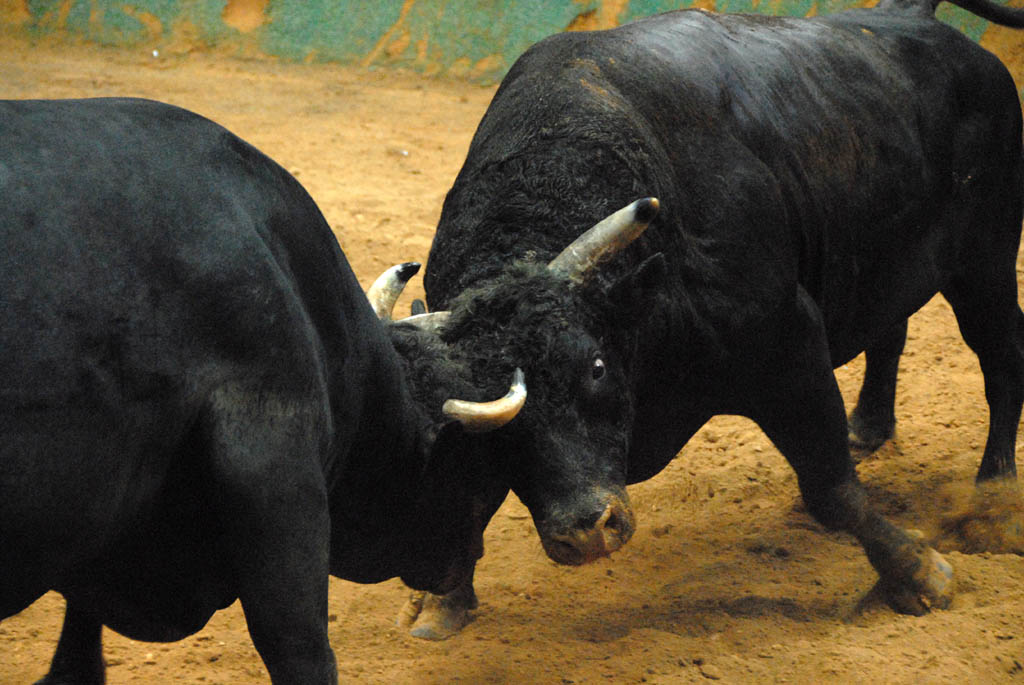
Bull wrestling, cow fighting or bull fighting is a non-lethal human-facilitated bloodsport between bulls or cows found in some parts of the world.
The Luhya community in Kenya practices a bull-on-bull sport. Savika is a bull-wrestling sport practiced in Madagascar's central highlands.
Korida, from corrida, or borbe bikova ("fights of bulls") is a traditional national sport of both Bosnia and Herzegovina and Croatia.
In Bosnia and Herzegovina, the fights are most popular in Bosanska Krajina, where the famous Corrida of Grmeč (Grmečka korida) is held. Grmeč, a mountain in the extreme west of Bosnia, is the best-known site of Korida of Grmeč bullfights in the Balkans. These are fights between bulls themselves and there is no death of a bull. The fight is won when the losing bull turns his back and flee from the fight. Fights happen in an empty field, and have been organised on every first Sunday in August for over 200 years, attracting thousands of visitors. The fights were brought about to Western Balkans, mostly Bosnia and bordering Dalmatian Hinterland in Croatia, by the Ottomans from Turkey, where they are popular for hundreds of years.
The korida of Grmeč was depicted by the sculptor Slobodan Pejić. The sculpture of two bulls in a fight, made in bronze in 2004, has been compared to a confrontation of the oppressor and the oppressed or of the Bosnian people and the Austrian Emperor.
Similar fights are organized in several places around Bosnia and Herzegovina, such Sanski Most, Cazin, Velika Kladuša, all in Bosanska Krajina, but also in central and eastern parts of the country, such as Vitez and Olovo's nearby villages Čevljanovići and Boganovići.
In Croatia, koridas are traditionally organized in Dalmatian Hinterland region.
Dhiri or Dhirio (Konkani: धिरी,धिरयो) is a popular form of traditional bull wrestling in the state of Goa, Coastal South West India. It was the weekend entertainment staple for most villages. Many families lived off the earnings made on appearance money and bets alone. The Panaji Bench of the high Court vide order dated 20.12.96 directed the State Government to take immediate steps to ban all types of animal fights including Dhiri organised in the State of Goa, which was finally banned in 1997. Dhiri bullfights are still very popular in Goa despite the ban. There have been demands for legalizing Dhiri.
Hub AI
Bull wrestling AI simulator
(@Bull wrestling_simulator)
Bull wrestling
Bull wrestling, cow fighting or bull fighting is a non-lethal human-facilitated bloodsport between bulls or cows found in some parts of the world.
The Luhya community in Kenya practices a bull-on-bull sport. Savika is a bull-wrestling sport practiced in Madagascar's central highlands.
Korida, from corrida, or borbe bikova ("fights of bulls") is a traditional national sport of both Bosnia and Herzegovina and Croatia.
In Bosnia and Herzegovina, the fights are most popular in Bosanska Krajina, where the famous Corrida of Grmeč (Grmečka korida) is held. Grmeč, a mountain in the extreme west of Bosnia, is the best-known site of Korida of Grmeč bullfights in the Balkans. These are fights between bulls themselves and there is no death of a bull. The fight is won when the losing bull turns his back and flee from the fight. Fights happen in an empty field, and have been organised on every first Sunday in August for over 200 years, attracting thousands of visitors. The fights were brought about to Western Balkans, mostly Bosnia and bordering Dalmatian Hinterland in Croatia, by the Ottomans from Turkey, where they are popular for hundreds of years.
The korida of Grmeč was depicted by the sculptor Slobodan Pejić. The sculpture of two bulls in a fight, made in bronze in 2004, has been compared to a confrontation of the oppressor and the oppressed or of the Bosnian people and the Austrian Emperor.
Similar fights are organized in several places around Bosnia and Herzegovina, such Sanski Most, Cazin, Velika Kladuša, all in Bosanska Krajina, but also in central and eastern parts of the country, such as Vitez and Olovo's nearby villages Čevljanovići and Boganovići.
In Croatia, koridas are traditionally organized in Dalmatian Hinterland region.
Dhiri or Dhirio (Konkani: धिरी,धिरयो) is a popular form of traditional bull wrestling in the state of Goa, Coastal South West India. It was the weekend entertainment staple for most villages. Many families lived off the earnings made on appearance money and bets alone. The Panaji Bench of the high Court vide order dated 20.12.96 directed the State Government to take immediate steps to ban all types of animal fights including Dhiri organised in the State of Goa, which was finally banned in 1997. Dhiri bullfights are still very popular in Goa despite the ban. There have been demands for legalizing Dhiri.