
Recent from talks
Burgas
Knowledge base stats:
Talk channels stats:
Members stats:
Burgas
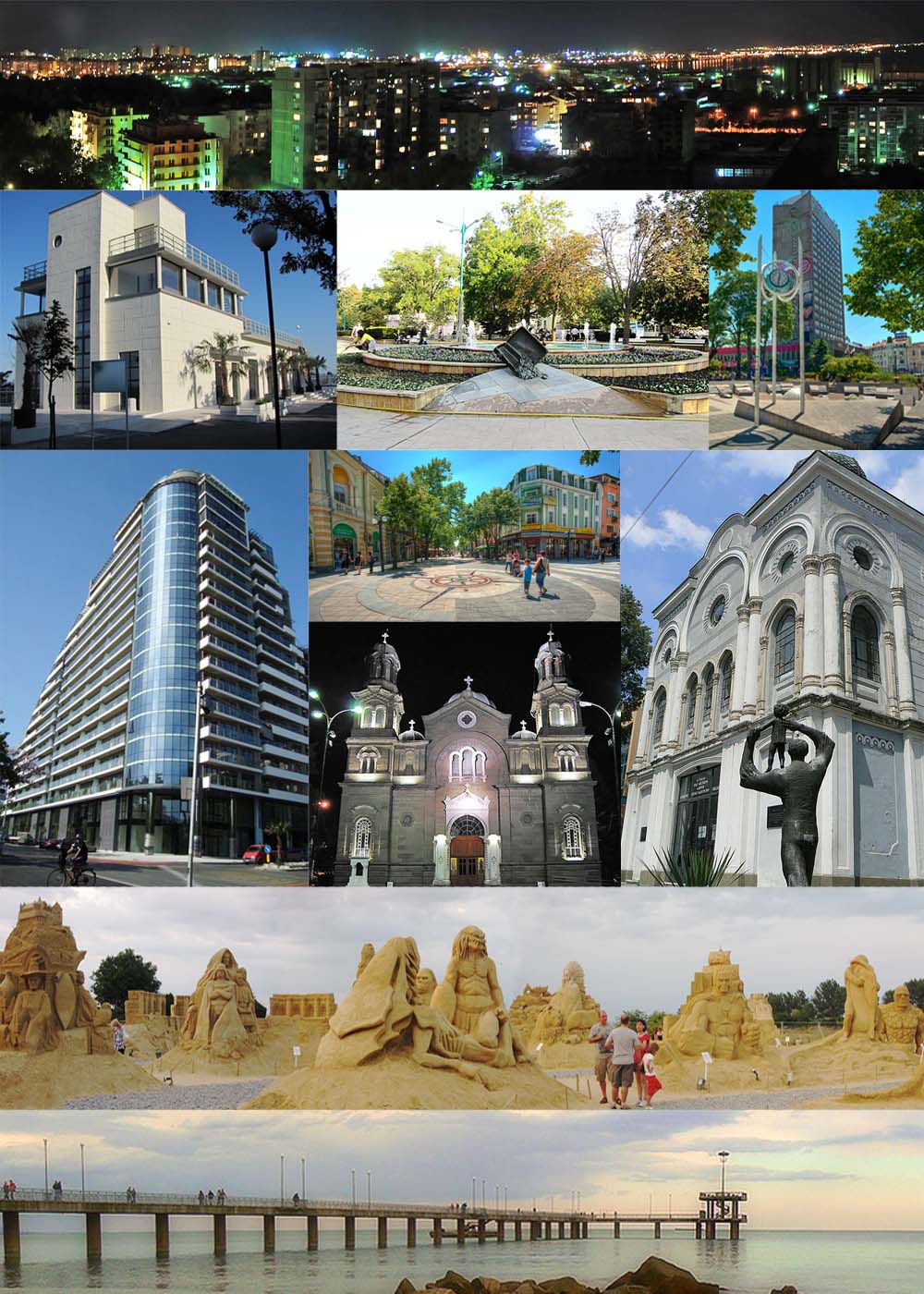
Burgas (Bulgarian: Бургас, pronounced [burˈɡas] ⓘ), sometimes transliterated as Bourgas, is the second largest city on the Bulgarian Black Sea Coast in the region of Northern Thrace and the fourth-largest city in Bulgaria after Sofia, Plovdiv, and Varna, with a population of 210,646 inhabitants, while 226,137 live in its urban area. It is the capital of Burgas Province and an important industrial, transport, cultural and tourist centre.
The city is surrounded by the Burgas Lakes and located at the westernmost point of the Black Sea, at the large Burgas Bay. LUKOIL Neftochim Burgas is the largest oil refinery in southeastern Europe and the largest industrial enterprise. The Port of Burgas is the second largest port in Bulgaria, and Burgas Airport is the second most important in the country. Burgas is the centre of the Bulgarian fishing and fish processing industry.
The city's name is similar to Burgos in Spain, as well as numerous cities containing the Germanic 'burg' suffix, meaning "castle," such as Hamburg. It is widely considered, including by the city's official website, that the name of the city is derived from the Latin word "burgus", meaning a "tower", after a local ancient Roman travel post, which used to be in the area of today's Burgas Port. Fifteen centuries later, the settlement was mentioned by the Byzantine poet Manuel Philes as "Pyrgos" (Greek: Πύργος), a word identical in meaning with the Greek word for tower. The name passed to Bulgarian through the Turkish Burgaz. There are several alternative explanations for the name's origin. One of them states the city's name comes from Gothic name "baurgs", meaning "signified consolidated walled villages". According to Bulgarian prof. Kiril Vlahov, the name of the city comes from the Thracian word "pyurg", meaning "fortification of wooden beams".
Burgas is situated at the westernmost point of the bay by the same name and in the eastern part of the Burgas Plain, in the east of the Upper Thracian Plain. Burgas is located some 360 kilometres (224 mi) from Sofia, 255 km (158 mi) from Plovdiv, 130 km (81 mi) from Varna, and 332 km (206 mi) from Istanbul. To the west, south and north, the city is surrounded by the Burgas Lakes: Burgas, Atanasovsko, and Mandrensko, which are home to several hundred bird species. Pan-European corridor 8 passes through the city, the European routes E87 and E773, and the longest national rout I/6. The St. Anastasia Island is a part of the city.
Under the Köppen climate classification, Burgas has a humid subtropical climate (Köppen: Cfa). The summertime in Burgas lasts about five months from mid-May until late September. Average temperatures during high season is 24 °C (75 °F). Summertime sea temperatures stay around 23–24 °C (73–75 °F) at sunrise and go up to 29–30 °C (84–86 °F) by dusk, averaging 26 °C (79 °F). Winters are milder compared with the inland part of the country, with average temperatures of 4–5 °C (39–41 °F) and below 0 °C (32 °F) during the night. Snow is possible in December, January, February and rarely in March; however, it can quickly melt. The highest temperature was recorded in June 2007, at 42.8 °C (109 °F) and the lowest at −21.6 °C (−7 °F) in January 1942.
The Burgas Wetlands are highly recognized for their significance to biodiversity and as a resource pool for products used by people.
Lake Burgas is Bulgaria's largest lake and is in the middle of the city. It is important for migrating birds. Over 250 species of birds inhabit the lake area, 61 of which are endangered in Bulgaria and 9 globally, attracting keen birdwatchers from all over the world. The lakes are also home to important fish and invertebrates. In the site have been recorded several IUCN Red-Listed species of animals – 5 invertebrates, 4 fish, 4 amphibians, 3 reptiles, 5 birds and 3 mammals. Situated along the second largest migration path of birds in Europe, the Via Pontica, the site is an important stopover and staging site for a large number of water-birds, raptors and passerines. Yearly during migration and wintering more than 20,000 (up to 100,000) waterbirds congregate there.
The Atanasovo Lake is one of two salt-water lakes in the Black Sea region and contains rare and representative examples of wetland habitats. It is a hot spot for biodiversity, with many Red-Listed species of plants and animals. It is a well-known bottleneck site for migratory birds, with around 60,000 raptors and 240,000 storks, pelicans and cranes passing over the site and often landing in large numbers for staging. The highest numbers in Europe of migrating Great white pelican (Pelecanus onocrotalus), Dalmatian pelican (Pelecanus crispus), Western marsh harrier (Circus aeruginosus) and Red-footed Falcon (Falco vespertinus) have been recorded here.
Hub AI
Burgas AI simulator
(@Burgas_simulator)
Burgas
Burgas (Bulgarian: Бургас, pronounced [burˈɡas] ⓘ), sometimes transliterated as Bourgas, is the second largest city on the Bulgarian Black Sea Coast in the region of Northern Thrace and the fourth-largest city in Bulgaria after Sofia, Plovdiv, and Varna, with a population of 210,646 inhabitants, while 226,137 live in its urban area. It is the capital of Burgas Province and an important industrial, transport, cultural and tourist centre.
The city is surrounded by the Burgas Lakes and located at the westernmost point of the Black Sea, at the large Burgas Bay. LUKOIL Neftochim Burgas is the largest oil refinery in southeastern Europe and the largest industrial enterprise. The Port of Burgas is the second largest port in Bulgaria, and Burgas Airport is the second most important in the country. Burgas is the centre of the Bulgarian fishing and fish processing industry.
The city's name is similar to Burgos in Spain, as well as numerous cities containing the Germanic 'burg' suffix, meaning "castle," such as Hamburg. It is widely considered, including by the city's official website, that the name of the city is derived from the Latin word "burgus", meaning a "tower", after a local ancient Roman travel post, which used to be in the area of today's Burgas Port. Fifteen centuries later, the settlement was mentioned by the Byzantine poet Manuel Philes as "Pyrgos" (Greek: Πύργος), a word identical in meaning with the Greek word for tower. The name passed to Bulgarian through the Turkish Burgaz. There are several alternative explanations for the name's origin. One of them states the city's name comes from Gothic name "baurgs", meaning "signified consolidated walled villages". According to Bulgarian prof. Kiril Vlahov, the name of the city comes from the Thracian word "pyurg", meaning "fortification of wooden beams".
Burgas is situated at the westernmost point of the bay by the same name and in the eastern part of the Burgas Plain, in the east of the Upper Thracian Plain. Burgas is located some 360 kilometres (224 mi) from Sofia, 255 km (158 mi) from Plovdiv, 130 km (81 mi) from Varna, and 332 km (206 mi) from Istanbul. To the west, south and north, the city is surrounded by the Burgas Lakes: Burgas, Atanasovsko, and Mandrensko, which are home to several hundred bird species. Pan-European corridor 8 passes through the city, the European routes E87 and E773, and the longest national rout I/6. The St. Anastasia Island is a part of the city.
Under the Köppen climate classification, Burgas has a humid subtropical climate (Köppen: Cfa). The summertime in Burgas lasts about five months from mid-May until late September. Average temperatures during high season is 24 °C (75 °F). Summertime sea temperatures stay around 23–24 °C (73–75 °F) at sunrise and go up to 29–30 °C (84–86 °F) by dusk, averaging 26 °C (79 °F). Winters are milder compared with the inland part of the country, with average temperatures of 4–5 °C (39–41 °F) and below 0 °C (32 °F) during the night. Snow is possible in December, January, February and rarely in March; however, it can quickly melt. The highest temperature was recorded in June 2007, at 42.8 °C (109 °F) and the lowest at −21.6 °C (−7 °F) in January 1942.
The Burgas Wetlands are highly recognized for their significance to biodiversity and as a resource pool for products used by people.
Lake Burgas is Bulgaria's largest lake and is in the middle of the city. It is important for migrating birds. Over 250 species of birds inhabit the lake area, 61 of which are endangered in Bulgaria and 9 globally, attracting keen birdwatchers from all over the world. The lakes are also home to important fish and invertebrates. In the site have been recorded several IUCN Red-Listed species of animals – 5 invertebrates, 4 fish, 4 amphibians, 3 reptiles, 5 birds and 3 mammals. Situated along the second largest migration path of birds in Europe, the Via Pontica, the site is an important stopover and staging site for a large number of water-birds, raptors and passerines. Yearly during migration and wintering more than 20,000 (up to 100,000) waterbirds congregate there.
The Atanasovo Lake is one of two salt-water lakes in the Black Sea region and contains rare and representative examples of wetland habitats. It is a hot spot for biodiversity, with many Red-Listed species of plants and animals. It is a well-known bottleneck site for migratory birds, with around 60,000 raptors and 240,000 storks, pelicans and cranes passing over the site and often landing in large numbers for staging. The highest numbers in Europe of migrating Great white pelican (Pelecanus onocrotalus), Dalmatian pelican (Pelecanus crispus), Western marsh harrier (Circus aeruginosus) and Red-footed Falcon (Falco vespertinus) have been recorded here.
Recent media