
Recent from talks
Butterfly style
Knowledge base stats:
Talk channels stats:
Members stats:
Butterfly style
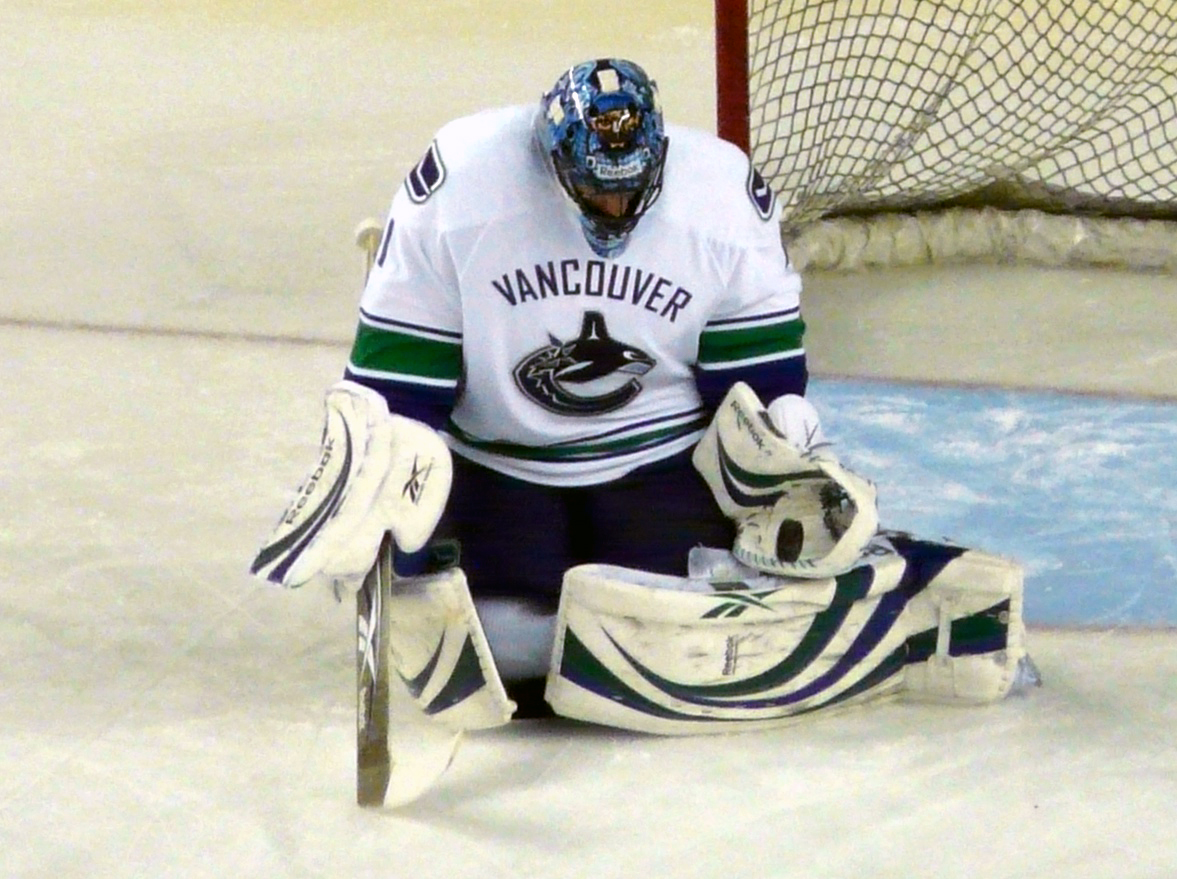
In ice hockey, butterfly style is a technique of goaltending distinguished by the goaltender guarding the lower part of the net by dropping to the knees to block attempts to score. The butterfly style derives its name from the resemblance of the spread goal pads and hands to a butterfly's wings. The butterfly style is contrasted with stand-up style, where most shots on a goal are stopped with the goaltender on their feet.
Many factors helped make it a de facto standard style of play today, including the popularization of the goalie mask by Jacques Plante, Vladislav Tretiak's outstanding use of the style at the 1972 Canada–USSR Summit Series, the National Hockey League (NHL) emergence of Tony Esposito in the 1970s and Dominik Hašek in the 1990s, the development of lightweight materials for pads, and the influence of professional goaltending coaches such as Warren Strelow and Benoit and François Allaire.
There are few who exclusively employ a stand-up style in the NHL. Although it is effective and popular among goaltenders, the butterfly style can leave the upper portion of the net more vulnerable to scoring attempts.
The modern profly derivative was made most popular by Patrick Roy and is the style most commonly used and taught. The profly style is a specialized progression of the butterfly style. The name derives from a goaltending leg pad model designed specifically for the use of the butterfly. The term eventually evolved into a style for goaltenders who tend to use the butterfly save technique as a base for the majority of their save selections.
The term "hybrid" is commonly used to measure how far a goaltender strays from using the butterfly technique as a base save. Some goaltending circles use the term "hybrid" as a middling term from a pure butterfly goaltender to a pure stand-up goaltender.
Glenn Hall is generally thought to be the first goaltender to react to shots by dropping to his knees. This was remarkable because he did it without a mask. Other contemporaries, such as Terry Sawchuk and Jacques Plante (who, while not having invented the goalie mask, is credited with having popularized it) relied mostly on the stand-up style. Plante actually tried the butterfly style when sharing goaltending duties with Glenn Hall in St. Louis, but cautioned others against its use except under certain types of screened shots. Hall's innovation was improved upon later in the 1960s and 70s by Roger Crozier and Tony Esposito. In spite of their success, the butterfly fell out of favour until the emergence of Patrick Roy in the mid-1980s. This new, modern butterfly style has been referred to as the "profly" style.
Prominent advocates of the "profly" progression of the butterfly include Canadian coaches François Allaire and Benoit Allaire. Many believe that the advent of the Profly style was made possible by improved, heavily armored chest/arm pads and more protective face masks. Prior to these advancements, goaltenders wore chest/arm pads made of felt. To avoid injury, goalies had to trap all pucks with their gloves. Modern, lightweight plastics and energy absorbent foams allowed goaltenders to block and trap shots with their bodies. Equipment designers such as Michel Lefebvre (of Koho and Reebok fame), Michael Vaughn of Vaughn Custom Sports and the late Brian Heaton (of Brian's and Heaton fame) were at the forefront of the equipment advancements. Patrick Roy worked with the Allaire brothers and used Lefebvre-designed pads and Heaton-designed gloves in the late 1980s to modernize the style.[citation needed]
As in many arts, there is no universal agreement on style classifications with modern goaltending techniques. Modern hybrid coaches such as the late Warren Strelow worked with goaltenders associated with the profly style such as Miikka Kiprusoff. The butterfly is not a style but a save selection used by most goaltenders.
Hub AI
Butterfly style AI simulator
(@Butterfly style_simulator)
Butterfly style
In ice hockey, butterfly style is a technique of goaltending distinguished by the goaltender guarding the lower part of the net by dropping to the knees to block attempts to score. The butterfly style derives its name from the resemblance of the spread goal pads and hands to a butterfly's wings. The butterfly style is contrasted with stand-up style, where most shots on a goal are stopped with the goaltender on their feet.
Many factors helped make it a de facto standard style of play today, including the popularization of the goalie mask by Jacques Plante, Vladislav Tretiak's outstanding use of the style at the 1972 Canada–USSR Summit Series, the National Hockey League (NHL) emergence of Tony Esposito in the 1970s and Dominik Hašek in the 1990s, the development of lightweight materials for pads, and the influence of professional goaltending coaches such as Warren Strelow and Benoit and François Allaire.
There are few who exclusively employ a stand-up style in the NHL. Although it is effective and popular among goaltenders, the butterfly style can leave the upper portion of the net more vulnerable to scoring attempts.
The modern profly derivative was made most popular by Patrick Roy and is the style most commonly used and taught. The profly style is a specialized progression of the butterfly style. The name derives from a goaltending leg pad model designed specifically for the use of the butterfly. The term eventually evolved into a style for goaltenders who tend to use the butterfly save technique as a base for the majority of their save selections.
The term "hybrid" is commonly used to measure how far a goaltender strays from using the butterfly technique as a base save. Some goaltending circles use the term "hybrid" as a middling term from a pure butterfly goaltender to a pure stand-up goaltender.
Glenn Hall is generally thought to be the first goaltender to react to shots by dropping to his knees. This was remarkable because he did it without a mask. Other contemporaries, such as Terry Sawchuk and Jacques Plante (who, while not having invented the goalie mask, is credited with having popularized it) relied mostly on the stand-up style. Plante actually tried the butterfly style when sharing goaltending duties with Glenn Hall in St. Louis, but cautioned others against its use except under certain types of screened shots. Hall's innovation was improved upon later in the 1960s and 70s by Roger Crozier and Tony Esposito. In spite of their success, the butterfly fell out of favour until the emergence of Patrick Roy in the mid-1980s. This new, modern butterfly style has been referred to as the "profly" style.
Prominent advocates of the "profly" progression of the butterfly include Canadian coaches François Allaire and Benoit Allaire. Many believe that the advent of the Profly style was made possible by improved, heavily armored chest/arm pads and more protective face masks. Prior to these advancements, goaltenders wore chest/arm pads made of felt. To avoid injury, goalies had to trap all pucks with their gloves. Modern, lightweight plastics and energy absorbent foams allowed goaltenders to block and trap shots with their bodies. Equipment designers such as Michel Lefebvre (of Koho and Reebok fame), Michael Vaughn of Vaughn Custom Sports and the late Brian Heaton (of Brian's and Heaton fame) were at the forefront of the equipment advancements. Patrick Roy worked with the Allaire brothers and used Lefebvre-designed pads and Heaton-designed gloves in the late 1980s to modernize the style.[citation needed]
As in many arts, there is no universal agreement on style classifications with modern goaltending techniques. Modern hybrid coaches such as the late Warren Strelow worked with goaltenders associated with the profly style such as Miikka Kiprusoff. The butterfly is not a style but a save selection used by most goaltenders.
Recent media