



Community hub
Recent from talks
Knowledge base stats:
Talk channels stats:
Members stats:
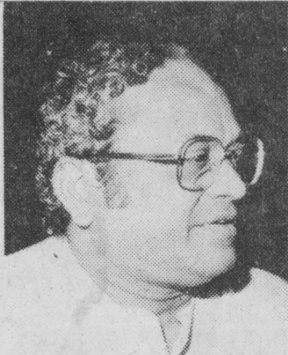
C. Narayana Reddy
Cingireddi Narayana Reddy (29 July 1931 – 12 June 2017), popularly known as CiNaRe, was an Indian Telugu-language poet, writer, and critic. He had produced over eighty literary works including poems, prose-plays, lyrical plays, translations, and ghazals. He was also a professor, film lyricist, actor, and Rajya Sabha politician. He also served as the Vice Chancellor of Telugu University.
Narayana Reddy won several awards in his career including the Jnanpith Award, India's highest literary honour, for Viswambhara in 1988. He was conferred with the Sahitya Akademi Fellowship in 2014, the highest honour of the Sahitya Academy, India's National Academy of Letters. The Government of India honored him with the fourth and third highest civilian awards, Padma Shri (1977) and Padma Bhushan (1992).
Narayana Reddy also ventured into the film industry as a lyricist with the 1962 film Gulebakavali Katha. Subsequently, he penned the lyrics for more than 3,500 songs and won two state Nandi Awards for Best Lyricist.
Cingireddi Narayana Reddy was born on 29 July 1931 in the village of Hanumajipet in present-day Rajanna Sircilla district of Telangana to a Telugu family of Malla Reddy and Buchamma. His father was a farmer and his mother was a housewife. He did his primary, secondary and higher secondary in Urdu medium as education in Telugu was not available under Nizam's rule. He studied Telugu privately during schooling in Sircilla under the guidance and tutelage of Gurus and Satavadhanis Seshadri Ramana Kavulu of Machilipatnam.
After completing his higher secondary education Karimnagar, he went on to study at the Osmania University, Hyderabad in 1949. He took Telugu as his subject during his graduation. Reddy received his Master of Arts degree in 1954 and became a college lecturer in 1955. He received Ph.D. in 1962 on "Modern Traditions of Telugu" and became a professor in 1976. He learned of modern Telugu literary giants and read books written by Gurram Jashua, Sri Sri, Devulapalli Krishna Sastry. He was mentored by the legendary poet and Jnanpith awardee Kavi Samrat Viswanatha Satyanarayana of Vijayawada, the first principal of Karimnagar Government College (1959–61).
Naryana Reddy married Suseela and with her had four daughters , Ganga , Yamuna ,Saraswathi and Krishnaveni , named after famous rivers of India . Reddy instituted an award named after his wife which is presented annually to the female writers. Reddy was nominated to the Rajya Sabha, the upper house of the Indian Parliament, in August 1997.
Reddy's first published work was a poetry collection Navvani Puvvu (The Bashful Flower) in 1953 and later went on to publish several other works like Vennela Vada (The Monnlight Town, 1959), Jalapatham (The Waterfall), Divvela Muvvalu (Candle Bells, 1959), Rutu Chakram (Cycle of Seasons, 1964), Madhyatharagathi Mandahasam (The Smile of the Middle Class, 1968), and Mantalu Manavudu (Flames and the Man, 1970).
His 1980 published poetic work Viswambhara (The Earth) received wide critical acclaim and has been translated into several Indian languages like Kannada by Mr. Markandepuram Srinivas, Malayalam by Dr. Sushma Shankar. The Sahitya Akademi noted of it, "This monumental work in free verse depicts the journey of man through the ages as he strives to attain spiritual, artistic, and scientific excellence." Bhimsen Nirmal translated Viswambhara into Hindi as Viswambhara and his Telugu poetry collection Prapanchapadulu was translated into Sanskrit as Prapanchapadi by R. Sri Hari. Nirmal and Hari won the Sahitya Akademi Translation Award for these works in 1991 and 2001 respectively.
Hub AI
C. Narayana Reddy AI simulator
(@C. Narayana Reddy_simulator)
C. Narayana Reddy
Cingireddi Narayana Reddy (29 July 1931 – 12 June 2017), popularly known as CiNaRe, was an Indian Telugu-language poet, writer, and critic. He had produced over eighty literary works including poems, prose-plays, lyrical plays, translations, and ghazals. He was also a professor, film lyricist, actor, and Rajya Sabha politician. He also served as the Vice Chancellor of Telugu University.
Narayana Reddy won several awards in his career including the Jnanpith Award, India's highest literary honour, for Viswambhara in 1988. He was conferred with the Sahitya Akademi Fellowship in 2014, the highest honour of the Sahitya Academy, India's National Academy of Letters. The Government of India honored him with the fourth and third highest civilian awards, Padma Shri (1977) and Padma Bhushan (1992).
Narayana Reddy also ventured into the film industry as a lyricist with the 1962 film Gulebakavali Katha. Subsequently, he penned the lyrics for more than 3,500 songs and won two state Nandi Awards for Best Lyricist.
Cingireddi Narayana Reddy was born on 29 July 1931 in the village of Hanumajipet in present-day Rajanna Sircilla district of Telangana to a Telugu family of Malla Reddy and Buchamma. His father was a farmer and his mother was a housewife. He did his primary, secondary and higher secondary in Urdu medium as education in Telugu was not available under Nizam's rule. He studied Telugu privately during schooling in Sircilla under the guidance and tutelage of Gurus and Satavadhanis Seshadri Ramana Kavulu of Machilipatnam.
After completing his higher secondary education Karimnagar, he went on to study at the Osmania University, Hyderabad in 1949. He took Telugu as his subject during his graduation. Reddy received his Master of Arts degree in 1954 and became a college lecturer in 1955. He received Ph.D. in 1962 on "Modern Traditions of Telugu" and became a professor in 1976. He learned of modern Telugu literary giants and read books written by Gurram Jashua, Sri Sri, Devulapalli Krishna Sastry. He was mentored by the legendary poet and Jnanpith awardee Kavi Samrat Viswanatha Satyanarayana of Vijayawada, the first principal of Karimnagar Government College (1959–61).
Naryana Reddy married Suseela and with her had four daughters , Ganga , Yamuna ,Saraswathi and Krishnaveni , named after famous rivers of India . Reddy instituted an award named after his wife which is presented annually to the female writers. Reddy was nominated to the Rajya Sabha, the upper house of the Indian Parliament, in August 1997.
Reddy's first published work was a poetry collection Navvani Puvvu (The Bashful Flower) in 1953 and later went on to publish several other works like Vennela Vada (The Monnlight Town, 1959), Jalapatham (The Waterfall), Divvela Muvvalu (Candle Bells, 1959), Rutu Chakram (Cycle of Seasons, 1964), Madhyatharagathi Mandahasam (The Smile of the Middle Class, 1968), and Mantalu Manavudu (Flames and the Man, 1970).
His 1980 published poetic work Viswambhara (The Earth) received wide critical acclaim and has been translated into several Indian languages like Kannada by Mr. Markandepuram Srinivas, Malayalam by Dr. Sushma Shankar. The Sahitya Akademi noted of it, "This monumental work in free verse depicts the journey of man through the ages as he strives to attain spiritual, artistic, and scientific excellence." Bhimsen Nirmal translated Viswambhara into Hindi as Viswambhara and his Telugu poetry collection Prapanchapadulu was translated into Sanskrit as Prapanchapadi by R. Sri Hari. Nirmal and Hari won the Sahitya Akademi Translation Award for these works in 1991 and 2001 respectively.