Hubbry Logo
KarimnagarKarimnagarMain
Open search
Karimnagar
Community hub
Karimnagar
logo
8 pages, 0 posts
0 subscribers
Be the first to start a discussion here.
Karimnagar
Karimnagar
from Wikipedia

Karimnagar, formerly known as Elagandula,[6] is a city and District Headquarters in the Indian state of Telangana. Karimnagar is a major urban agglomeration in the state. It is fourth largest City in the state and Municipal Corporation and is the headquarters of the Karimnagar district.[7][8] It is situated on the banks of Manair River, which is a tributary of the Godavari River. It is the third largest and fastest growing urban settlement in the state, according to the 2011 census. It has registered a population growth rate of 45.46% and 38.87% [citation needed] respectively over the past two decades between 1991 and 2011, which is the highest growth rate among major cities of Telangana.[9] It serves as a major educational and health hub for the northern districts of Telangana.[10] It is a major business center and widely known for its agricultural and granite industries, earning the nickname "City of Granites."[11][12]

Key Information

It has been selected as one of the hundred Indian cities to be developed as a smart city under PM Narendra Modi's flagship Smart Cities Mission by replacing Hyderabad based on the request from the former Chief Minister of Telangana K. Chandrashekar Rao.[13]

Etymology

[edit]

In the olden days, this place was known as Veligandula, Tellakandula.[14] Poet Veligandala Narayya who was the principal disciple of Poet Potana hailed from this place. During the Nizam era, the village was named Karimnagar by an Elgandala Qiladar, Syed Karimuddin.[15]

History

[edit]

Asaf Jahi Dynasty

[edit]

During the Asaf Jahi Dynasty (1724–1948), Karimnagar was part of the Hyderabad State under the Nizams. The region grew in importance due to its strategic location, contributing to agriculture, trade, and military activities.

Modern era

[edit]

It became a district in 1905. In the 1920s, serving under the Nizam of Hyderabad, the District Collector Sir John Hunter oversaw construction of the clock tower which still stands in the city centre today. In 1937, Janab Shaikhaan Sahab built the Karimnagar Kaman to commemorate the Nizam's Silver Jubilee. It was previously part of princely Hyderabad State and then became part of Hyderabad state in 1948 after the Hyderabad state was annexed into the Indian Union. It then became part of Andhra Pradesh state on 1 November 1956 after merging the Telugu speaking region of Hyderabad state with Andhra state. After almost 6 decades of Telangana statehood movement, on 2 June 2014 it became part of newly formed state of Telangana by Andhra Pradesh Reorganisation Act, 2014.

Demographics

[edit]
Historical population
YearPop.±%
1901 5,752—    
1911 8,347+45.1%
1921 9,399+12.6%
1931 10,903+16.0%
1941 17,437+59.9%
1951 23,826+36.6%
1961 31,554+32.4%
1971 48,918+55.0%
1981 86,125+76.1%
1991 148,583+72.5%
2001 218,302+46.9%
2011 297,447+36.3%
Source: [16]

Karimnagar has a population of 397,447 within its corporation limits, according to 2011 census, making it the Third largest city in Telangana state. Karimnagar Urban Agglomeration comprising Municipal Corporation and Urban Development authority of 689,985.City out growths include Bommakal (with a population of 9,031), Arepalle (6,987), Alugunur (6,164), Chinthakunta (3,437) and Sitharampur (3,017). Besides these outgrowths, there are many sub-urban areas on the outskirts, which are merged into corporation limits. It is the most densely populated city in Telangana, with a density of 11,114 persons per km2.

Karimnagar city has a literacy rate of 85.82%, which is highest urban literacy rate in Telangana state. Karimnagar urban agglomeration has a literacy rate of 84.93% which is almost equal to the National Urban average of 85%. The literacy rate for males and females for Karimnagar urban region stood at 91.06% and 78.69% respectively.[17][18]

Religions in Karimnagar[19][failed verification]
Religion Percentage
Hindu
77.1%
Muslim
20.7%
Christian
1.3%
Others
0.9%

Climate

[edit]
Dense Clouds over LMD Reservoir at Karimnagar

Karimnagar experiences dry inland climatic conditions with hot summers and cool winters.[20] The city of Karimnagar gets most of its rainfall from the Southwest monsoon. The summer season is extremely hot, but temperatures decline with the onset of the monsoons, and the winter season is generally cool. The most popular tourist season is from November to February.

The summer season starts in March and can continue through early June. During this period temperatures range from a minimum of 27 °C to a maximum of 39 °C. The highest recorded temperature in the area is around 48 °C. Nights are much cooler, and the humidity is around 50%. October and November experiences increased rainfall from the Northeast monsoon. During this time, daytime temperatures average around 30 °C. The winter season starts in December and lasts through February. During this time, temperatures range from a minimum of 10 °C to a maximum of 35 °C.

Climate data for Karimnagar
Month Jan Feb Mar Apr May Jun Jul Aug Sep Oct Nov Dec Year
Mean daily maximum °C (°F) 29
(84)
32
(90)
37
(99)
40
(104)
42
(108)
34
(93)
30
(86)
29
(84)
31
(88)
32
(90)
29
(84)
28
(82)
33
(91)
Mean daily minimum °C (°F) 13
(55)
16
(61)
22
(72)
26
(79)
28
(82)
26
(79)
24
(75)
23
(73)
22
(72)
20
(68)
16
(61)
12
(54)
21
(69)
Average precipitation mm (inches) 32
(1.3)
8
(0.3)
43
(1.7)
17
(0.7)
41
(1.6)
162
(6.4)
204
(8.0)
126
(5.0)
133
(5.2)
75
(3.0)
48
(1.9)
18
(0.7)
907
(35.8)
Source: Sunmap

Civic administration

[edit]
Karimnagar Municipal Corporation logo

Karimnagar Municipal Corporation is the civic body that administers the city. It was constituted as a third grade municipality in the year 1952, as a second grade in 1959, first grade in 1984, special grade in 1996, selection grade in 1999 and finally upgraded to corporation in 2005.[15]

The city is served by Karimnagar Police Commissionerate.

Despite the city growing in leaps and bounds, the area of the civic body remaining unaltered. Ever since the municipality was upgraded into corporation in 2005, the merger of adjoining villages on the outskirts with the Corporation was being met with wide opposition from local village authorities.[21][22]

It belongs to the Karimnagar Lok Sabha constituency.

The area is served by TSNPDCL.

Sports

[edit]

United Karimnagar district has produced many sports persons from the rural level in sports like Karate, Cricket, Kabaddi, Kho-Kho and many other sports. Dr. B.R. Ambedkar Sports Complex is the primary sports complex in the city of Karimnagar. The sports complex has a main stadium used for sports like Athletics, Cricket, Football, an indoor stadium, a hockey field, swimming pool, kho-kho grounds, basketball courts. Another indoor stadium was built inside SRR college.

Healthcare

[edit]
Apollo Hospitals, Karimnagar

Karimnagar has evolved into a major health center for its surrounding districts because it is centrally located to all the nearby Districts and Talukas like Jagtial, Siricilla, Ramagundam, Peddapalli, Mancherial, Siddipet, Komaram Bheem, Manthani, Huzurabad, Jammikunta, Husnabad, Sultanabad, Vemulawada, Korutla, Metpalli, Choppadhandi, Manakondur, Bejjanki, Thimmapur, Dharmapuri, Kodimyal, Malyal, Gangadhara and Kalva Srirampur.

Patients come from all over the surrounding districts. Karimnagar has three medical institutions, Government Medical College, Chalmeda Anand Rao Institute of Medical Sciences, and Prathima Institute of Medical Sciences. There is also a cancer hospital in the city. The Newly opened Mother and Child care hospital is next to the Government hospital. Government Civil Hospital is the dominant medical institution.[23]

Tourism

[edit]
Cable bridge
Deer Park at Karimnagar
View from Manair Dam

Lower Manair Dam (LMD) is one of the largest dams in the state of Telangana. LMD is a major tourism spot for people of Karimnagar and the surrounding area. The dam has boating facilities.

Ujwala park and Deer park near LMD are another major part of the city's tourism.

The Karimnagar Cable Bridge has been constructed on Manair River between Housing Board Colony and Sadashivpalli, opened in 2023, it shortens the distance to Warangal by 7 KM.[24][25][26] The bridge is part of the large Manair Riverfront project which has been proposed by the Chief Minister of Telangana after his ministers visited Sabarmati riverfront in Ahmedabad on Sabarmati river.[27]

Culture

[edit]

Telugu is the major language spoken in Karimnagar; Urdu is also widely spoken. The typical attire includes the traditional Chira and Pancha, and also modern dress styles. Kurta Pajama is also worn by many. Karimnagar Silver Filigree is one of the local silverware handicrafts.

Religious worships and festivals

[edit]

The spring festival of Bathukamma is typical in this region. Other major Hindu festivals celebrated in the region include Ugadi, Sri Ramanavami, Vinayaka Chavithi, Holi, Sri Krishna Janmashtami, Dasara, Deepavali, Sankranti, and Maha Sivaratri. Muslims in this area also celebrate Eid-ul-Fitr, Eid al-Adha, Ramadan (ninth month of the Islamic calendar), Laylat al-Qadr (Shab-e-Qadr), Isra and Mi'raj (Shab-e-Meraj), Shab-e-barat (Mid-Sha'ban), Milad-un-Nabi (Mawlid) and Muharram (Day of Ashura). These are usually greeted with great pomp and ceremony. Christians in this area celebrate Christmas and Good Friday.

ISKCON Metpally- Sri Sri Radha Govardhandhari Temple, Raja Rajeshwara Swamy Temple at Vemulawada,[28] Narasimha Temple at Dharmapuri, Jagtial district,[29] Anjaneya Temple at Kondagattu, Jagtial District,[30] and Veerabhadra Temple at Kothakonda Jatara are some of the prominent and famous religious destinations.[31]

Cuisine

[edit]

Sakinalu a local snack made from rice, gingelly seeds and ajwain during Sankranti festival[32] And Biryani is a common cuisine of the state. Sarvapindi is another traditional snack native to the Telangana state. Kudumulu are of two types, one made with just rice flour are called kudumula while the other type made with rice flour and beans are called gudlakudumulu.

Economy

[edit]

The economy of Karimnagar comes from mainly three sectors Agriculture, industry, and services. There are many granite quarries on the city outskirts near Baopet, and many Agro based industries, Paddy and cotton are the major crops produced in Karimnagar.[33] The Lower Manair Dam in Karimnagar has a capacity of 24.5 thousand million cubic feet which can irrigate 4,00,000 acres of land.

Former Information Technology minister of Telangana, KTR laid the foundation stone for an IT hub for the aim of expanding IT to cities like Karimnagar, Warangal, Nizamabad, Khammam and Mahabubnagar. The IT Tower was completed and inaugurated in 2020.[34][35]

Four integrated markets, a central building to accommodate farmers and grocers wishing to sell their food items, are under construction as of the year 2023.[36][37]

Karimnagar is nationally renowned for its silver filigree.[38]

Transport

[edit]
Karimnagar railway station
A train halts at the railway station in Karimnagar.
Kothapalli-Manoharabad railway foundation stone being laid

Karimnagar is connected to other major cities and towns by means of road. State Highway 1 which connects with the Hyderabad–Karimnagar–Mancherial Highway coal-belt corridor passes through town. In addition, State highways 7, 10, 11[39] and National Highway 563 which connects Jagtial–Karimnagar–WarangalKhammam.

Airway

[edit]

Rajiv Gandhi International Airport in Hyderabad is the nearest airport at a distance of 210 km by road. There are three Helipads in the city inside the district collectorate. The other two nearest airports to Karimnagar are Ramagundam Airport and Warangal Airport which are closed, but may be reopened in the future under the UDAN scheme.

Road

[edit]

Dr. B. R. Ambedkar Bus Station, in the center of the city is the second biggest bus station in the State of Telangana after Hyderabad bus station.[40]

72 Electric Vehicle Charging Stations were approved for Karimnagar in 2023 and will operate under the Private Public Partnership model.[41]

Railway

[edit]

Karimnagar railway station provides rail connectivity to the city, located on the Peddapalli–Nizamabad section of New Delhi–Chennai main line. It is under the jurisdiction of Secunderabad railway division of the South Central Railway zone.

Karimnagar is connected to cities like Mumbai with a weekly Super fast express, Hyderabad with Kachiguda passenger daily, Tirupati with a biweekly super fast express and Nizamabad with a DEMU train.[42] In October 2023, the Karimnagar-Nizamabad MEMU was extended up to Bodhan.[43]

The Kothapalli-Manoharabad railway line will reduce the travel time from Karimnagar to Hyderabad.[44] It is scheduled to be completed by 2025.[45] The Manoharabad - Siddipet portion of the line was inaugurated on 3 October 2023.[46]

In 2023, construction work began at the railway station to add a second and third platform, part of the Amrit Bharat Station Scheme, a modernization and expansion effort by the government.[47]

Media

[edit]

The Telugu News publishers in the city are Janam Sakshi, Maithri Channel, Eenadu, ABN Andhra Jyothi. Apart from the local language, there are also English papers such as The Hans India.

Education

[edit]
Crescent College

Karimnagar is a major education center in north-western Telangana. There are many schools and intermediate colleges in the city. Karimnagar has technology institutes,[48] medical colleges,[49] and law colleges.

Universities

Notable people

[edit]

See also

[edit]

References

[edit]
[edit]
Revisions and contributorsEdit on WikipediaRead on Wikipedia
from Grokipedia
Karimnagar is a city in north-central Telangana, India, serving as the administrative headquarters of Karimnagar district and recognized as the fifth-largest urban center in the state. Located approximately 165 kilometers northeast of Hyderabad on a tributary of the Godavari River, it functions as a key road junction, educational hub, and commercial node with a 2011 urban population of 261,185 and a literacy rate of 85.82%, the highest among Telangana's urban areas. The city's name derives from Syed Karimuddin, a 19th-century Qiladar noted for Vedic scholarship, and its history traces to the Satavahana dynasty, with Kotilingala serving as their earliest capital around 230 BCE. Predominantly agricultural, Karimnagar supports production of millet, rice, oilseeds, and cotton, while its economy also features granite quarrying, silver filigree craftsmanship, and stone carving industries. The district headquarters were relocated from Elgandal to Karimnagar in 1905 under Nizam rule, enhancing its administrative prominence amid a landscape of ancient forts, temples, and reservoirs.

Geography

Location and Topography

Karimnagar, the district headquarters, is located in north-central , , at coordinates 18°26′N 79°07′E, approximately 165 km northeast of Hyderabad, the state capital. The city sits at an elevation of about 265 meters above and lies on the banks of the Manair River, a right-bank of the , which influences local and supports in the region. The topography of Karimnagar district forms part of the , featuring undulating terrain with moderate hills and plateaus that slope eastward toward the Godavari basin. Predominant soil types include red soils derived from weathered and , alongside black cotton soils in areas associated with basaltic influences, both conducive to rain-fed agriculture such as and paddy cultivation. Clay loam soils cover approximately 92% of certain sub-basins like the Manair, with the remainder being clay soils, contributing to the area's fertility despite variable erosion patterns. The district is bordered by to the north, to the northeast, Jayashankar Bhupalpally to the east, and to the south, and Rajanna Sircilla to the west, positioning Karimnagar strategically within Telangana's northern interior for administrative and economic connectivity.

Climate

Karimnagar features a classified as Aw under the Köppen-Geiger system, marked by high temperatures throughout the year and a distinct monsoon-driven . Average annual temperatures hover around 27.5 °C, with extreme summer highs exceeding 42 °C in May, the hottest month, while winter daytime averages reach about 30 °C in . Nighttime lows dip to approximately 18 °C during winter but remain above 25 °C in the hot season, contributing to persistent heat stress. Precipitation totals average 988 mm annually, concentrated between June and September, with July and August recording the peaks at 143 mm and 149 mm, respectively; the dry season from December to May sees minimal rain, often below 20 mm monthly. Located in the Godavari River basin, the district experiences heightened drought vulnerability due to erratic monsoons, with geospatial analyses showing increased drought frequency in sub-basins like Pranhita from 2000 to 2019 compared to prior decades. Historical floods, tied to heavy Godavari inflows, have occurred periodically, including severe events in 2016 that affected Telangana districts and caused fatalities. India Meteorological Department records from regional stations indicate post-2014 trends of elevated temperatures driving increases, alongside variable rainfall deviations that exacerbate risks during deficient monsoons. These patterns, derived from long-term observations spanning 1951–2023, underscore causal links between rising heat and reduced efficiency in rain-fed areas.

Etymology

Origin of the Name

The name Karimnagar derives from Syed Karimuddin, a qiladar (military commander) of Elgandala Fort during the rule of the Nizams of Hyderabad, who is credited with establishing or renaming the settlement in his honor. Prior to the Nizam period, the region was referred to as Sabbinadu or Elagandula, terms attested in inscriptions from the Kakatiya dynasty (c. 1083–1323 CE), including those issued by kings Prola II and Prataparudra II found locally and at sites like Srisailam. The formal adoption of Karimnagar as an administrative center occurred during district reorganizations under the sixth Nizam, (r. 1868–1911), who shifted headquarters from Elagandal to the town, solidifying its nomenclature in official records of .

History

Ancient and Pre-Colonial Periods

Archaeological indicates activity in the Karimnagar to the period, with excavations at sites such as Pedda Bonkur revealing artifacts associated with early settlements. Further findings, including Mesolithic rock paintings estimated at 12,000 years old discovered in Guttasingaram village, underscore the area's prolonged occupation by prehistoric communities engaged in hunting and gathering. These material remains, primarily stone tools and rudimentary art, suggest small-scale, mobile groups exploiting local resources like rivers and forests, though the precise to 148,000 BC cited in regional histories lacks corroboration from peer-reviewed stratigraphic analysis and may reflect broader estimates rather than site-specific verification. The transition to early historic periods is marked by influence from approximately the 2nd century BCE to the 3rd century CE, with Karimnagar forming a key part of their domain in the Andhra-Telangana region. Excavations at Dhulikatta uncovered a Buddhist stupa complex featuring limestone carvings of Muchilinda Naga from the 1st-2nd century BCE, alongside containers and structural remains indicating organized monastic and urban activity. Similarly, Pedda Bonkur yielded over 900 Satavahana-era artifacts, including coins, terracotta beads, pearls, and semi-precious stones, evidencing a flourishing trade center linked to exploitation and riverine commerce along the Godavari basin. , identified as an early Satavahana capital, produced inscriptions and fortified settlements confirming administrative control and cultural Telugu origins in the region. By the medieval era under Kakatiya rule (12th-14th centuries CE), the area supported agrarian economies through expanded via tanks and canals, fostering and millet cultivation that sustained trade routes connecting inland forts to coastal ports. Sites like Nagunur preserve ruins of over 400 temples, including Vaishnava, , and structures in Chalukya-Kakatiya styles, alongside fort remnants that facilitated defense and resource management in fertile river valleys. These developments, driven by royal patronage rather than unsubstantiated mythic narratives, positioned Karimnagar as a nodal point in pre-Muslim Deccan networks, with from structural alignments and hydrological prioritizing causal over ritualistic embellishment.

Asaf Jahi Dynasty Rule

formed part of under the from the establishment of Nizam-ul-Mulk Asaf Jah I's rule in 1724 until 1948, integrated into the Deccan Subah's territories previously held by the Mughals and Qutb Shahis. The region's administration relied on the jagirdari system, inherited from Mughal practices but entrenched under the Nizams, where land revenues were assigned as jagirs to military nobles, officials, and loyalists in lieu of salaries, granting them hereditary control over villages and peasant labor. This feudal structure causally discouraged long-term agricultural improvements, as jagirdars extracted fixed revenues through intermediaries like deshmukhs and tehsildars, prioritizing immediate collections over soil enhancement or irrigation investments, which perpetuated low productivity in Karimnagar's predominantly agrarian economy reliant on crops like , millets, and . Revenue policies emphasized land-based taxation, with assessments often exceeding 50% of produce in areas, enforced via periodic settlements but undermined by and absentee landlords, as documented in Nizam-era administrative reports. Efforts at centralization, such as Salar Jung I's mid-19th-century surveys introducing ryotwari-like direct peasant assessments in diwani (crown) lands, had limited penetration into Karimnagar's -dominated taluks, where feudal extraction persisted and stifled market-oriented farming. Forts like Elgandal, originally constructed in the Kakatiya era but maintained for defensive and revenue oversight roles, exemplified the Nizams' reliance on fortified outposts to control rebellious jagirdars and secure tax flows from the Godavari basin. Structures such as the Jubilee Kaman in Karimnagar town, erected in the early to mark Nizam Osman Ali Khan's , symbolized nominal dynastic continuity amid underlying administrative decay. Empirical records from the 1931 census indicate Karimnagar district's high rural density, with an average taluk population of 177,343—the highest in —concentrated in villages supporting and minimal trade, limited to local markets for grains and textiles due to poor transport infrastructure like unpaved roads and absent railways until the late . Trade volumes remained stagnant, with district exports of cotton and oilseeds funneled through jagirdar-controlled mandis, yielding negligible surpluses for broader commerce as revenues were siphoned to Hyderabad rather than reinvested locally, fostering economic inefficiencies that compounded indebtedness and . This system's causal rigidities, including resistance to and cash crops, persisted until the 1948 integration, when jagirdari abolition enabled land reforms, though legacy fragmentation hindered immediate modernization.

Integration into India and Telangana Movement

Following the Indian Army's Operation Polo, launched on September 13, 1948, the of Hyderabad, including the Karimnagar region, was annexed into the on September 17, 1948, after five days of military action against the Nizam's forces and irregular Razakar militias. This integration ended the Nizam's rule and incorporated Karimnagar's territories into the provisional under Indian administration, marking the cessation of semi-autonomous governance and the imposition of central authority amid reports of and administrative upheaval. Under the States Reorganisation Act of 1956, effective November 1, the Telugu-speaking districts of the former , including Karimnagar, were linguistically realigned and merged into the newly expanded , dissolving boundaries to prioritize language-based administration over historical princely divisions. This reorganization aimed to address post-independence linguistic demands but sowed seeds of regional discontent in Telangana areas like Karimnagar, where local economies reliant on and small-scale perceived unequal resource distribution favoring regions. The , erupting in Karimnagar and other northern districts, stemmed from grassroots grievances over economic neglect, including Andhra migrants dominating government jobs, irrigation projects like the Sri Ram Sagar favoring Andhra areas, and underinvestment in Telangana's , leading to widespread student-led protests, hartals, and resignations by over 200 public servants. Karimnagar emerged as a focal point, with local leaders such as Velichala Jagapathi Rao mobilizing Congress defectors and villagers against perceived exploitation, culminating in the formation of and over 300 deaths from police firing and self-immolations across the region. Renewed agitations from the 1990s, intensified by TRS founder K. Chandrashekar Rao's 2001 fast and action committees, highlighted Karimnagar's role in sustained rallies decrying fiscal imbalances, such as Telangana's net contribution to 's revenues exceeding returns in development funds. The , passed by Parliament on February 18 and effective June 2, 2014, bifurcated , establishing with ten districts including undivided Karimnagar, addressing demands through provisions for equitable asset division and Hyderabad as a capital for a decade. Post-formation, underwent restructuring in 2016, splitting into four—, , , and Rajanna Sircilla—to enhance local efficiency amid rapid , with the original district recording a decadal of approximately 36% from 2001 to 2011 per data, reflecting pre-statehood migration and economic pressures that fueled the movement. This realignment facilitated targeted investments, such as improved road connectivity and district-specific development schemes, empirically reducing administrative lags in resource allocation observed under unified .

Demographics

Population Dynamics

As of the , the urban agglomeration of Karimnagar recorded a of 261,185, while the broader stood at 3,776,269. The city's was 11,114 persons per square kilometer, marking the highest in state at that time. Decadal population growth for the city was robust, at 45.46% from 1991 to 2001 and 38.87% from 2001 to 2011, reflecting accelerated amid rural-urban migration patterns linked to agricultural shifts and emerging local opportunities post-state reorganization in 2014. In contrast, experienced more moderate growth of 14.96% over the 1991-2001 decade, indicative of slower rural depopulation relative to urban centers. Literacy rates in the city reached 85.82% in , surpassing the state average, with literacy at 91.38% and at 80.17%. The city's was 981 females per 1,000 s, while the district's was higher at 1,008, signaling balanced gender distribution overall but slight urban skew. Urbanization trends show increasing rural-to-urban inflows, contributing to the city's expansion beyond core municipal limits into peri-urban areas.

Religious and Linguistic Composition

According to the , constitutes the majority in , accounting for 92.45% of the (3,491,139 individuals out of a total of 3,776,269). follows as the second-largest group at 6.48% (244,723 individuals), with at 0.66% (24,979), at 0.06% (2,086), and the remaining 0.35% comprising Buddhists, Jains, and those not stating a . These figures reflect data for the pre-reorganization boundaries under ; subsequent district splits in 2016 for state formation primarily affected rural, Hindu-majority mandals, suggesting minimal shifts in overall religious proportions for the residual . Telugu serves as the dominant mother tongue in the district, spoken by approximately 90.4% of residents, aligning with its status as the primary language of . Urdu, a legacy of the Nizam's rule under the , is the second most prevalent at about 7.94%, particularly in urban areas with historical Muslim settlements. Other languages, including (spoken by some Scheduled Tribes) and , constitute the remaining 1.66%. Literacy rates exhibit variations across groups, with overall district literacy at 64.15% in 2011—higher among (around 65%) and Telugu speakers compared to (approximately 55%) and Urdu speakers, attributable to socioeconomic factors like urban-rural divides and access to Telugu-medium .

Economy

Agricultural Base

Karimnagar district's agricultural sector forms the backbone of its rural economy, with over 70% of the workforce engaged in farming activities that rely on rainfed and irrigated cultivation. Principal crops include paddy, , and chilies, alongside and , reflecting a shift from cereal dominance to commercial crops as evidenced by mandal-wise crop area data from 2016-2018 showing increased acreage under and at the expense of traditional . The district's position in the basin, characterized by red sandy loams (45%) and black soils (55%), supports paddy production, with as a whole contributing 9.44% of India's national paddy output from 7.88% of the area. Irrigation infrastructure has expanded to bolster productivity, with projects like the , integral to the Sri Ram Sagar scheme, providing canal water to irrigate surrounding farmlands and reducing dependency. Completed medium projects such as Upper Manair and Shanigaram further command an ayacut of significant extent, though overall covers about 15% of the geographical area directly, with district plans aiming to harness 72.7% of created potential through promotion. Soil fertility mapping reveals heterogeneous macronutrient levels in rice-growing areas, necessitating targeted inputs for sustained yields. Landholding patterns trace back to the Nizam era's Jagirdari system, a feudal structure abolished post-1947 through reforms initiated after the (1946-1951), which redistributed excess holdings to tenants and aimed to dismantle exploitative tenancy. Subsequent Andhra Pradesh land ceiling acts in the 1960s-1970s further fragmented large estates, though implementation challenges persisted in Karimnagar's semi-arid zones. Agricultural output remains susceptible to climatic variability, with frequent droughts and delays causing crop losses in rainfed tracts comprising a majority of the sown area; for instance, early sowing of often hinges on timely rains, while broader vulnerability assessments highlight depletion of and erratic weather patterns exacerbating yield fluctuations.

Industrial and Commercial Activities

Karimnagar district's non-agricultural economy centers on mineral extraction and , notably , with extensive reserves of Tan Brown variety driving and export-oriented activities. Granite production has expanded through dedicated , including the state's first granite cluster established in Bahupeta village in June 2018 to facilitate value-added , polishing, and slab manufacturing for domestic and international markets. The sector supports ancillary units producing granite tiles and monuments, listed among key exportable items from the district. Textile manufacturing, primarily powerloom-based weaving, forms another pillar, clustered in areas like Siricilla with over 22,000 workers engaged in producing fabrics for apparel and household use. Small- and medium-scale engineering and mineral-processing units complement this, alongside service-oriented crafts such as silver , contributing to localized clusters. The district registers approximately 10,000 small-scale enterprises, employing around 82,000 workers in these activities, while large- and medium-scale operations, including and power units, add over 27,000 jobs. The Telangana Industrial Policy of 2014 spurred further diversification by streamlining approvals and incentives, leading to a rise in the district's share of state industrial units from 5% in 2012 to 12% by 2017, with 57% of surveyed stakeholders reporting employment gains in textiles, , and sectors. This policy framework has bolstered small-scale and cluster development, enhancing competitiveness in export items like products and textiles. As a commercial nexus for northern districts, Karimnagar hosts dynamic trade markets, particularly in jewelry, with dozens of wholesalers handling , silver, and imitation segments, supported by local associations and frequent industry roadshows. This positions the city as a and , channeling goods to surrounding regions and fostering ancillary services in trade logistics.

Economic Challenges and Growth

Karimnagar district grapples with persistent , where small and marginal farmers face low and limited access to resources, exacerbating economic vulnerability in over 60% rural households dependent on farming. compounds these issues, with depletion and contamination affecting and supply across mandals, leading to seasonal shortages that force abandonment and hinder diversification into high-value . Remnants of feudal land structures persist, characterized by fragmented holdings and unequal access, impeding and shift to agro-processing or non-farm sectors despite the district's and reserves. Pre-2014 bifurcation disparities reveal systemic underinvestment in Telangana regions like Karimnagar compared to Andhra's coastal districts, with in Telangana lagging by 20-30% due to skewed resource allocation in united , contradicting claims of uniform development. Post-statehood, central critiques highlight initial shortfalls, yet state-led initiatives have driven growth, including 109 industrial parks statewide by 2023, with Karimnagar benefiting from MSME registrations and investments totaling billions in like roads and irrigation. Economic indicators post-2014 show acceleration, with Telangana's growth ranking second nationally by 2022-23, enabling Karimnagar's urban expansion through IT hubs and agro-based units, though rural-urban divides persist at ratios exceeding 1:3 in income. Potential in IT and remains untapped due to skill gaps, but verifiable progress includes over 1,400 projects funded via NABARD loans amounting to ₹878 by recent assessments, fostering diversification beyond paddy-dominant .

Governance

Civic Administration

The Karimnagar Municipal Corporation, established as a in 1952 and upgraded to a in 2005, administers the of , covering an extent of approximately 65 square kilometers with 60 electoral wards. It operates under an elected council headed by a , with a serving as the chief executive responsible for day-to-day administration, including revenue collection and service delivery. In the financial year 2023-2024, the corporation achieved a record collection exceeding ₹42 from over 100,000 assessments, reflecting efforts to enhance fiscal self-reliance amid urban expansion. The district collectora te, led by the Collector and District Magistrate—an Indian Administrative Service officer such as the incumbent Pamela Satpathy—oversees broader administrative coordination, including land revenue, law and order, and developmental oversight in coordination with municipal bodies. Following Telangana's formation via the 2014 bifurcation of Andhra Pradesh, the collectora te has played a key role in urban planning adaptations, including master plan revisions to accommodate population growth and jurisdictional shifts, such as the 2016 reorganization splitting the erstwhile Karimnagar district into four entities (Karimnagar, Jagtial, Peddapalli, and Rajanna Sircilla). This has involved integrating surrounding areas into urban development frameworks, with recent expansions placing much of the region under specialized Urban Development Authorities for regulated growth. Key civic functions include and , managed primarily by the municipal corporation's health and engineering sections. Water is sourced from the , with an installed treatment capacity of 58 million liters per day (MLD), though current supply stands at 27 MLD, yielding a availability of 107 liters per day (LPCD) as of recent assessments. efforts encompass solid waste management and initiatives across the urban limits, though district-level data indicates broader challenges with 64.75% of reliant on aquifers amid a net annual resource of 1,458.75 million cubic meters (MCM) and a draft of 696.20 MCM, underscoring the need for sustainable urban resource planning.

Political Representation and Issues

Karimnagar Lok Sabha constituency, encompassing the district, has witnessed shifting political dominance since 's formation in 2014. The (BRS, formerly Telangana Rashtra Samithi or TRS) initially held sway in regional politics, reflecting broader sentiment for statehood, but the (BJP) gained ground in recent national elections. In 2019, BJP candidate secured victory with a margin that expanded in 2024, where he polled 585,116 votes (approximately 45% of valid votes), defeating BRS's and Congress's Velichala Rajender Rao in a triangular contest. This shift correlates with voter dissatisfaction over unfulfilled promises like farm loan waivers and irrigation projects, alongside BJP's national appeal, though BRS retains influence in local body polls through caste-based mobilization among Backward Classes (BCs). At the assembly level, Karimnagar district's seven segments have seen representation dominated by regional parties post-2014, with TRS/BRS securing most seats in 2014 and 2018 elections due to its role in statehood. Caste dynamics play a causal role, as Backward Castes and Scheduled Castes (SCs), comprising significant portions of the electorate, influence outcomes; for instance, BRS has organized BC-focused rallies to consolidate support amid competition from BJP and . However, empirical data from 2023 assembly polls shows BJP breakthroughs in urban segments, driven by against BRS failures in and . Tribal representation remains limited, with issues like podu () land rights prompting protests, though formal assembly seats prioritize general and reserved categories without dedicated tribal quotas in Karimnagar's general seats. Persistent political issues stem from agrarian distress and land governance. Farmer protests over urea shortages peaked in August 2025, with hundreds queuing amid supply constraints, exacerbating reliance on rain-fed crops in the district. Land acquisition disputes, such as a July 2025 halt to NH-563 expansion by a alleging misclassification of for inadequate compensation, highlight systemic frictions in projects. Digitized land records under the portal have triggered ownership conflicts since , fueled by inconsistencies in historical titles and pressures, leading to frustration among smallholders. Historically, Naxalite insurgency shaped representation from the 1970s to early 2000s, originating from Telangana Rebellion grievances over unpaid labor and land inequities in Karimnagar and adjacent districts. People's War Group activities intensified peasant revolts, but state counteroperations, including surrenders of over 100 extremists by 2002, empirically diminished the movement through arrests and Greyhounds policing, reducing violence by the 2010s without reliance on ideological concessions. This legacy informs current caste-based politics, as former Naxal-affected areas now channel demands via electoral mobilization rather than armed struggle.

Infrastructure

Transportation

Karimnagar's transportation system primarily relies on extensive road networks and rail links, with air access provided through regional airports. The city connects major urban centers like Hyderabad and via highways and state roads, facilitating passenger and freight movement. Rail services support daily commuting and long-distance travel, bolstered by recent infrastructure upgrades.

Road Networks

Karimnagar integrates into Telangana's 4,996 km network of national highways, which link it to key cities including Hyderabad and Warangal. National Highway 16 traverses the district, enhancing connectivity to northern Telangana towns like Adilabad and Nizamabad. The city lies approximately 164 km from Hyderabad by road, with frequent bus services operating from Warangal, 75 km away, every 15 minutes. State-managed roads under the Telangana Roads department further support local and inter-district travel.

Railway Connectivity

Karimnagar Railway Station (KRMR), classified as NSG-5, serves as the primary rail hub, handling originating trains and connecting to major routes via and junctions. The station underwent redevelopment under the at a cost of ₹25.85 , with foundation laid in 2023 and completion by May 2025, introducing facilities akin to standards for improved experience. A new 62-km rail line between Hasanparthi () and Karimnagar, estimated at ₹1,116 as of 2024, aims to integrate towns like Manakondur and , reducing travel times to Hyderabad, , and . Additionally, the Kothapalli-Manoharabad line enhances direct access to Hyderabad and adjacent districts.

Air Access

No operational airport exists within Karimnagar; the nearest facility is in Hyderabad, approximately 160 km away by road. This handles domestic and global flights, with ground transport options including buses and taxis connecting to the city. Smaller helipads are available locally for limited aviation needs.

Road Networks

National Highway 563 (NH-563) serves as the primary arterial road connecting to in the south, facilitating access toward Hyderabad, and to in the north. The highway spans approximately 68 kilometers through the Karimnagar-Warangal section, with ongoing four-laning projects from kilometer 49.500 to 117.820 aimed at improving freight and agricultural transport efficiency. These upgrades, initiated post-2014 as part of broader national highway expansions, include foundation stones laid in July 2023 for enhanced two-to-four lane conversion. The district's state highways total 58 kilometers, supplemented by 489 kilometers of major district roads maintained by the Roads and Buildings Department. Rural road networks further extend connectivity, though specific lengths under Panchayat Raj remain integrated into the overall infrastructure supporting local and . Recent developments, such as bids for four-laning the 58.866-kilometer Jagtial-Karimnagar stretch, underscore efforts to bolster regional linkages.

Railway Connectivity

Karimnagar railway station (KRMR), located in the city center, serves as the primary rail hub for the district, handling passenger services via diesel electric multiple unit (DEMU) trains and limited freight operations primarily for agricultural commodities. The station falls under the division of South Central Railway and was modernized under the at a cost of ₹26.6 , with upgrades including enhanced passenger amenities completed by May 2025. Connectivity links Karimnagar to regional networks via the Peddapalli-Karimnagar , which connects to the busy Kazipet-Balharshah trunk route, facilitating indirect access to major corridors for goods transport critical to local trade in , , and minerals. The Karimnagar-Nizamabad section, including branches like Gangadhara-Lingampeta-Jagityal, has been fully as part of the broader of Telangana's broad-gauge network, enabling more efficient operations and potential for increased freight capacity. Ongoing enhancements include the third line doubling on the 202 km Kazipet-Balharshah route, with 177 km of progress reported by August 2025 at a cost of ₹2,063 , aimed at alleviating congestion and boosting freight throughput for industrial and agricultural exports from the region. This development underscores the line's strategic role in linking Telangana's interior districts to ports and markets in and beyond. A key project enhancing direct connectivity is the 151 km Manoharabad-Kothapalli new rail line, approved in July 2016 at an estimated ₹1,160 , which will shorten the route from Karimnagar to by integrating with existing networks and supporting freight for district industries. As of September 2025, trial runs have succeeded on portions, with full operationalization targeted for 2027 following 90% land acquisition completion; the line has already handled initial freight trials since 2022, promising reduced transit times and economic stimulus through improved logistics. These upgrades position Karimnagar's rail infrastructure as vital for regional trade, though current limitations in long-distance passenger links persist pending further expansions.

Air Access

Karimnagar lacks a dedicated commercial , with residents and visitors relying primarily on the in Hyderabad, situated approximately 165 kilometers southwest via NH563 and connected by road in about 3-4 hours. Opened in 2008, RGIA serves as Telangana's main international gateway, handling over 25 million passengers annually as of 2023-2024, though specific inbound from or to Karimnagar remains minimal due to the absence of direct regional flights. operations at RGIA support regional logistics, but Karimnagar's agricultural and exports are predominantly routed via road or rail to the airport. Regional aviation infrastructure is limited to a small in Karimnagar for occasional emergency or private helicopter services, with no scheduled flights. Proposals for enhanced air access include the development of in adjacent districts: the in (about 55 kilometers northeast), proposed on a 260-acre site at Basanth Nagar with dual civil-military use, gained approval from the in 2025 and aims to serve northern including Karimnagar. Similarly, the at Mamnoor (roughly 70 kilometers south) received state funding of ₹205 in 2024 for runway upgrades and to enable regional connectivity, potentially reducing dependence on Hyderabad once operational. These initiatives, part of 's broader plan for four new by 2030, target underserved areas but face delays in land acquisition and funding, with no firm operational timelines as of October 2025.

Healthcare Services

The District Hospital in Karimnagar functions as the main government healthcare provider for the district and surrounding northern Telangana regions, featuring a combined bed capacity of 500 beds across the main hospital (350 beds) and the attached Mother & Child Health Centre (150 beds). It provides specialized services in general medicine, surgery, orthopedics, pediatrics, ophthalmology, ENT, obstetrics and gynecology, and critical care, supported by facilities including a blood bank, CT-scan, dialysis unit with 10 beds, ICU with trauma care (15 beds), and RT-PCR lab for diagnostics. Established in 2023, the Government Medical College Karimnagar at Kothapalli serves as a tertiary care center and educational institution, admitting 100 MBBS students annually and affiliated with University of Health Sciences. It enhances regional access to advanced medical services and training, contributing to the state's post-2014 healthcare expansions that doubled overall hospital beds from 17,000 to 34,000 statewide. Private multispecialty hospitals, such as Apollo Reach Hospital and , supplement public infrastructure by offering emergency care, , , and orthopedics, positioning Karimnagar as a referral hub. Recent government initiatives include a sanctioned 50-bed critical care unit (2023 allocation of ₹20 crore) and the Aarogya Mahila Centre for (operational since March 2023), alongside a palliative care unit since 2021, improving specialized access amid state-level advancements that elevated 's healthcare ranking from 11th in 2014 to 3rd by 2023. Primary healthcare is delivered through approximately 70 Primary Health Centres (PHCs) and 16 Community Health Centres (CHCs) across the district, ensuring grassroots coverage for preventive care and basic treatments, though specific bed-to-doctor ratios remain aligned with national challenges where only 27% of district hospitals meet the recommended 1:3.45 doctor-to-bed standard. State health indicators reflect these efforts, with Telangana's at 45 per 100,000 live births (2019-2021), below the national average of 93, though district-specific data underscores ongoing needs for enhanced neonatal services.

Educational Landscape

Karimnagar serves as an educational center in , anchored by Satavahana University, a public institution established in 2008 and located in the district, which provides undergraduate, postgraduate, and doctoral programs across disciplines including arts, sciences, commerce, management, and social sciences. The university's focus on regional development has supported enrollment in higher education, with the district hosting multiple affiliated colleges that emphasize practical skills in emerging fields. Engineering education dominates the landscape, with institutions such as Jyothishmathi Institute of Technology and Science, an autonomous college offering B.Tech programs in , , and , and Sree Chaitanya College of Engineering, which provides similar technical degrees and has expanded infrastructure for industry-aligned training. These colleges contribute to talent production, particularly in STEM fields, drawing students from rural and fostering a local of technical proficiency amid the region's agricultural . Other notable facilities include KIMS Group of Institutions, encompassing degree, postgraduate, law, and hotel management colleges, which broaden access to professional education. Literacy rates reflect progress, with the 2011 Census recording 69.16% overall for the district (male: higher, female: lower at around 60%), though urban Karimnagar city achieves 85.82%, exceeding state averages and indicating urban-rural disparities as key drivers of educational outcomes. No comprehensive post-2011 data exists, but higher education penetration remains notable, with approximately 23.56% of the district's adult holding graduate or postgraduate degrees as of mid-2010s surveys, supporting outflows of skilled professionals. Challenges persist in retention, especially in rural areas where nomadic communities and economic pressures lead to elevated dropout risks; statewide UDISE+ data from 2023-24 shows primary dropouts at 0.3% but rising to 14.1% in secondary classes, with Telangana struggling to sustain enrollment beyond elementary levels due to inadequate infrastructure and family labor demands. Empirical retention rates hover around 63.8% for secondary education nationally, mirroring local patterns where rural Karimnagar sees higher attrition linked to agriculture seasonality rather than systemic quality failures. Initiatives like integrated residential schools aim to mitigate these, yet verifiable district-specific retention data remains sparse post-2011.

Culture and Society

Religious Practices and Festivals

The religious landscape of Karimnagar district is dominated by Hindu practices, centered on temple worship, rituals, and seasonal festivals that draw pilgrims from across . Major observances include daily pujas, vow fulfillments, and communal jatara events at Shaivite and Vaishnavite shrines, reflecting the region's ancient temple traditions dating back to Satavahana and Kakatiya eras. The Sri Raja Rajeswara Swamy Temple in Vemulawada, 38 km from Karimnagar town, serves as a key pilgrimage hub dedicated to Lord Shiva, attracting thousands during its annual festivals. features a three-day jatara beginning the day before the auspicious night, with elaborate rituals, processions, and special poojas; in 2025, preparations included enhanced devotee facilities for the February 26 observance. Other events encompass , marked by a symbolic celestial wedding involving the Hijra community, alongside in July-August and Dasara in September-October, each drawing significant crowds for deity adorations and cultural performances. Additional prominent sites include the Swamy Temple at , a hilltop Vaishnavite shrine where festivals emphasize Narasimha avatar worship, and the , focused on devotion with vow-related rituals. The district also hosts events near the , incorporating bathing and temple rites during pushkaralu cycles. Tribal Hindu traditions manifest in mini-jataras for goddesses Sammakka and Saralamma, held biennially in villages across Karimnagar to align with the main event; in 2020 and 2024, sites like Rekurthi in Kothapally mandal saw local gatherings with deity processions, while 36 such celebration points were designated in 2012 for synchronized observances involving tribal and offerings. Ugadi, the Telugu New Year in March-April, is widely marked with panchanga shravanam, neem-jaggery consumption, and temple visits, as observed district-wide on March 30, 2025. Historical Islamic influences from Nizam rule persist in minor mosque-based observances like Eid, but empirical data indicates Hindu festivals predominate, with pilgrim influxes peaking at over 100,000 annually for Vemulawada events based on temple records.

Cuisine and Culinary Traditions

The cuisine of emphasizes as a staple, reflecting the region's agrarian reliance on paddy cultivation, with dishes often incorporating locally grown millets, lentils, , and spices for robust, tangy flavors suited to the hot climate. Preparation methods prioritize simple, home-style cooking involving tempering with mustard seeds, curry leaves, and red chilies, alongside for pickles to extend amid limited historically. Prominent rice-based preparations include , a tangy mixed with , curry leaves, and chilies, commonly served during home meals or festivals for its preservative qualities derived from tamarind's acidity. curries like vankaya koora (brinjal stir-fry) or aloo gadda vepudu ( dry fry) feature shallow-frying or boiling with ground spices, drawing from abundant local produce such as brinjal and . Non-vegetarian options, such as kodi kura—a simmered with onions, tomatoes, ginger, , and spice blends—highlight tender meat cooked low and slow to absorb flavors, popular in rural households. Pickles form a cornerstone of culinary traditions, with gongura pachadi (sorrel leaf pickle) and avakaya () prepared by sun-drying and spicing fruits or greens to combat humidity, often homemade and stored in earthen jars for year-round use with . Snacks like , crisp rings of kneaded with seeds, , and chilies, are fried or baked and tied to seasonal agrarian cycles, providing portable energy from rice harvests. Sweets draw from basic ingredients like and , including badusha—a deep-fried glazed with sugar syrup—offered at tea stalls or family gatherings for its flaky texture achieved through layered dough resting. Garijalu, steamed rice dumplings filled with coconut and , exemplify festival home cooking, where steaming preserves natural sweetness without excess oil. Street foods, such as samosas stuffed with spiced potatoes or peas, complement these traditions, fried fresh at local vendors like historic tea stalls serving over daily crowds since the mid-20th century.

Media, Sports, and Social Life

Local media in Karimnagar primarily consists of regional Telugu-language channels and newspapers that cover district-level events, , and daily affairs. Prominent outlets include , , and TV5, which maintain coverage through local correspondents and live streams focused on Karimnagar happenings. Online platforms like TV Sri News provide 24-hour updates tailored to the region. Print media features newspapers such as Praja Paksham, which reports on local , business, and community issues under leadership emphasizing comprehensive coverage. Sports activities in Karimnagar emphasize as the dominant pursuit, supported by the Cricket Association, which organizes matches and seeks infrastructure like dedicated grounds and nets. Facilities include multiple box cricket turfs, such as those on Razvichaman Peddapalli Road, offering 24/7 bookings for casual and competitive play. A mini cricket stadium serves as a hub for local tournaments, while larger grounds are under construction to expand capacity. enjoys participation through local clubs and training sessions, though venues remain less formalized compared to cricket setups. State-level upgrades, including potential support for Karimnagar facilities, aim to host events like Games. Social life in Karimnagar reflects traditional Telugu community dynamics, where structures, such as those among Golla, Kuruma, and other groups, shape interactions and worship practices like devotion to local deities. norms prioritize extended kin networks and patriarchal arrangements common in rural , fostering community welfare through NGOs addressing education, healthcare, and underprivileged support. Organizations like the Karimnagar Welfare enhance via vocational programs, while broader human development efforts have reduced inter-group disparities since 2017. Historical challenges, including bonded labor remnants, underscore ongoing shifts toward formal .

Tourism

Historical and Architectural Sites

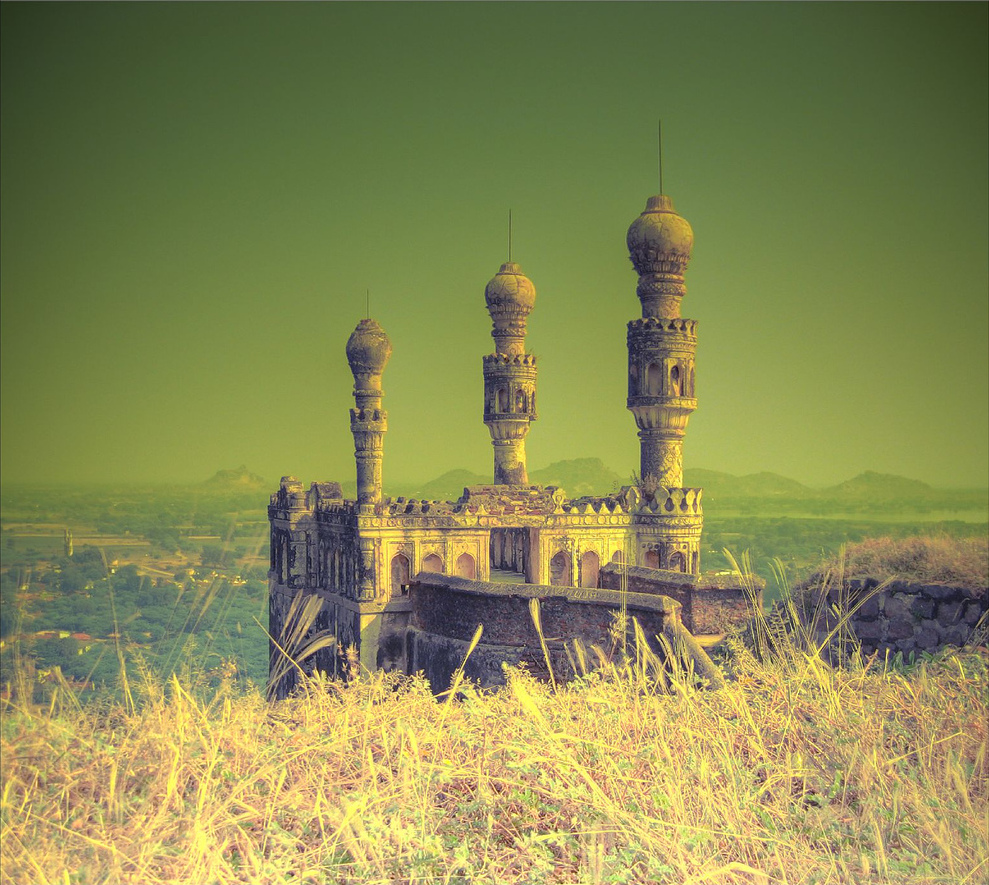
, situated approximately 15 km from Karimnagar city, stands as a key originating from the era (1083–1323 CE). Originally named Veligundula, it functioned as a military stronghold for the Musunuri Nayaks and later served as the regional headquarters during the Nizam's rule. The fort's architecture features robust stone walls, strategic gateways, and defensive structures like the Hathikhana (elephant stable), reflecting defensive engineering adapted across ruling periods including Kakatiya and Qutb Shahi influences. Nagunur Fort ruins, located about 8 km north of , date to the 12th-century Kakatiya period and represent remnants of one of their significant defensive outposts. The site preserves fragments of fortification walls and bastions, underscoring the dynasty's expansion in the Deccan region. Archaeological evidence highlights its role in regional control before subsequent declines. Molangur Fort, another Kakatiya-era remnant built under Prataparudra's chief Voragiri Moggaraju on a , exemplifies fortified hill architecture with stone constructions for oversight and defense. Protected by the state's department, these sites collectively illustrate Karimnagar's layered historical fortifications from the Kakatiya period, with ongoing preservation efforts to mitigate natural decay.

Religious and Cultural Attractions

, located in the village of Mutyampeta approximately 35 kilometers from Karimnagar city, is a prominent Hindu site dedicated to Lord . The temple attracts devotees seeking blessings for health and protection, with daily rituals including pujas and the distribution of chandanam prasad. Its annual festival, observed in March or April, draws over 400,000 visitors, many undertaking a 41-day Hanuman Deeksha vow involving recitations of the and barefoot s to the site. Dharmapuri Lakshmi Narasimha Swamy Temple, situated about 28 kilometers northwest of Karimnagar, enshrines Lord , the fourth avatar of , alongside . Originating from the Chalukya period (circa 850-928 CE) and expanded under Kakatiya rulers, the temple hosts the Brahmotsavam Jathara in March-April, featuring processions of the utsava murti adorned in jewels. Peak attendance occurs during Narasimha Jayanthi, Vaikunta Ekadasi, and Karthika Pournami, when thousands gather for special abhishekam and homam rituals, reflecting its role as a regional spiritual hub. Karimnagar's cultural heritage includes the ancient silver filigree , known locally as "jadigam," practiced by artisans since and centered in workshops around the district. This intricate wirework, used for jewelry, temple ornaments, and decorative items like boxes and keychains, represents a continuity of Deccani artistic traditions, with pieces often featuring floral and motifs. The sustains local economies through sales at fairs and exports, though it faces challenges from modern manufacturing competition.

Notable People

Political and Administrative Figures

, born on July 11, 1971, in , has represented the as a member since 2019. He won the 2019 election with a margin of over 193,000 votes and secured re-election in 2024 with 585,116 votes, achieving approximately 45% of the polled votes in a constituency of 1,313,331 total votes. In June 2024, Kumar was appointed Minister of State for Home Affairs in the , overseeing aspects of internal security and policy implementation. Ponnam Prabhakar, originating from as the son of a , entered and was elected as a before ascending to the state cabinet. By December 2023, he served as a minister in the government, focusing on transport infrastructure development amid the state's post-formation . His rise exemplifies political mobilization in the district, contributing to policy execution in public services. Karimnagar district leaders played a pivotal role in the Telangana statehood movement, with the region serving as a hub for agitations that sustained momentum toward the state's formation on June 2, 2014. Local figures organized public meetings and protests, injecting vitality into the campaign as noted by political observers, leading to empirical outcomes like the bifurcation of under the 2014 Andhra Pradesh Reorganisation Act. On the administrative front, Pamela Satpathy, an officer, has held the position of District Collector and Magistrate since November 2023, overseeing local governance, revenue administration, and development projects including initiatives such as opting for government hospital procedures to promote institutional utilization. Her tenure emphasizes operational efficiency in district-level policy delivery, including coordination for like railway expansions impacting regional connectivity.

Cultural and Intellectual Contributors

, born on 29 July 1931 in Hanumajipet village of , emerged as a pivotal figure in modern as a poet, critic, and lyricist. His works, such as the epic poem Kakatiya Veena (1963), celebrated 's historical and cultural legacy, drawing on local folklore and linguistic traditions to foster regional pride. Reddy's receipt of the in 2011 underscored his enduring impact, with compositions like "Jaya Jayahe Telangana" symbolizing resistance and identity during the Telangana statehood movement. These contributions elevated Karimnagar's role in preserving and innovating within Telugu poetic forms, influencing subsequent generations of writers in the Deccan region. Dr. P. V. Laxmiprasad, hailing from Karimnagar, has advanced Telugu literary criticism and scholarship through extensive research on , , and . As an editor and author of over 50 books, including analyses of classical Telugu texts, he has documented the evolution of regional literary motifs tied to Karimnagar's agrarian and folk heritage. His academic output, spanning critiques of poets like Sri Sri and modern interpretive frameworks, has shaped university curricula in , promoting rigorous textual analysis over ideological narratives. In contemporary poetry, Elanaga, a writer from Karimnagar, gained recognition for her English-language volume Dazzlers (2023), earning the International Award for Best Poet that year. Her verses explore personal and universal themes with vivid imagery, bridging local Telugu influences and global aesthetics, though her award from the Sahitya Akademi highlights a shift toward bilingual expression in the district's intellectual scene. Collectively, these contributors have reinforced Karimnagar's intellectual fabric by grounding abstract ideas in verifiable cultural artifacts, countering broader trends of diluted regional narratives in mainstream Telugu scholarship.

References

Add your contribution
Related Hubs
User Avatar
No comments yet.