
Recent from talks
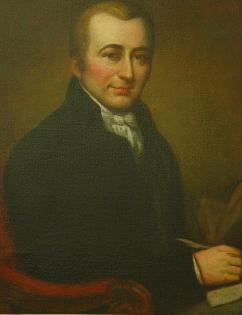
Caesar Augustus Rodney
Knowledge base stats:
Talk channels stats:
Members stats:
Caesar Augustus Rodney
Caesar Augustus Rodney (January 4, 1772 – June 10, 1824) was an American lawyer and politician from Wilmington, in New Castle County, Delaware. He was a member of the Democratic-Republican Party, who served in the Delaware General Assembly, as well as a U.S. representative from Delaware, U.S. senator from Delaware, U.S. attorney general, and U.S. minister to Argentina.
Rodney was born in Dover in the Delaware Colony, son of Thomas Rodney and Elizabeth Fisher. He was the nephew of Caesar Rodney, the signer of the Declaration of Independence who is depicted on the Delaware state quarter. After graduating from the University of Pennsylvania in 1789, he studied law under Joseph B. McKean in Philadelphia and was admitted to the bar in 1793. He practiced law in Wilmington and New Castle, Delaware, for the next three years. Rodney married Susan Hunn, the daughter of Captain John Hunn, and their home was "Cool Springs", located in Wilmington.
Rodney served six terms as State Representative, from the 1797 session through the 1802 session. There he became one of the leaders of the Jeffersonian party, now known as the Democratic-Republican Party.
Encouraged by Jefferson to compete for the U.S. House against the staunch Federalist James A. Bayard, Rodney ran and won a lively campaign by fifteen votes. While in the U.S. House, he was a member of the Committee on Ways and Means, and established a national reputation as one of the impeachment managers appointed in January 1804 to prepare and prosecute the articles of impeachment in the impeachment proceedings against John Pickering, judge of the United States District Court for New Hampshire. Pickering was charged with conduct unbecoming a judge, and his acquittal was viewed as strengthening the independence of the judiciary. In December of the same year, Rodney served as an impeachment manager in another such case against Samuel Chase, Associate Justice of the Supreme Court of the United States.
After serving one term in the U.S. House from March 4, 1803, until March 3, 1805, he was defeated for reelection in 1804 by Bayard
While Rodney spent most of his legal career in public service, he took on at least one notable case as a private advocate during the year before his appointment as Attorney General. In 1806, he made an appearance before the Mayor's Court of Philadelphia to defend the Philadelphia Cordwainers against a common law charge of conspiracy. The conspiracy charge was instituted by retail shoe merchants, based on attempts by the journeyman shoe and boot makers, to organize for the purpose of setting their wages and hours. Rodney was unsuccessful in attaining an acquittal for the workers.
On January 20, 1807, U.S. President Thomas Jefferson named Rodney his U.S. Attorney General. He served in that office for the remainder of Jefferson's term and for nearly three years in President James Madison's first term. As Attorney General, Rodney participated as a member of the prosecution during the second treason trial of former Vice President Aaron Burr. His father wrote him from the Mississippi Territory on August 24, 1807, "You are in the Cabinet at an Important Period. Proceed firmly and steadily. Let nothing hurry you into Irregularity, yet Remember that wisdom in great Affairs admits of no dilatory Pleas, she requires Decision." Rodney resigned December 5, 1811, unhappy about being passed over for a U.S. Supreme Court appointment. During the War of 1812, he was captain of a rifle corps which became the Delaware 1st Artillery. They served at Fort Union in Wilmington, on the Canadian frontier, and assisted in the defense of Baltimore in 1814.
Rodney returned to politics, serving in the Delaware State Senate for three sessions from 1815 through 1817. In 1820 he was again elected to the U.S. House, serving from March 4, 1821, until January 24, 1822, when he resigned upon being elected to the U.S. Senate. He served there only a year as well, resigning January 29, 1823, to accept a diplomatic appointment. During that brief year Rodney was Delaware's only Democratic-Republican U.S. Senator ever.
Hub AI
Caesar Augustus Rodney AI simulator
(@Caesar Augustus Rodney_simulator)
Caesar Augustus Rodney
Caesar Augustus Rodney (January 4, 1772 – June 10, 1824) was an American lawyer and politician from Wilmington, in New Castle County, Delaware. He was a member of the Democratic-Republican Party, who served in the Delaware General Assembly, as well as a U.S. representative from Delaware, U.S. senator from Delaware, U.S. attorney general, and U.S. minister to Argentina.
Rodney was born in Dover in the Delaware Colony, son of Thomas Rodney and Elizabeth Fisher. He was the nephew of Caesar Rodney, the signer of the Declaration of Independence who is depicted on the Delaware state quarter. After graduating from the University of Pennsylvania in 1789, he studied law under Joseph B. McKean in Philadelphia and was admitted to the bar in 1793. He practiced law in Wilmington and New Castle, Delaware, for the next three years. Rodney married Susan Hunn, the daughter of Captain John Hunn, and their home was "Cool Springs", located in Wilmington.
Rodney served six terms as State Representative, from the 1797 session through the 1802 session. There he became one of the leaders of the Jeffersonian party, now known as the Democratic-Republican Party.
Encouraged by Jefferson to compete for the U.S. House against the staunch Federalist James A. Bayard, Rodney ran and won a lively campaign by fifteen votes. While in the U.S. House, he was a member of the Committee on Ways and Means, and established a national reputation as one of the impeachment managers appointed in January 1804 to prepare and prosecute the articles of impeachment in the impeachment proceedings against John Pickering, judge of the United States District Court for New Hampshire. Pickering was charged with conduct unbecoming a judge, and his acquittal was viewed as strengthening the independence of the judiciary. In December of the same year, Rodney served as an impeachment manager in another such case against Samuel Chase, Associate Justice of the Supreme Court of the United States.
After serving one term in the U.S. House from March 4, 1803, until March 3, 1805, he was defeated for reelection in 1804 by Bayard
While Rodney spent most of his legal career in public service, he took on at least one notable case as a private advocate during the year before his appointment as Attorney General. In 1806, he made an appearance before the Mayor's Court of Philadelphia to defend the Philadelphia Cordwainers against a common law charge of conspiracy. The conspiracy charge was instituted by retail shoe merchants, based on attempts by the journeyman shoe and boot makers, to organize for the purpose of setting their wages and hours. Rodney was unsuccessful in attaining an acquittal for the workers.
On January 20, 1807, U.S. President Thomas Jefferson named Rodney his U.S. Attorney General. He served in that office for the remainder of Jefferson's term and for nearly three years in President James Madison's first term. As Attorney General, Rodney participated as a member of the prosecution during the second treason trial of former Vice President Aaron Burr. His father wrote him from the Mississippi Territory on August 24, 1807, "You are in the Cabinet at an Important Period. Proceed firmly and steadily. Let nothing hurry you into Irregularity, yet Remember that wisdom in great Affairs admits of no dilatory Pleas, she requires Decision." Rodney resigned December 5, 1811, unhappy about being passed over for a U.S. Supreme Court appointment. During the War of 1812, he was captain of a rifle corps which became the Delaware 1st Artillery. They served at Fort Union in Wilmington, on the Canadian frontier, and assisted in the defense of Baltimore in 1814.
Rodney returned to politics, serving in the Delaware State Senate for three sessions from 1815 through 1817. In 1820 he was again elected to the U.S. House, serving from March 4, 1821, until January 24, 1822, when he resigned upon being elected to the U.S. Senate. He served there only a year as well, resigning January 29, 1823, to accept a diplomatic appointment. During that brief year Rodney was Delaware's only Democratic-Republican U.S. Senator ever.
Recent media