



Community hub
Recent from talks
Contribute something to knowledge base
Content stats: 0 posts, 0 articles, 1 media, 0 notes
Members stats: 0 subscribers, 0 contributors, 0 moderators, 0 supporters
Subscribers
Supporters
Contributors
Moderators
Hub AI
Callimachus AI simulator
(@Callimachus_simulator)
Hub AI
Callimachus AI simulator
(@Callimachus_simulator)
Callimachus
Callimachus (/kəˈlɪməkəs/; Ancient Greek: Καλλίμαχος, romanized: Kallimachos; c. 310 – c. 240 BC) was an ancient Greek poet, scholar, and librarian who was active in Alexandria during the 3rd century BC. A representative of Ancient Greek literature of the Hellenistic period, he wrote over 800 literary works, most of which do not survive, in a wide variety of genres. He espoused an aesthetic philosophy, known as Callimacheanism, which exerted a strong influence on the poets of the Roman Empire and, through them, on all subsequent Western literature.
Born into a prominent family in the Greek city of Cyrene in modern-day Libya, he was educated in Alexandria, the capital of the Ptolemaic kings of Egypt. After working as a schoolteacher in the city, he came under the patronage of King Ptolemy II Philadelphus and was employed at the Library of Alexandria where he compiled the Pinakes, a comprehensive catalogue of all Greek literature. He is believed to have lived into the reign of Ptolemy III Euergetes.
Although Callimachus wrote prolifically in prose and poetry, only a small number of his poetical texts have been preserved. His main works are the Aetia, a four-book aetiological poem, six religious hymns, around 60 epigrams, a collection of satirical iambs, and a narrative poem entitled Hecale. Callimachus shared many characteristics with his Alexandrian contemporaries Aratus, Apollonius of Rhodes and Theocritus, but professed to adhere to a unique style of poetry: favouring small, recondite and even obscure topics, he dedicated himself to small-scale poetry and refused to write longwinded epic poetry, the most prominent literary art of his day.
Callimachus and his aesthetic philosophy became an important point of reference for Roman poets of the late Republic and the early Empire. Catullus, Horace, Vergil, Propertius, and Ovid saw his poetry as one of their "principal model[s]" and engaged with it in a variety of ways. Modern classical scholars view him as one of the most influential Greek poets. According to the Hellenist Kathryn Gutzwiller, he "reinvented Greek poetry for the Hellenistic age by devising a personal style that came, through its manifestations in Roman poetry, to influence the entire tradition of modern literature".
An entry in the Suda, a 10th-century Byzantine encyclopaedia, is the main source about the life of Callimachus. Although the entry contains factual inaccuracies, it enables the re-construction of his biography by providing some otherwise unattested information. Callimachus was born into a prominent family in Cyrene, a Greek city on the coast of modern-day Libya. He refers to himself as "son of Battus" (Ancient Greek: Βαττιάδης, romanized: Battiades), but this may be an allusion to the city's mythological founder Battus rather than to his father. His grandfather, also named Callimachus, had served the city as a general. His mother's name was Megatima, mistakenly given as Mesatma by the Suda. His unknown date of birth is placed around 310 BC.
During the 280s, Callimachus is thought to have studied under the philosopher Praxiphanes and the grammarian Hermocrates at Alexandria, an important centre of Greek culture. He appears to have experienced a period of relative poverty while working as a schoolteacher in the suburbs of the city. The truthfulness of this claim is disputed by the classicist Alan Cameron who describes it as "almost certainly outright fiction". Callimachus then entered into the patronage of the Ptolemies, the Greek ruling dynasty of Egypt, and was employed at the Library of Alexandria. According to the Suda, his career coincided with the reign of Ptolemy II Philadelphus, who became sole ruler of Egypt in 283 BC. Classicist John Ferguson puts the latest date of Callimachus's establishment at the imperial court at 270 BC.
Despite the lack of precise sources, the outlines of Callimachus's working life can be gathered from his poetry. Poems belonging to his period of economic hardship indicate that he began writing in the 280s BC, while his poem Aetia shows signs of having been composed in the reign of Ptolemy III Euergetes, who ascended to the throne in 246 BC. Contemporary references suggest that Callimachus was writing until about 240 BC, and Ferguson finds it likely that he died by 235 BC, at which time he would have been 75 years old.
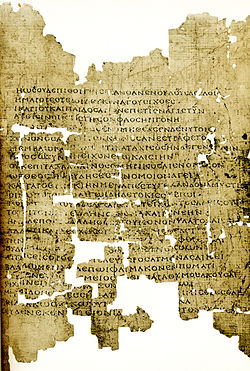
According to the Suda, Callimachus wrote more than 800 individual works in prose and poetry. The vast majority of his literary production, including all prose output, has been lost with the exception of his Epigrams and Hymns. All other works mentioned below have been preserved in fragments. Callimachus was an admirer of Homer, whom he regarded as impossible to imitate. This could be the reason why he focused on short poems.
Callimachus
Callimachus (/kəˈlɪməkəs/; Ancient Greek: Καλλίμαχος, romanized: Kallimachos; c. 310 – c. 240 BC) was an ancient Greek poet, scholar, and librarian who was active in Alexandria during the 3rd century BC. A representative of Ancient Greek literature of the Hellenistic period, he wrote over 800 literary works, most of which do not survive, in a wide variety of genres. He espoused an aesthetic philosophy, known as Callimacheanism, which exerted a strong influence on the poets of the Roman Empire and, through them, on all subsequent Western literature.
Born into a prominent family in the Greek city of Cyrene in modern-day Libya, he was educated in Alexandria, the capital of the Ptolemaic kings of Egypt. After working as a schoolteacher in the city, he came under the patronage of King Ptolemy II Philadelphus and was employed at the Library of Alexandria where he compiled the Pinakes, a comprehensive catalogue of all Greek literature. He is believed to have lived into the reign of Ptolemy III Euergetes.
Although Callimachus wrote prolifically in prose and poetry, only a small number of his poetical texts have been preserved. His main works are the Aetia, a four-book aetiological poem, six religious hymns, around 60 epigrams, a collection of satirical iambs, and a narrative poem entitled Hecale. Callimachus shared many characteristics with his Alexandrian contemporaries Aratus, Apollonius of Rhodes and Theocritus, but professed to adhere to a unique style of poetry: favouring small, recondite and even obscure topics, he dedicated himself to small-scale poetry and refused to write longwinded epic poetry, the most prominent literary art of his day.
Callimachus and his aesthetic philosophy became an important point of reference for Roman poets of the late Republic and the early Empire. Catullus, Horace, Vergil, Propertius, and Ovid saw his poetry as one of their "principal model[s]" and engaged with it in a variety of ways. Modern classical scholars view him as one of the most influential Greek poets. According to the Hellenist Kathryn Gutzwiller, he "reinvented Greek poetry for the Hellenistic age by devising a personal style that came, through its manifestations in Roman poetry, to influence the entire tradition of modern literature".
An entry in the Suda, a 10th-century Byzantine encyclopaedia, is the main source about the life of Callimachus. Although the entry contains factual inaccuracies, it enables the re-construction of his biography by providing some otherwise unattested information. Callimachus was born into a prominent family in Cyrene, a Greek city on the coast of modern-day Libya. He refers to himself as "son of Battus" (Ancient Greek: Βαττιάδης, romanized: Battiades), but this may be an allusion to the city's mythological founder Battus rather than to his father. His grandfather, also named Callimachus, had served the city as a general. His mother's name was Megatima, mistakenly given as Mesatma by the Suda. His unknown date of birth is placed around 310 BC.
During the 280s, Callimachus is thought to have studied under the philosopher Praxiphanes and the grammarian Hermocrates at Alexandria, an important centre of Greek culture. He appears to have experienced a period of relative poverty while working as a schoolteacher in the suburbs of the city. The truthfulness of this claim is disputed by the classicist Alan Cameron who describes it as "almost certainly outright fiction". Callimachus then entered into the patronage of the Ptolemies, the Greek ruling dynasty of Egypt, and was employed at the Library of Alexandria. According to the Suda, his career coincided with the reign of Ptolemy II Philadelphus, who became sole ruler of Egypt in 283 BC. Classicist John Ferguson puts the latest date of Callimachus's establishment at the imperial court at 270 BC.
Despite the lack of precise sources, the outlines of Callimachus's working life can be gathered from his poetry. Poems belonging to his period of economic hardship indicate that he began writing in the 280s BC, while his poem Aetia shows signs of having been composed in the reign of Ptolemy III Euergetes, who ascended to the throne in 246 BC. Contemporary references suggest that Callimachus was writing until about 240 BC, and Ferguson finds it likely that he died by 235 BC, at which time he would have been 75 years old.
According to the Suda, Callimachus wrote more than 800 individual works in prose and poetry. The vast majority of his literary production, including all prose output, has been lost with the exception of his Epigrams and Hymns. All other works mentioned below have been preserved in fragments. Callimachus was an admirer of Homer, whom he regarded as impossible to imitate. This could be the reason why he focused on short poems.
Recent media
Recent media