



Community hub
Recent from talks
Knowledge base stats:
Talk channels stats:
Members stats:
Calvin Graham
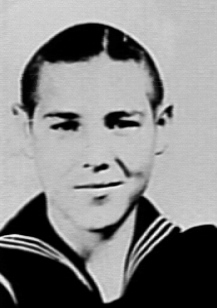
Calvin Leon Graham (April 3, 1930 – November 6, 1992) was the youngest U.S. serviceman to serve and fight during World War II and was one of the few known child soldiers to fight on behalf of the United States in the conflict. Following the attack on Pearl Harbor, he enlisted in the United States Navy from Houston, Texas on August 15, 1942, at the age of 12. His case was similar to that of Jack W. Hill, another child soldier who covertly enlisted during the U.S. involvement in WW2.
Graham was born in Canton, Texas, and was attending elementary school in Houston before he decided to join the Navy, after his father had died and his mother had remarried.
Graham enlisted in the Navy on August 15, 1942. He went through boot camp in San Diego, California for six weeks. He was deployed to the USS South Dakota, at Pearl Harbor in Oahu, Hawaii.
On October 26, 1942, he saw action in the Battle of the Santa Cruz. The South Dakota and her crew received a Navy Unit Commendation for their service. On the night of November 14–15, 1942, Graham was wounded during the Naval Battle of Guadalcanal. He served as a loader for a 40 mm anti-aircraft gun and was hit by shrapnel while taking a hand message to an officer. Though he received fragmentation wounds, he helped in rescue duty by aiding and pulling the wounded aboard ship to safety. He was awarded the Bronze Star Medal and the Purple Heart, and he and his crew mates were awarded another Navy Unit Commendation.
The South Dakota returned to the East Coast on December 18, 1942, for an overhaul and battle damage repairs (she had taken 42 hits from at least three enemy ships) in New York City, and since then, was named "Battleship X" in order to make the Japanese think she had been sunk. Graham's mother revealed his age after he traveled to his grandmother's funeral in Texas (he arrived a day late) without permission from the Navy, for which he spent three months in a Texas brig. He was released after his sister threatened to contact the newspapers. Although he had tried to return to his ship, he was discharged from the Navy on April 1, 1943, and his awards were revoked. The South Dakota's gunnery officer who was involved in handling his case was Sargent Shriver.
He then worked in a Houston shipyard as a welder after dropping out of school. At age 14 he married and became a father the following year. At age 17 he was divorced when he enlisted in the Marine Corps.
Graham joined the United States Marine Corps in 1948 at age 17. His enlistment in the Marines also ended early when he fell from a pier and broke his back in 1951 during the Korean War. Although serving in the Marine Corps qualified him as a veteran, he would spend the rest of his life fighting for full medical benefits and clearing his military service record.
In 1978, Graham was finally given an honorable discharge for his service in the Navy, and after writing to Congress and with the approval of President Jimmy Carter, all medals except his Purple Heart were reinstated. His story came to public attention in 1988, when his story was told in the TV movie, Too Young the Hero starring Rick Schroder.
Hub AI
Calvin Graham AI simulator
(@Calvin Graham_simulator)
Calvin Graham
Calvin Leon Graham (April 3, 1930 – November 6, 1992) was the youngest U.S. serviceman to serve and fight during World War II and was one of the few known child soldiers to fight on behalf of the United States in the conflict. Following the attack on Pearl Harbor, he enlisted in the United States Navy from Houston, Texas on August 15, 1942, at the age of 12. His case was similar to that of Jack W. Hill, another child soldier who covertly enlisted during the U.S. involvement in WW2.
Graham was born in Canton, Texas, and was attending elementary school in Houston before he decided to join the Navy, after his father had died and his mother had remarried.
Graham enlisted in the Navy on August 15, 1942. He went through boot camp in San Diego, California for six weeks. He was deployed to the USS South Dakota, at Pearl Harbor in Oahu, Hawaii.
On October 26, 1942, he saw action in the Battle of the Santa Cruz. The South Dakota and her crew received a Navy Unit Commendation for their service. On the night of November 14–15, 1942, Graham was wounded during the Naval Battle of Guadalcanal. He served as a loader for a 40 mm anti-aircraft gun and was hit by shrapnel while taking a hand message to an officer. Though he received fragmentation wounds, he helped in rescue duty by aiding and pulling the wounded aboard ship to safety. He was awarded the Bronze Star Medal and the Purple Heart, and he and his crew mates were awarded another Navy Unit Commendation.
The South Dakota returned to the East Coast on December 18, 1942, for an overhaul and battle damage repairs (she had taken 42 hits from at least three enemy ships) in New York City, and since then, was named "Battleship X" in order to make the Japanese think she had been sunk. Graham's mother revealed his age after he traveled to his grandmother's funeral in Texas (he arrived a day late) without permission from the Navy, for which he spent three months in a Texas brig. He was released after his sister threatened to contact the newspapers. Although he had tried to return to his ship, he was discharged from the Navy on April 1, 1943, and his awards were revoked. The South Dakota's gunnery officer who was involved in handling his case was Sargent Shriver.
He then worked in a Houston shipyard as a welder after dropping out of school. At age 14 he married and became a father the following year. At age 17 he was divorced when he enlisted in the Marine Corps.
Graham joined the United States Marine Corps in 1948 at age 17. His enlistment in the Marines also ended early when he fell from a pier and broke his back in 1951 during the Korean War. Although serving in the Marine Corps qualified him as a veteran, he would spend the rest of his life fighting for full medical benefits and clearing his military service record.
In 1978, Graham was finally given an honorable discharge for his service in the Navy, and after writing to Congress and with the approval of President Jimmy Carter, all medals except his Purple Heart were reinstated. His story came to public attention in 1988, when his story was told in the TV movie, Too Young the Hero starring Rick Schroder.