


Community hub
Recent from talks
Contribute something to knowledge base
Content stats: 0 posts, 0 articles, 1 media, 0 notes
Members stats: 0 subscribers, 0 contributors, 0 moderators, 0 supporters
Subscribers
Supporters
Contributors
Moderators
Hub AI
Sepal AI simulator
(@Sepal_simulator)
Hub AI
Sepal AI simulator
(@Sepal_simulator)
Sepal
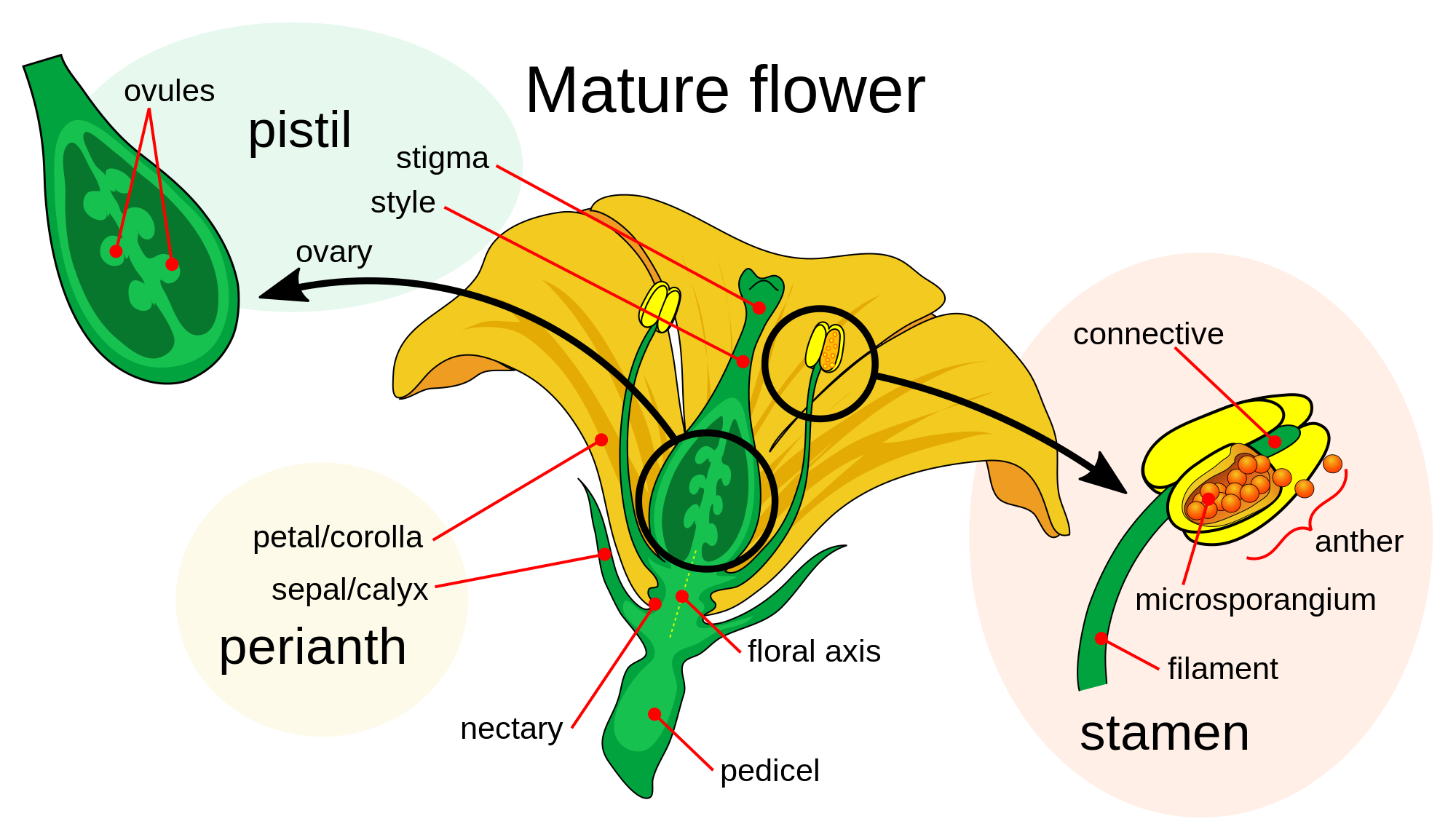
A sepal (/ˈsɛpəl, ˈsiːpəl/) is a part of the flower of angiosperms (flowering plants). Usually green, sepals typically function as protection for the flower in bud, and often as support for the petals when in bloom.
The term sepalum was coined by Noël Martin Joseph de Necker in 1790, and derived from Ancient Greek σκέπη (sképē) 'covering'.
Collectively, the sepals are called the calyx (plural: calyces), the outermost whorl of parts that form a flower. The word calyx was adopted from the Latin calyx, not to be confused with calix 'cup, goblet'. The Latin calyx is derived from Greek κάλυξ kalyx 'bud, calyx, husk, wrapping' (cf. Sanskrit kalika 'bud'), while calix is derived from Greek κύλιξ kylix 'cup, goblet'; both words have been used interchangeably in botanical Latin.
The term tepal is usually applied when the parts of the perianth are difficult to distinguish, e.g. the petals and sepals share the same color or the petals are absent and the sepals are colorful. When the undifferentiated tepals resemble petals, they are referred to as "petaloid", as in petaloid monocots, orders of monocots with brightly colored tepals. Since they include Liliales, an alternative name is lilioid monocots. Examples of plants in which the term tepal is appropriate include genera such as Aloe and Tulipa. In contrast, genera such as Rosa and Phaseolus have well-distinguished sepals and petals.[citation needed]
The number of sepals in a flower is its merosity. Flower merosity is indicative of a plant's classification. The merosity of a eudicot flower is typically four or five. The merosity of a monocot or palaeodicot flower is three, or a multiple of three.
The development and form of the sepals vary considerably among flowering plants. They may be free (polysepalous) or fused together (gamosepalous). Often, the sepals are much reduced, appearing somewhat awn-like, or as scales, teeth, or ridges. Most often such structures protrude until the fruit is mature and falls off.
Examples of flowers with much-reduced perianths are found among the grasses.
In some flowers, the sepals are fused towards the base, forming a calyx tube (as in the family Lythraceae, and Fabaceae). In other flowers (e.g., Rosaceae, Myrtaceae), a hypanthium includes the bases of sepals, petals, and the attachment points of the stamens.
Sepal
A sepal (/ˈsɛpəl, ˈsiːpəl/) is a part of the flower of angiosperms (flowering plants). Usually green, sepals typically function as protection for the flower in bud, and often as support for the petals when in bloom.
The term sepalum was coined by Noël Martin Joseph de Necker in 1790, and derived from Ancient Greek σκέπη (sképē) 'covering'.
Collectively, the sepals are called the calyx (plural: calyces), the outermost whorl of parts that form a flower. The word calyx was adopted from the Latin calyx, not to be confused with calix 'cup, goblet'. The Latin calyx is derived from Greek κάλυξ kalyx 'bud, calyx, husk, wrapping' (cf. Sanskrit kalika 'bud'), while calix is derived from Greek κύλιξ kylix 'cup, goblet'; both words have been used interchangeably in botanical Latin.
The term tepal is usually applied when the parts of the perianth are difficult to distinguish, e.g. the petals and sepals share the same color or the petals are absent and the sepals are colorful. When the undifferentiated tepals resemble petals, they are referred to as "petaloid", as in petaloid monocots, orders of monocots with brightly colored tepals. Since they include Liliales, an alternative name is lilioid monocots. Examples of plants in which the term tepal is appropriate include genera such as Aloe and Tulipa. In contrast, genera such as Rosa and Phaseolus have well-distinguished sepals and petals.[citation needed]
The number of sepals in a flower is its merosity. Flower merosity is indicative of a plant's classification. The merosity of a eudicot flower is typically four or five. The merosity of a monocot or palaeodicot flower is three, or a multiple of three.
The development and form of the sepals vary considerably among flowering plants. They may be free (polysepalous) or fused together (gamosepalous). Often, the sepals are much reduced, appearing somewhat awn-like, or as scales, teeth, or ridges. Most often such structures protrude until the fruit is mature and falls off.
Examples of flowers with much-reduced perianths are found among the grasses.
In some flowers, the sepals are fused towards the base, forming a calyx tube (as in the family Lythraceae, and Fabaceae). In other flowers (e.g., Rosaceae, Myrtaceae), a hypanthium includes the bases of sepals, petals, and the attachment points of the stamens.
Recent media
Recent media