
.JPG/250px-Ranunculus_repens_1_(cropped).JPG)


.JPG/2000px-Ranunculus_repens_1_(cropped).JPG)
Community hub
Recent from talks
Contribute something
Nothing was collected or created yet.
Flowering plant
View on Wikipedia
| Flowering plant Temporal range:
| |
|---|---|
Scientific classification 
| |
| Kingdom: | Plantae |
| Clade: | Tracheophytes |
| Clade: | Spermatophytes |
| Clade: | Angiosperms |
| Groups (APG IV)[1] | |
| |
| Synonyms | |
.JPG)


.jpg)

Flowering plants are plants that bear flowers and fruits, and form the clade Angiospermae (/ˌændʒiəˈspərmiː/).[5][6] The term angiosperm is derived from the Greek words ἀγγεῖον (angeion; 'container, vessel') and σπέρμα (sperma; 'seed'), meaning that the seeds are enclosed within a fruit. The group was formerly called Magnoliophyta.[7]
Angiosperms are by far the most diverse group of land plants with 64 orders, 416 families, approximately 13,000 known genera and 300,000 known species.[8] They include all forbs (flowering plants without a woody stem), grasses and grass-like plants, a vast majority of broad-leaved trees, shrubs and vines, and most aquatic plants. Angiosperms are distinguished from the other major seed plant clade, the gymnosperms, by having flowers, xylem consisting of vessel elements instead of tracheids, endosperm within their seeds, and fruits that completely envelop the seeds. The ancestors of flowering plants diverged from the common ancestor of all living gymnosperms before the end of the Carboniferous, over 300 million years ago. In the Cretaceous, angiosperms diversified explosively, becoming the dominant group of plants across the planet.
Agriculture is almost entirely dependent on angiosperms, and a small number of flowering plant families supply nearly all plant-based food and livestock feed. Rice, maize and wheat provide half of the world's staple calorie intake, and all three plants are cereals from the Poaceae family (colloquially known as grasses). Other families provide important industrial plant products such as wood, paper and cotton, and supply numerous ingredients for drinks, sugar production, traditional medicine and modern pharmaceuticals. Flowering plants are also commonly grown for decorative purposes, with certain flowers playing significant cultural roles in many societies.
Out of the "Big Five" extinction events in Earth's history, only the Cretaceous–Paleogene extinction event occurred while angiosperms dominated plant life on the planet. Today, the Holocene extinction affects all kingdoms of complex life on Earth, and conservation measures are necessary to protect plants in their habitats in the wild (in situ), or failing that, ex situ in seed banks or artificial habitats like botanic gardens. Otherwise, around 40% of plant species may become extinct due to human actions such as habitat destruction, introduction of invasive species, unsustainable logging, land clearing and overharvesting of medicinal or ornamental plants. Further, climate change is starting to impact plants and is likely to cause many species to become extinct by 2100.
Distinguishing features
[edit]Angiosperms are terrestrial vascular plants; like the gymnosperms, they have roots, stems, leaves, and seeds. They differ from other seed plants in several ways.
| Feature | Description | Image |
|---|---|---|
| Flowers | The reproductive organs of flowering plants, not found in any other seed plants.[9] |  |
| Reduced gametophytes, three cells in male, seven cells with eight nuclei in female (except for basal angiosperms)[10] | The gametophytes are smaller than those of gymnosperms.[11] The smaller size of the pollen reduces the time between pollination and fertilization, which in gymnosperms is up to a year.[12] |  |
| Endosperm | Endosperm forms after fertilization but before the zygote divides. It provides food for the developing embryo, the cotyledons, and sometimes the seedling.[13] | |
| Closed carpel enclosing the ovules. | Once the ovules are fertilised, the carpels, often with surrounding tissues, develop into fruits. Gymnosperms have unenclosed seeds.[14] | .jpg) |
| Xylem made of vessel elements | Open vessel elements are stacked end to end to form continuous tubes, whereas gymnosperm xylem is made of tapered tracheids connected by small pits.[15] | .jpg) |
Diversity
[edit]Ecological diversity
[edit]- Largest and smallest
-
 Eucalyptus regnans,
a tree almost 100 m tall -
 Wolffia arrhiza, a rootless floating freshwater plant under 2 mm across


The largest angiosperms are Eucalyptus gum trees of Australia, and Shorea faguetiana, dipterocarp rainforest trees of Southeast Asia, both of which can reach almost 100 metres (330 ft) in height.[16] The smallest are Wolffia duckweeds which float on freshwater, each plant less than 2 millimetres (0.08 in) across.[17]
- Photosynthetic and parasitic
-
 Gunnera captures sunlight for photosynthesis over the large surfaces of its leaves, which are supported by strong veins.
 -
 Orobanche purpurea, a parasitic broomrape with no leaves, obtains all its food from other plants.


Considering their method of obtaining energy, some 99% of flowering plants are photosynthetic autotrophs, deriving their energy from sunlight and using it to create molecules such as sugars. The remainder are parasitic, whether on fungi (myco-heterotrophic, formerly thought to be saprophytic) like the orchids for part or all of their life-cycle,[18] or on other plants, either wholly like the broomrapes, Orobanche, or partially like the witchweeds, Striga.[19]
- Hot, cold, wet, dry, fresh, salt
-
 Carnegiea gigantea, the saguaro cactus, grows in hot dry deserts in Mexico and the southern United States.
 -
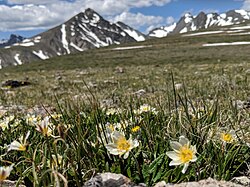 Dryas octopetala, the mountain avens, lives in cold arctic and montane habitats in the far north of America and Eurasia.
 -
 Nelumbo nucifera, the sacred lotus, grows in warm freshwater across tropical and subtropical Asia.
 -
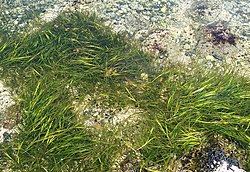 Zostera seagrass grows on the seabed in sheltered coastal waters.
.jpg)
.jpg)
.jpg)

In terms of their environment, flowering plants are cosmopolitan, occupying a wide range of habitats on land, in fresh water and in the sea. On land, they are the dominant plant group in every habitat except for frigid moss-lichen tundra and coniferous forest.[20] The seagrasses in the Alismatales grow in marine environments, spreading with rhizomes that grow through the mud in sheltered coastal waters.[21]
- Acid, alkaline
-
![Drosera anglica, a sundew, lives in nutrient-poor acid bogs, deriving nutrients from trapped insects.[22]](//upload.wikimedia.org/wikipedia/commons/thumb/7/76/Drosera_anglica_ne2.jpg/250px-Drosera_anglica_ne2.jpg) Drosera anglica, a sundew, lives in nutrient-poor acid bogs, deriving nutrients from trapped insects.[22]
Drosera anglica, a sundew, lives in nutrient-poor acid bogs, deriving nutrients from trapped insects.[22] -
![Gentiana verna, the spring gentian, flourishes in dry limestone habitats.[23]](//upload.wikimedia.org/wikipedia/commons/thumb/c/c6/Gentiana_verna.jpg/250px-Gentiana_verna.jpg) Gentiana verna, the spring gentian, flourishes in dry limestone habitats.[23]
Gentiana verna, the spring gentian, flourishes in dry limestone habitats.[23]
![Drosera anglica, a sundew, lives in nutrient-poor acid bogs, deriving nutrients from trapped insects.[22]](https://en.wikipedia.org/wiki/File:Drosera_anglica_ne2.jpg)
![Gentiana verna, the spring gentian, flourishes in dry limestone habitats.[23]](https://en.wikipedia.org/wiki/File:Gentiana_verna.jpg)
Some specialised angiosperms are able to flourish in extremely acid or alkaline habitats. The sundews, many of which live in nutrient-poor acid bogs, are carnivorous plants, able to derive nutrients such as nitrate from the bodies of trapped insects.[22] Other flowers such as Gentiana verna, the spring gentian, are adapted to the alkaline conditions found on calcium-rich chalk and limestone, which give rise to often dry topographies such as limestone pavement.[23]
- Herbaceous, woody, climbing
-
 Geranium robertianum, herb-Robert, is an annual or biennial herb of Europe and North America.
 -
 Betula pendula, the silver birch, is a perennial deciduous tree of Eurasia.
 -


As for their growth habit, the flowering plants range from small, soft herbaceous plants, often living as annuals or biennials that set seed and die after one or two growing seasons,[24] to large perennial woody trees that may live for many centuries and grow to many metres in height. Some species grow tall without being self-supporting like trees by climbing on other plants in the manner of vines or lianas.[25]
Taxonomic diversity
[edit]The number of species of flowering plants is estimated to be in the range of 250,000 to 400,000.[26][27][28] This compares to around 12,000 species of moss[29] and 11,000 species of pteridophytes.[30] The APG system seeks to determine the number of families, mostly by molecular phylogenetics. In the 2009 APG III there were 415 families.[31] The 2016 APG IV added five new orders (Boraginales, Dilleniales, Icacinales, Metteniusales and Vahliales), along with some new families, for a total of 64 angiosperm orders and 416 families.[1]
The diversity of flowering plants is not evenly distributed. Nearly all species belong to the eudicot (75%), monocot (23%), and magnoliid (2%) clades. The remaining five clades contain a little over 250 species in total; i.e. less than 0.1% of flowering plant diversity, divided among nine families. The 25 most species-rich of 443 families,[32] containing over 166,000 species between them in their APG circumscriptions, are:
| Group | Family | English name | No. of spp. | |
|---|---|---|---|---|
| 1 | Eudicot | Asteraceae or Compositae | daisy | 22,750 |
| 2 | Monocot | Orchidaceae | orchid | 21,950 |
| 3 | Eudicot | Fabaceae or Leguminosae | pea, legume | 19,400 |
| 4 | Eudicot | Rubiaceae | madder | 13,150[33] |
| 5 | Monocot | Poaceae or Gramineae | grass | 10,035 |
| 6 | Eudicot | Lamiaceae or Labiatae | mint | 7,175 |
| 7 | Eudicot | Euphorbiaceae | spurge | 5,735 |
| 8 | Eudicot | Melastomataceae | melastome | 5,005 |
| 9 | Eudicot | Myrtaceae | myrtle | 4,625 |
| 10 | Eudicot | Apocynaceae | dogbane | 4,555 |
| 11 | Monocot | Cyperaceae | sedge | 4,350 |
| 12 | Eudicot | Malvaceae | mallow | 4,225 |
| 13 | Monocot | Araceae | arum | 4,025 |
| 14 | Eudicot | Ericaceae | heath | 3,995 |
| 15 | Eudicot | Gesneriaceae | gesneriad | 3,870 |
| 16 | Eudicot | Apiaceae or Umbelliferae | parsley | 3,780 |
| 17 | Eudicot | Brassicaceae or Cruciferae | cabbage | 3,710 |
| 18 | Magnoliid dicot | Piperaceae | pepper | 3,600 |
| 19 | Monocot | Bromeliaceae | bromeliad | 3,540 |
| 20 | Eudicot | Acanthaceae | acanthus | 3,500 |
| 21 | Eudicot | Rosaceae | rose | 2,830 |
| 22 | Eudicot | Boraginaceae | borage | 2,740 |
| 23 | Eudicot | Urticaceae | nettle | 2,625 |
| 24 | Eudicot | Ranunculaceae | buttercup | 2,525 |
| 25 | Magnoliid dicot | Lauraceae | laurel | 2,500 |
Evolution
[edit]History of classification
[edit]
The botanical term "angiosperm", from Greek words angeíon (ἀγγεῖον 'bottle, vessel') and spérma (σπέρμα 'seed'), was coined in the form "Angiospermae" by Paul Hermann in 1690, including only flowering plants whose seeds were enclosed in capsules.[34] The term angiosperm fundamentally changed in meaning in 1827 with Robert Brown, when angiosperm came to mean a seed plant with enclosed ovules.[35][36] In 1851, with Wilhelm Hofmeister's work on embryo-sacs, Angiosperm came to have its modern meaning of all the flowering plants including Dicotyledons and Monocotyledons.[36][37] The APG system[31] treats the flowering plants as an unranked clade without a formal Latin name (angiosperms). A formal classification was published alongside the 2009 revision in which the flowering plants rank as the subclass Magnoliidae.[38] From 1998, the Angiosperm Phylogeny Group (APG) has reclassified the angiosperms, with updates in the APG II system in 2003,[39] the APG III system in 2009,[31][40] and the APG IV system in 2016.[1]
Phylogeny
[edit]External
[edit]In 2019, a molecular phylogeny of plants placed the flowering plants in their evolutionary context:[41]
| Embryophytes |
| |||||||||||||||||||||||||||
| land plants |

.jpg)
_(8516512808).jpg)


Internal
[edit]The main groups of living angiosperms are:[42][1]
|


| Detailed cladogram of the 2016 Angiosperm Phylogeny Group (APG) IV classification.[1] | |||||||||||||||||||||||||||||||||||||||||||||||||||||||||||||||||||||||||||||||||||||||||||||||||||||||||||||||||||||||||||||||||||||||||||||||||||||||||||||||||||||||||||||||||||||||||||||||||||||||||||||||||||||||||||||||||||||||||||||||||||||||||||||||||||||||||||||||||||||||||||||||||||||||||||||||||||||||||||||||||||||||||||||||||||||||||||||||||||||||||||||||||
|---|---|---|---|---|---|---|---|---|---|---|---|---|---|---|---|---|---|---|---|---|---|---|---|---|---|---|---|---|---|---|---|---|---|---|---|---|---|---|---|---|---|---|---|---|---|---|---|---|---|---|---|---|---|---|---|---|---|---|---|---|---|---|---|---|---|---|---|---|---|---|---|---|---|---|---|---|---|---|---|---|---|---|---|---|---|---|---|---|---|---|---|---|---|---|---|---|---|---|---|---|---|---|---|---|---|---|---|---|---|---|---|---|---|---|---|---|---|---|---|---|---|---|---|---|---|---|---|---|---|---|---|---|---|---|---|---|---|---|---|---|---|---|---|---|---|---|---|---|---|---|---|---|---|---|---|---|---|---|---|---|---|---|---|---|---|---|---|---|---|---|---|---|---|---|---|---|---|---|---|---|---|---|---|---|---|---|---|---|---|---|---|---|---|---|---|---|---|---|---|---|---|---|---|---|---|---|---|---|---|---|---|---|---|---|---|---|---|---|---|---|---|---|---|---|---|---|---|---|---|---|---|---|---|---|---|---|---|---|---|---|---|---|---|---|---|---|---|---|---|---|---|---|---|---|---|---|---|---|---|---|---|---|---|---|---|---|---|---|---|---|---|---|---|---|---|---|---|---|---|---|---|---|---|---|---|---|---|---|---|---|---|---|---|---|---|---|---|---|---|---|---|---|---|---|---|---|---|---|---|---|---|---|---|---|---|---|---|---|---|---|---|---|---|---|---|---|---|---|---|---|---|---|---|---|---|---|---|---|---|---|---|---|---|---|---|---|---|---|---|---|---|---|---|---|---|---|---|---|---|---|---|---|---|---|---|---|---|---|---|
|
In 2024, Alexandre R. Zuntini and colleagues constructed a tree of some 6,000 flowering plant genera, representing some 60% of the existing genera, on the basis of analysis of 353 nuclear genes in each specimen. Much of the existing phylogeny is confirmed; the rosid phylogeny is revised.[46]

Fossil history
[edit].jpg)
Fossilised spores suggest that land plants (embryophytes) have existed for at least 475 million years.[47] However, angiosperms appear suddenly and in great diversity in the fossil record in the Early Cretaceous (~130 mya).[48][49] Claimed records of flowering plants prior to this are not widely accepted,[50] as all supposed pre-Cretaceous "flowers" can be explained through being misidentifications of other seed plants. Furthermore, almost all of these controversial fossils are described in papers co-authored by the researcher Xin Wang, such as the particularly debated Nanjinganthus.[51] Molecular evidence suggests that the ancestors of angiosperms diverged from the gymnosperms during the late Devonian, about 365 million years ago.[52] The origin time of the crown group of flowering plants remains contentious.[53] By the Late Cretaceous, angiosperms appear to have dominated environments formerly occupied by ferns and gymnosperms. Large canopy-forming trees replaced conifers as the dominant trees close to the end of the Cretaceous, 66 million years ago.[54] The radiation of herbaceous angiosperms occurred much later.[55]
Reproduction
[edit]Flowers
[edit]
The characteristic feature of angiosperms is the flower. Its function is to ensure fertilization of the ovule and development of fruit containing seeds.[56] It may arise terminally on a shoot or from the axil of a leaf.[57] The flower-bearing part of the plant is usually sharply distinguished from the leaf-bearing part, and forms a branch-system called an inflorescence.[37]
Flowers produce two kinds of reproductive cells. Microspores, which divide to become pollen grains, are the male cells; they are borne in the stamens.[58] The female cells, megaspores, divide to become the egg cell. They are contained in the ovule and enclosed in the carpel; one or more carpels form the pistil.[58]
The flower may consist only of these parts, as in wind-pollinated plants like the willow, where each flower comprises only a few stamens or two carpels.[37] In insect- or bird-pollinated plants, other structures protect the sporophylls and attract pollinators. The individual members of these surrounding structures are known as sepals and petals (or tepals in flowers such as Magnolia where sepals and petals are not distinguishable from each other). The outer series (calyx of sepals) is usually green and leaf-like, and functions to protect the rest of the flower, especially the bud.[59][60] The inner series (corolla of petals) is, in general, white or brightly colored, is more delicate in structure, and attracts pollinators by colour, scent, and nectar.[61][62]
Most flowers are hermaphroditic, producing both pollen and ovules in the same flower, but some use other devices to reduce self-fertilization. Heteromorphic flowers have carpels and stamens of differing lengths, so animal pollinators cannot easily transfer pollen between them. Homomorphic flowers may use a biochemical self-incompatibility to discriminate between self and non-self pollen grains. Dioecious plants such as holly have male and female flowers on separate plants.[63] Monoecious plants have separate male and female flowers on the same plant; these are often wind-pollinated,[64] as in maize,[65] but include some insect-pollinated plants such as Cucurbita squashes.[66][67]
Fertilisation and embryogenesis
[edit]Double fertilization requires two sperm cells to fertilise cells in the ovule. A pollen grain sticks to the stigma at the top of the pistil, germinates, and grows a long pollen tube. A haploid generative cell travels down the tube behind the tube nucleus. The generative cell divides by mitosis to produce two haploid (n) sperm cells. The pollen tube grows from the stigma, down the style and into the ovary. When it reaches the micropyle of the ovule, it digests its way into one of the synergids, releasing its contents including the sperm cells. The synergid that the cells were released into degenerates; one sperm makes its way to fertilise the egg cell, producing a diploid (2n) zygote. The second sperm cell fuses with both central cell nuclei, producing a triploid (3n) cell. The zygote develops into an embryo; the triploid cell develops into the endosperm, the embryo's food supply. The ovary develops into a fruit and each ovule into a seed.[68]
Fruit and seed
[edit]
As the embryo and endosperm develop, the wall of the embryo sac enlarges and combines with the nucellus and integument to form the seed coat. The ovary wall develops to form the fruit or pericarp, whose form is closely associated with type of seed dispersal system.[69]
Other parts of the flower often contribute to forming the fruit. For example, in the apple, the hypanthium forms the edible flesh, surrounding the ovaries which form the tough cases around the seeds.[70]
Apomixis, setting seed without fertilization, is found naturally in about 2.2% of angiosperm genera.[71] Some angiosperms, including many citrus varieties, are able to produce fruits through a type of apomixis called nucellar embryony.[72]
Sexual selection
[edit]Sexual selection is a mechanism of evolution in which members of one sex choose mates of the other sex to mate with (inter-sexual selection), and compete with members of the same sex for access to members of the opposite sex (intra-sexual selection). It is an accepted concept in animal evolution, but it is more controversial in botany. Sexual selection in plants could work through two principal mechanisms:
- Intra-sexual (male–male) competition: Competing pollen donors vie for ovule fertilization via traits like pollen packaging, timing of release, and flower morphology.
- Female or pistil-mediated mate choice: Post-pollination filters—such as pollen-recipient compatibility, pollen-tube growth rates, and selective seed abortion — enable differential siring success.[73][74]
Adaptive function of flowers
[edit]Charles Darwin in his 1878 book The Effects of Cross and Self-Fertilization in the Vegetable Kingdom[75] in the initial paragraph of chapter XII noted "The first and most important of the conclusions which may be drawn from the observations given in this volume, is that generally cross-fertilisation is beneficial and self-fertilisation often injurious, at least with the plants on which I experimented." Flowers emerged in plant evolution as an adaptation for the promotion of cross-fertilisation (outcrossing), a process that allows the masking of deleterious mutations in the genome of progeny. The masking effect is known as genetic complementation.[76] Meiosis in flowering plants provides a direct mechanism for repairing DNA through genetic recombination in reproductive tissues.[77] Sexual reproduction appears to be required for maintaining long-term genomic integrity and only infrequent combinations of extrinsic and intrinsic factors permit shifts to asexuality.[77] Thus the two fundamental aspects of sexual reproduction in flowering plants, cross-fertilization (outcrossing) and meiosis appear to be maintained respectively by the advantages of genetic complementation and recombinational repair.[76]
Human uses
[edit]Practical uses
[edit]

Agriculture is almost entirely dependent on angiosperms, which provide virtually all plant-based food and fodder for livestock. Much of this food derives from a small number of flowering plant families.[78] For instance, half of the world's calorie intake is supplied by just three plants – wheat, rice and maize.[79]
| Family | English | Example foods from that family |
|---|---|---|
| Poaceae | Grasses, cereals | Most feedstocks, inc. rice, maize, wheat, barley, rye, oats, pearl millet, sugar cane, sorghum |
| Fabaceae | Legumes, pea family | Peas, beans, lentils; for animal feed, clover, alfalfa |
| Solanaceae | Nightshade family | Potatoes, tomatoes, peppers, aubergines |
| Cucurbitaceae | Gourd family | Squashes, cucumbers, pumpkins, melons |
| Brassicaceae | Cabbage family | Cabbage and its varieties, e.g. Brussels sprout, broccoli; mustard; oilseed rape |
| Apiaceae | Parsley family | Parsnip, carrot, parsley, coriander, fennel, cumin, caraway |
| Rutaceae | Rue family[80] | Oranges, lemons, grapefruits |
| Rosaceae | Rose family[81] | Apples, pears, cherries, apricots, plums, peaches |
Flowering plants provide a diverse range of materials in the form of wood, paper, fibers such as cotton, flax, and hemp, medicines such as digoxin and opioids, and decorative and landscaping plants. Coffee and hot chocolate are beverages from flowering plants (in the Rubiaceae and Malvaceae respectively).[78]
Cultural uses
[edit]
Both real and fictitious plants play a wide variety of roles in literature and film.[82] Flowers are the subjects of many poems by poets such as William Blake, Robert Frost, and Rabindranath Tagore.[83] Bird-and-flower painting (Huaniaohua) is a kind of Chinese painting that celebrates the beauty of flowering plants.[84] Flowers have been used in literature to convey meaning by authors including William Shakespeare.[85] Flowers are used in a variety of art forms which arrange cut or living plants, such as bonsai, ikebana, and flower arranging. Ornamental plants have sometimes changed the course of history, as in tulipomania.[86] Many countries and regions have floral emblems; a survey of 70 of these found that the most popular flowering plant family for such emblems is Orchidaceae at 15.7% (11 emblems), followed by Fabaceae at 10% (7 emblems), and Asparagaceae, Asteraceae, and Rosaceae all at 5.7% (4 emblems each).[87]
Conservation
[edit]
Human impact on the environment has driven a range of species extinct and is threatening even more today. Multiple organizations such as IUCN and Royal Botanic Gardens, Kew suggest that around 40% of plant species are threatened with extinction.[89] The majority are threatened by habitat loss, but activities such as logging of wild timber trees and collection of medicinal plants, or the introduction of non-native invasive species, also play a role.[90][91][92]
Relatively few plant diversity assessments currently consider climate change,[89] yet it is starting to impact plants as well. About 3% of flowering plants are very likely to be driven extinct within a century at 2 °C (3.6 °F) of global warming, and 10% at 3.2 °C (5.8 °F).[93] In worst-case scenarios, half of all tree species may be driven extinct by climate change over that timeframe.[89]
Conservation in this context is the attempt to prevent extinction, whether in situ by protecting plants and their habitats in the wild, or ex situ in seed banks or as living plants.[90] Some 3000 botanic gardens around the world maintain living plants, including over 40% of the species known to be threatened, as an "insurance policy against extinction in the wild."[94] The United Nations' Global Strategy for Plant Conservation asserts that "without plants, there is no life".[95] It aims to "halt the continuing loss of plant diversity" throughout the world.[95]
References
[edit]- ^ a b c d e APG 2016.
- ^ Cronquist 1960.
- ^ Reveal, James L. (2011) [or later]. "Indices Nominum Supragenericorum Plantarum Vascularium – M". Archived from the original on 27 August 2013. Retrieved 28 August 2017.
- ^ Takhtajan 1964.
- ^ Lindley, J. (1830). Introduction to the Natural System of Botany. London: Longman, Rees, Orme, Brown, and Green. xxxvi. Archived from the original on 27 August 2017. Retrieved 29 January 2018.
- ^ Cantino, Philip D.; Doyle, James A.; Graham, Sean W.; et al. (2007). "Towards a phylogenetic nomenclature of Tracheophyta". Taxon. 56 (3): E1 – E44. doi:10.2307/25065865. JSTOR 25065865.
- ^ Takhtajan 1980.
- ^ Christenhusz, M. J. M.; Byng, J. W. (2016). "The number of known plants species in the world and its annual increase". Phytotaxa. 261 (3): 201–217. Bibcode:2016Phytx.261..201C. doi:10.11646/phytotaxa.261.3.1. Archived from the original on 6 April 2017. Retrieved 21 February 2022.
- ^ "Angiosperms | OpenStax Biology 2e". courses.lumenlearning.com. Archived from the original on 19 July 2021. Retrieved 19 July 2021.
- ^ Friedman, William E.; Ryerson, Kirsten C. (2009). "Reconstructing the ancestral female gametophyte of angiosperms: Insights from Amborella and other ancient lineages of flowering plants". American Journal of Botany. 96 (1): 129–143. Bibcode:2009AmJB...96..129F. doi:10.3732/ajb.0800311. PMID 21628180.
- ^ Raven, Peter H.; Evert, Ray F.; Eichhorn, Susan E. (2005). Biology of Plants. W. H. Freeman. pp. 376–. ISBN 978-0-7167-1007-3.
- ^ Williams, Joseph H. (2012). "The evolution of pollen germination timing in flowering plants: Austrobaileya scandens (Austrobaileyaceae)". AoB Plants. 2012 pls010. doi:10.1093/aobpla/pls010. PMC 3345124. PMID 22567221.
- ^ Baroux, C.; Spillane, C.; Grossniklaus, U. (2002). "Evolutionary origins of the endosperm in flowering plants". Genome Biology. 3 (9) reviews1026.1: reviews1026.1. doi:10.1186/gb-2002-3-9-reviews1026. PMC 139410. PMID 12225592.
- ^ Gonçalves, Beatriz (15 December 2021). "Case not closed: the mystery of the origin of the carpel". EvoDevo. 12 (1) 14. doi:10.1186/s13227-021-00184-z. ISSN 2041-9139. PMC 8672599. PMID 34911578.
- ^ Baas, Pieter (1982). "Systematic, phylogenetic, and ecological wood anatomy — History and perspectives". New Perspectives in Wood Anatomy. Forestry Sciences. Vol. 1. Dordrecht: Springer Netherlands. pp. 23–58. doi:10.1007/978-94-017-2418-0_2. ISBN 978-90-481-8269-5. ISSN 0924-5480.
- ^ "Menara, yellow meranti, Shorea". Guinness World Records. 6 January 2019. Retrieved 8 May 2023.
yellow meranti (Shorea faguetiana) ... 98.53 m (323 ft 3.1 in) tall ... swamp gum (Eucalyptus regnans) ... In 2014, it had a tape-drop height of 99.82 m (327 ft 5.9 in)
- ^ "The Charms of Duckweed". Missouri Botanical Garden. 25 November 2009. Archived from the original on 25 November 2009. Retrieved 5 July 2022.
- ^ Leake, J.R. (1994). "The biology of myco-heterotrophic ('saprophytic') plants". New Phytologist. 127 (2): 171–216. Bibcode:1994NewPh.127..171L. doi:10.1111/j.1469-8137.1994.tb04272.x. PMID 33874520. S2CID 85142620.
- ^ Westwood, James H.; Yoder, John I.; Timko, Michael P.; dePamphilis, Claude W. (2010). "The evolution of parasitism in plants". Trends in Plant Science. 15 (4): 227–235. Bibcode:2010TPS....15..227W. doi:10.1016/j.tplants.2010.01.004. ISSN 1360-1385. PMID 20153240.
- ^ "Angiosperms". University of Nevada, Las Vegas. Retrieved 6 May 2023.
- ^ Kendrick, Gary A.; Orth, Robert J.; Sinclair, Elizabeth A.; Statton, John (2022). "Effect of climate change on regeneration of seagrasses from seeds". Plant Regeneration from Seeds. pp. 275–283. doi:10.1016/b978-0-12-823731-1.00011-1. ISBN 978-0-1282-3731-1.
- ^ a b Karlsson, P. S.; Pate, J. S. (1992). "Contrasting effects of supplementary feeding of insects or mineral nutrients on the growth and nitrogen and phosphorous economy of pygmy species of Drosera". Oecologia. 92 (1): 8–13. Bibcode:1992Oecol..92....8K. doi:10.1007/BF00317256. PMID 28311806. S2CID 13038192.
- ^ a b Pardoe, H. S. (1995). Mountain Plants of the British Isles. National Museum of Wales. p. 24. ISBN 978-0-7200-0423-6.
- ^ Hart, Robin (1977). "Why are Biennials so Few?". The American Naturalist. 111 (980): 792–799. Bibcode:1977ANat..111..792H. doi:10.1086/283209. JSTOR 2460334. S2CID 85343835.
- ^ Rowe, Nick; Speck, Thomas (12 January 2005). "Plant growth forms: an ecological and evolutionary perspective". New Phytologist. 166 (1): 61–72. Bibcode:2005NewPh.166...61R. doi:10.1111/j.1469-8137.2004.01309.x. ISSN 0028-646X. PMID 15760351.
- ^ Thorne, R.F. (2002). "How many species of seed plants are there?". Taxon. 51 (3): 511–522. Bibcode:2002Taxon..51..511T. doi:10.2307/1554864. JSTOR 1554864.
- ^ Scotland, R. W.; Wortley, A. H. (2003). "How many species of seed plants are there?". Taxon. 52 (1): 101–104. Bibcode:2003Taxon..52..101S. doi:10.2307/3647306. JSTOR 3647306.
- ^ Govaerts, R. (2003). "How many species of seed plants are there? – a response". Taxon. 52 (3): 583–584. Bibcode:2003Taxon..52..583G. doi:10.2307/3647457. JSTOR 3647457.
- ^ Goffinet, Bernard; Buck, William R. (2004). "Systematics of the Bryophyta (Mosses): From molecules to a revised classification". Monographs in Systematic Botany. 98: 205–239.
- ^ Raven, Peter H.; Evert, Ray F.; Eichhorn, Susan E. (2005). Biology of Plants (7th ed.). New York: W. H. Freeman and Company. ISBN 0-7167-1007-2.
- ^ a b c APG 2009.
- ^ a b Stevens, P. F. (2011). "Angiosperm Phylogeny Website (at Missouri Botanical Garden)". Archived from the original on 20 January 2022. Retrieved 21 February 2022.
- ^ "Kew Scientist 30" (PDF). October 2006. Archived from the original (PDF) on 27 September 2007.
- ^ Balfour & Rendle 1911, p. 9.
- ^ Brown, Robert (1827). "Character and description of Kingia, a new genus of plants found on the southwest coast of New Holland: with observations on the structure of its unimpregnated ovulum; and on the female flower of Cycadeae and Coniferae". In King, Philip Parker (ed.). Narrative of a Survey of the Intertropical and Western Coasts of Australia: Performed Between the Years 1818 and 1822. J. Murray. pp. 534–565. OCLC 185517977.
- ^ a b Buggs, Richard J.A. (January 2021). "The origin of Darwin's "abominable mystery"". American Journal of Botany. 108 (1): 22–36. doi:10.1002/ajb2.1592. PMID 33482683. S2CID 231689158.
- ^ a b c Balfour & Rendle 1911, p. 10.
- ^ Chase & Reveal 2009.
- ^ APG 2003.
- ^ "As easy as APG III – Scientists revise the system of classifying flowering plants" (Press release). The Linnean Society of London. 8 October 2009. Archived from the original on 26 November 2010. Retrieved 2 October 2009.
- ^ Leebens-Mack, M.; Barker, M.; Carpenter, E.; et al. (2019). "One thousand plant transcriptomes and the phylogenomics of green plants". Nature. 574 (7780): 679–685. doi:10.1038/s41586-019-1693-2. PMC 6872490. PMID 31645766.
- ^ Guo, Xing (26 November 2021). "Chloranthus genome provides insights into the early diversification of angiosperms". Nature Communications. 12 (1) 6930. Bibcode:2021NatCo..12.6930G. doi:10.1038/s41467-021-26922-4. PMC 8626473. PMID 34836973.
- ^ a b c d e Palmer, Jeffrey D.; Soltis, Douglas E.; Chase, Mark W. (October 2004). "The plant tree of life: an overview and some points of view". American Journal of Botany. 91 (10): 1437–45. doi:10.3732/ajb.91.10.1437. PMID 21652302., Figure 2 Archived 2 February 2011 at the Wayback Machine
- ^ Christenhusz, Maarten J. M.; Fay, Michael F.; Chase, Mark W. (2017). Plants of the World: An Illustrated Encyclopedia of Vascular Plants. University of Chicago Press. p. 114. ISBN 978-0-226-52292-0.
- ^ Massoni, Julien; Couvreur, Thomas L.P.; Sauquet, Hervé (18 March 2015). "Five major shifts of diversification through the long evolutionary history of Magnoliidae (angiosperms)". BMC Evolutionary Biology. 15 (1): 49. Bibcode:2015BMCEE..15...49M. doi:10.1186/s12862-015-0320-6. PMC 4377182. PMID 25887386.
- ^ Zuntini, Alexandre R.; Carruthers, Tom; Maurin, Olivier; Bailey, Paul C.; Leempoel, Kevin; Brewer, Grace E.; et al. (24 April 2024). "Phylogenomics and the rise of the angiosperms". Nature. 629 (8013): 843–850. Bibcode:2024Natur.629..843Z. doi:10.1038/s41586-024-07324-0. ISSN 0028-0836. PMC 11111409. PMID 38658746.
- ^ Edwards, D. (June 2000). "The role of mid-palaeozoic mesofossils in the detection of early bryophytes". Philosophical Transactions of the Royal Society of London. Series B, Biological Sciences. 355 (1398): 733–54, discussion 754–5. doi:10.1098/rstb.2000.0613. PMC 1692787. PMID 10905607.
- ^ Herendeen, Patrick S.; Friis, Else Marie; Pedersen, Kaj Raunsgaard; Crane, Peter R. (3 March 2017). "Palaeobotanical redux: revisiting the age of the angiosperms". Nature Plants. 3 (3): 17015. Bibcode:2017NatPl...317015H. doi:10.1038/nplants.2017.15. ISSN 2055-0278. PMID 28260783. S2CID 205458714.
- ^ Friedman, William E. (January 2009). "The meaning of Darwin's "abominable mystery"". American Journal of Botany. 96 (1): 5–21. Bibcode:2009AmJB...96....5F. doi:10.3732/ajb.0800150. PMID 21628174.
- ^ Bateman, Richard M (1 January 2020). Ort, Donald (ed.). "Hunting the Snark: the flawed search for mythical Jurassic angiosperms". Journal of Experimental Botany. 71 (1): 22–35. doi:10.1093/jxb/erz411. ISSN 0022-0957. PMID 31538196.
- ^ Sokoloff, Dmitry D.; Remizowa, Margarita V.; El, Elena S.; Rudall, Paula J.; Bateman, Richard M. (October 2020). "Supposed Jurassic angiosperms lack pentamery, an important angiosperm-specific feature". New Phytologist. 228 (2): 420–426. Bibcode:2020NewPh.228..420S. doi:10.1111/nph.15974. PMID 31418869.
- ^ Stull, Gregory W.; Qu, Xiao-Jian; Parins-Fukuchi, Caroline; et al. (19 July 2021). "Gene duplications and phylogenomic conflict underlie major pulses of phenotypic evolution in gymnosperms". Nature Plants. 7 (8): 1015–1025. Bibcode:2021NatPl...7.1015S. doi:10.1038/s41477-021-00964-4. PMID 34282286. S2CID 236141481. Archived from the original on 10 January 2022. Retrieved 10 January 2022.
- ^ Sauquet, Hervé; Ramírez-Barahona, Santiago; Magallón, Susana (24 June 2022). Melzer, Rainer (ed.). "What is the age of flowering plants?". Journal of Experimental Botany. 73 (12): 3840–3853. doi:10.1093/jxb/erac130. ISSN 0022-0957. PMID 35438718.
- ^ Sadava, David; Heller, H. Craig; Orians, Gordon H.; et al. (December 2006). Life: the science of biology. Macmillan. pp. 477–. ISBN 978-0-7167-7674-1. Archived from the original on 23 December 2011. Retrieved 4 August 2010.
- ^ Stewart, Wilson Nichols; Rothwell, Gar W. (1993). Paleobotany and the evolution of plants (2nd ed.). Cambridge University Press. p. 498. ISBN 978-0-521-23315-6.
- ^ Willson, Mary F. (1 June 1979). "Sexual Selection in Plants". The American Naturalist. 113 (6): 777–790. Bibcode:1979ANat..113..777W. doi:10.1086/283437. S2CID 84970789. Archived from the original on 9 November 2021. Retrieved 9 November 2021.
- ^ Bredmose, N. (2003). "Growth Regulation: Axillary Bud Growth". Encyclopedia of Rose Science. Elsevier. pp. 374–381. doi:10.1016/b0-12-227620-5/00017-3. ISBN 978-0-12-227620-0.
- ^ a b Salisbury, Frank B.; Parke, Robert V. (1970). "Sexual Reproduction". In Salisbury, Frank B.; Parke, Robert V. (eds.). Vascular Plants: Form and Function. Fundamentals of Botany Series. London: Macmillan Education. pp. 185–195. doi:10.1007/978-1-349-00364-8_13 (inactive 1 July 2025). ISBN 978-1-349-00364-8.
{{cite book}}: CS1 maint: DOI inactive as of July 2025 (link) - ^ De Craene & P. 2010, p. 7.
- ^ D. Mauseth 2016, p. 225.
- ^ De Craene & P. 2010, p. 8.
- ^ D. Mauseth 2016, p. 226.
- ^ Ainsworth, C. (August 2000). "Boys and Girls Come Out to Play: The Molecular Biology of Dioecious Plants". Annals of Botany. 86 (2): 211–221. Bibcode:2000AnBot..86..211A. doi:10.1006/anbo.2000.1201.
- ^ Batygina, T.B. (2019). Embryology of Flowering Plants: Terminology and Concepts, Vol. 3: Reproductive Systems. CRC Press. p. 43. ISBN 978-1-4398-4436-6.
- ^ Bortiri, E.; Hake, S. (13 January 2007). "Flowering and determinacy in maize". Journal of Experimental Botany. 58 (5). Oxford University Press (OUP): 909–916. doi:10.1093/jxb/erm015. ISSN 0022-0957. PMID 17337752.
- ^ Mabberley, D. J. (2008). The Plant Book: A Portable Dictionary of the Vascular Plants. Cambridge: Cambridge University Press. p. 235. ISBN 978-0-521-82071-4.
- ^ "Angiosperms". Flora of China. Retrieved 21 February 2015 – via eFloras.org, Missouri Botanical Garden, St. Louis, MO & Harvard University Herbaria, Cambridge, MA.
- ^ Berger, F. (January 2008). "Double-fertilization, from myths to reality". Sexual Plant Reproduction. 21 (1): 3–5. doi:10.1007/s00497-007-0066-4. S2CID 8928640.
- ^ Eriksson, O. (2008). "Evolution of Seed Size and Biotic Seed Dispersal in Angiosperms: Paleoecological and Neoecological Evidence". International Journal of Plant Sciences. 169 (7): 863–870. Bibcode:2008IJPlS.169..863E. doi:10.1086/589888. S2CID 52905335.
- ^ "Fruit Anatomy". Fruit & Nut Research & Information Center. University of California. Archived from the original on 2 May 2023.
- ^ Hojsgaard, D.; Klatt, S.; Baier, R.; et al. (September 2014). "Taxonomy and Biogeography of Apomixis in Angiosperms and Associated Biodiversity Characteristics". Critical Reviews in Plant Sciences. 33 (5): 414–427. Bibcode:2014CRvPS..33..414H. doi:10.1080/07352689.2014.898488. PMC 4786830. PMID 27019547.
- ^ Gentile, Alessandra (18 March 2020). The Citrus Genome. Springer Nature. p. 171. ISBN 978-3-030-15308-3. Archived from the original on 14 April 2021. Retrieved 13 December 2020.
- ^ Ashman, Tia-Lynn; Delph, Lynda F. (1 August 2006). "Trait selection in flowering plants: how does sexual selection contribute?". Integrative and Comparative Biology. 46 (4): 465–472. doi:10.1093/icb/icj038. PMID 21672758.
- ^ a b Moore, Jamie C.; Pannell, John R. (8 March 2011). "Sexual selection in plants". Current Biology. 21 (5): R176 – R182. doi:10.1016/j.cub.2010.12.035. PMID 21377091.
- ^ Darwin, Charles R. (1878). The effects of cross and self fertilisation in the vegetable kingdom (PDF). London: John Murray.
- ^ a b Bernstein, Harris; Byerly, Henry C.; Hopf, Frederic A.; Michod, Richard E. (20 September 1985). "Genetic Damage, Mutation, and the Evolution of Sex". Science. 229 (4719): 1277–1281. Bibcode:1985Sci...229.1277B. doi:10.1126/science.3898363. PMID 3898363.
- ^ a b Hörandl, Elvira (7 June 2024). "Apomixis and the paradox of sex in plants" (PDF). Annals of Botany. 134 (1): 1–18. doi:10.1093/aob/mcae044. PMC 11161571. PMID 38497809. Retrieved 17 January 2025.
- ^ a b c Dilcher, David L.; Cronquist, Arthur; Zimmermann, Martin Huldrych; Stevens, Peter; Stevenson, Dennis William; Berry, Paul E. (8 March 2016). "Angiosperm: Significance to Humans". Encyclopedia Britannica.
- ^ McKie, Robin (16 July 2017). "Maize, rice, wheat: alarm at rising climate risk to vital crops". The Observer. Retrieved 30 July 2023.
- ^ "Rutaceae". Botanical Dermatology Database. Archived from the original on 19 July 2019.
- ^ Zhang, Shu-Dong; Jin, Jian-Jun; Chen, Si-Yun; et al. (2017). "Diversification of Rosaceae since the Late Cretaceous based on plastid phylogenomics". New Phytologist. 214 (3): 1355–1367. Bibcode:2017NewPh.214.1355Z. doi:10.1111/nph.14461. ISSN 1469-8137. PMID 28186635.
- ^ "Literary Plants". Nature Plants. 1 (11) 15181. 2015. Bibcode:2015NatPl...115181.. doi:10.1038/nplants.2015.181. PMID 27251545.
- ^ "Flower Poems". Poem Hunter. Retrieved 21 June 2016.
- ^ "Nature's Song: Chinese Bird and Flower Paintings". Museum Wales. Archived from the original on 4 August 2022. Retrieved 4 August 2022.
- ^ "The Language of Flowers". Folger Shakespeare Library. Archived from the original on 19 September 2014. Retrieved 31 May 2013.
- ^ Lambert, Tim (2014). "A Brief History of Gardening". British Broadcasting Corporation. Retrieved 21 June 2016.
- ^ Lim, Reuben; Tan, Heok; Tan, Hugh (2013). Official Biological Emblems of the World. Singapore: Raffles Museum of Biodiversity Research. ISBN 978-9-8107-4147-1.
- ^ Block, Sebastián; Maechler, Marc-Jacques; Levine, Jacob I.; Alexander, Jake M.; Pellissier, Loïc; Levine, Jonathan M. (26 August 2022). "Ecological lags govern the pace and outcome of plant community responses to 21st-century climate change". Ecology Letters. 25 (10): 2156–2166. Bibcode:2022EcolL..25.2156B. doi:10.1111/ele.14087. PMC 9804264. PMID 36028464.
- ^ a b c Lughadha, Eimear Nic; Bachman, Steven P.; Leão, Tarciso C. C.; Forest, Félix; Halley, John M.; Moat, Justin; Acedo, Carmen; Bacon, Karen L.; Brewer, Ryan F. A.; Gâteblé, Gildas; Gonçalves, Susana C.; Govaerts, Rafaël; Hollingsworth, Peter M.; Krisai-Greilhuber, Irmgard; de Lirio, Elton J.; Moore, Paloma G. P.; Negrão, Raquel; Onana, Jean Michel; Rajaovelona, Landy R.; Razanajatovo, Henintsoa; Reich, Peter B.; Richards, Sophie L.; Rivers, Malin C.; Cooper, Amanda; Iganci, João; Lewis, Gwilym P.; Smidt, Eric C.; Antonelli, Alexandre; Mueller, Gregory M.; Walker, Barnaby E. (29 September 2020). "Extinction risk and threats to plants and fungi". Plants People Planet. 2 (5): 389–408. Bibcode:2020PlPP....2..389N. doi:10.1002/ppp3.10146. hdl:10316/101227. S2CID 225274409.
- ^ a b "Botanic Gardens and Plant Conservation". Botanic Gardens Conservation International. Retrieved 19 July 2023.
- ^ Wiens, John J. (2016). "Climate-Related Local Extinctions Are Already Widespread among Plant and Animal Species". PLOS Biology. 14 (12) e2001104. doi:10.1371/journal.pbio.2001104. hdl:10150/622757. PMC 5147797. PMID 27930674.
- ^ Shivanna, K. R. (2019). "The 'Sixth Mass Extinction Crisis' and Its Impact on Flowering Plants". Biodiversity and Chemotaxonomy. Sustainable Development and Biodiversity. Vol. 24. Cham: Springer International Publishing. pp. 15–42. doi:10.1007/978-3-030-30746-2_2. ISBN 978-3-030-30745-5.
- ^ Parmesan, C., M.D. Morecroft, Y. Trisurat et al. (2022) Chapter 2: Terrestrial and Freshwater Ecosystems and Their Services in "Terrestrial and Freshwater Ecosystems and Their Services". Climate Change 2022 – Impacts, Adaptation and Vulnerability. Cambridge University Press. 2023. pp. 197–378. doi:10.1017/9781009325844.004. ISBN 978-1-009-32584-4.
- ^ "Plant Conservation Around the World". Cambridge University Botanic Garden. 2020. Archived from the original on 18 April 2024. Retrieved 19 July 2023.
- ^ a b "Updated Global Strategy for Plant Conservation 2011–2020". Convention on Biological Diversity. 3 July 2023. Retrieved 19 July 2023.
Bibliography
[edit]Articles, books and chapters
[edit]- This article incorporates text from a publication now in the public domain: Balfour, Isaac Bayley; Rendle, Alfred Barton (1911). "Angiosperms". In Chisholm, Hugh (ed.). Encyclopædia Britannica. Vol. 2 (11th ed.). Cambridge University Press. pp. 9–14.
- APG (2003). "An update of the Angiosperm Phylogeny Group classification for the orders and families of flowering plants: APG II". Botanical Journal of the Linnean Society. 141 (4): 399–436. doi:10.1046/j.1095-8339.2003.t01-1-00158.x.
- APG (2009). "An update of the Angiosperm Phylogeny Group classification for the orders and families of flowering plants: APG III". Botanical Journal of the Linnean Society. 161 (2): 105–121. doi:10.1111/j.1095-8339.2009.00996.x. hdl:10654/18083.
- APG (2016). "An update of the Angiosperm Phylogeny Group classification for the orders and families of flowering plants: APG IV". Botanical Journal of the Linnean Society. 181 (1): 1–20. doi:10.1111/boj.12385.
- Becker, Kenneth M. (February 1973). "A Comparison of Angiosperm Classification Systems". Taxon. 22 (1): 19–50. Bibcode:1973Taxon..22...19B. doi:10.2307/1218032. JSTOR 1218032.
- Bell, Adrian D. (2008) [1991]. Plant Form. An Illustrated Guide to Flowering Plant Morphology. Portland, Oregon: Timber Press. ISBN 978-0-88192-850-1.
- Bell, C.D.; Soltis, D.E.; Soltis, P.S. (2010). "The Age and Diversification of the Angiosperms Revisited". American Journal of Botany. 97 (8): 1296–1303. Bibcode:2010AmJB...97.1296B. doi:10.3732/ajb.0900346. PMID 21616882. S2CID 207613985.
- Chase, Mark W.; Reveal, James L. (2009). "A phylogenetic classification of the land plants to accompany APG III". Botanical Journal of the Linnean Society. 161 (2): 122–127. doi:10.1111/j.1095-8339.2009.01002.x.
- De Craene, Ronse; P., Louis (2010). Floral Diagrams. Cambridge: Cambridge University Press. doi:10.1017/cbo9780511806711. ISBN 978-0-511-80671-1.
- Cromie, William J. (16 December 1999). "Oldest Known Flowering Plants Identified By Genes". Harvard University Gazette.
- Cronquist, Arthur (October 1960). "The divisions and classes of plants". The Botanical Review. 26 (4): 425–482. Bibcode:1960BotRv..26..425C. doi:10.1007/BF02940572. S2CID 43144314.
- Cronquist, Arthur (1981). An Integrated System of Classification of Flowering Plants. New York: Columbia Univ. Press. ISBN 978-0-231-03880-5.
- Dahlgren, R. M. T. (February 1980). "A revised system of classification of the angiosperms". Botanical Journal of the Linnean Society. 80 (2): 91–124. doi:10.1111/j.1095-8339.1980.tb01661.x.
- Dahlgren, Rolf (February 1983). "General aspects of angiosperm evolution and macrosystematics". Nordic Journal of Botany. 3 (1): 119–149. Bibcode:1983NorJB...3..119D. doi:10.1111/j.1756-1051.1983.tb01448.x.
- Dilcher, D. (2000). "Toward a new synthesis: Major evolutionary trends in the angiosperm fossil record". Proceedings of the National Academy of Sciences. 97 (13): 7030–7036. Bibcode:2000PNAS...97.7030D. doi:10.1073/pnas.97.13.7030. PMC 34380. PMID 10860967.
- Heywood, V. H.; Brummitt, R. K.; Culham, A.; Seberg, O. (2007). Flowering Plant Families of the World. Richmond Hill, Ontario, Canada: Firefly Books. ISBN 978-1-55407-206-4.
- Hill, Christopher; Crane, Peter (January 1982). "Evolutionary Cladistics and the origin of Angiosperms". In Joysey, Kenneth Alan; Friday, A.E. (eds.). Problems of Phylogenetic Reconstruction. Special Volumes. Vol. 21. London: Systematics Association. pp. 269–361. ISBN 978-0-12-391250-3.
- Lersten, Nels R. (2004). Flowering plant embryology with emphasis on economic species. Ames, Iowa: Blackwell Pub. ISBN 978-0-470-75267-8.
- D. Mauseth, James (2016). Botany: An Introduction to Plant Biology (6th ed.). Jones & Bartlett Learning. ISBN 978-1-284-07753-7.
- Pooja (2004). Angiosperms. New Delhi: Discovery. ISBN 978-81-7141-788-9.
- Raven, P.H.; Evert, R.F.; Eichhorn, S.E. (2004). Biology of Plants (7th ed.). W.H. Freeman.
- Sattler, R. (1973). Organogenesis of Flowers. A Photographic Text-Atlas. University of Toronto Press.
- Simpson, Michael G. (2010). Plant Systematics (2nd ed.). Academic Press. ISBN 978-0-08-092208-9.
- Soltis, Pamela S; Soltis, Douglas E (April 2016). "Ancient WGD events as drivers of key innovations in angiosperms". Current Opinion in Plant Biology. 30: 159–165. Bibcode:2016COPB...30..159S. doi:10.1016/j.pbi.2016.03.015. PMID 27064530.
- Takhtajan, A. (June 1964). "The Taxa of the Higher Plants above the Rank of Order". Taxon. 13 (5): 160–164. Bibcode:1964Taxon..13..160T. doi:10.2307/1216134. JSTOR 1216134.
- Takhtajan, A. (July–September 1980). "Outline of the Classification of Flowering Plants (Magnoliophyta)". Botanical Review. 46 (3): 225–359. Bibcode:1980BotRv..46..225T. doi:10.1007/bf02861558. JSTOR 4353970. S2CID 30764910.
- Zeng, Liping; Zhang, Qiang; Sun, Renran; Kong, Hongzhi; Zhang, Ning; Ma, Hong (24 September 2014). "Resolution of deep angiosperm phylogeny using conserved nuclear genes and estimates of early divergence times". Nature Communications. 5 (4956): 4956. Bibcode:2014NatCo...5.4956Z. doi:10.1038/ncomms5956. PMC 4200517. PMID 25249442.

Websites
[edit]- Cole, Theodor C.H.; Hilger, Harmut H.; Stevens, Peter F. (2017). "Angiosperm Phylogeny Poster – Flowering Plant Systematics" (PDF).
- Watson, L.; Dallwitz, M.J. (1992). "The Families of Flowering Plants: Descriptions, Illustrations, Identification, and Information Retrieval". 14 December 2000. Archived from the original on 2 August 2014.
- "Flowering plant". The Encyclopedia of Life.
Classification of Archaeplastida or Plantae s.l. | |||||||||||||||||||||||||||||||||||||||||||||||||||||||||||||||||||||||||||||||||||||||||||||||||||||||||||||
|---|---|---|---|---|---|---|---|---|---|---|---|---|---|---|---|---|---|---|---|---|---|---|---|---|---|---|---|---|---|---|---|---|---|---|---|---|---|---|---|---|---|---|---|---|---|---|---|---|---|---|---|---|---|---|---|---|---|---|---|---|---|---|---|---|---|---|---|---|---|---|---|---|---|---|---|---|---|---|---|---|---|---|---|---|---|---|---|---|---|---|---|---|---|---|---|---|---|---|---|---|---|---|---|---|---|---|---|---|---|
| |||||||||||||||||||||||||||||||||||||||||||||||||||||||||||||||||||||||||||||||||||||||||||||||||||||||||||||

| Subdisciplines | |||||||||||
|---|---|---|---|---|---|---|---|---|---|---|---|
| Plant groups | |||||||||||
| Plant anatomy |
| ||||||||||
| Plant physiology Materials | |||||||||||
| Plant growth and habit | |||||||||||
| Reproduction | |||||||||||
| Plant taxonomy | |||||||||||
| Practice | |||||||||||
| |||||||||||

Orders of flowering plants (APG IV) | ||||||||||||||||||||||||||||||||||||||||||||||||||
|---|---|---|---|---|---|---|---|---|---|---|---|---|---|---|---|---|---|---|---|---|---|---|---|---|---|---|---|---|---|---|---|---|---|---|---|---|---|---|---|---|---|---|---|---|---|---|---|---|---|---|
|  | |||||||||||||||||||||||||||||||||||||||||||||||||


| International | |
|---|---|
| National | |
| Other | |

Flowering plant
View on GrokipediaTaxonomy and Definition
Defining Characteristics
Flowering plants, known as angiosperms, are defined by their production of flowers as reproductive organs and the enclosure of seeds within fruits derived from the ovary wall. This enclosure provides protection and aids in seed dispersal, distinguishing them from gymnosperms, which bear naked seeds.[7][8] Flowers typically comprise four whorls: sepals, petals, stamens bearing pollen sacs, and carpels containing ovules, facilitating efficient pollination often by animals or wind.[9] A hallmark of angiosperm reproduction is double fertilization, absent in other seed plants. Pollen tubes deliver two sperm cells to the embryo sac: one fuses with the egg cell to form a diploid zygote that develops into the embryo, while the other combines with the two polar nuclei of the central cell to produce triploid endosperm, a nutritive tissue sustaining early embryo growth.[10][11] This process ensures coordinated development of embryo and nourishment, enhancing reproductive efficiency. The female gametophyte is highly reduced, consisting of seven cells and eight nuclei within the ovule.[12] Angiosperms also exhibit advanced vascular tissues, including vessel elements in xylem for rapid water conduction and sieve tubes with companion cells in phloem for efficient phloem loading, supporting diverse habits from herbs to trees. These traits, combined with floral and fruit innovations, underpin their dominance in terrestrial ecosystems, comprising over 250,000 species.[13][14]Classification Systems
Early classification of flowering plants relied on observable morphological traits, such as flower structure and fruit type, with Carl Linnaeus introducing a sexual system in 1735 that grouped plants by the number of stamens and pistils.[15] This artificial approach prioritized convenience over evolutionary relationships, influencing subsequent natural systems like those of George Bentham and Joseph Hooker in 1862–1883, which organized approximately 97,000 species into 202 orders and families based on perceived affinities in floral and vegetative characters.[16] In the 20th century, Arthur Cronquist's system, published in 1968 and revised in 1981, became widely adopted in textbooks, dividing angiosperms into two classes—magnoliopsids (dicots) and liliopsids (monocots)—using a combination of morphological, anatomical, and chemical evidence to define subclasses, orders, and families.[15] However, this system often produced paraphyletic groups, as later molecular analyses revealed that traditional dicots encompass multiple lineages, rendering the division non-monophyletic.[17] Modern classification shifted to cladistic methods incorporating DNA sequence data from genes like rbcL and matK, enabling resolution of deep phylogenetic relationships that morphology alone could not clarify due to convergent evolution in traits like woodiness or flower symmetry.[17] The Angiosperm Phylogeny Group (APG) systems, starting with APG I in 1998, prioritize monophyletic clades supported by molecular evidence, rejecting ranks like subclass in favor of flexible orders and families.[18] APG IV, published in 2016, refines prior versions by recognizing 64 orders and 416 families, introducing five new orders—Boraginales, Dilleniales, Icacinales, Metteniusales, and Vahliales—based on expanded genomic datasets confirming relationships such as the embedding of monocots within a broader eudicot clade.[19] This system groups core angiosperms into major clades like mesangiosperms (containing eudicots, monocots, and magnoliids) and superrosids/supermagnoliids, reflecting shared derived characters like vessel elements in xylem validated by both molecular and anatomical data.[18] While APG classifications are not mandatory and some herbaria retain modified traditional schemes for practical identification, molecular phylogenies have supplanted morphology-driven systems as the standard for understanding evolutionary history, with ongoing refinements from whole-genome sequencing.[17]Morphology and Physiology
Vegetative Anatomy
The vegetative anatomy of flowering plants, or angiosperms, comprises three primary organs—roots, stems, and leaves—that facilitate anchorage, nutrient uptake, structural support, and photosynthesis. These organs are organized into three tissue systems: dermal tissue forming protective outer layers, vascular tissue conducting water, nutrients, and photosynthates, and ground tissue providing storage and metabolic functions. Dermal tissue includes the epidermis in young organs and periderm in older woody stems; vascular tissue consists of xylem for water transport and phloem for sugar distribution; ground tissue encompasses parenchyma, collenchyma for support, and sclerenchyma for rigid strengthening.[20][21] Roots anchor plants and absorb water and minerals, typically featuring a root cap protecting the apical meristem, followed by zones of elongation and maturation. Internally, dicot roots exhibit a central vascular stele with xylem poles alternating with phloem, surrounded by pericycle, endodermis (with Casparian strip regulating apoplastic flow), cortex, and epidermis bearing root hairs for increased absorption surface. Monocot roots differ with a pith occupying the center and vascular bundles arranged in a ring. Secondary growth in some roots involves a vascular cambium producing concentric xylem and phloem./02:_Roots/2.03:_Root_Anatomy)[21] Stems provide support and transport, with primary growth from shoot apical meristems producing nodes, internodes, and axillary buds. In herbaceous eudicot stems, vascular bundles form a ring around a central pith, enabling secondary growth via fascicular and interfascicular cambium merging into a continuous vascular cambium that generates secondary xylem inward and phloem outward, with cork cambium forming protective bark. Monocot stems lack this cambium, featuring scattered vascular bundles throughout ground tissue, limiting growth to primary thickening. Woody stems accumulate extensive secondary xylem (wood) for mechanical strength and water conduction.[22][23][21] Leaves, the primary photosynthetic organs, consist of a blade and petiole, with anatomy adapted for light capture and gas exchange. The epidermis covers both surfaces, often with stomata regulated by guard cells; mesophyll ground tissue divides into upper palisade parenchyma with elongated chloroplasts for light absorption and lower spongy parenchyma with air spaces for CO2 diffusion. Vascular bundles form veins: reticulate (net-like) in eudicots supporting broad blades, parallel in monocots aligning with elongated leaves. Specialized leaves include tendrils for climbing or spines for defense, but typical dorsiventral or isobilateral structures optimize photosynthesis.[24][21]
Reproductive Anatomy
Flowers serve as the primary reproductive structures in angiosperms, enclosing male and female organs within modified leaves.[25] The male reproductive organs, collectively termed the androecium, consist of stamens, each comprising a filament supporting an anther.[26] Anthers contain microsporangia where pollen grains develop, each grain housing a male gametophyte with two sperm cells after germination.[26] Pollen grains are released upon anther dehiscence, facilitating transfer to the female structures.[26] The female reproductive organs form the gynoecium, typically one or more fused carpels enclosing the ovary.[27] Within the ovary lie ovules, each featuring integuments surrounding a nucellus that houses the megasporangium.[28] Megasporogenesis produces a megaspore that divides to form the embryo sac, the female gametophyte, containing an egg cell, two synergids, three antipodals, and two polar nuclei.[26] The stigma atop the style receives pollen, triggering pollen tube growth through the style to the ovule's micropyle.[28] Angiosperms exhibit double fertilization, unique among plants, where one sperm fertilizes the egg to form the zygote, and the second fuses with the polar nuclei to produce triploid endosperm for nutrient storage.[26] This process ensures coordinated embryo and endosperm development within the seed.[26] Post-fertilization, the ovule matures into a seed, and the ovary into a fruit, aiding dispersal.[29]Physiological Adaptations
Flowering plants exhibit diverse photosynthetic pathways adapted to environmental conditions. The predominant C3 pathway fixes carbon dioxide via the Calvin cycle in mesophyll cells, but it is prone to photorespiration under high temperatures and low CO2 concentrations, reducing efficiency by up to 25% in such scenarios.[30] In contrast, approximately 3% of angiosperm species employ the C4 pathway, which spatially separates initial CO2 fixation in mesophyll cells from the Calvin cycle in bundle sheath cells, concentrating CO2 and minimizing photorespiration; this adaptation prevails in tropical grasses and crops like maize and sugarcane, enhancing productivity in hot, arid environments.[31] Crassulacean acid metabolism (CAM), utilized by succulents such as cacti and agaves, temporally separates CO2 uptake at night from daytime fixation, with stomata closed during the day to curb transpiration losses by 90% compared to C3 plants.[32] Water conservation mechanisms further underpin drought tolerance in many angiosperms. Stomatal regulation responds to abscisic acid signaling, rapidly closing pores to limit transpiration when soil moisture drops below 50% of field capacity, thereby preserving hydraulic integrity.[33] Osmotic adjustment accumulates compatible solutes like proline and sugars, maintaining turgor and cellular function under water deficits, as observed in species like sorghum where leaf water potential drops to -2.5 MPa without wilting.[34] Enhanced venation density, up to 10-fold greater than in gymnosperms, facilitates efficient water and nutrient transport, supporting higher transpiration rates and photosynthetic capacity in mesic habitats.[35] Nutrient acquisition relies on physiological processes optimized for soil heterogeneity. Active transport via proton pumps in root plasma membranes drives uptake of ions like nitrate and phosphate against gradients, with angiosperms showing higher affinity for phosphorus through mycorrhizal symbioses that extend absorption surfaces by factors of 10-100.[36] Root exudates, including organic acids, solubilize bound nutrients, enhancing bioavailability in nutrient-poor soils, while thinner root cortices in derived angiosperms reduce respiratory costs and improve nitrogen use efficiency.[37] Stress responses integrate hormonal and metabolic adjustments for resilience. Under drought or salinity, antioxidant enzymes like superoxide dismutase increase activity by 2-5 fold to scavenge reactive oxygen species, preventing cellular damage.[38] Cold tolerance involves membrane lipid remodeling and dehydrin proteins that stabilize enzymes at subzero temperatures, enabling overwintering in temperate perennials.[39] These adaptations, evolving post-Cretaceous, correlate with angiosperm dominance, as higher growth rates under nutrient pulses outcompete slower gymnosperms.[40]Diversity
Taxonomic Diversity
Flowering plants encompass approximately 328,565 accepted species, representing over 90% of all land plant diversity.[6] This vast taxonomic scope is organized under the Angiosperm Phylogeny Group (APG) IV classification system, which recognizes 64 orders and around 416 families, encompassing roughly 13,000 genera.[19] The APG framework, derived from molecular phylogenetic analyses, prioritizes monophyletic groups and has iteratively refined boundaries since its inception, incorporating data from DNA sequencing to resolve evolutionary relationships that morphological traits alone could not clarify.[18] Angiosperms are divided into three principal clades: basal angiosperms (comprising the ANA grade—Amborellales, Nymphaeales, and Austrobaileyales), monocots, and eudicots (including magnoliids and other mesangiosperms). Basal angiosperms account for fewer than 100 species, primarily aquatic or semi-aquatic forms like Amborella trichopoda, which phylogenetic studies place as the sister group to all other angiosperms based on mitochondrial and nuclear gene analyses.[18] Monocots, characterized by a single cotyledon and parallel leaf venation, include about 70,000 species across 11 orders, with Poales (grasses and allies) dominating at over 20,000 species due to their adaptation to open habitats and wind pollination.[17] Eudicots, the largest clade with roughly 250,000 species, feature two cotyledons, branched leaf venation, and tricolpate pollen; they subdivide into core eudicots (showing floral trimerous symmetries) and earlier-diverging groups like Proteales, supported by shared genetic markers such as the MADS-box genes regulating flower development.[41]| Clade | Approximate Species Count | Key Orders/Families |
|---|---|---|
| Basal Angiosperms | <100 | Amborellales, Nymphaeales |
| Monocots | 70,000 | Poales (Poaceae: ~12,000 spp), Asparagales (Orchidaceae: ~28,000 spp) |
| Eudicots | 250,000 | Fabales (Fabaceae: ~19,000 spp), Asterales (Asteraceae: ~23,000 spp) |
Ecological Diversity
Flowering plants exhibit profound ecological diversity, comprising approximately 300,000 species that dominate terrestrial vegetation and occupy niches from tropical rainforests to extreme arid, cold, and aquatic environments.[45] This versatility stems from specialized morphological and physiological adaptations enabling survival across a spectrum of climatic conditions and habitat types.[46] In tropical biomes, angiosperms achieve peak species richness, with over 50% of global diversity concentrated in rainforests where multilayered canopies of trees, lianas, and epiphytes foster intricate ecological interactions.[47] Temperate forests and grasslands feature deciduous and evergreen forms adapted to seasonal variations, while boreal regions host conifer-associated angiosperms tolerant of short growing seasons and low temperatures. Deserts sustain succulents and drought-deciduous species employing crassulacean acid metabolism (CAM) to conserve water by opening stomata at night, as seen in cacti reaching heights of 18 meters over centuries.[45] Arctic and alpine habitats feature low-stature angiosperms with cushion growth forms, thick cuticles, and antifreeze proteins to endure permafrost, high winds, and temperatures below -40°C, exemplified by Dryas octopetala forming dense mats that stabilize soil.[48] Aquatic angiosperms include submerged marine species like seagrasses (Zostera spp.), which photosynthesize underwater and anchor in sediments via rhizomes, covering 0.1-0.2% of ocean floors but supporting coastal ecosystems.[45] Parasitic angiosperms, such as broomrapes (Orobanche spp.), lack leaves and chlorophyll, deriving sustenance from host roots via haustoria, thus bypassing autotrophy in nutrient-poor soils.[46] Epiphytic and hemiepiphytic forms, prevalent in humid tropics, absorb moisture and nutrients from air and bark, circumventing soil competition. This array of strategies underscores angiosperms' adaptive radiation, enabling proliferation in 90% of terrestrial biomass.[35]Genetic and Phenotypic Variation
Flowering plants exhibit extensive genetic variation, underpinning their diversification into approximately 400,000 species.[49] This variation arises from mechanisms including point mutations, transposon activity, gene duplication, and whole-genome duplication via polyploidy.[50] Transposable elements contribute significantly by amplifying repeats and inducing structural changes, fostering adaptive potential.[51] Genome size in angiosperms spans a 2,400-fold range, from under 0.1 Gb to over 150 Gb, with a mean of 5.7 Gb and a skew toward smaller genomes due to processes like illegitimate recombination and DNA loss.[52] Polyploidy, involving chromosome doubling, is a recurrent driver of genetic novelty, with estimates indicating that 15–35% of extant angiosperm species are recent polyploids, while over 70% trace polyploid events in their evolutionary history.[53] [54] Such events often precede speciation bursts, as duplicated genes enable subfunctionalization or neofunctionalization, though they can also impose meiotic challenges like homoeologous exchanges leading to unbalanced gametes.[55] Epigenetic modifications, such as DNA methylation, further modulate variation, showing widespread differences across angiosperms in gene body methylation and transposon silencing.[56] Phenotypic variation in flowering plants manifests in traits like morphology, physiology, and reproductive timing, largely rooted in genetic diversity but modulated by environmental cues through phenotypic plasticity.[57] Plasticity allows genotypes to produce differing phenotypes under varying conditions, such as adjustments in flowering time driven by temperature rather than photoperiod, enhancing survival in fluctuating climates.[58] For instance, spring temperature influences selection on flowering plasticity, favoring less plastic responses in colder conditions to optimize phenology.[59] Floral traits, including size, color, and nectar production, exhibit quantitative plasticity that supports pollination efficiency amid pollinator variability.[60] Genetic-environmental interactions, including gene expression changes post-polyploidy, amplify this, though excessive plasticity may constrain evolutionary innovation by buffering selection.[61]Evolution
Fossil Evidence
The earliest unequivocal fossil evidence of angiosperms consists of tricolpate pollen grains from the Hauterivian stage of the Early Cretaceous, dated to approximately 136 million years ago. These pollen fossils, identified from sediments in regions such as Israel and potentially earlier deposits, represent the first morphologically diagnostic angiosperm reproductive structures, predating macrofossils by a few million years.[62][63] Macrofossils of angiosperm leaves, fruits, and flowers emerge in the Barremian-Aptian stages, around 130–125 million years ago, primarily from Laurasian localities like the Yixian Formation in northeastern China. Key specimens include Archaefructus liaoningensis and related taxa, preserved as compression fossils of herbaceous, aquatic plants with elongated, leaf-like structures bearing simple reproductive organs lacking fully closed carpels. Initially proposed as basal to all living angiosperms, these fossils are now interpreted by some as derived early eudicots, highlighting debates over their phylogenetic position due to limited permineralized preservation.[64][65][66] Throughout the mid-Cretaceous (Albian–Cenomanian, ~110–100 million years ago), angiosperm fossils diversify rapidly, with records of core eudicots, monocots, and magnoliids appearing in both Laurasia and Gondwana. Structurally preserved flowers from this interval, such as those in Burmese amber (~99 Ma), reveal complex floral architectures including sepals, petals, and stamens, indicating early evolution of entomophily. Fossil pollen and wood also document angiosperm dominance in riparian and lowland habitats by the Turonian (~90 Ma), comprising up to 70% of plant diversity in some assemblages.[67][68][69] No confirmed angiosperm fossils predate the Early Cretaceous, with purported Jurassic records (e.g., Schmeissneria) dismissed as gymnosperms or algal remains due to lacking definitive angiosperm synapomorphies like vessel elements or triaperturate pollen. The abrupt onset and subsequent radiation in the fossil record contrast with gymnosperm persistence, underscoring a causal shift possibly linked to reproductive innovations, though direct environmental triggers remain inferred from associated sedimentology.[70][71][72]Phylogenetic Hypotheses
Molecular phylogenetic analyses, initiated in the late 1980s and expanded through large-scale DNA sequencing, have established that flowering plants (angiosperms) form a monophyletic clade within seed plants, diverging from gymnosperm-like ancestors approximately 300 million years ago.[73] Early hypotheses, such as the anthophyte theory proposing angiosperms as derived from gnetophyte gymnosperms, gained traction in the mid-20th century based on morphological similarities in reproductive structures but were refuted by molecular data showing gnetophytes as more closely related to conifers and other gymnosperms, rendering gymnosperms paraphyletic with respect to angiosperms.[74] [75] Consensus topologies from the Angiosperm Phylogeny Group (APG) systems, updated in APG IV in 2016, emphasize stability and incorporate evidence from nuclear, plastid, and mitochondrial genes across thousands of loci, confirming core relationships while refining family-level circumscriptions with minimal changes from prior iterations.[19] The earliest diverging extant lineage is Amborella trichopoda, a single-species shrub from New Caledonia, positioned as sister to all other angiosperms based on shared plesiomorphic traits like simple vessels and molecular synapomorphies in 18S rDNA and other markers.[18] Next, the Nymphaeales (water lilies and allies, including Hydatellaceae in some placements) branch off, forming part of the former ANITA grade—Amborella, Nymphaeales, and early-diverging Austrobaileyales, Illiciales, and Trimeniaceae—which collectively represent a paraphyletic basal assemblage rather than a clade, with floral features like spirally arranged organs and ascidiate carpels.[76] Core angiosperms then radiate into Austrobaileyales, Chloranthales, Magnoliidae (magnoliids), monocots, and eudicots (including a basal grade of Chloranthales and Magnoliidae before the monocot-eudicot split).[18] Eudicots, comprising over 75% of angiosperm species, feature tricolpate pollen as a synapomorphy and further subdivide into early-diverging groups like Ranunculales and Proteales before the large rosid and asterid clades.[17] Phylogenomic approaches, leveraging datasets of 1,500+ genes from 150+ taxa, have resolved longstanding polytomies, such as the position of Chloranthales near magnoliids and the monophyly of monocots, while highlighting rapid diversification events around 140–100 million years ago during the Cretaceous.[77] Mitochondrial gene analyses from 2025 further corroborate deep-node stability, demonstrating that organelle genomes capture historical signals less prone to nuclear gene tree discordance from incomplete lineage sorting.[78] Remaining uncertainties include the exact rooting of angiosperms relative to gymnosperms and fine-scale relationships within rapidly radiating clades like early eudicots, where hybrid phylogenies integrating morphology and molecules suggest reticulate evolution in some lineages.[44] These hypotheses underscore angiosperm success as tied to innovations in reproductive efficiency rather than direct derivation from specific gymnosperm morphologies.[35]Controversies in Origins and Diversification
The sudden appearance of angiosperms in the fossil record during the Early Cretaceous, around 140–130 million years ago (Ma), and their subsequent rapid diversification to dominance in terrestrial ecosystems by the mid-Cretaceous has been termed Darwin's "abominable mystery," highlighting the challenge of explaining this pattern without evident gradual precursors.[79] Charles Darwin noted in 1879 correspondence that the "suddenness of the angiosperm appearance and their rapid rise to dominance" perplexed uniformitarian views of evolution, as angiosperm fossils are scarce or absent before the Barremian stage of the Cretaceous, contrasting with the gradual transitions seen in other plant groups.[79] This abruptness raises questions about whether the fossil record incompletely samples early angiosperm history or if their evolutionary innovations enabled an exceptionally fast adaptive radiation.[80] A central controversy concerns the timing of angiosperm origins, pitting fossil evidence against molecular clock estimates. The oldest unequivocal angiosperm fossils, such as Archaefructus from the Yixian Formation in China dated to approximately 125 Ma, support a crown-group origin no earlier than the Early Cretaceous, with diversification accelerating thereafter.[81] In contrast, relaxed molecular clock analyses of DNA sequences from extant angiosperms frequently infer crown-group ages of 250–180 Ma, placing origins in the Triassic or Jurassic, implying a long "ghost lineage" of undetected early forms that evaded fossilization due to rarity, unsuitable preservation environments, or morphological similarity to gymnosperms.[35] Critics argue that molecular clocks overestimate ages due to assumptions of constant evolutionary rates, incomplete taxon sampling, or calibration biases from younger fossils, while proponents contend that fossils underestimate true divergence by missing pre-Cretaceous stem-lineage angiosperms; recent Bayesian node-dating reconciles some discrepancies by suggesting compatibility between clocks and fossils when long-branch artifacts are addressed.[82][63] Debates persist on the geographic cradle of angiosperms, with evidence pointing to multiple hypotheses but no consensus. Fossil distributions suggest a Laurasian (northern) origin, as early records cluster in Eurasia and North America during the Aptian–Albian (120–100 Ma), potentially linked to warm, humid climates favoring innovation in vessel elements and double fertilization.[83] Alternatively, molecular phylogenies and biogeographic modeling favor a Gondwanan (southern) ancestry, with basal clades like Amborellales and Austrobaileyales showing affinities to southern continents, implying northward dispersal post-Pangaean breakup; this view posits that Jurassic gymnosperm-dominated floras in Gondwana harbored cryptic angiosperm precursors.[84] Proposed ancestral links, such as the Jurassic Schmeissneria from China with fruit-like structures, challenge gymnosperm exclusivity in pre-Cretaceous records but remain contested as insufficiently angiospermous due to lacking enclosed ovules.[70] Diversification controversies center on causal drivers of the Cretaceous "angiosperm revolution," where flowering plants supplanted gymnosperms through enhanced resource acquisition and reproductive efficiency. Key innovations like flowers and fruits are credited, yet debates question their sufficiency: biotic pollination by insects may have amplified speciation via specialized interactions, but fossil evidence shows angiosperms initially wind-pollinated, suggesting abiotic factors like hydraulic vessels for faster growth in variable climates as primary.[85] Traits such as small genome size or whole-genome duplications are invoked for evolvability, but analyses reveal opposing effects—e.g., fleshy fruits boost diversification in some clades via animal dispersal while constraining it in others due to habitat specificity.[86] The role of abiotic perturbations, including the mid-Cretaceous thermal maximum (~100–90 Ma) with elevated CO2 and temperatures, likely facilitated invasions of disturbed habitats, but quantifying its contribution versus intrinsic traits remains unresolved, as supertrees indicate uneven radiation across lineages rather than uniform explosiveness.[87] These debates underscore that while angiosperms achieved ~300,000 species today, their success reflects contingent interactions of morphology, ecology, and environment rather than singular breakthroughs.[88]Reproduction and Life Cycle
Pollination Mechanisms
Pollination in flowering plants involves the transfer of pollen grains from the anthers of stamens to the stigmas of carpels, enabling fertilization and seed production.[89] This process occurs via self-pollination, where pollen transfers within the same flower (autogamy) or between flowers on the same plant (geitonogamy), or cross-pollination (xenogamy), which promotes genetic diversity by involving pollen from a different plant.[90] Approximately 90% of angiosperm species rely on animal-mediated pollination, with insects dominating throughout most of their evolutionary history (about 86%), while abiotic mechanisms like wind or water account for the remainder.[2][91] Abiotic pollination includes anemophily (wind pollination), which has independently evolved at least 65 times from biotic ancestors and characterizes roughly 10% of angiosperm species, such as grasses and oaks.[92] Wind-pollinated flowers lack showy petals, scents, or nectar, instead producing copious lightweight pollen and feathery stigmas to capture airborne grains efficiently; pollen dispersal rarely exceeds 100 meters and depends on dense plant stands.[93] Hydrophily (water pollination) is rarer, occurring in fully submerged aquatic angiosperms like Zostera seagrasses, where thread-like pollen masses float or sink to female flowers via water currents, often without direct contact between pollen and water.[94][95] Biotic pollination predominates, with adaptations like floral colors, ultraviolet patterns, scents, and rewards (nectar or pollen) attracting specific vectors to ensure precise pollen transfer.[96] Entomophily (insect pollination) involves mechanisms such as buzz pollination, where bees vibrate anthers to release sticky pollen from poricidal dehiscence, as seen in Solanaceae species.[96] Ornithophily (bird pollination) features tubular red flowers with copious nectar but little scent, suited to hovering birds like hummingbirds or sunbirds; examples include Bombax ceiba and Butea monosperma.[97] Chiropterophily (bat pollination) occurs in nocturnal flowers with strong musky odors, pale colors, and robust structures, pollinated by bats feeding on nectar or pollen in species like Adansonia (baobab) and Kigelia pinnata.[98] These specialized syndromes reduce ineffective visits, enhancing reproductive success through coevolved traits.[99] Self-pollination mechanisms often serve as a fallback in pollinator-scarce environments, with structural adaptations like fused stamens and stigmas or cleistogamous flowers that never open, ensuring autogamy without external agents; however, many angiosperms employ genetic barriers like self-incompatibility to favor outcrossing.[100][101]Fertilization and Seed Development
In angiosperms, fertilization follows pollination and culminates in double fertilization, a process unique to flowering plants that ensures coordinated development of the embryo and nutritive endosperm. A pollen grain adhering to the stigma absorbs water and germinates, forming a pollen tube that extends through the style toward the ovule in the ovary. This tube delivers two sperm cells generated from the generative cell of the pollen grain to the embryo sac within the ovule.[102][26] The embryo sac, the mature female gametophyte, typically comprises seven cells: the egg cell at the micropylar end flanked by two synergids, a central cell with two polar nuclei, and three antipodal cells at the chalazal end. Upon entry, one sperm cell fuses with the haploid egg cell to produce a diploid zygote, the progenitor of the embryo. Simultaneously, the second sperm cell unites with the diploid central cell, yielding a triploid primary endosperm cell whose descendants form the endosperm, a storage tissue rich in starch, proteins, and oils that sustains the developing embryo and, in some species, the seedling post-germination.[103][28][104] Post-fertilization, the zygote divides asymmetrically; the basal cell contributes to the suspensor, which anchors the embryo and facilitates nutrient transfer, while the terminal cell initiates embryogenesis through globular, heart-shaped, and torpedo stages, culminating in a mature embryo with radicle, plumule, hypocotyl, and one or two cotyledons. The endosperm undergoes free nuclear divisions followed by cellularization, accumulating reserves via maternal and paternal genetic contributions that promote hybrid vigor in many crops. Meanwhile, ovule integuments differentiate into the protective seed coat, often comprising sclerenchyma and parenchyma layers impermeable to water and gases, inducing dormancy.[105][106][107] Seed maturation involves desiccation, reducing water content to 5-20% for longevity, with variations by species: orthodox seeds tolerate drying for extended viability, while recalcitrant seeds of tropical species like Avicennia marina retain high moisture and short dormancy. This process integrates hormonal signals, such as abscisic acid promoting dormancy and gibberellins aiding reserve mobilization, ensuring the seed's role as a resilient propagule for dispersal.[108]Dispersal and Germination
Seed dispersal in flowering plants primarily occurs through fruits, which are mature ovaries enclosing one or more seeds, facilitating transport away from the parent plant to reduce competition and predation.[109] Common mechanisms include anemochory (wind dispersal), where lightweight seeds with wings, plumes, or hairs, such as those of dandelions (Taraxacum officinale) or thistles (Cirsium spp.), are carried by air currents over distances up to several kilometers in favorable winds.[110] Hydrochory (water dispersal) involves buoyant fruits or seeds, exemplified by coconuts (Cocos nucifera), which float across oceans due to fibrous husks trapping air, enabling colonization of distant islands.[111] Zoochory (animal dispersal) encompasses epizoochory, with hooks or barbs on fruits like burdock (Arctium spp.) attaching to animal fur or feathers for external transport, and endozoochory, where fleshy fruits such as plums (Prunus spp.) are ingested, with seeds excreted intact after passing through digestive tracts, often enhanced by scarification that aids germination.[112] Autochory (self-dispersal) includes ballistic mechanisms, as in balsam (Impatiens spp.), where dehiscing pods explosively propel seeds up to 2 meters via turgor pressure buildup.[113] These adaptations ensure seeds reach suitable microhabitats, with dispersal distances varying: wind-dispersed seeds averaging 10-100 meters in open areas, while animal-mediated dispersal can exceed 1 kilometer via birds or mammals.[114] Fruits often integrate multiple traits, such as dryness for wind or succulence for animals, reflecting evolutionary pressures for effective propagation in diverse ecosystems.[115] Germination follows successful dispersal and requires viable seeds encountering favorable conditions: adequate moisture for imbibition, oxygen for respiration, suitable temperatures (typically 20-30°C for many temperate angiosperms), and sometimes light.[116] The process unfolds in three phases: imbibition, where seeds absorb water (up to 30-100% of dry weight increase), softening the seed coat and activating enzymes; lag phase, involving metabolic reactivation, hormone shifts (gibberellins promoting growth, abscisic acid inhibiting), and nutrient mobilization from reserves like starch or oils; and radicle emergence, with the embryonic root breaking through the coat, followed by shoot elongation.[117] In epigeal germination (e.g., beans), cotyledons emerge above ground for photosynthesis, while hypogeal (e.g., peas) keeps them subterranean.[118] Seed dormancy, a temporary inhibition of germination despite favorable conditions, enhances survival by synchronizing emergence with optimal seasons, affecting up to 70% of angiosperm species.[119] Physiological dormancy, regulated by abscisic acid-gibberellin balance, breaks via after-ripening (dry storage) or cold stratification (4-5°C for 4-12 weeks, mimicking winter); physical dormancy from impermeable coats is overcome by scarification (mechanical abrasion or acid exposure); and combined types require multiple cues like fire or nitrate exposure in post-fire ecosystems.[120] These mechanisms, verified in lab trials, prevent energy waste in unsuitable environments, with dormancy release pathways varying by taxon—e.g., temperate herbs needing chilling versus tropical species relying on light gaps.[121]Ecological Roles
Interactions with Animals and Microbes
Flowering plants engage in mutualistic interactions with animals primarily through pollination and seed dispersal. Approximately 90% of angiosperm species depend on animals for pollination, with insects comprising the majority of pollinators, followed by birds, bats, and other vertebrates.[122] [123] These relationships evolved via co-adaptation, where plants offer nectar, pollen, or oils as rewards, enhancing reproductive success; for instance, specialized floral traits like ultraviolet patterns attract specific pollinators, increasing pollen transfer efficiency.[124] Seed dispersal by animals, often via ingestion and defecation of fleshy fruits or external attachment, facilitates wider distribution and genetic diversity, with early Cretaceous floras showing nearly 25% of angiosperms bearing animal-dispersed fruits.[125] Antagonistic interactions with animals include herbivory, which reduces plant fitness by damaging tissues and impairing reproduction. Herbivores consume leaves, flowers, and seeds, leading to decreased floral attractiveness to pollinators and lower reproductive output; meta-analyses indicate consistent negative effects on pollinator visitation and seed set across herbaceous and woody species.[126] [127] In response, angiosperms deploy chemical defenses like alkaloids and phenolics, physical barriers such as spines, and induced responses that trade off growth for resistance, with chronic herbivory favoring constitutive defenses over plasticity.[128] Microbial interactions encompass both symbioses and pathogenesis. Over 80% of angiosperm species form mycorrhizal associations with fungi, particularly arbuscular mycorrhizae, which enhance nutrient uptake—especially phosphorus—in exchange for plant photosynthates, boosting growth in nutrient-poor soils.[129] [130] Legumes, a major angiosperm clade, uniquely host symbiotic nitrogen-fixing rhizobia bacteria in root nodules, converting atmospheric N₂ into ammonia at rates up to 465 kg N ha⁻¹ yr⁻¹, enabling colonization of nitrogen-limited environments.[131] [132] Pathogenic microbes, including bacteria like Pseudomonas syringae and fungi, infect angiosperms via wounds or natural openings, causing diseases such as wilts and blights that reduce yields and biodiversity.[133] [134] These interactions drive plant immune evolution, with conserved receptors recognizing microbial patterns, though pathogens counter via effectors, perpetuating an arms race; angiosperm defenses, including stomatal closure and antimicrobial compounds, mitigate infection but impose fitness costs.[135]Ecosystem Engineering
Flowering plants function as ecosystem engineers by physically structuring habitats, modulating abiotic factors such as light, temperature, and moisture, and facilitating nutrient and water cycles, which in turn support diverse biotic communities. In terrestrial ecosystems, their aboveground biomass—particularly in the form of trees and shrubs—creates vertical stratification, with canopies intercepting sunlight to generate shaded understories that harbor specialized flora and fauna. For example, old-growth angiosperm-dominated forests produce microclimates with reduced temperature fluctuations and higher humidity, contrasting sharply with open areas and enabling the persistence of moisture-dependent species.[136] Belowground, angiosperm roots mechanically reinforce soil matrices, enhancing stability against erosion and landslides while promoting aggregation and pore formation for improved water infiltration. In slope bioengineering applications, roots of herbaceous and woody angiosperms increase soil shear strength and reduce permeability, with studies showing optimal reinforcement at low root volume fractions (around 1% by weight) before diminishing returns from excess organic matter.[137][138] These modifications also drive nutrient cycling, as root exudates and mycorrhizal associations—prevalent in angiosperms—enhance phosphorus and nitrogen availability, fostering positive density-dependence in tropical forest understories.[139] Angiosperms profoundly influence hydrological dynamics through transpiration, leveraging efficient xylem vessels to release vast quantities of water vapor, which accounts for 39% of global terrestrial precipitation and up to 61% of evapotranspiration. This process not only cools local atmospheres but also recycles moisture to sustain precipitation in angiosperm-rich biomes like rainforests, where their physiological evolution amplified water fluxes compared to pre-angiosperm floras.[140][141] Additionally, angiosperm forests sequester substantial carbon, with global totals exceeding 662 Pg in biomass and soils, underscoring their role in regulating atmospheric CO2 and stabilizing ecosystem productivity.[142] Through these mechanisms, angiosperms have progressively dominated and reshaped terrestrial landscapes since the Cretaceous, amplifying biodiversity and resilience in engineered habitats.[143]Invasiveness and Range Expansion
Numerous angiosperm species have undergone rapid range expansions beyond their native distributions, primarily facilitated by human activities such as international trade, ornamental gardening, and agricultural introductions, resulting in widespread invasiveness. Over 1,000 naturalized plant species in regions like North America have become invasive pests, with the majority being angiosperms due to their versatile reproductive strategies and adaptability.[144] These expansions often involve high seed production, effective long-distance dispersal via wind, water, or human vectors, and the absence of coevolved natural enemies in new habitats, enabling demographic amplification where population growth rates exceed those of native competitors.[145] For instance, Japanese knotweed (Fallopia japonica), introduced to Europe and North America in the 19th century for erosion control, spreads aggressively via rhizomes, forming dense monocultures that displace native vegetation and damage infrastructure, with economic costs exceeding $500 million annually in the UK alone for control efforts.[146] Invasiveness is further enhanced by traits like phenotypic plasticity and epigenetic modifications, allowing rapid adaptation to novel environments without genetic changes, as seen in species such as garlic mustard (Alliaria petiolata), which inhibits native seedling growth through allelopathy and outcompetes forest understories across eastern North America.[147] Among the world's worst invasive species, 31 of 35 listed are angiosperms, predominantly from families like Fabaceae and Asteraceae, underscoring their disproportionate role due to efficient pollination and seed dispersal mechanisms.[148] Purple loosestrife (Lythrum salicaria), another angiosperm invader, clogs wetlands in North America, reducing biodiversity by up to 50% in affected marshes through competitive exclusion and habitat alteration.[149] Contemporary range expansions are amplified by climate change, which creates "windows of opportunity" for poleward or elevational shifts, particularly for herbaceous angiosperms with high growth rates.[150] However, empirical evidence for widespread tree angiosperm range shifts remains limited, as dispersal limitations and biotic interactions often constrain tracking of warming isotherms.[151] In northern China, projections indicate that warmer, wetter conditions could expand distributions for many angiosperm species by 2100, potentially increasing local richness but exacerbating invasiveness in vulnerable ecosystems.[152] These dynamics highlight causal factors like reduced freezing stress and extended growing seasons favoring generalist angiosperms over specialized natives.[153] Overall, invasive angiosperms contribute to global biodiversity loss, with terrestrial invaders disrupting forests, grasslands, and wetlands while imposing billions in management costs worldwide.[154][155]Human Interactions
Agricultural Domestication and Crop Yields
The domestication of flowering plants initiated agriculture around 12,000 years ago in the Fertile Crescent, where humans selected wild progenitors of wheat (Triticum spp.), barley (Hordeum vulgare), lentils (Lens culinaris), and peas (Pisum sativum) for traits improving cultivation and harvest.[156] Independent domestication events followed in East Asia with rice (Oryza sativa) approximately 9,000 years ago and in Mesoamerica with maize (Zea mays) around 9,000 years ago, marking the transition from foraging to sedentary farming reliant on angiosperm crops.[156] By 4,000 years ago, major staple crops supporting human civilizations had been established through these processes.[157] Selective pressures during domestication drove genetic shifts from wild adaptations favoring dispersal and survival to domesticated forms prioritizing human utility, including non-shattering rachises in cereals that retained seeds on the plant until harvest—unlike the brittle structures of wild ancestors that shed grains readily.[158] Additional changes encompassed enlarged seeds, reduced germination dormancy, erect growth for easier reaping, and loss of pod dehiscence in legumes, collectively comprising the domestication syndrome that enhanced yield potential and reduced harvest losses.[156] These modifications, arising from unconscious selection over generations, fundamentally increased caloric output per unit area compared to wild harvesting.[157] Subsequent yield gains accelerated through breeding and agronomic advances, with global wheat yields advancing from below 1 tonne per hectare in antiquity and early modern periods to approximately 3.5 tonnes per hectare today, paralleled by rice at 4 tonnes per hectare and maize at 5.5 tonnes per hectare.[159] The Green Revolution from the 1960s onward amplified this trajectory via semi-dwarf, high-yielding varieties of wheat, rice, and maize that responded effectively to fertilizers and irrigation, tripling outputs in key regions like South Asia and averting widespread famine amid population growth.[160] These innovations, grounded in empirical breeding rather than ideological constraints, underscore causal factors like genetic gain and input intensification in sustaining food security.[159]| Crop | Origin Region | Approximate Domestication (years ago) | Modern Global Yield (t/ha, circa 2020) |
|---|---|---|---|
| Wheat | Fertile Crescent | 10,000 | 3.5 |
| Rice | East Asia | 9,000 | 4.0 |
| Maize | Mesoamerica | 9,000 | 5.5 |