


Community hub
Recent from talks
Contribute something to knowledge base
Content stats: 0 posts, 0 articles, 1 media, 0 notes
Members stats: 0 subscribers, 0 contributors, 0 moderators, 0 supporters
Subscribers
Supporters
Contributors
Moderators
Hub AI
Cambodian genocide AI simulator
(@Cambodian genocide_simulator)
Hub AI
Cambodian genocide AI simulator
(@Cambodian genocide_simulator)
Cambodian genocide
The Cambodian genocide was the systematic persecution and killing of Cambodian citizens by the Khmer Rouge under the general secretaryship of Pol Pot. It resulted in the deaths of 1.5 to 2 million people from 1975 to 1979, nearly 25% of Cambodia's population in 1975 (c. 7.8 million).
Pol Pot and the Khmer Rouge were supported for many years by the Chinese Communist Party (CCP), led by Chairman Mao Zedong; it is estimated that at least 90% of the foreign aid which the Khmer Rouge received came from China, including at least US$1 billion in interest-free economic and military aid in 1975 alone. After it seized power in April 1975, the Khmer Rouge wanted to turn the country into an agrarian socialist republic, founded on the policies of ultra-Maoism and influenced by the Cultural Revolution. Pol Pot and other Khmer Rouge officials met with Mao in Beijing in June 1975, receiving approval and advice, while high-ranking CCP officials such as Politburo Standing Committee member Zhang Chunqiao later visited Cambodia to offer help. To fulfill its goals, the Khmer Rouge emptied the cities and marched Cambodians to labor camps in the countryside, where mass executions, forced labor, physical abuse, torture, malnutrition, and disease were rampant. In 1976, the Khmer Rouge renamed the country Democratic Kampuchea.
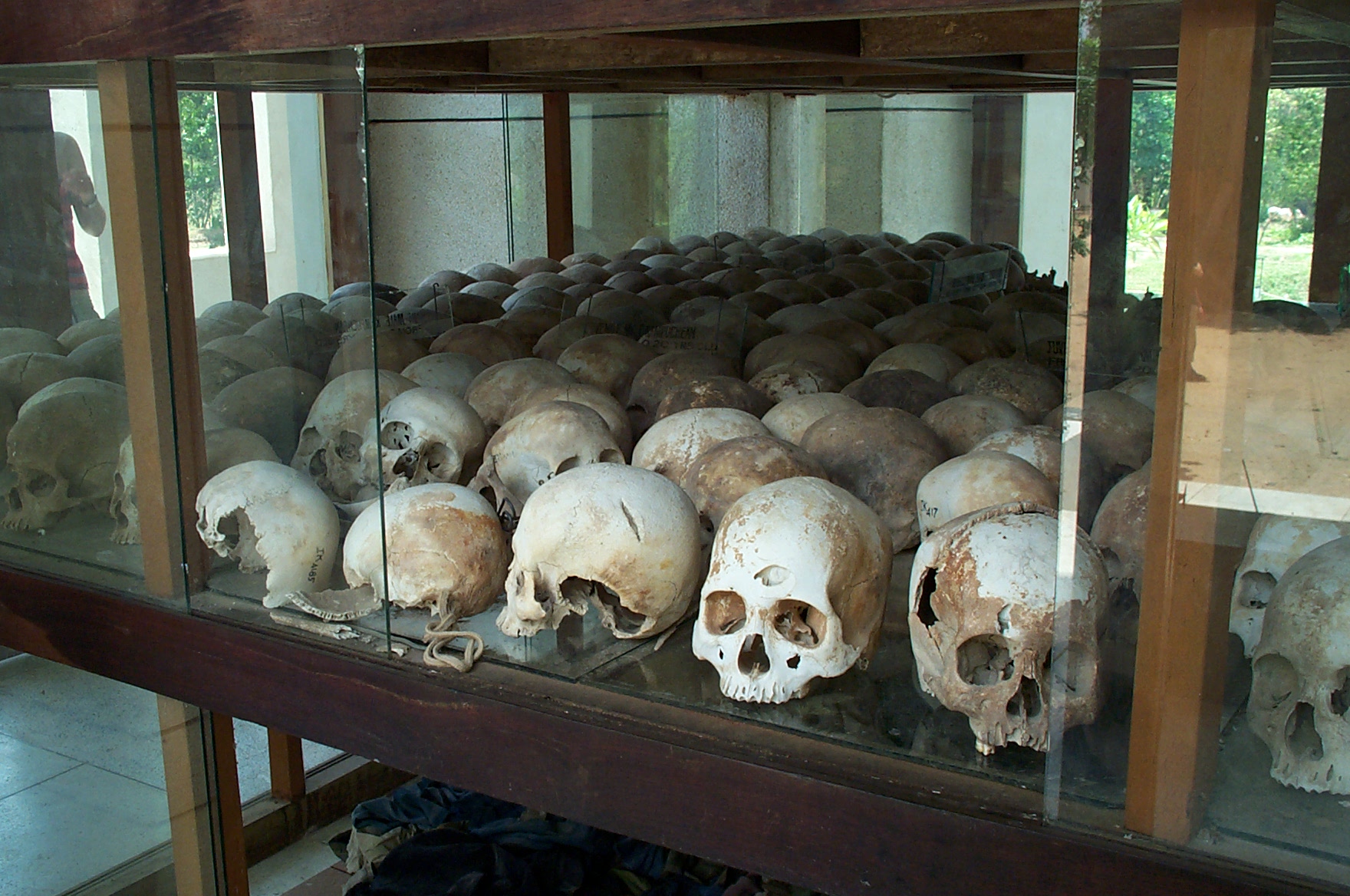
The massacres ended when the Vietnamese military invaded in 1978 and toppled the Khmer Rouge regime. By January 1979, 1.5 to 2 million people had died due to the Khmer Rouge's policies, including 200,000–300,000 Chinese Cambodians, 90,000–500,000 Cambodian Cham (who are mostly Muslim), and 20,000 Vietnamese Cambodians. 20,000 people passed through the Security Prison 21, one of the 196 prisons the Khmer Rouge operated, and only seven adults survived. The prisoners were taken to the Killing Fields, where they were executed (often with pickaxes, to save bullets) and buried in mass graves. Abduction and indoctrination of children was widespread, and many were persuaded or forced to commit atrocities. As of 2009, the Documentation Center of Cambodia has mapped 23,745 mass graves containing approximately 1.3 million suspected victims of execution. Direct execution is believed to account for up to 60% of the genocide's death toll, with other victims succumbing to starvation, exhaustion, or disease.
The genocide triggered a second outflow of refugees, many of whom escaped to neighboring Thailand and, to a lesser extent, Vietnam. In 2003, by agreement between the Cambodian government and the United Nations, the Extraordinary Chambers in the Court of Cambodia (Khmer Rouge Tribunal) were established to try the members of the Khmer Rouge leadership responsible for the Cambodian genocide. Trials began in 2009. On 26 July 2010, the Trial Chamber convicted Kang Kek Iew for crimes against humanity and grave breaches of the 1949 Geneva Conventions. The Supreme Court Chamber increased his sentence to life imprisonment. Nuon Chea and Khieu Samphan were tried and convicted in 2014 of crimes against humanity and grave breaches of the Geneva Conventions. On 28 March 2019, the Trial Chamber found Nuon Chea and Khieu Samphan guilty of crimes against humanity, grave breaches of the Geneva Conventions, and genocide of the Vietnamese ethnic, national and racial group. The Chamber additionally convicted Nuon Chea of genocide of the Cham ethnic and religious group under the doctrine of superior responsibility. Both Nuon Chea and Khieu Samphan were sentenced to terms of life imprisonment.
In 1968, the Khmer Rouge officially launched a nation-wide insurgency across Cambodia. Though the government of North Vietnam was not informed about the Khmer Rouge's decision in advance, its forces still provided shelter and weapons. This support made it difficult for the Cambodian military to effectively counter the insurgents, and for the next two years, King Norodom Sihanouk did very little to stop it. As such, the insurgency grew in strength, resulting in the party openly declaring itself to be the Communist Party of Kampuchea.
Sihanouk was deposed in 1970 by Premier Lon Nol, with the support of the National Assembly, establishing the pro-United States Khmer Republic. On the Chinese Communist Party (CCP)'s advice, Sihanouk, who was in exile in Beijing, formed an alliance with the Khmer Rouge, and became the nominal head of a Khmer Rouge–dominated government-in-exile (known by its French acronym, GRUNK) backed by China. Although thoroughly aware of the weakness of Lon Nol's forces and loath to commit American military force to the new conflict in any form other than air power, the Nixon administration announced its support for the new Khmer Republic.
On 29 March 1970, North Vietnam launched an offensive against the Cambodian army. Documents which were uncovered from the Soviet Union's archives reveal that the invasion was launched at the Khmer Rouge's explicit request after negotiations were held with Nuon Chea. A North Vietnamese force quickly overran large parts of eastern Cambodia, reaching within 15 miles (24 km) of Phnom Penh before being pushed back. By June, three months after Sihanouk's removal, they had swept government forces from the entire northeastern third of the country. After defeating those forces, the Vietnamese turned the newly won territories over to the local insurgents. The Khmer Rouge also established "liberated" areas in the southern and southwestern parts of the country, where they operated independently of the Vietnamese.
After Sihanouk demonstrated his support for the Khmer Rouge by visiting them in the field, their ranks swelled from 6,000 to 50,000 fighters. Many of the Khmer Rouge's new recruits were apolitical peasants who fought in support of the King, rather than for communism, of which they had little understanding.
Cambodian genocide
The Cambodian genocide was the systematic persecution and killing of Cambodian citizens by the Khmer Rouge under the general secretaryship of Pol Pot. It resulted in the deaths of 1.5 to 2 million people from 1975 to 1979, nearly 25% of Cambodia's population in 1975 (c. 7.8 million).
Pol Pot and the Khmer Rouge were supported for many years by the Chinese Communist Party (CCP), led by Chairman Mao Zedong; it is estimated that at least 90% of the foreign aid which the Khmer Rouge received came from China, including at least US$1 billion in interest-free economic and military aid in 1975 alone. After it seized power in April 1975, the Khmer Rouge wanted to turn the country into an agrarian socialist republic, founded on the policies of ultra-Maoism and influenced by the Cultural Revolution. Pol Pot and other Khmer Rouge officials met with Mao in Beijing in June 1975, receiving approval and advice, while high-ranking CCP officials such as Politburo Standing Committee member Zhang Chunqiao later visited Cambodia to offer help. To fulfill its goals, the Khmer Rouge emptied the cities and marched Cambodians to labor camps in the countryside, where mass executions, forced labor, physical abuse, torture, malnutrition, and disease were rampant. In 1976, the Khmer Rouge renamed the country Democratic Kampuchea.
The massacres ended when the Vietnamese military invaded in 1978 and toppled the Khmer Rouge regime. By January 1979, 1.5 to 2 million people had died due to the Khmer Rouge's policies, including 200,000–300,000 Chinese Cambodians, 90,000–500,000 Cambodian Cham (who are mostly Muslim), and 20,000 Vietnamese Cambodians. 20,000 people passed through the Security Prison 21, one of the 196 prisons the Khmer Rouge operated, and only seven adults survived. The prisoners were taken to the Killing Fields, where they were executed (often with pickaxes, to save bullets) and buried in mass graves. Abduction and indoctrination of children was widespread, and many were persuaded or forced to commit atrocities. As of 2009, the Documentation Center of Cambodia has mapped 23,745 mass graves containing approximately 1.3 million suspected victims of execution. Direct execution is believed to account for up to 60% of the genocide's death toll, with other victims succumbing to starvation, exhaustion, or disease.
The genocide triggered a second outflow of refugees, many of whom escaped to neighboring Thailand and, to a lesser extent, Vietnam. In 2003, by agreement between the Cambodian government and the United Nations, the Extraordinary Chambers in the Court of Cambodia (Khmer Rouge Tribunal) were established to try the members of the Khmer Rouge leadership responsible for the Cambodian genocide. Trials began in 2009. On 26 July 2010, the Trial Chamber convicted Kang Kek Iew for crimes against humanity and grave breaches of the 1949 Geneva Conventions. The Supreme Court Chamber increased his sentence to life imprisonment. Nuon Chea and Khieu Samphan were tried and convicted in 2014 of crimes against humanity and grave breaches of the Geneva Conventions. On 28 March 2019, the Trial Chamber found Nuon Chea and Khieu Samphan guilty of crimes against humanity, grave breaches of the Geneva Conventions, and genocide of the Vietnamese ethnic, national and racial group. The Chamber additionally convicted Nuon Chea of genocide of the Cham ethnic and religious group under the doctrine of superior responsibility. Both Nuon Chea and Khieu Samphan were sentenced to terms of life imprisonment.
In 1968, the Khmer Rouge officially launched a nation-wide insurgency across Cambodia. Though the government of North Vietnam was not informed about the Khmer Rouge's decision in advance, its forces still provided shelter and weapons. This support made it difficult for the Cambodian military to effectively counter the insurgents, and for the next two years, King Norodom Sihanouk did very little to stop it. As such, the insurgency grew in strength, resulting in the party openly declaring itself to be the Communist Party of Kampuchea.
Sihanouk was deposed in 1970 by Premier Lon Nol, with the support of the National Assembly, establishing the pro-United States Khmer Republic. On the Chinese Communist Party (CCP)'s advice, Sihanouk, who was in exile in Beijing, formed an alliance with the Khmer Rouge, and became the nominal head of a Khmer Rouge–dominated government-in-exile (known by its French acronym, GRUNK) backed by China. Although thoroughly aware of the weakness of Lon Nol's forces and loath to commit American military force to the new conflict in any form other than air power, the Nixon administration announced its support for the new Khmer Republic.
On 29 March 1970, North Vietnam launched an offensive against the Cambodian army. Documents which were uncovered from the Soviet Union's archives reveal that the invasion was launched at the Khmer Rouge's explicit request after negotiations were held with Nuon Chea. A North Vietnamese force quickly overran large parts of eastern Cambodia, reaching within 15 miles (24 km) of Phnom Penh before being pushed back. By June, three months after Sihanouk's removal, they had swept government forces from the entire northeastern third of the country. After defeating those forces, the Vietnamese turned the newly won territories over to the local insurgents. The Khmer Rouge also established "liberated" areas in the southern and southwestern parts of the country, where they operated independently of the Vietnamese.
After Sihanouk demonstrated his support for the Khmer Rouge by visiting them in the field, their ranks swelled from 6,000 to 50,000 fighters. Many of the Khmer Rouge's new recruits were apolitical peasants who fought in support of the King, rather than for communism, of which they had little understanding.
Recent media
Recent media