



Community hub
Recent from talks
Knowledge base stats:
Talk channels stats:
Members stats:
Lon Nol
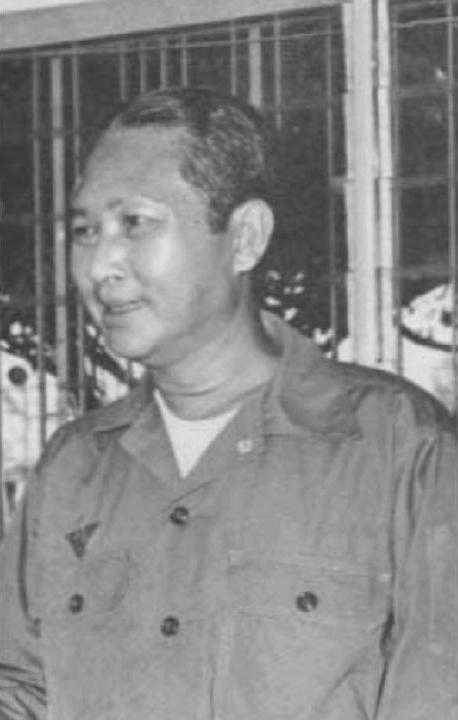
Lon Nol (Khmer: លន់ នល់, also លន់ ណុល; 13 November 1913 – 17 November 1985) was a Cambodian military officer and politician who served as Prime Minister of Cambodia twice (1966–1967; 1969–1971), as well as serving repeatedly as defence minister and provincial governor. As a right-wing nationalist, he led the military coup of 1970 against Prince Norodom Sihanouk, abolished the monarchy, and established the short-lived Khmer Republic. Constitutionally a semi-presidential republic, Cambodia was de facto governed under a military dictatorship. He was the commander-in-chief of the Khmer National Armed Forces during the Cambodian Civil War and became President of the Khmer Republic on 10 March 1972. On 1 April 1975, as the only president of the republic 16 days before Angkar and the Khmer Rouge captured Phnom Penh, Lon Nol fled to Indonesia and later the United States, first to Hawaii and then to California, where he remained until his death in 1985.
Lon Nol was born in Prey Veng Province on 13 November 1913, to a family of mixed Khmer-Chinese descent. His father Lon Hin was the son of a Khmer Krom from Tay Ninh Province who later served as a district chief in Siem Reap and Kampong Thom, after making a name for himself 'pacifying' bandit groups in Prey Veng. His maternal grandfather was a Chinese immigrant from Fujian who later became the governor of Prey Veng. Nol was educated in the relatively privileged surroundings of the Lycée Chasseloup-Laubat in Saigon, followed by the Cambodian Royal Military Academy.
Nol found employment with the French colonial civil service in 1937. He became a magistrate, and soon proved himself as an efficient enforcer of French rule against a series of anti-colonial disturbances in 1939. By 1946, he had risen to the post of Governor of Kratie Province. He became an associate of King Norodom Sihanouk, and by the late 1940s, when he set up a right-wing, monarchist, pro-independence political group, was becoming increasingly involved in the developing Cambodian political scene. Joining the army in 1952, he carried out military operations against the Viet Minh.
After independence, Nol's nationalist Khmer Renovation party (along with small right-wing parties headed by Sam Sary and Dap Chhuon) became the core of the Sangkum, the organisation set up by Sihanouk to participate in the 1955 elections. Sangkum won the elections and Sihanouk became prime minister.
Nol was appointed the Army Chief of Staff in 1955, and commander-in-chief of the armed forces in 1960, as well as serving as Defence Minister. At the time, he was a trusted supporter of Sihanouk, his police being instrumental in the suppression of the small, clandestine communist movement in Cambodia. He was appointed deputy prime minister in 1963. While Sihanouk, in an attempt to distance his country from the effects of the Vietnam War, was pursuing a foreign policy of "extreme neutrality", which involved association with China and toleration of North Vietnamese activity on the eastern borders, Nol remained friendly towards the United States, and indicated that he regretted the ending of US aid after 1963.
The 1966 parliamentary elections represented a major shift in the balance of power towards Lon Nol and the rightist elements of the Sangkum, as conservative and right-wing candidates were overwhelmingly elected. Lon Nol became prime minister, and the following year troops carried out a savage repression of a leftist-inspired revolt, the Samlaut Uprising, in Battambang Province.
Nol was injured in a car crash later in 1967, and temporarily retired from politics. In 1968, however, he returned as Minister of Defence and in 1969 became prime minister a second time, appointing the vocally anti-Sihanouk, and pro-US politician Prince Sisowath Sirik Matak as his deputy.
Sihanouk later claimed that the 1970 coup against him was the result of an alliance between his longstanding enemy, exiled politician Son Ngoc Thanh and Sirik Matak, with CIA support and planning. Although there are indications that Lon Nol approached the US during 1969 to gauge the likelihood of military support for a coup against Sihanouk, there is no concrete evidence of CIA involvement, though it remains possible some military intelligence agents may have had partial responsibility. It seems likely that in setting in motion the events leading up to the coup, Lon Nol initially intended to strengthen his position against the North Vietnamese with the ultimate aim of preventing their troops (and those of the Viet Cong) from operating within Cambodian borders, and wished to apply pressure on Sihanouk to achieve this. However, events rapidly developed far beyond the original plan, and with the encouragement of Sirik Matak – who wished to see Sihanouk deposed as Head of State – Lon Nol was ultimately to engineer Sihanouk's removal.
Hub AI
Lon Nol AI simulator
(@Lon Nol_simulator)
Lon Nol
Lon Nol (Khmer: លន់ នល់, also លន់ ណុល; 13 November 1913 – 17 November 1985) was a Cambodian military officer and politician who served as Prime Minister of Cambodia twice (1966–1967; 1969–1971), as well as serving repeatedly as defence minister and provincial governor. As a right-wing nationalist, he led the military coup of 1970 against Prince Norodom Sihanouk, abolished the monarchy, and established the short-lived Khmer Republic. Constitutionally a semi-presidential republic, Cambodia was de facto governed under a military dictatorship. He was the commander-in-chief of the Khmer National Armed Forces during the Cambodian Civil War and became President of the Khmer Republic on 10 March 1972. On 1 April 1975, as the only president of the republic 16 days before Angkar and the Khmer Rouge captured Phnom Penh, Lon Nol fled to Indonesia and later the United States, first to Hawaii and then to California, where he remained until his death in 1985.
Lon Nol was born in Prey Veng Province on 13 November 1913, to a family of mixed Khmer-Chinese descent. His father Lon Hin was the son of a Khmer Krom from Tay Ninh Province who later served as a district chief in Siem Reap and Kampong Thom, after making a name for himself 'pacifying' bandit groups in Prey Veng. His maternal grandfather was a Chinese immigrant from Fujian who later became the governor of Prey Veng. Nol was educated in the relatively privileged surroundings of the Lycée Chasseloup-Laubat in Saigon, followed by the Cambodian Royal Military Academy.
Nol found employment with the French colonial civil service in 1937. He became a magistrate, and soon proved himself as an efficient enforcer of French rule against a series of anti-colonial disturbances in 1939. By 1946, he had risen to the post of Governor of Kratie Province. He became an associate of King Norodom Sihanouk, and by the late 1940s, when he set up a right-wing, monarchist, pro-independence political group, was becoming increasingly involved in the developing Cambodian political scene. Joining the army in 1952, he carried out military operations against the Viet Minh.
After independence, Nol's nationalist Khmer Renovation party (along with small right-wing parties headed by Sam Sary and Dap Chhuon) became the core of the Sangkum, the organisation set up by Sihanouk to participate in the 1955 elections. Sangkum won the elections and Sihanouk became prime minister.
Nol was appointed the Army Chief of Staff in 1955, and commander-in-chief of the armed forces in 1960, as well as serving as Defence Minister. At the time, he was a trusted supporter of Sihanouk, his police being instrumental in the suppression of the small, clandestine communist movement in Cambodia. He was appointed deputy prime minister in 1963. While Sihanouk, in an attempt to distance his country from the effects of the Vietnam War, was pursuing a foreign policy of "extreme neutrality", which involved association with China and toleration of North Vietnamese activity on the eastern borders, Nol remained friendly towards the United States, and indicated that he regretted the ending of US aid after 1963.
The 1966 parliamentary elections represented a major shift in the balance of power towards Lon Nol and the rightist elements of the Sangkum, as conservative and right-wing candidates were overwhelmingly elected. Lon Nol became prime minister, and the following year troops carried out a savage repression of a leftist-inspired revolt, the Samlaut Uprising, in Battambang Province.
Nol was injured in a car crash later in 1967, and temporarily retired from politics. In 1968, however, he returned as Minister of Defence and in 1969 became prime minister a second time, appointing the vocally anti-Sihanouk, and pro-US politician Prince Sisowath Sirik Matak as his deputy.
Sihanouk later claimed that the 1970 coup against him was the result of an alliance between his longstanding enemy, exiled politician Son Ngoc Thanh and Sirik Matak, with CIA support and planning. Although there are indications that Lon Nol approached the US during 1969 to gauge the likelihood of military support for a coup against Sihanouk, there is no concrete evidence of CIA involvement, though it remains possible some military intelligence agents may have had partial responsibility. It seems likely that in setting in motion the events leading up to the coup, Lon Nol initially intended to strengthen his position against the North Vietnamese with the ultimate aim of preventing their troops (and those of the Viet Cong) from operating within Cambodian borders, and wished to apply pressure on Sihanouk to achieve this. However, events rapidly developed far beyond the original plan, and with the encouragement of Sirik Matak – who wished to see Sihanouk deposed as Head of State – Lon Nol was ultimately to engineer Sihanouk's removal.