
Recent from talks
Canton Operation
Knowledge base stats:
Talk channels stats:
Members stats:
Canton Operation
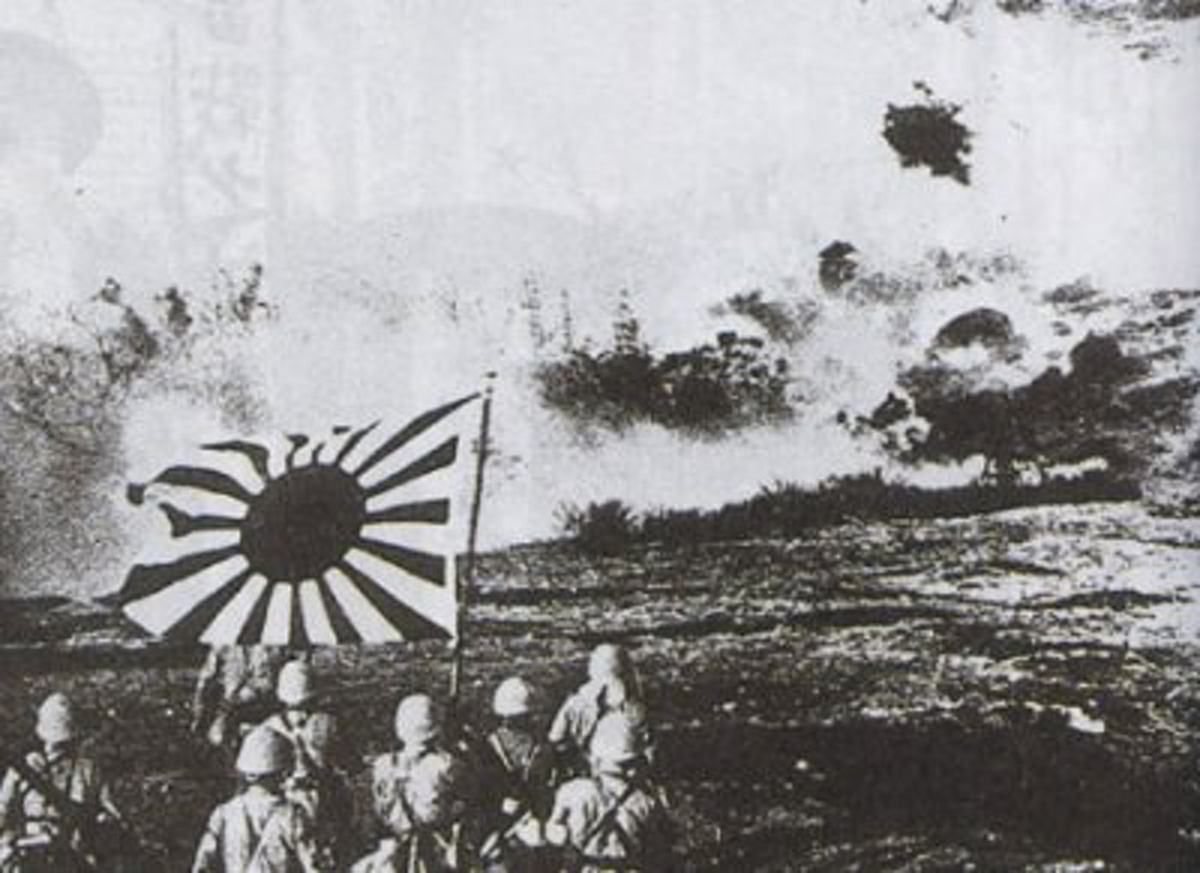
The Canton Operation (Chinese: 廣州戰役; pinyin: Guǎngzhōu Zhànyì) was part of a campaign by Japan during the Second Sino-Japanese War to blockade China to prevent it from communicating with the outside world and importing needed arms and materials. Control of Guangzhou (Canton) and the Pearl River Delta would provide a base to make the blockade of Guangdong province more effective by seizing southern China's major port and isolate the British port of British Hong Kong.
By the end of 1937, south China was crucial to the Republic of China as a means of maintaining contact with the outside world. Guangzhou and Hong Kong served as vital centers of transportation and international aid to Chiang Kai-Shek. Approximately 80 percent of supplies from abroad to the Chinese forces in the interior passed through Guangzhou. Imperial General Headquarters believed that a blockade of Guangdong province would deprive China of essential war material and the ability to prolong the war.
In 1936 the Hankow-Canton (Hankou-Guangzhou) railway was completed. With the Kowloon-Canton (Hong Kong-Guangzhou) railway, this formed a rapid all-rail link from south China to central and northern China. For the first sixteen months of the war about 60,000 tons of goods transited per month through the port of Hong Kong. The central government also reported the import of 1.5 million gallons of gasoline (4,100 tons) through Hong Kong in 1938. More than 700,000 tons of goods would eventually reach Hankou using the new railway.
For comparison, the Soviet Union was more willing to provide direct military support to prolong the war. In addition to the Sino-Soviet Non-Aggression Pact signed in August 1937, a barter agreement was negotiated to trade munitions for strategic materials such as tungsten and antimony. Starting in 1937 Soviet war material was transported through Xinjiang (Sinkiang) to Lanzhou (Lanchow) using 20,000 camels. Chinese raw materials would travel back the same way or via Hong Kong to Vladivostok. By 1940, 50,000 camels and hundreds of trucks were transporting 2,000-3,000 tons of Soviet war material per month into China.
Japanese planning for operations began in early November 1937. The objectives of the blockade could be achieved by seizing a portion of Daya Bay and conducting air operations from there. In December 1937, the 5th Army with the 11th Division, the Formosa Mixed Brigade and the 4th Air Brigade were activated in Formosa under the command Lt. Gen. Motoo Furusho to accomplish this objective. Due to the proximity of Daya Bay to Hongkong, the Japanese Government feared that trouble might break out between Britain and Japan. The operation was subsequently suspended and the 5th Army was deactivated. By June 1938, the Battle of Wuhan caused the Imperial General Headquarters to realize that it could not localize the fighting. Imperial General Headquarters reversed policy and began preparations to capture Guangzhou and expedite the settlement of the war.
While the full-scale War of Resistance-World War II raged at the Battle of Shanghai and Battle of Nanking, pressing demands for aerial support at the Battle of Taiyuan in the northern front and Canton in the southern front, forced the Nationalist Air Force of China to split the 28th PS, 5th PG based at Jurong Airbase in the Nanking defense sector into two smaller squadrons, dispatching them with Lt. Arthur Chin leading half of the squadron towards Canton, and Capt. Chan Kee-Wong leading the other half to Taiyuan. On 27 September 1937, 28th PS commander Lt. Arthur Chin led four Hawk IIs out of Shaoguan Airbase while 29th PS commander Lt. Chen Shun-Nan led three Hawk IIIs out from Tianhe Airbase on an intercept of IJNAF G3M bombers sent to attack the Canton-Hankow railway infrastructure; the two flights of Hawks attacked the Japanese bombers over Canton, claiming at least two kills, with one G3M streaming fuel, where it ditched off the coast of Swatow, and the crew rescued by a British freighter, with one of the gunners dying of his battle wounds. In October 1937, the Chinese government ordered 36 Gloster Gladiator Mk.I fighters whose performance and firepower well-exceeds that of the Hawk IIs and IIIs; most of these became the frontline fighter aircraft of the Chinese Air Force in the Canton defense sector as the war raged into 1938.
On 23 February 1938 (some sources date 24 February), Capt. John Huang Xinrui (like Arthur Chin, a Chinese-American volunteer pilot for the Chinese Air Force) commanded the renewed 29th PS now equipped with the new Gloster Gladiator fighters, led nine of his squadron's British-made Gladiators out of Nanxiong Airbase to its first-ever aerial-combat baptism of fire over Canton, along with three 28th PS Gladiators, they intercepted thirteen Nakajima E8N fighter-attack seaplanes from the seaplane tenders Notoro Maru and Kinugasa Maru; unfortunately the Chinese pilots efforts were severely thwarted in the ensuing battle, as most of the machine guns on the Gladiators jammed, yet despite the greatly reduced firepower from the Gladiators, five of the E8N were still shot-up enough to go down as confirmed kills by Capt. Huang and the other pilots hitting the Japanese planes with only one, two or three working guns (out of four) per Gladiator. Arthur Chin revealed later that the cause of the jamming of the Gladiator's machine guns were the result of defective Belgian-made ammunition rounds. Tragically, the bad ammunition led to fatal consequences, as the Gladiator pilots Lt. Xie Chuanhe (Hsieh Chuan-ho) and his wingman Lt. Yang Rutong both tailed and targeted the E8Ns, only to be stymied with their Gladiator's inoperable weapons, with Lt. Yang killed in a burst of machine gun fire from the counter-attacking E8N; Lt. Chen Qiwei (Chen Chi-wei) was lost under similar circumstances.
The 4th War Area Army under the command of He Yingqin in 1938 was assigned to the defense of south China. General Yu Hanmou was in command of the 12th Army Group defending Guangdong province. Eight divisions and two brigades of regular army troops were deployed in the vicinity of Guangzhou. Another five divisions of regular army troops were deployed in Fujian province. The 4th War Area Army totalled about 110,000 regular army troops. Most regular army units in Guangxi province and four divisions from Guangdong had been transferred north to participate in the Battle of Wuhan.
Hub AI
Canton Operation AI simulator
(@Canton Operation_simulator)
Canton Operation
The Canton Operation (Chinese: 廣州戰役; pinyin: Guǎngzhōu Zhànyì) was part of a campaign by Japan during the Second Sino-Japanese War to blockade China to prevent it from communicating with the outside world and importing needed arms and materials. Control of Guangzhou (Canton) and the Pearl River Delta would provide a base to make the blockade of Guangdong province more effective by seizing southern China's major port and isolate the British port of British Hong Kong.
By the end of 1937, south China was crucial to the Republic of China as a means of maintaining contact with the outside world. Guangzhou and Hong Kong served as vital centers of transportation and international aid to Chiang Kai-Shek. Approximately 80 percent of supplies from abroad to the Chinese forces in the interior passed through Guangzhou. Imperial General Headquarters believed that a blockade of Guangdong province would deprive China of essential war material and the ability to prolong the war.
In 1936 the Hankow-Canton (Hankou-Guangzhou) railway was completed. With the Kowloon-Canton (Hong Kong-Guangzhou) railway, this formed a rapid all-rail link from south China to central and northern China. For the first sixteen months of the war about 60,000 tons of goods transited per month through the port of Hong Kong. The central government also reported the import of 1.5 million gallons of gasoline (4,100 tons) through Hong Kong in 1938. More than 700,000 tons of goods would eventually reach Hankou using the new railway.
For comparison, the Soviet Union was more willing to provide direct military support to prolong the war. In addition to the Sino-Soviet Non-Aggression Pact signed in August 1937, a barter agreement was negotiated to trade munitions for strategic materials such as tungsten and antimony. Starting in 1937 Soviet war material was transported through Xinjiang (Sinkiang) to Lanzhou (Lanchow) using 20,000 camels. Chinese raw materials would travel back the same way or via Hong Kong to Vladivostok. By 1940, 50,000 camels and hundreds of trucks were transporting 2,000-3,000 tons of Soviet war material per month into China.
Japanese planning for operations began in early November 1937. The objectives of the blockade could be achieved by seizing a portion of Daya Bay and conducting air operations from there. In December 1937, the 5th Army with the 11th Division, the Formosa Mixed Brigade and the 4th Air Brigade were activated in Formosa under the command Lt. Gen. Motoo Furusho to accomplish this objective. Due to the proximity of Daya Bay to Hongkong, the Japanese Government feared that trouble might break out between Britain and Japan. The operation was subsequently suspended and the 5th Army was deactivated. By June 1938, the Battle of Wuhan caused the Imperial General Headquarters to realize that it could not localize the fighting. Imperial General Headquarters reversed policy and began preparations to capture Guangzhou and expedite the settlement of the war.
While the full-scale War of Resistance-World War II raged at the Battle of Shanghai and Battle of Nanking, pressing demands for aerial support at the Battle of Taiyuan in the northern front and Canton in the southern front, forced the Nationalist Air Force of China to split the 28th PS, 5th PG based at Jurong Airbase in the Nanking defense sector into two smaller squadrons, dispatching them with Lt. Arthur Chin leading half of the squadron towards Canton, and Capt. Chan Kee-Wong leading the other half to Taiyuan. On 27 September 1937, 28th PS commander Lt. Arthur Chin led four Hawk IIs out of Shaoguan Airbase while 29th PS commander Lt. Chen Shun-Nan led three Hawk IIIs out from Tianhe Airbase on an intercept of IJNAF G3M bombers sent to attack the Canton-Hankow railway infrastructure; the two flights of Hawks attacked the Japanese bombers over Canton, claiming at least two kills, with one G3M streaming fuel, where it ditched off the coast of Swatow, and the crew rescued by a British freighter, with one of the gunners dying of his battle wounds. In October 1937, the Chinese government ordered 36 Gloster Gladiator Mk.I fighters whose performance and firepower well-exceeds that of the Hawk IIs and IIIs; most of these became the frontline fighter aircraft of the Chinese Air Force in the Canton defense sector as the war raged into 1938.
On 23 February 1938 (some sources date 24 February), Capt. John Huang Xinrui (like Arthur Chin, a Chinese-American volunteer pilot for the Chinese Air Force) commanded the renewed 29th PS now equipped with the new Gloster Gladiator fighters, led nine of his squadron's British-made Gladiators out of Nanxiong Airbase to its first-ever aerial-combat baptism of fire over Canton, along with three 28th PS Gladiators, they intercepted thirteen Nakajima E8N fighter-attack seaplanes from the seaplane tenders Notoro Maru and Kinugasa Maru; unfortunately the Chinese pilots efforts were severely thwarted in the ensuing battle, as most of the machine guns on the Gladiators jammed, yet despite the greatly reduced firepower from the Gladiators, five of the E8N were still shot-up enough to go down as confirmed kills by Capt. Huang and the other pilots hitting the Japanese planes with only one, two or three working guns (out of four) per Gladiator. Arthur Chin revealed later that the cause of the jamming of the Gladiator's machine guns were the result of defective Belgian-made ammunition rounds. Tragically, the bad ammunition led to fatal consequences, as the Gladiator pilots Lt. Xie Chuanhe (Hsieh Chuan-ho) and his wingman Lt. Yang Rutong both tailed and targeted the E8Ns, only to be stymied with their Gladiator's inoperable weapons, with Lt. Yang killed in a burst of machine gun fire from the counter-attacking E8N; Lt. Chen Qiwei (Chen Chi-wei) was lost under similar circumstances.
The 4th War Area Army under the command of He Yingqin in 1938 was assigned to the defense of south China. General Yu Hanmou was in command of the 12th Army Group defending Guangdong province. Eight divisions and two brigades of regular army troops were deployed in the vicinity of Guangzhou. Another five divisions of regular army troops were deployed in Fujian province. The 4th War Area Army totalled about 110,000 regular army troops. Most regular army units in Guangxi province and four divisions from Guangdong had been transferred north to participate in the Battle of Wuhan.
Recent media