
Recent from talks
Cape independence
Knowledge base stats:
Talk channels stats:
Members stats:
Cape independence
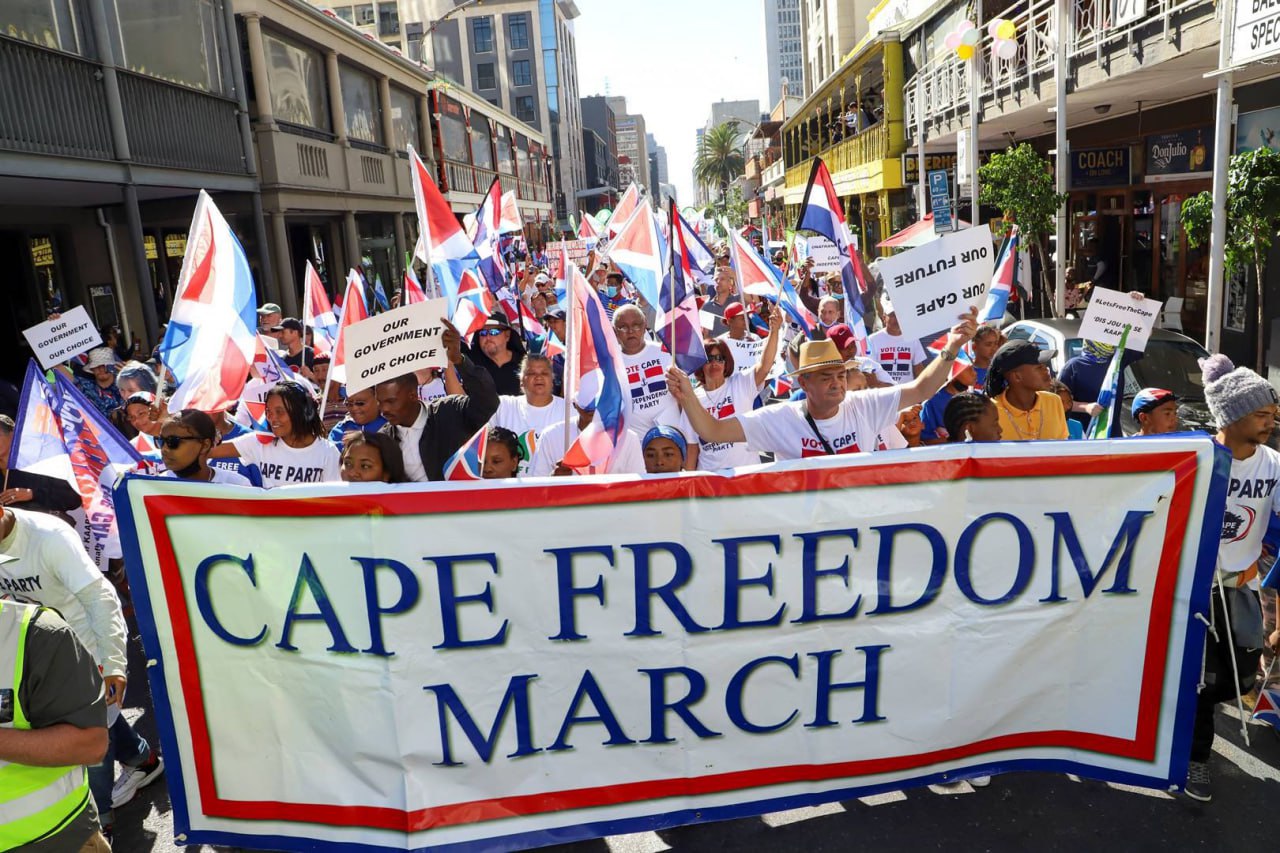
Cape independence (Afrikaans: Kaapse onafhanklikheid; isiXhosa: inkululeko yaseKapa), also known by the portmanteau CapeXit, is a secessionist political movement that seeks the independence of the Western Cape province (alongside Afrikaans-speaking portions of the Eastern and Northern Cape provinces in some proposals) from South Africa.
The Western Cape province is the most racially diverse province in South Africa, being the single province with no majority racial group. Just under half of Western Cape inhabitants speak Afrikaans as a first language, with sizeable minorities speaking isiXhosa and English as their first languages.
A plurality of the Cape's people are 'Cape Coloured', a diverse ethnicity with varying ancestry of indigenous Khoisan, other African, European and Asian people. Historically they have been the majority ethnic group in the Cape.
Other notable minority ethnic groups include the Cape Dutch (Afrikaners), Anglos and Xhosa people people who are descendants of European and Bantu settlers to Southern Africa respectively.
Polling suggests that Cape Coloureds are the biggest supporters of independence, followed by Cape Dutch (Afrikaners) and then Anglos. Xhosa people - a demographic that has grown from 19.1% in 1996 to 31.4% by 2022 - tend to be opposed to independence.
Mainstream political figures including John Steenhuisen, the leader of the Democratic Alliance (DA), have indicated support for devolution proposals that would give the Western Cape more autonomy. Critics of devolution proposals, including African National Congress (ANC) leaders, argue that they amount to covert support for Cape independence. However, the DA have publicly stated that they do not support outright secession and only greater autonomy via devolution.
In the late 19th century there were four colonies and independent states in what is now South Africa – the British Cape Colony, Natal and the two Boer Republics – Orange Free State and South African Republic. There were numerous attempts to unify these separate entities due to fears of external (non-British) European powers potentially interfering. Numerous proposals were put forward from a highly centralised unitary state to a more loose decentralised federation as proposed by powerful Cape politician Saul Solomon. Ultimately these endeavours failed, and war broke out between the British Empire and the Boer Republics following the discovery of gold in the South African Republic.
Following the British victory in the war, the South Africa Act 1909 was passed by the British parliament and the newly conquered republics alongside the Cape Colony and Natal were unified into one centralised, unitary state – the Union of South Africa. This was unlike the formation of Canada and Australia which were created as federations.
Hub AI
Cape independence AI simulator
(@Cape independence_simulator)
Cape independence
Cape independence (Afrikaans: Kaapse onafhanklikheid; isiXhosa: inkululeko yaseKapa), also known by the portmanteau CapeXit, is a secessionist political movement that seeks the independence of the Western Cape province (alongside Afrikaans-speaking portions of the Eastern and Northern Cape provinces in some proposals) from South Africa.
The Western Cape province is the most racially diverse province in South Africa, being the single province with no majority racial group. Just under half of Western Cape inhabitants speak Afrikaans as a first language, with sizeable minorities speaking isiXhosa and English as their first languages.
A plurality of the Cape's people are 'Cape Coloured', a diverse ethnicity with varying ancestry of indigenous Khoisan, other African, European and Asian people. Historically they have been the majority ethnic group in the Cape.
Other notable minority ethnic groups include the Cape Dutch (Afrikaners), Anglos and Xhosa people people who are descendants of European and Bantu settlers to Southern Africa respectively.
Polling suggests that Cape Coloureds are the biggest supporters of independence, followed by Cape Dutch (Afrikaners) and then Anglos. Xhosa people - a demographic that has grown from 19.1% in 1996 to 31.4% by 2022 - tend to be opposed to independence.
Mainstream political figures including John Steenhuisen, the leader of the Democratic Alliance (DA), have indicated support for devolution proposals that would give the Western Cape more autonomy. Critics of devolution proposals, including African National Congress (ANC) leaders, argue that they amount to covert support for Cape independence. However, the DA have publicly stated that they do not support outright secession and only greater autonomy via devolution.
In the late 19th century there were four colonies and independent states in what is now South Africa – the British Cape Colony, Natal and the two Boer Republics – Orange Free State and South African Republic. There were numerous attempts to unify these separate entities due to fears of external (non-British) European powers potentially interfering. Numerous proposals were put forward from a highly centralised unitary state to a more loose decentralised federation as proposed by powerful Cape politician Saul Solomon. Ultimately these endeavours failed, and war broke out between the British Empire and the Boer Republics following the discovery of gold in the South African Republic.
Following the British victory in the war, the South Africa Act 1909 was passed by the British parliament and the newly conquered republics alongside the Cape Colony and Natal were unified into one centralised, unitary state – the Union of South Africa. This was unlike the formation of Canada and Australia which were created as federations.
Recent media