



Community hub
Recent from talks
Knowledge base stats:
Talk channels stats:
Members stats:
Capture of Damascus (1918)
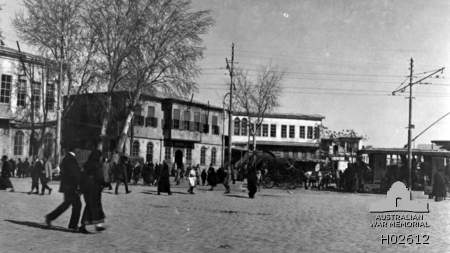
The Capture of Damascus occurred on 1 October 1918 after the capture of Haifa and the victory at the Battle of Samakh which opened the way for the pursuit north from the Sea of Galilee and the Third Transjordan attack which opened the way to Deraa and the inland pursuit, after the decisive Egyptian Expeditionary Force (EEF) victory at the Battle of Megiddo during the Sinai and Palestine campaign of World War I. Damascus was captured when Indian British troops under general Barrow, the Desert Mounted Corps under general Chauvel, Prince Faisal's Sharifial Hejaz Army and an Arab army under Sharif Nasir of Medina encircled the city. Faced with this superior force, the German and Turkish troops in the city surrendered very quickly.
During the pursuit to Damascus, many rearguards established by remnants of the Ottoman Fourth, Seventh and Eighth Armies were attacked and captured by Prince Feisal's Sherifial Army and the Desert Mounted Corps' Australian Mounted Division, and 4th and the 5th Cavalry Divisions. The important strategic success of capturing Damascus resulted in political manoeuvring by representatives from France, Britain and Prince Feisal's force.
Following the victories at the Battle of Sharon and Battle of Nablus during the Battle of Megiddo, on 25 September, the combined attacks by the XXI Corps, Desert Mounted Corps, the XX Corps supported by extensive aerial bombing attacks, gained all objectives. The Ottoman Seventh and Eighth Armies in the Judean Hills were forced by the attacks at Tulkarm, and Tabsor to disengage and retreat, in turn forcing the Fourth Army, east of the Jordan River to avoid outflanking by retreating from Amman when they were attacked by Chaytor's Force.[citation needed] As a consequence of these withdrawals large numbers of prisoners were captured at Jenin while the surviving columns retreated behind a strong rearguard at Samakh.
The commander of the Egyptian Expeditionary Force, General Edmund Allenby ordered Lieutenant General Harry Chauvel's Desert Mounted Corps to pursue the remnants of the three Ottoman armies and capture Damascus. The 4th Cavalry Division began the pursuit, attacking rearguards along the inland road at Irbid on 26 September, at Er Remta and Prince Feisal's Sherifial Army captured Deraa on 27 September. The Australian Mounted Division attacked rearguards along the main road, at Jisr Benat Yakub on 27 September, occupying Quneitra the next day, at Sa'sa' on 29/30 September, and at Kaukab and the Barada Gorge on 30 September, while the 5th Cavalry Division also attacked a rearguard at Kiswe the same day. Following these successful attacks and advances the 3rd Light Horse Brigade was ordered to move north of Damascus, marching through the city on the morning of 1 October to continue their attack on the retreating columns, cutting the road to Homs.
With the British Empire forces having gained all objectives during the battles of Sharon and Nablus; breaking the Ottoman front line and the extensive flank attacks by infantry divisions which continued while the cavalry divisions rode many miles to encircle, they destroyed two Ottoman armies west of the Jordan River with a third Ottoman army in full retreat, many of whom were forced to march after the Sherifial Army cut the Hejaz railway, while half its strength was captured by Chaytor's Force. The Yildirim Army Group had also lost most of their transport and guns, while the EEF advances further strained their administrative and transport services.
At Lajjun on 22 September, Allenby outlined his plans to Chauvel for an advance to Damascus. Before this could be achieved, though, Haifa and important logistics nodes had to be captured. Additionally, the Fourth Army still held Amman and the rearguard was still in place at Samakh, Nevertheless, on 26 September, the Inspector General Lines of Communication took control of all the captured territory up to a line stretching from Jisr ed Damieh on the Jordan River to Nahr el Faliq on the Mediterranean Sea. The same day detachments from the XX and XXI Corps had moved north to take over garrison duties in the Esdraelon Plain, at Nazareth and at Samakh, from Desert Mounted Corps and transport from the XXI Corps was placed at their disposal.
While Otto Liman von Sanders was out of contact until late in the afternoon of 20 September, following his hasty retreat from Nazareth in the early hours of the morning, the Fourth Army, still without orders stood firm. Liman continued his journey via Tiberias and Samakh where he ordered a rearguard late in the afternoon, arriving at Deraa on the morning of 21 September, on his way to Damascus. Here he ordered the Irbid to Deraa line established and received a report from the Fourth Army, which he ordered to withdraw without waiting for the southern Hejaz troops to strengthen the new defensive line.
Liman von Sanders had found Deraa "fairly secure" due to the actions of its commandant, Major Willmer whom he placed in temporary command of the new front line from Deraa to Samakh. While at Deraa during the evening of 21 September, Liman von Sanders met leaders of several thousand Druses, who agreed to remain neutral. He arrived at Damascus on the evening of 23 September, his staff having already arrived. Here, he requested the Second Army which was garrisoning Northern Syria to advance to the defence of Damascus. Two days later; on 25 September Liman von Sanders ordered his staff back to Aleppo.
Hub AI
Capture of Damascus (1918) AI simulator
(@Capture of Damascus (1918)_simulator)
Capture of Damascus (1918)
The Capture of Damascus occurred on 1 October 1918 after the capture of Haifa and the victory at the Battle of Samakh which opened the way for the pursuit north from the Sea of Galilee and the Third Transjordan attack which opened the way to Deraa and the inland pursuit, after the decisive Egyptian Expeditionary Force (EEF) victory at the Battle of Megiddo during the Sinai and Palestine campaign of World War I. Damascus was captured when Indian British troops under general Barrow, the Desert Mounted Corps under general Chauvel, Prince Faisal's Sharifial Hejaz Army and an Arab army under Sharif Nasir of Medina encircled the city. Faced with this superior force, the German and Turkish troops in the city surrendered very quickly.
During the pursuit to Damascus, many rearguards established by remnants of the Ottoman Fourth, Seventh and Eighth Armies were attacked and captured by Prince Feisal's Sherifial Army and the Desert Mounted Corps' Australian Mounted Division, and 4th and the 5th Cavalry Divisions. The important strategic success of capturing Damascus resulted in political manoeuvring by representatives from France, Britain and Prince Feisal's force.
Following the victories at the Battle of Sharon and Battle of Nablus during the Battle of Megiddo, on 25 September, the combined attacks by the XXI Corps, Desert Mounted Corps, the XX Corps supported by extensive aerial bombing attacks, gained all objectives. The Ottoman Seventh and Eighth Armies in the Judean Hills were forced by the attacks at Tulkarm, and Tabsor to disengage and retreat, in turn forcing the Fourth Army, east of the Jordan River to avoid outflanking by retreating from Amman when they were attacked by Chaytor's Force.[citation needed] As a consequence of these withdrawals large numbers of prisoners were captured at Jenin while the surviving columns retreated behind a strong rearguard at Samakh.
The commander of the Egyptian Expeditionary Force, General Edmund Allenby ordered Lieutenant General Harry Chauvel's Desert Mounted Corps to pursue the remnants of the three Ottoman armies and capture Damascus. The 4th Cavalry Division began the pursuit, attacking rearguards along the inland road at Irbid on 26 September, at Er Remta and Prince Feisal's Sherifial Army captured Deraa on 27 September. The Australian Mounted Division attacked rearguards along the main road, at Jisr Benat Yakub on 27 September, occupying Quneitra the next day, at Sa'sa' on 29/30 September, and at Kaukab and the Barada Gorge on 30 September, while the 5th Cavalry Division also attacked a rearguard at Kiswe the same day. Following these successful attacks and advances the 3rd Light Horse Brigade was ordered to move north of Damascus, marching through the city on the morning of 1 October to continue their attack on the retreating columns, cutting the road to Homs.
With the British Empire forces having gained all objectives during the battles of Sharon and Nablus; breaking the Ottoman front line and the extensive flank attacks by infantry divisions which continued while the cavalry divisions rode many miles to encircle, they destroyed two Ottoman armies west of the Jordan River with a third Ottoman army in full retreat, many of whom were forced to march after the Sherifial Army cut the Hejaz railway, while half its strength was captured by Chaytor's Force. The Yildirim Army Group had also lost most of their transport and guns, while the EEF advances further strained their administrative and transport services.
At Lajjun on 22 September, Allenby outlined his plans to Chauvel for an advance to Damascus. Before this could be achieved, though, Haifa and important logistics nodes had to be captured. Additionally, the Fourth Army still held Amman and the rearguard was still in place at Samakh, Nevertheless, on 26 September, the Inspector General Lines of Communication took control of all the captured territory up to a line stretching from Jisr ed Damieh on the Jordan River to Nahr el Faliq on the Mediterranean Sea. The same day detachments from the XX and XXI Corps had moved north to take over garrison duties in the Esdraelon Plain, at Nazareth and at Samakh, from Desert Mounted Corps and transport from the XXI Corps was placed at their disposal.
While Otto Liman von Sanders was out of contact until late in the afternoon of 20 September, following his hasty retreat from Nazareth in the early hours of the morning, the Fourth Army, still without orders stood firm. Liman continued his journey via Tiberias and Samakh where he ordered a rearguard late in the afternoon, arriving at Deraa on the morning of 21 September, on his way to Damascus. Here he ordered the Irbid to Deraa line established and received a report from the Fourth Army, which he ordered to withdraw without waiting for the southern Hejaz troops to strengthen the new defensive line.
Liman von Sanders had found Deraa "fairly secure" due to the actions of its commandant, Major Willmer whom he placed in temporary command of the new front line from Deraa to Samakh. While at Deraa during the evening of 21 September, Liman von Sanders met leaders of several thousand Druses, who agreed to remain neutral. He arrived at Damascus on the evening of 23 September, his staff having already arrived. Here, he requested the Second Army which was garrisoning Northern Syria to advance to the defence of Damascus. Two days later; on 25 September Liman von Sanders ordered his staff back to Aleppo.