
Recent from talks
Quneitra
Knowledge base stats:
Talk channels stats:
Members stats:
Quneitra
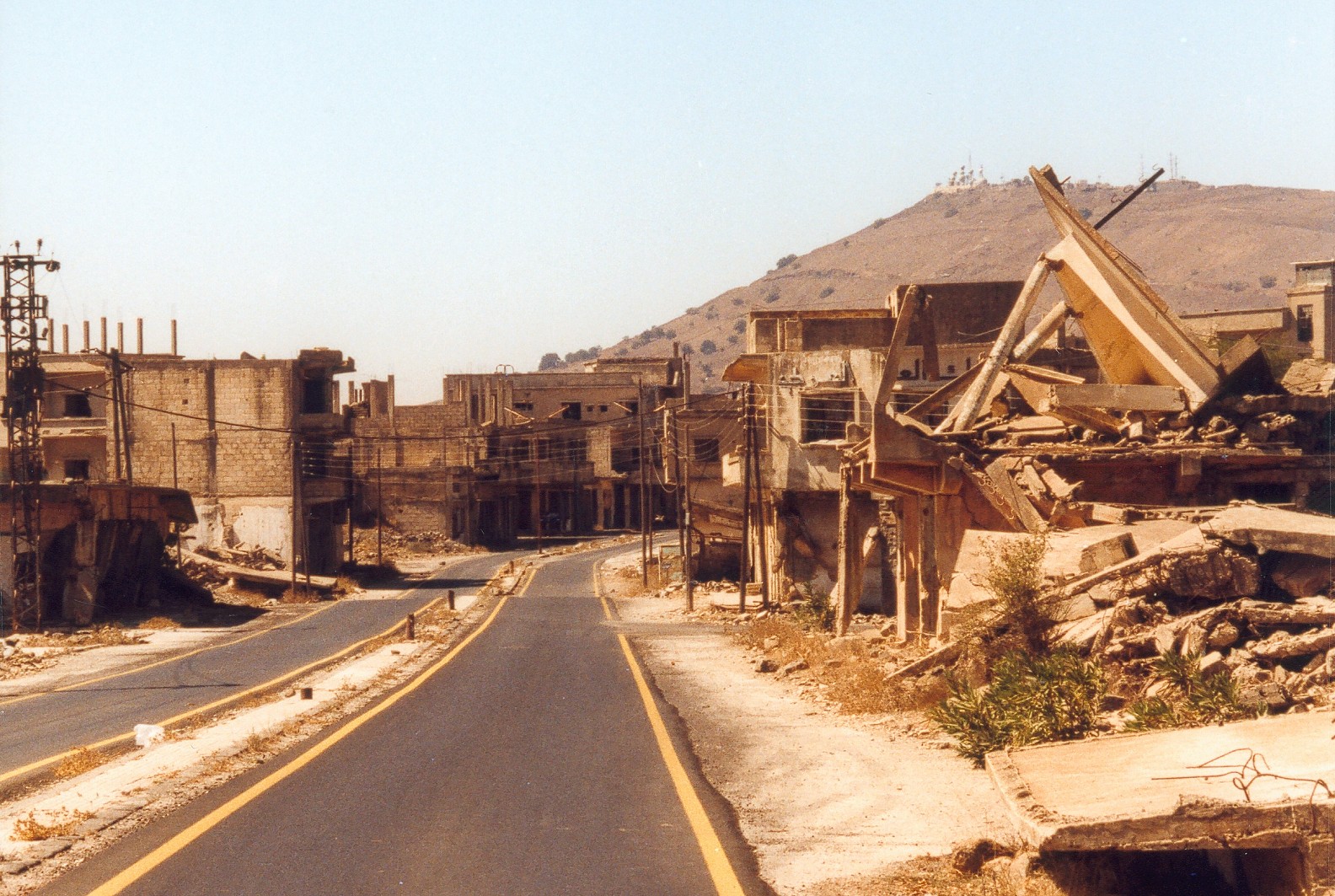
Quneitra (also Al Qunaytirah, Qunaitira, or Kuneitra; Arabic: ٱلْقُنَيْطِرَة or ٱلْقُنَيطْرَة, al-Qunayṭrah or al-Qunayṭirah pronounced [æl qʊˈneɪ̯tˁ(ɨ)rɑ]) is the largely destroyed and abandoned capital of the Quneitra Governorate in south-western Syria. It is situated in a high valley in the Golan Heights at 1,010 metres (3,313 feet) above sea level. Since 1974, pursuant to United Nations Security Council Resolution 350 and the Agreement on Disengagement between Israel and Syria, the city is inside the UN-patrolled buffer zone.
Quneitra was founded in the Ottoman era as a way station on the caravan route to Damascus and subsequently became a garrison town of some 20,000 people. In 1946, it became part of the independent Syrian Republic within the Riff Dimashq Governorate and in 1964 became the capital of the split Quneitra Governorate. On 10 June 1967, the last day of the Six-Day War, Quneitra came under Israeli control. It was briefly recaptured by Syria during the 1973 Yom Kippur War, but Israel regained control in its subsequent counter-offensive. The city was almost completely destroyed by Israel before it withdrew in June 1974. Syria later refused to rebuild the city and actively discouraged resettlement in the area. Israel was heavily criticized by the United Nations for the city's destruction, while Israel has also criticized Syria for not rebuilding Quneitra.
In 2004, its population was estimated at 153 persons, with some 4,000 more living in the surrounding areas of the former city.
During the Syrian Civil War, Quneitra became a clash point between rebel forces and Syrian Arab Army. Between 2014 and July 2018, Quneitra was de facto controlled by the Southern Front, a Syrian rebel alliance. By the end of July 2018, Syrian Government forces regained control over the city, until the rebels retook it.
Quneitra came under the control of the Israeli armed forces during the Israeli invasion of Syria following the fall of the Assad regime in December 2024.
Qantara is the Arabic word for arched bridge. Quneitra means small arch or bridge, and the name is derived from the small-arches bridge around which the town has been built.
Quneitra is the capital of the Quneitra Governorate, a district of southwestern Syria that incorporates the whole of the Golan Heights. The city of Quneitra is within the portion of the Golan Heights controlled by Syria. Madinat al-Salam (Peace City), also known as New Quneitra, replaced Quneitra as the administrative centre of Quneitra Governorate.
Quneitra is situated in a high valley in the Golan Heights at an altitude of 942 metres (3,091 feet) above sea level. It is overshadowed to the west by the Israeli-held portion of the Golan Heights and the peak of Har Bental. The surrounding area is dominated by ancient volcanic lava flows interspersed by a number of dormant volcanic cones which rise some 150 to 200 metres (490 to 660 feet) above the surrounding plain. The volcanic hills of the region have played a key role as observation points and natural firing positions in the conflicts over the region, most notably in the Yom Kippur War. In more peaceful times, the fertile volcanic soil has supported agricultural activities such as wheat growing and pastoralism.
Hub AI
Quneitra AI simulator
(@Quneitra_simulator)
Quneitra
Quneitra (also Al Qunaytirah, Qunaitira, or Kuneitra; Arabic: ٱلْقُنَيْطِرَة or ٱلْقُنَيطْرَة, al-Qunayṭrah or al-Qunayṭirah pronounced [æl qʊˈneɪ̯tˁ(ɨ)rɑ]) is the largely destroyed and abandoned capital of the Quneitra Governorate in south-western Syria. It is situated in a high valley in the Golan Heights at 1,010 metres (3,313 feet) above sea level. Since 1974, pursuant to United Nations Security Council Resolution 350 and the Agreement on Disengagement between Israel and Syria, the city is inside the UN-patrolled buffer zone.
Quneitra was founded in the Ottoman era as a way station on the caravan route to Damascus and subsequently became a garrison town of some 20,000 people. In 1946, it became part of the independent Syrian Republic within the Riff Dimashq Governorate and in 1964 became the capital of the split Quneitra Governorate. On 10 June 1967, the last day of the Six-Day War, Quneitra came under Israeli control. It was briefly recaptured by Syria during the 1973 Yom Kippur War, but Israel regained control in its subsequent counter-offensive. The city was almost completely destroyed by Israel before it withdrew in June 1974. Syria later refused to rebuild the city and actively discouraged resettlement in the area. Israel was heavily criticized by the United Nations for the city's destruction, while Israel has also criticized Syria for not rebuilding Quneitra.
In 2004, its population was estimated at 153 persons, with some 4,000 more living in the surrounding areas of the former city.
During the Syrian Civil War, Quneitra became a clash point between rebel forces and Syrian Arab Army. Between 2014 and July 2018, Quneitra was de facto controlled by the Southern Front, a Syrian rebel alliance. By the end of July 2018, Syrian Government forces regained control over the city, until the rebels retook it.
Quneitra came under the control of the Israeli armed forces during the Israeli invasion of Syria following the fall of the Assad regime in December 2024.
Qantara is the Arabic word for arched bridge. Quneitra means small arch or bridge, and the name is derived from the small-arches bridge around which the town has been built.
Quneitra is the capital of the Quneitra Governorate, a district of southwestern Syria that incorporates the whole of the Golan Heights. The city of Quneitra is within the portion of the Golan Heights controlled by Syria. Madinat al-Salam (Peace City), also known as New Quneitra, replaced Quneitra as the administrative centre of Quneitra Governorate.
Quneitra is situated in a high valley in the Golan Heights at an altitude of 942 metres (3,091 feet) above sea level. It is overshadowed to the west by the Israeli-held portion of the Golan Heights and the peak of Har Bental. The surrounding area is dominated by ancient volcanic lava flows interspersed by a number of dormant volcanic cones which rise some 150 to 200 metres (490 to 660 feet) above the surrounding plain. The volcanic hills of the region have played a key role as observation points and natural firing positions in the conflicts over the region, most notably in the Yom Kippur War. In more peaceful times, the fertile volcanic soil has supported agricultural activities such as wheat growing and pastoralism.
Recent media