
Recent from talks
Caratacus
Knowledge base stats:
Talk channels stats:
Members stats:
Caratacus
Caratacus was a 1st-century AD British chieftain of the Catuvellauni tribe, who resisted the Roman conquest of Britain.
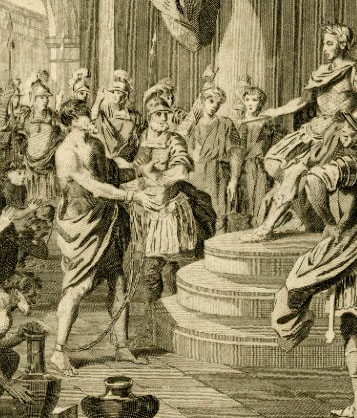
Before the Roman invasion, Caratacus is associated with the expansion of his tribe's territory. His apparent success led to the Roman invasion, nominally in support of his defeated enemies. He resisted the Romans for almost a decade, using guerrilla warfare, but when he offered a set-piece battle he was defeated by Roman forces. After defeat he fled to the territory of Queen Cartimandua, who captured him and handed him over to the Romans. He was sentenced to death but made a speech before his execution that persuaded the Emperor Claudius to spare him. Caratacus' speech to Claudius has been a popular subject in visual art.
Caratacus' name appears as both Caratacus and Caractacus in manuscripts of Tacitus, and as Καράτακος and Καρτάκης in manuscripts of Dio. Older reference works tend to favour the spelling Caractacus.
Coins minted during his rule show the beginning of his name CARA' on the obverse, but some modern scholars[who?] agree, based on historical linguistics and source criticism, that the original Common Brittonic form was *Karatākos, pronounced [karaˈtaːkos], cognate with Welsh Caradog, Breton Karadeg, and Irish Carthach, meaning "loving, beloved, dear; friend".[additional citation(s) needed]
Caratacus is named by Dio Cassius as a son of the Catuvellaunian king Cunobelinus (Cunobelin). Based on coin distribution Caratacus appears to have been the protégé of his uncle Epaticcus, who expanded Catuvellaunian power westwards most likely from his palace in Verulam, the heartland of the Catuvellauni, into the territory of the Atrebates. After Epaticcus died in about AD 35, the Atrebates, under Verica, regained some of their territory, but it appears Caratacus completely conquered the Atrebates, since Dio tells us Verica was ousted, fled to Rome and appealed to the emperor Claudius for help. This was the excuse used by Claudius to launch his invasion of Britain in the summer of 43.
The invasion targeted Caratacus' stronghold of Camulodunon (modern Colchester), previously the seat of his father Cunobelinus. Cunobelinus had died some time before the invasion. Caratacus and his brother Togodumnus led the initial defence of the country against Aulus Plautius's four legions, thought to have been around 40,000 men, primarily using guerrilla tactics. They lost much of the south-east after being defeated in two crucial battles, the Battle of the River Medway and River Thames.
Dio reports that Togodumnus was killed (although both Miles Russell and John Hind argue that Dio was mistaken in reporting Togodumnus' death, that he was defeated but survived and was later appointed by the Romans as a friendly king over a number of territories, becoming the loyal king referred to by Tacitus as Cogidubnus or Togidubnus) and the Romans conquered the Catuvellaunian territories. Their stronghold of Camulodunon was converted into the first Roman colonia in Britain, Colonia Victricensis.
We next hear of Caratacus in Tacitus's Annals, leading the Silures and Ordovices of Wales against Plautius' successor as governor, Publius Ostorius Scapula. Finally, in 50, Scapula managed to defeat Caratacus in a set-piece battle somewhere in Ordovician territory, capturing Caratacus' wife and daughter and receiving the surrender of his brothers. Caratacus himself escaped and fled north to the lands of the Brigantes (modern Yorkshire), where the Brigantian queen, Cartimandua, handed him over to the Romans in chains. This was one of the factors that led to two Brigantian revolts against Cartimandua and her Roman allies, once later in the 50s and once in 69, led by Venutius, who had once been Cartimandua's husband. With the capture of Caratacus, much of southern Britain from the Humber to the Severn was pacified and garrisoned throughout the 50s.
Hub AI
Caratacus AI simulator
(@Caratacus_simulator)
Caratacus
Caratacus was a 1st-century AD British chieftain of the Catuvellauni tribe, who resisted the Roman conquest of Britain.
Before the Roman invasion, Caratacus is associated with the expansion of his tribe's territory. His apparent success led to the Roman invasion, nominally in support of his defeated enemies. He resisted the Romans for almost a decade, using guerrilla warfare, but when he offered a set-piece battle he was defeated by Roman forces. After defeat he fled to the territory of Queen Cartimandua, who captured him and handed him over to the Romans. He was sentenced to death but made a speech before his execution that persuaded the Emperor Claudius to spare him. Caratacus' speech to Claudius has been a popular subject in visual art.
Caratacus' name appears as both Caratacus and Caractacus in manuscripts of Tacitus, and as Καράτακος and Καρτάκης in manuscripts of Dio. Older reference works tend to favour the spelling Caractacus.
Coins minted during his rule show the beginning of his name CARA' on the obverse, but some modern scholars[who?] agree, based on historical linguistics and source criticism, that the original Common Brittonic form was *Karatākos, pronounced [karaˈtaːkos], cognate with Welsh Caradog, Breton Karadeg, and Irish Carthach, meaning "loving, beloved, dear; friend".[additional citation(s) needed]
Caratacus is named by Dio Cassius as a son of the Catuvellaunian king Cunobelinus (Cunobelin). Based on coin distribution Caratacus appears to have been the protégé of his uncle Epaticcus, who expanded Catuvellaunian power westwards most likely from his palace in Verulam, the heartland of the Catuvellauni, into the territory of the Atrebates. After Epaticcus died in about AD 35, the Atrebates, under Verica, regained some of their territory, but it appears Caratacus completely conquered the Atrebates, since Dio tells us Verica was ousted, fled to Rome and appealed to the emperor Claudius for help. This was the excuse used by Claudius to launch his invasion of Britain in the summer of 43.
The invasion targeted Caratacus' stronghold of Camulodunon (modern Colchester), previously the seat of his father Cunobelinus. Cunobelinus had died some time before the invasion. Caratacus and his brother Togodumnus led the initial defence of the country against Aulus Plautius's four legions, thought to have been around 40,000 men, primarily using guerrilla tactics. They lost much of the south-east after being defeated in two crucial battles, the Battle of the River Medway and River Thames.
Dio reports that Togodumnus was killed (although both Miles Russell and John Hind argue that Dio was mistaken in reporting Togodumnus' death, that he was defeated but survived and was later appointed by the Romans as a friendly king over a number of territories, becoming the loyal king referred to by Tacitus as Cogidubnus or Togidubnus) and the Romans conquered the Catuvellaunian territories. Their stronghold of Camulodunon was converted into the first Roman colonia in Britain, Colonia Victricensis.
We next hear of Caratacus in Tacitus's Annals, leading the Silures and Ordovices of Wales against Plautius' successor as governor, Publius Ostorius Scapula. Finally, in 50, Scapula managed to defeat Caratacus in a set-piece battle somewhere in Ordovician territory, capturing Caratacus' wife and daughter and receiving the surrender of his brothers. Caratacus himself escaped and fled north to the lands of the Brigantes (modern Yorkshire), where the Brigantian queen, Cartimandua, handed him over to the Romans in chains. This was one of the factors that led to two Brigantian revolts against Cartimandua and her Roman allies, once later in the 50s and once in 69, led by Venutius, who had once been Cartimandua's husband. With the capture of Caratacus, much of southern Britain from the Humber to the Severn was pacified and garrisoned throughout the 50s.
Recent media