



Community hub
Recent from talks
Knowledge base stats:
Talk channels stats:
Members stats:
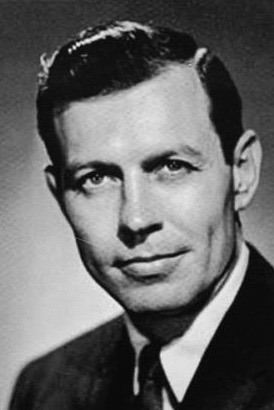
Carl Sanders
Carl Edward Sanders Sr. (May 15, 1925 – November 16, 2014) was an American lawyer and politician who served as the 74th governor of Georgia from 1963 to 1967.
Carl Sanders was born on May 15, 1925, in Augusta, Georgia, United States to a middle class family. He later stated that he had "an exceptionally happy and secure childhood." He attended the Academy of Richmond County, where he performed well academically and played on the school football team. He was made an alternate appointee to the United States Military Academy, but when the primary appointee claimed the spot Sanders accepted a football scholarship and enrolled at the University of Georgia in 1942. He played as a left-handed quarterback on the freshman football team.
While Sanders was at college, the United States entered World War II, and in 1943 he left his studies and joined the United States Army Air Forces. He was commissioned as a lieutenant and piloted B-17 Flying Fortress aircraft. He named his own bomber "Georgia Peach", but was never deployed overseas. After the war he returned to the University of Georgia to complete his studies. He studied law, passing the bar examination in early 1947 and finishing his courses in December. He played with the Georgia Bulldogs and went to the Oil Bowl. He was a member of the Chi Phi fraternity, the Phi Kappa Literary Society, and the school debate team. On September 6, 1947, he married Betty Foy, an art student he had met at the university. They had two children together. Sanders started practicing law in Augusta with Henry Hammond before establishing his own practice with several other partners. He devoted a significant amount of time to practice early on to pay off medical debt after his wife fell ill.
Sanders garnered an interest in politics from his father, who had served on the Richmond County Board of Commissioners. In 1954, Sanders won a seat in the Georgia House of Representatives, successfully defeating a "Cracker Party" candidate. Two years later he was elected to the Georgia State Senate. At the time, a rotation agreement meant the seat was typically held in successive fashion by a denizen of Richmond County, of Jefferson County, and of Glascock County. He was re-elected in 1958 and 1960, making him the only person to ever serve three consecutive terms from a multi-county Georgia senatorial constituency while the rotation agreements were in use.
In 1958 Sanders chaired a Senate committee which investigated potential corruption in the Rural Roads Authority during Governor Marvin Griffin's tenure. The committee found that the authority spent too much money on construction projects, located new roads without proper consideration, and was ineffective at maintaining existing roads. It recommended that the agency be dissolved and that future rural road projects be allocated based on population density, all financed with a pay-as-you-go system. Lieutenant Governor Ernest Vandiver became political allies with Sanders as a result of his committee work and made him Senate floor leader in 1959. Vandiver became governor, and that year a federal judge ordered the Atlanta Board of Education to draft a plan to racially desegregate schools. Vandiver called 60 people to the Governor's Mansion to discuss either proceeding with desegregation or closing the schools. Only Sanders and House floor leader Frank Twitty advised desegregation, the former fearing that suspending schools "would have created a generation of illiterates." Vandiver ultimately had schools closed only temporarily while the Georgia General Assembly revised state segregation statutes. He opposed a proposal to make the school issue subject to a statewide referendum. With the governor's support, Sanders was elected president pro tempore of the Senate on February 20, 1959, after Robert H. Jordan's resignation, and served in that position during the chamber's 1960 and 1962 regular sessions.
Sanders decided to make a bid for higher office in 1962. Initially mulling over a potential race for the office of lieutenant governor which had a retiring incumbent, he had doubts when a similarly-named Atlanta attorney, Carl F. Sanders, declared his candidacy. Carl E. Sanders suspected that the other man had been planted to confuse voters and spoil his chances by another candidate, Peter Zack Geer. Geer denied the allegation. Carl E. Sanders then decided to run for governor. At the time he launched his candidacy in late April, Georgia used the county unit system in its primaries, whereby the candidate who won the majority in most counties secured the party nomination, instead of the candidate which earned the majority of all votes across the state. This system greatly limited the chances of urban candidates for decades. Several weeks into the primary, federal courts declared this method unconstitutional, and left the nomination to be decided by popular vote. Sanders campaigned on "a platform of progress", pledging to improve education, reorganize the State Highway Department, revamp mental health and penal institutions, recruit industry, and reapportion the General Assembly.
Already seeking the nomination in the Democratic primary were former governor Marvin Griffin and incumbent Lieutenant Governor Garland T. Byrd. Byrd withdrew from the race after suffering a heart attack in May. Griffin was a staunch supporter of racial segregation. He attacked Sanders as too young for the governorship and not committed enough to defending segregation. Sanders supported segregation but felt it was useless to oppose federal integration orders. He promised to "maintain Georgia's traditional separation" but said he opposed race-baiting politics and that "I tip my hat to the past, but I take off my coat to the future." He also promised to keep public schools open, even if the federal government ordered them to integrate. Griffin held a rally with Alabama governor-elect George Wallace, another staunch segregationist, to demonstrate his support for racial separation. Sanders mocked this strategy at his own rally the same day, describing Griffin as "so weak in his belief in Georgia and her people that he plans to import an outsider to meddle in our affairs. I don't need an Alabama crutch to help me." Griffin pledged to oppose federal court orders to integrate and throughout the campaign vilified the "Negro bloc vote" in Georgia. Following a confrontation between the white supremacist Ku Klux Klan and the Georgia State Patrol at a Klan rally, Griffin offered that he was unsure of how to handle such a situation. Sanders accused the former governor of having prior knowledge of the rally and of bringing Klansmen into Georgia. Sanders also accused Griffin of having run a corrupt administration in his previous term. In the primary, he defeated Griffin, receiving 494,978 votes (58.7 percent) to Griffin's 332,746 (39 percent). Most of his support came from urban areas. He then won the general election. He took the oath of office on January 14 and was formally inaugurated as governor the following day. Aged 37 upon his assumption of the office, he was the youngest governor in the country at the time.
Sanders appointed a Governor's Commission for Efficiency and Improvement in Government, which managed reforms in the penal system, mental healthcare, the civil service, the Highway Department, the Department of Agriculture, and the Department of Education. He worked with Atlanta Mayor Ivan Allen Jr. to bring professional sports teams to the capital city, and in 1963 he recruited a friend, Rankin M. Smith Sr., to fund the creation of the Atlanta Falcons football team.
Hub AI
Carl Sanders AI simulator
(@Carl Sanders_simulator)
Carl Sanders
Carl Edward Sanders Sr. (May 15, 1925 – November 16, 2014) was an American lawyer and politician who served as the 74th governor of Georgia from 1963 to 1967.
Carl Sanders was born on May 15, 1925, in Augusta, Georgia, United States to a middle class family. He later stated that he had "an exceptionally happy and secure childhood." He attended the Academy of Richmond County, where he performed well academically and played on the school football team. He was made an alternate appointee to the United States Military Academy, but when the primary appointee claimed the spot Sanders accepted a football scholarship and enrolled at the University of Georgia in 1942. He played as a left-handed quarterback on the freshman football team.
While Sanders was at college, the United States entered World War II, and in 1943 he left his studies and joined the United States Army Air Forces. He was commissioned as a lieutenant and piloted B-17 Flying Fortress aircraft. He named his own bomber "Georgia Peach", but was never deployed overseas. After the war he returned to the University of Georgia to complete his studies. He studied law, passing the bar examination in early 1947 and finishing his courses in December. He played with the Georgia Bulldogs and went to the Oil Bowl. He was a member of the Chi Phi fraternity, the Phi Kappa Literary Society, and the school debate team. On September 6, 1947, he married Betty Foy, an art student he had met at the university. They had two children together. Sanders started practicing law in Augusta with Henry Hammond before establishing his own practice with several other partners. He devoted a significant amount of time to practice early on to pay off medical debt after his wife fell ill.
Sanders garnered an interest in politics from his father, who had served on the Richmond County Board of Commissioners. In 1954, Sanders won a seat in the Georgia House of Representatives, successfully defeating a "Cracker Party" candidate. Two years later he was elected to the Georgia State Senate. At the time, a rotation agreement meant the seat was typically held in successive fashion by a denizen of Richmond County, of Jefferson County, and of Glascock County. He was re-elected in 1958 and 1960, making him the only person to ever serve three consecutive terms from a multi-county Georgia senatorial constituency while the rotation agreements were in use.
In 1958 Sanders chaired a Senate committee which investigated potential corruption in the Rural Roads Authority during Governor Marvin Griffin's tenure. The committee found that the authority spent too much money on construction projects, located new roads without proper consideration, and was ineffective at maintaining existing roads. It recommended that the agency be dissolved and that future rural road projects be allocated based on population density, all financed with a pay-as-you-go system. Lieutenant Governor Ernest Vandiver became political allies with Sanders as a result of his committee work and made him Senate floor leader in 1959. Vandiver became governor, and that year a federal judge ordered the Atlanta Board of Education to draft a plan to racially desegregate schools. Vandiver called 60 people to the Governor's Mansion to discuss either proceeding with desegregation or closing the schools. Only Sanders and House floor leader Frank Twitty advised desegregation, the former fearing that suspending schools "would have created a generation of illiterates." Vandiver ultimately had schools closed only temporarily while the Georgia General Assembly revised state segregation statutes. He opposed a proposal to make the school issue subject to a statewide referendum. With the governor's support, Sanders was elected president pro tempore of the Senate on February 20, 1959, after Robert H. Jordan's resignation, and served in that position during the chamber's 1960 and 1962 regular sessions.
Sanders decided to make a bid for higher office in 1962. Initially mulling over a potential race for the office of lieutenant governor which had a retiring incumbent, he had doubts when a similarly-named Atlanta attorney, Carl F. Sanders, declared his candidacy. Carl E. Sanders suspected that the other man had been planted to confuse voters and spoil his chances by another candidate, Peter Zack Geer. Geer denied the allegation. Carl E. Sanders then decided to run for governor. At the time he launched his candidacy in late April, Georgia used the county unit system in its primaries, whereby the candidate who won the majority in most counties secured the party nomination, instead of the candidate which earned the majority of all votes across the state. This system greatly limited the chances of urban candidates for decades. Several weeks into the primary, federal courts declared this method unconstitutional, and left the nomination to be decided by popular vote. Sanders campaigned on "a platform of progress", pledging to improve education, reorganize the State Highway Department, revamp mental health and penal institutions, recruit industry, and reapportion the General Assembly.
Already seeking the nomination in the Democratic primary were former governor Marvin Griffin and incumbent Lieutenant Governor Garland T. Byrd. Byrd withdrew from the race after suffering a heart attack in May. Griffin was a staunch supporter of racial segregation. He attacked Sanders as too young for the governorship and not committed enough to defending segregation. Sanders supported segregation but felt it was useless to oppose federal integration orders. He promised to "maintain Georgia's traditional separation" but said he opposed race-baiting politics and that "I tip my hat to the past, but I take off my coat to the future." He also promised to keep public schools open, even if the federal government ordered them to integrate. Griffin held a rally with Alabama governor-elect George Wallace, another staunch segregationist, to demonstrate his support for racial separation. Sanders mocked this strategy at his own rally the same day, describing Griffin as "so weak in his belief in Georgia and her people that he plans to import an outsider to meddle in our affairs. I don't need an Alabama crutch to help me." Griffin pledged to oppose federal court orders to integrate and throughout the campaign vilified the "Negro bloc vote" in Georgia. Following a confrontation between the white supremacist Ku Klux Klan and the Georgia State Patrol at a Klan rally, Griffin offered that he was unsure of how to handle such a situation. Sanders accused the former governor of having prior knowledge of the rally and of bringing Klansmen into Georgia. Sanders also accused Griffin of having run a corrupt administration in his previous term. In the primary, he defeated Griffin, receiving 494,978 votes (58.7 percent) to Griffin's 332,746 (39 percent). Most of his support came from urban areas. He then won the general election. He took the oath of office on January 14 and was formally inaugurated as governor the following day. Aged 37 upon his assumption of the office, he was the youngest governor in the country at the time.
Sanders appointed a Governor's Commission for Efficiency and Improvement in Government, which managed reforms in the penal system, mental healthcare, the civil service, the Highway Department, the Department of Agriculture, and the Department of Education. He worked with Atlanta Mayor Ivan Allen Jr. to bring professional sports teams to the capital city, and in 1963 he recruited a friend, Rankin M. Smith Sr., to fund the creation of the Atlanta Falcons football team.