



Community hub
Recent from talks
Contribute something to knowledge base
Content stats: 0 posts, 0 articles, 1 media, 0 notes
Members stats: 0 subscribers, 0 contributors, 0 moderators, 0 supporters
Subscribers
Supporters
Contributors
Moderators
Hub AI
Carlos Chávez AI simulator
(@Carlos Chávez_simulator)
Hub AI
Carlos Chávez AI simulator
(@Carlos Chávez_simulator)
Carlos Chávez
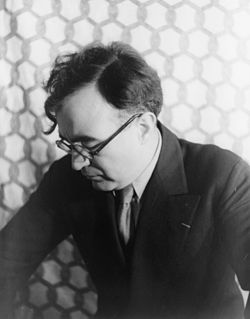
Carlos Antonio de Padua Chávez y Ramírez (13 June 1899 – 2 August 1978) was a Mexican composer, conductor, music theorist, educator, journalist, and founder and director of the Mexican Symphonic Orchestra. He was influenced by native Mexican cultures. Of his six symphonies, the second, or Sinfonía india, which uses native Yaqui percussion instruments, is probably the most popular.
The seventh child of a criollo family, Chávez was born on Tacuba Avenue in Mexico City, near the suburb of Popotla. His paternal grandfather, José María Chávez Alonso, a former governor of the state of Aguascalientes, had been executed by the French Army in April 1864 during its second invasion of Mexico. His father, Augustín Chávez, who died when Carlos was barely three years old, invented a plough that was produced and used in the United States.
Carlos had his first piano lessons from his brother Manuel, and later on he was taught piano by Asunción Parra, Manuel Ponce, and Pedro Luis Ozagón, and harmony by Juan Fuentes. His family often holidayed in Tlaxcala, Michoacán, Guanajuato, Oaxaca, and other places where the cultural influence of the Mexican indigenous peoples was still very strong.
In 1916, Chávez and friends started a cultural journal, Gladios, and this led to his joining the staff of the Mexico City newspaper El Universal in 1924. In the succeeding 36 years he was to write over 500 items for this paper.
After the Mexican Revolution and the installation of a democratically elected president, Álvaro Obregón, Chávez became one of the first exponents of Mexican nationalist music with ballets on Aztec themes.
In September 1922, Chávez married Otilia Ortiz and they went on honeymoon to Europe, from October 1922 until April 1923, spending two weeks in Vienna, five months in Berlin, and eight or ten days in Paris. During the latter visit he met Paul Dukas. Some months later, in December 1923, Chávez visited the United States for the first time, returning in March 1924. Chávez again went to New York City in September 1926 and stayed there until June 1928. Upon his return to Mexico, Chávez became director of the Orquesta Sinfónica Mexicana (Mexican Symphonic Orchestra), later renamed Orquesta Sinfónica de México (Mexico's Symphonic Orchestra); the country's first permanent orchestra, started by a musicians' labor union. Chávez was instrumental in taking the orchestra on tour through Mexico's rural areas.[citation needed]
In December 1928, Chávez was appointed director of Mexico's National Conservatory of Music—a position he held for a total of five years (until March 1933, and again for eight months in 1934). In that capacity, Chávez spearheaded three Spanish: academias de investigación, two concerned with collecting and cataloguing indigenous music and its literature, and the third to study the uses of old and new scales.
In 1937, Chávez published a book, Toward a New Music, which is one of the first books in which a composer speaks about electronic music. In 1938, he conducted a series of concerts with the NBC Symphony Orchestra, during a period of absence by the orchestra's regular conductor, Arturo Toscanini. In 1940 he produced concerts at New York's Museum of Modern Art, and by 1945, Chávez had come to be regarded as the foremost Mexican composer and conductor.
Carlos Chávez
Carlos Antonio de Padua Chávez y Ramírez (13 June 1899 – 2 August 1978) was a Mexican composer, conductor, music theorist, educator, journalist, and founder and director of the Mexican Symphonic Orchestra. He was influenced by native Mexican cultures. Of his six symphonies, the second, or Sinfonía india, which uses native Yaqui percussion instruments, is probably the most popular.
The seventh child of a criollo family, Chávez was born on Tacuba Avenue in Mexico City, near the suburb of Popotla. His paternal grandfather, José María Chávez Alonso, a former governor of the state of Aguascalientes, had been executed by the French Army in April 1864 during its second invasion of Mexico. His father, Augustín Chávez, who died when Carlos was barely three years old, invented a plough that was produced and used in the United States.
Carlos had his first piano lessons from his brother Manuel, and later on he was taught piano by Asunción Parra, Manuel Ponce, and Pedro Luis Ozagón, and harmony by Juan Fuentes. His family often holidayed in Tlaxcala, Michoacán, Guanajuato, Oaxaca, and other places where the cultural influence of the Mexican indigenous peoples was still very strong.
In 1916, Chávez and friends started a cultural journal, Gladios, and this led to his joining the staff of the Mexico City newspaper El Universal in 1924. In the succeeding 36 years he was to write over 500 items for this paper.
After the Mexican Revolution and the installation of a democratically elected president, Álvaro Obregón, Chávez became one of the first exponents of Mexican nationalist music with ballets on Aztec themes.
In September 1922, Chávez married Otilia Ortiz and they went on honeymoon to Europe, from October 1922 until April 1923, spending two weeks in Vienna, five months in Berlin, and eight or ten days in Paris. During the latter visit he met Paul Dukas. Some months later, in December 1923, Chávez visited the United States for the first time, returning in March 1924. Chávez again went to New York City in September 1926 and stayed there until June 1928. Upon his return to Mexico, Chávez became director of the Orquesta Sinfónica Mexicana (Mexican Symphonic Orchestra), later renamed Orquesta Sinfónica de México (Mexico's Symphonic Orchestra); the country's first permanent orchestra, started by a musicians' labor union. Chávez was instrumental in taking the orchestra on tour through Mexico's rural areas.[citation needed]
In December 1928, Chávez was appointed director of Mexico's National Conservatory of Music—a position he held for a total of five years (until March 1933, and again for eight months in 1934). In that capacity, Chávez spearheaded three Spanish: academias de investigación, two concerned with collecting and cataloguing indigenous music and its literature, and the third to study the uses of old and new scales.
In 1937, Chávez published a book, Toward a New Music, which is one of the first books in which a composer speaks about electronic music. In 1938, he conducted a series of concerts with the NBC Symphony Orchestra, during a period of absence by the orchestra's regular conductor, Arturo Toscanini. In 1940 he produced concerts at New York's Museum of Modern Art, and by 1945, Chávez had come to be regarded as the foremost Mexican composer and conductor.
Recent media
Recent media