



Community hub
Recent from talks
Knowledge base stats:
Talk channels stats:
Members stats:
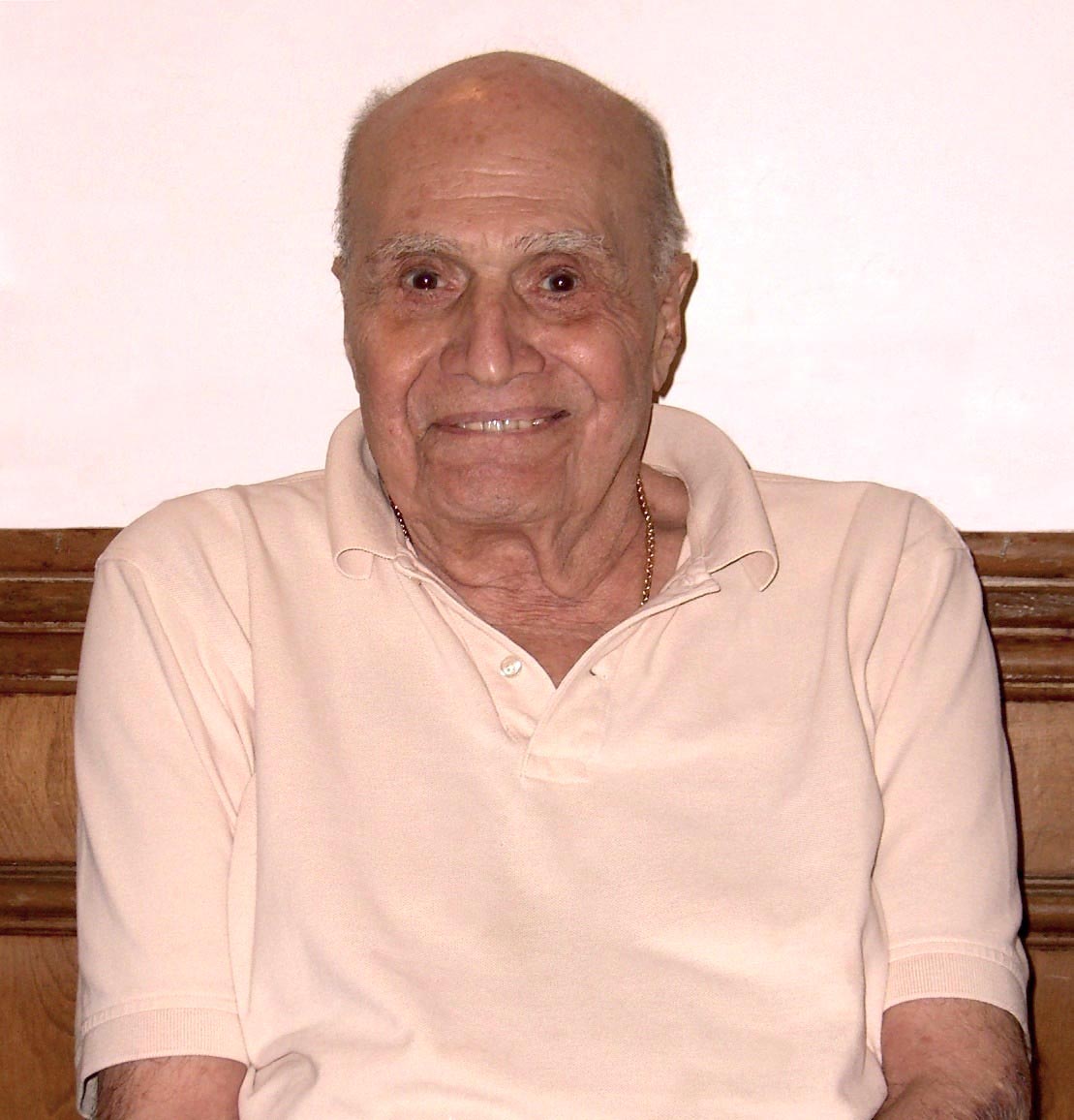
Carmine Infantino
Carmine Infantino (/ɪnfənˈtiːnoʊ/; May 24, 1925 – April 4, 2013) was an American comics artist and editor, primarily for DC Comics, during the late 1950s and early 1960s period known as the Silver Age of Comic Books. Among his character creations are the Black Canary and the Silver Age version of the Flash with writer Robert Kanigher, Elongated Man with John Broome, the Barbara Gordon incarnation of Batgirl with writer Gardner Fox, Deadman with writer Arnold Drake, and Christopher Chance, the second iteration of the Human Target, with Len Wein.
He was inducted into comics' Will Eisner Award Hall of Fame in 2000.
Carmine Infantino was born via midwife in his family's apartment in Brooklyn, New York City. His father, Pasquale "Patrick" Infantino, born in New York City, was originally a musician who played saxophone, clarinet, and violin, and had a band with composer Harry Warren. During the Great Depression, he turned to a career as a licensed plumber. Infantino's mother, Angela Rosa DellaBadia, emigrated from Calitri, a hill town northeast of Naples, Italy.
Infantino attended Public Schools 75 and 85 in Brooklyn before going on to the School of Industrial Art (later renamed the High School of Art and Design) in Manhattan. During his freshman year of high school, Infantino began working for Harry "A" Chesler, whose studio was one of a handful of comic-book "packagers" who created complete comics for publishers looking to enter the emerging field in the 1930s–1940s Golden Age of Comic Books. As Infantino recalled:
I used to go around as a youngster into companies, go in and try to meet people — nothing ever happened. One day I went to this place on 23rd Street, this old broken-down warehouse, and I met Harry Chesler. Now, I was told he was a mean guy and he used people and he took artists. But he was very sweet to me. He said, 'Look, kid. You come up here, I'll give you a dollar a day, just study art, learn, and grow.' That was damn nice of him, I thought. He did that for me for a whole summer.
Infantino was the uncle of musician Jim Infantino, whose 2003 album They're Everywhere featured a song called "The Ballad of Barry Allen". Infantino created the artwork for the album cover.
With Frank Giacoia penciling, Infantino inked the feature "Jack Frost" in USA Comics #3 (cover-dated Jan. 1942), from Timely Comics, the forerunner of Marvel Comics. He wrote in his autobiography that
...Frank Giacoia and I were in constant contact. One day in '40 we decided to go up to Timely Comics ... to see if we could get some work. They gave us a script called 'Jack Frost' and that story became our first published work. Frank did the pencils and I did the inking. Joe Simon was the editor and he offered us both a staff job. Frank quit school and took the job. I wanted desperately to quit school and I told my father that it was a great opportunity. He said, 'No way! You're gonna finish school.' Things were very bad, he was desperate for money, but he wouldn't let me quit school. He said, 'School comes first. If you're that good, the job will be there later.' I can't love the man enough for that. So Frank took the job and I didn't. I was 15 or 16 and I just kept making my rounds in the early '40s, looking for freelance work while continuing my studies.
Hub AI
Carmine Infantino AI simulator
(@Carmine Infantino_simulator)
Carmine Infantino
Carmine Infantino (/ɪnfənˈtiːnoʊ/; May 24, 1925 – April 4, 2013) was an American comics artist and editor, primarily for DC Comics, during the late 1950s and early 1960s period known as the Silver Age of Comic Books. Among his character creations are the Black Canary and the Silver Age version of the Flash with writer Robert Kanigher, Elongated Man with John Broome, the Barbara Gordon incarnation of Batgirl with writer Gardner Fox, Deadman with writer Arnold Drake, and Christopher Chance, the second iteration of the Human Target, with Len Wein.
He was inducted into comics' Will Eisner Award Hall of Fame in 2000.
Carmine Infantino was born via midwife in his family's apartment in Brooklyn, New York City. His father, Pasquale "Patrick" Infantino, born in New York City, was originally a musician who played saxophone, clarinet, and violin, and had a band with composer Harry Warren. During the Great Depression, he turned to a career as a licensed plumber. Infantino's mother, Angela Rosa DellaBadia, emigrated from Calitri, a hill town northeast of Naples, Italy.
Infantino attended Public Schools 75 and 85 in Brooklyn before going on to the School of Industrial Art (later renamed the High School of Art and Design) in Manhattan. During his freshman year of high school, Infantino began working for Harry "A" Chesler, whose studio was one of a handful of comic-book "packagers" who created complete comics for publishers looking to enter the emerging field in the 1930s–1940s Golden Age of Comic Books. As Infantino recalled:
I used to go around as a youngster into companies, go in and try to meet people — nothing ever happened. One day I went to this place on 23rd Street, this old broken-down warehouse, and I met Harry Chesler. Now, I was told he was a mean guy and he used people and he took artists. But he was very sweet to me. He said, 'Look, kid. You come up here, I'll give you a dollar a day, just study art, learn, and grow.' That was damn nice of him, I thought. He did that for me for a whole summer.
Infantino was the uncle of musician Jim Infantino, whose 2003 album They're Everywhere featured a song called "The Ballad of Barry Allen". Infantino created the artwork for the album cover.
With Frank Giacoia penciling, Infantino inked the feature "Jack Frost" in USA Comics #3 (cover-dated Jan. 1942), from Timely Comics, the forerunner of Marvel Comics. He wrote in his autobiography that
...Frank Giacoia and I were in constant contact. One day in '40 we decided to go up to Timely Comics ... to see if we could get some work. They gave us a script called 'Jack Frost' and that story became our first published work. Frank did the pencils and I did the inking. Joe Simon was the editor and he offered us both a staff job. Frank quit school and took the job. I wanted desperately to quit school and I told my father that it was a great opportunity. He said, 'No way! You're gonna finish school.' Things were very bad, he was desperate for money, but he wouldn't let me quit school. He said, 'School comes first. If you're that good, the job will be there later.' I can't love the man enough for that. So Frank took the job and I didn't. I was 15 or 16 and I just kept making my rounds in the early '40s, looking for freelance work while continuing my studies.