
.jpg/250px-Actor_Carter_DeHaven_(SAYRE_23538).jpg)


.jpg)
Community hub
Recent from talks
Contribute something
Nothing was collected or created yet.
Carter DeHaven
View on Wikipedia
Carter DeHaven (born Francis O'Callaghan; October 5, 1886 – July 20, 1977) was an American film and stage actor, film director, and screenwriter.
Key Information

.jpg)
Career
[edit]DeHaven started his career in vaudeville in 1896[1] and made his Broadway debut portraying multiple roles in the 1903 musical Whoop-Dee-Doo. Other Broadway musicals he starred in included Miss Dolly Dollars (1905), The Queen of the Moulin Rouge (1908), Hanky Panky (1912), All Aboard (1913), and His Little Widows (1917). He also directed and starred as Bertie Stewart in the 1910 Broadway play The Girl in the Taxi by playwright Stanislaus Stange.
DeHaven started acting in movies in 1915. He regularly starred in comedy shorts up until 1923. He worked for Paramount in 1920, and some of his films were directed by Charley Chase.
A 1923 short Character Studies uses editing as DeHaven "transforms" himself into the spitting image of various major film stars of the era: Buster Keaton, Harold Lloyd, Douglas Fairbanks, Roscoe 'Fatty' Arbuckle and 9-year-old Jackie Coogan. This was the only film in which Keaton and Lloyd appeared together and also marked Keaton's last film appearance with Arbuckle, his former partner.
DeHaven went on to work with Charlie Chaplin as assistant director on Modern Times (1936) and assistant producer for The Great Dictator (1940). In the latter film, he also played the Bacterian Ambassador. In the 1959–60 season, he appeared four times in various roles, and his daughter Gloria once as Rosemary Blaker, in the episode "Love Affair" on the television series Johnny Ringo. At this time he also guest-starred on The Donna Reed Show in the role of Fred Miller in "It Only Hurts When I Laugh".
In 1965, DeHaven played an old man, Henry, walking with his wife in a park in the Bewitched episode "Eye of the Beholder".[2]
Personal life and death
[edit]He was married to actress Flora Parker. They would often be paired together in films, including The College Orphan (1915) and Twin Beds (1920). Their daughter, actress Gloria DeHaven, made her first screen appearance in Modern Times. Their son, Carter DeHaven Jr., was also an actor and director. Carter Jr was born December 23, 1910, in New York City, and died March 1, 1979, in Encino, California.[3] Both Carter and Gloria DeHaven have their own stars on the Hollywood Walk of Fame. After their divorce, Carter DeHaven married Evelyn Burd (a union that also ended in divorce).
Carter DeHaven died in 1977 at age 90 and was interred at Forest Lawn Memorial Park Cemetery, Glendale, California[4]
Filmography
[edit]
| Year | Title | Role | Notes |
|---|---|---|---|
| 1915 | The College Orphan | Jack Bennett, Jr. | |
| 1916 | The Wrong Door | Philip Borden | |
| 1916 | A Youth of Fortune | Willie O'Donovan | |
| 1916 | From Broadway to a Throne | Jimmie | |
| 1916 | Timothy Dobbs, That's Me | Timothy Dobbs | |
| 1916 | He Becomes a Cop | Short | |
| 1916 | Get the Boy | ||
| 1919 | Their Day of Rest | Short | |
| 1920 | Am I Dreaming? | ||
| 1920 | Twin Beds | Signor Monti | |
| 1921 | The Girl in the Taxi | Bertie Stewart | |
| 1921 | My Lady Friends | James Smith | |
| 1921 | Marry the Poor Girl | Jack Tanner | |
| 1925 | The Thoroughbred | Archie de Rennsaler | |
| 1940 | The Great Dictator | Bacterian Ambassador | |
| 1962 | The Notorious Landlady | Old Man | Uncredited |
References
[edit]- ^ Cullen, Frank; Hackman, Florence; McNeilly, Donald (2007). Vaudeville old & new: an encyclopedia of variety performances in America. Psychology Press. pp. 303–304. ISBN 978-0-415-93853-2. Retrieved February 16, 2020.
- ^ End sequence of Bewitched episode, including credits on YouTube; accessed February 27, 2010.
- ^ "Films' Carter DeHaven Jr. Dies". Los Angeles Times. March 4, 1979.
- ^ Ellenberger, Allan R. (2001). Celebrities in Los Angeles Cemeteries: A Directory. McFarland. p. 45.
External links
[edit]
- Carter DeHaven at IMDb
- Carter DeHaven and Flora DeHaven portrait
| International | |
|---|---|
| National | |
| Artists | |
| Other | |

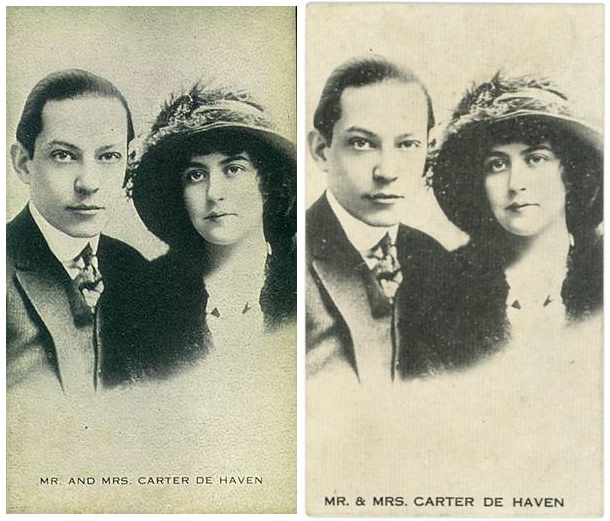
Carter DeHaven
View on GrokipediaEarly life
Birth and family background
Carter DeHaven was born Francis O'Callaghan on October 5, 1886, in Chicago, Illinois. He later adopted the stage name Carter DeHaven to suit his budding career in entertainment.[3][2] DeHaven grew up in Chicago during the late 19th century, a period when the city was transforming into a major industrial hub amid waves of immigration and urban expansion. His early childhood unfolded in this dynamic setting, which fostered a vibrant cultural scene that would later influence his path into performance. Little is documented about his parents' specific occupations, but the family's circumstances reflected the working-class milieu common among many residents of the era's growing metropolis. DeHaven had an older sister, Rose De Haven (born July 2, 1881), who similarly entered the acting profession and appeared in films and theater. No other siblings are recorded in historical accounts of his family. This sibling connection provided an early familial link to the world of entertainment, though DeHaven's own entry into the field came later through independent efforts.[7][8]Entry into entertainment
Carter DeHaven entered the world of entertainment at a young age, debuting in vaudeville around 1896 when he was about 10 years old.[9] By the early 1900s, DeHaven transitioned toward more structured stage work, building on his vaudeville foundation to pursue longer engagements and collaborative acts that foreshadowed his later successes. This shift marked a pivotal step in professionalizing his career, allowing greater stability amid the evolving entertainment landscape.[9]Career
Vaudeville and stage work
Carter DeHaven began his vaudeville career as a young performer, initially as a singer with Brock’s Marine Band in Sunday concerts before being discovered by a vaudeville scout.[10] His early acts emphasized a snappy personality and ready wit, quickly evolving into comedy sketches that showcased his versatile comedic timing.[10] By the early 1900s, DeHaven had become a headliner, touring extensively across vaudeville circuits with routines that blended humor, song, and light-hearted impersonations, establishing him as a rising star in live performance.[9] DeHaven's Broadway debut came in 1903 with the musical extravaganza Whoop-Dee-Doo, a production by the influential comedy duo Weber and Fields, where he portrayed the role of Pierrepont Grimes.[11] This collaboration marked the start of key partnerships with Weber and Fields, whose Dutch dialect sketches and slapstick routines shaped DeHaven's own comedic approach, emphasizing exaggerated characters and quick banter.[9] The show, which ran for 247 performances at Weber and Fields' Broadway Music Hall, highlighted DeHaven's ability to contribute to ensemble comedy while building his reputation in legitimate theater.[12] Throughout the early 1900s, DeHaven alternated between vaudeville tours and Broadway engagements, appearing in subsequent productions that further honed his stage presence. Notable roles included Guy Gay in the 1905 musical comedy Miss Dolly Dollars (56 performances) and Sacha in the 1908–1909 musical comedy-drama The Queen of the Moulin Rouge (160 performances).[11] He also took on directing duties alongside acting as Bertie Stewart in the 1910 farce The Girl in the Taxi (48 performances), demonstrating his growing influence in comedic theater.[11] Later credits, such as Blackie Daw in the 1912 musical Hanky Panky (104 performances) and dual roles of Dick and Cyril Mahoney in the 1913 musical comedy All Aboard (96 performances), continued his association with light-hearted, sketch-driven works.[11] By 1915, DeHaven's vaudeville and stage experience had solidified his reputation as a premier comedian, with his style—characterized by sharp wit, physical humor, and charismatic delivery—earning him widespread acclaim as a vaudeville mainstay and Broadway favorite.[9] These formative years in live performance laid the groundwork for his versatile persona, influencing generations of comedic performers through his work with mentors like Weber and Fields.[9]Silent film career
Carter DeHaven transitioned from vaudeville and stage performances to silent cinema in 1915, making his film debut in the comedy-drama The College Orphan, directed by William C. Dowlan, where he starred alongside his wife, Flora Parker DeHaven.[13] This marked the beginning of his prolific output in the medium, leveraging his established comedic timing from live entertainment to excel in short subjects and features. Over the next several years, DeHaven appeared in dozens of one- and two-reel comedies, often portraying hapless everyman characters in domestic or situational humor scenarios. By 1920, DeHaven had signed with Paramount, contributing to a series of popular shorts under the studio's banner, including Twin Beds, a feature adaptation of a stage play co-starring his wife, and comedies like Hoodooed and Teasing the Soil, directed by Charley Chase.[14][15] These films showcased his versatile physical comedy and quick wit, solidifying his status as a reliable leading man in the genre. Representative examples from this period also include A Sure Cure (1919), where he played a bumbling patient, and Twin Husbands (1922), highlighting his knack for marital farce.[16] In addition to acting, DeHaven took on directing and screenwriting duties for several shorts in the early 1920s, demonstrating his multifaceted involvement in production. Notable credits include writing and directing The Panic's On (1923) and Rice and Old Shoes (1923), both comedy shorts featuring exaggerated character antics.[3] A standout project was Character Studies (1927), an innovative short in which DeHaven used makeup, costuming, and editing to impersonate silent-era stars like Buster Keaton, Harold Lloyd, and Douglas Fairbanks, earning praise for its technical ingenuity and satirical nod to Hollywood's leading men.[1] DeHaven's silent film career peaked in the mid-1920s with consistent work in high-output comedy series, but his on-screen prominence waned by the late decade as the industry shifted to synchronized sound, rendering many silent performers' styles obsolete and prompting his pivot to behind-the-scenes roles.[2]Sound era and collaborations
With the transition to sound films in the late 1920s, DeHaven's career as a leading actor in silent comedies largely faded, as many performers from the era struggled to adapt to the demands of dialogue and synchronized audio. He pivoted to behind-the-scenes contributions, beginning with directing the 1930 short comedy She Who Gets Slapped, a Vitaphone production starring Tom Dugan as a meek husband learning to assert himself against his domineering wife.[17] DeHaven's most prominent sound-era work came through his collaboration with Charlie Chaplin, for whom he served as assistant director on Modern Times (1936). This hybrid film, incorporating limited spoken words and sound effects into Chaplin's signature visual comedy, marked a pivotal adaptation to talkies and ranked among the top-grossing releases of the year with domestic rentals exceeding $1.8 million.[18][2] He deepened this partnership as associate producer and actor in The Great Dictator (1940), playing the Bacterian Ambassador in Chaplin's bold anti-fascist satire. The film achieved significant commercial success, earning over $3.7 million in worldwide rentals and helping United Artists weather financial challenges.[19][2] These roles underscored DeHaven's value in bridging silent-era techniques with sound innovations, though his on-camera appearances remained sparse amid the industry's shift.[18]Television and later roles
As the film industry shifted toward television in the post-war era, DeHaven, then in his late sixties, transitioned to guest roles on episodic series, leveraging his experience as a seasoned character actor to portray elderly, folksy figures.[7] His earliest known television work includes appearances starting in the late 1950s, such as the 1959 episode of Death Valley Days.[20] DeHaven's most notable television appearances occurred in the late 1950s and early 1960s, often in Westerns and family sitcoms where his vaudeville-honed timing suited supporting parts. He guest-starred in four episodes of Johnny Ringo from 1959 to 1960, playing characters such as Luke, an old man, George Haig, and General Hickey, contributing to the show's frontier narratives.[21] On The Donna Reed Show, he appeared in at least two episodes, including as Mr. Merriam in the 1962 installment "On to Fairview" and as Fred Miller in "It Only Hurts When I Laugh," embodying affable, everyday elders in domestic comedies.[22] His role as Henry, a park bench regular in the 1965 Bewitched episode "Eye of the Beholder," showcased his ability to deliver wry, understated humor in a fantastical setting.[23] This pivot to television reflected broader industry changes, as Hollywood studios increasingly produced content for the small screen, while DeHaven's advancing age—nearing 80 by the mid-1960s—limited opportunities for larger film parts.[16] His final credited acting role was in Bewitched, after which he retired from on-screen work around 1965. In a rare late film appearance, DeHaven had an uncredited cameo as an old man in the 1962 comedy The Notorious Landlady, a minor return to features drawing on his earlier silent and sound era background.[24]Personal life
Marriages
Carter DeHaven married actress Flora Parker on November 4, 1905, in New York City.[25] The couple formed a successful vaudeville act, performing singing and dancing specialties together on major bills, which helped establish DeHaven's early career in entertainment.[26] Their professional partnership extended into silent films, where they frequently co-starred, blending their stage chemistry with on-screen roles. The marriage lasted until their divorce on August 29, 1928, in California, amid allegations of DeHaven's attention to other performers, though the union's end was finalized under state law shortly before his next marriage.[27] Following the divorce, DeHaven wed Evelyn Burd, a musical comedy actress from Louisville, Kentucky, on November 1, 1929, in Chicago.[28] The ceremony required two marriage licenses due to timing issues with the prior divorce's finalization under California law, highlighting the legal complexities of his personal transitions during a period of career shifts from stage to film.[28] This second marriage ended in separation after about ten years, with Burd seeking a restraining order in 1939 against DeHaven for alleged molestation during their split, culminating in divorce in 1940.[29] DeHaven's marital history reflected the mobility of his entertainment career, with his first union deeply intertwined with vaudeville touring and collaborative performances, while the second occurred amid his relocation to Hollywood and evolving roles in sound films, both ending amid the demands of professional travel and public scrutiny.[3]Family and children
Carter DeHaven and his first wife, actress Flora Parker, had three children during their marriage: son Carter DeHaven Jr. (1910–1979), daughter Marjorie Florence DeHaven (1912–1975), and daughter Gloria DeHaven (1925–2016).[16][30] Carter DeHaven Jr. pursued a career behind the camera in Hollywood, working as an assistant director, production manager, and occasional actor on notable films such as Cool Hand Luke (1967), The Caine Mutiny (1954), and The Front Page (1974).[31] His contributions extended the family's involvement in the industry, and his son, Carter DeHaven III, also worked in film production.[32] Gloria DeHaven became a prominent actress and singer, signing with Metro-Goldwyn-Mayer in the 1940s and appearing in musicals like Summer Holiday (1948) opposite Mickey Rooney, Three Little Words (1950) with Fred Astaire—where she portrayed her own mother—and Summer Stock (1950) alongside Judy Garland and Gene Kelly.[33][34] In 1960, she received a star on the Hollywood Walk of Fame at 6933 Hollywood Boulevard, honoring her enduring screen presence.[35] Gloria had four children from her marriages and continued performing in film, television, and cabaret into her later years, embodying the family's transition from vaudeville stages to postwar Hollywood stardom.[5] The DeHaven family's collective legacy in entertainment spanned generations, with Carter and Flora's vaudeville background influencing their children's entry into film and production roles, fostering a dynasty that included grandchildren active in the industry.[7] Marjorie DeHaven, while not pursuing a public career in show business, remained part of this close-knit Hollywood family unit.[16]Death and legacy
Final years and death
Following his final television role in the 1965 episode "Eye of the Beholder" of Bewitched, Carter DeHaven retired from the entertainment industry and spent his remaining years in Woodland Hills, California.[2] He died on July 20, 1977, at age 90, from natural causes while residing in Woodland Hills.[2]Recognition and influence
Carter DeHaven received a star on the Hollywood Walk of Fame in the Motion Pictures category on February 8, 1960, located at 1742 Vine Street, recognizing his extensive contributions to film as an actor, director, and writer.[1] This honor underscores his transition from vaudeville performer to a key figure in early Hollywood cinema. Following his death, DeHaven was interred at Forest Lawn Memorial Park in Glendale, California, a site that serves as a final resting place for many entertainment industry pioneers.[16] DeHaven's influence on silent comedy is evident in his role as a bridge between vaudeville traditions and the emerging film medium, where he starred in light comedies during the 1910s and 1920s, bringing stage-honed comedic timing to the screen.[2] His 1927 short film Character Studies, produced by Educational Pictures, exemplifies this by showcasing his quick-change impersonations of prominent silent-era comedians such as Buster Keaton, Harold Lloyd, and Roscoe "Fatty" Arbuckle, highlighting the vaudeville roots of film comedy.[36] Through such works, DeHaven contributed to the evolution of comedic performance styles that influenced subsequent generations of filmmakers and performers. DeHaven's family legacy in Hollywood is marked by his daughter, actress Gloria DeHaven, who also earned her own star on the Walk of Fame and carried forward the family's entertainment dynasty across vaudeville, film, and television.[1] In modern film histories, DeHaven is acknowledged for his behind-the-scenes collaborations, including serving as assistant director on Charlie Chaplin's Modern Times (1936) and assistant producer on The Great Dictator (1940), which highlight his enduring impact on comedic and narrative filmmaking techniques.[2] His films continue to be featured in archival screenings and compilations dedicated to silent comedy preservation.[37]Filmography
Films
Carter DeHaven began his film career in the silent era, appearing primarily in comedies alongside his wife, Flora Parker DeHaven, through their production company, Carter De Haven Productions. His early work included acting, writing, directing, and producing short films and features, often drawing from vaudeville-style humor.[3] Between 1915 and 1923, DeHaven starred in a series of comedy shorts, many of which he also wrote or directed, focusing on domestic mishaps and lighthearted marital antics.[38] Several of these early productions are now lost, including key features like Twin Beds. DeHaven's debut feature was The College Orphan (1915), where he played the lead role of Jack Bennett, Jr., a young man navigating college life and family drama; the film was directed by William C. Dowlan and co-starred Flora Parker DeHaven.[13] In 1916, he appeared as Philip Borden in the short The Wrong Door, a comedy about mistaken identities, which he also wrote. By 1920, DeHaven took on the role of Signor Monti in Twin Beds, a lost adaptation of a 1914 Broadway play, produced under his company's banner and featuring his signature comedic timing in scenes of marital confusion.[39] Although not credited as director for this feature, he helmed numerous shorts around this period, such as The Panic's On (1923), where he and Flora portrayed a bumbling couple facing superstitious woes.[40] In the 1920s, DeHaven directed and starred in additional shorts, including The Panic's On (1923), a frantic tale of household chaos, and Rice and Old Shoes (1923), written by DeHaven, depicting a honeymoon couple's comedic quest for privacy.[38][41] These one- and two-reel comedies exemplified his contributions to early Hollywood's short film format, often blending physical comedy with scripted dialogue.[3] His directing output totaled at least 19 shorts during this era, many uncredited or lost to time.[3] Transitioning to the sound era, DeHaven served as second unit or assistant director on Charlie Chaplin's Modern Times (1936), contributing to the film's production logistics. His final major film credit came in The Great Dictator (1940), where he appeared uncredited as the Bacterian Ambassador in a brief diplomatic scene and assisted as producer, marking a collaboration with Chaplin that highlighted his behind-the-scenes expertise.[42][1]| Year | Title | Role(s) | Notes |
|---|---|---|---|
| 1915 | The College Orphan | Actor (Jack Bennett, Jr.) | Feature debut; co-starred Flora Parker DeHaven[13] |
| 1916 | The Wrong Door | Actor (Philip Borden), Writer | Short comedy |
| 1920 | Twin Beds | Actor (Signor Monti), Producer | Lost feature; Carter De Haven Productions[39] |
| 1920 | Hoodooed | Actor, with Flora Parker DeHaven | Short; superstitious comedy[40] |
| 1923 | The Panic's On | Director, Actor | Short; domestic farce[38] |
| 1923 | Rice and Old Shoes | Writer (story), Actor | Short[41] |
| 1936 | Modern Times | Assistant Director | Charlie Chaplin feature |
| 1940 | The Great Dictator | Actor (Bacterian Ambassador, uncredited), Assistant Producer | Charlie Chaplin feature[42] |
Television appearances
Carter DeHaven transitioned to television in the mid-1950s, making guest appearances primarily in Western anthology series and family sitcoms during the late 1950s and early 1960s. His roles often portrayed elderly or authoritative figures, leveraging his vaudeville background for character-driven performances. These appearances marked a resurgence in his acting career after a period focused on production and directing work.[16] DeHaven's television debut came on a variety show, followed by recurring guest spots that showcased his versatility in dramatic and comedic contexts. Notable among these were his roles in popular Westerns, where he embodied grizzled supporting characters, contributing to the genre's episodic storytelling. His final screen role came in a supernatural sitcom, cementing his legacy across media eras.[3]| Year | Series | Episode | Role | Citation |
|---|---|---|---|---|
| 1956 | The Ed Sullivan Show | Episode #9.28 | Self (with daughter Gloria DeHaven) | [43] |
| 1958 | The Donna Reed Show | "It Only Hurts When I Laugh" | Fred Miller | [44] |
| 1959 | Death Valley Days | "The Reluctant Gun" | Judge | [20] |
| 1959 | Tombstone Territory | "To the Last Man" | Rafe | [45] |
| 1959 | Johnny Ringo | "The Posse" | General Hickey | [46] |
| 1959 | Law of the Plainsman | "The Innocents" | Charlie Banner | [47] |
| 1961 | Lock Up | "End of a Titan" | Harry Frisbee | [48] |
| 1962 | The Donna Reed Show | "On to Fairview" | Mr. Merriam | [22] |
| 1965 | Bewitched | "Eye of the Beholder" | Henry | [23] |