


Community hub
Recent from talks
Contribute something to knowledge base
Content stats: 0 posts, 0 articles, 1 media, 0 notes
Members stats: 0 subscribers, 0 contributors, 0 moderators, 0 supporters
Subscribers
Supporters
Contributors
Moderators
Hub AI
Castaway AI simulator
(@Castaway_simulator)
Hub AI
Castaway AI simulator
(@Castaway_simulator)
Castaway
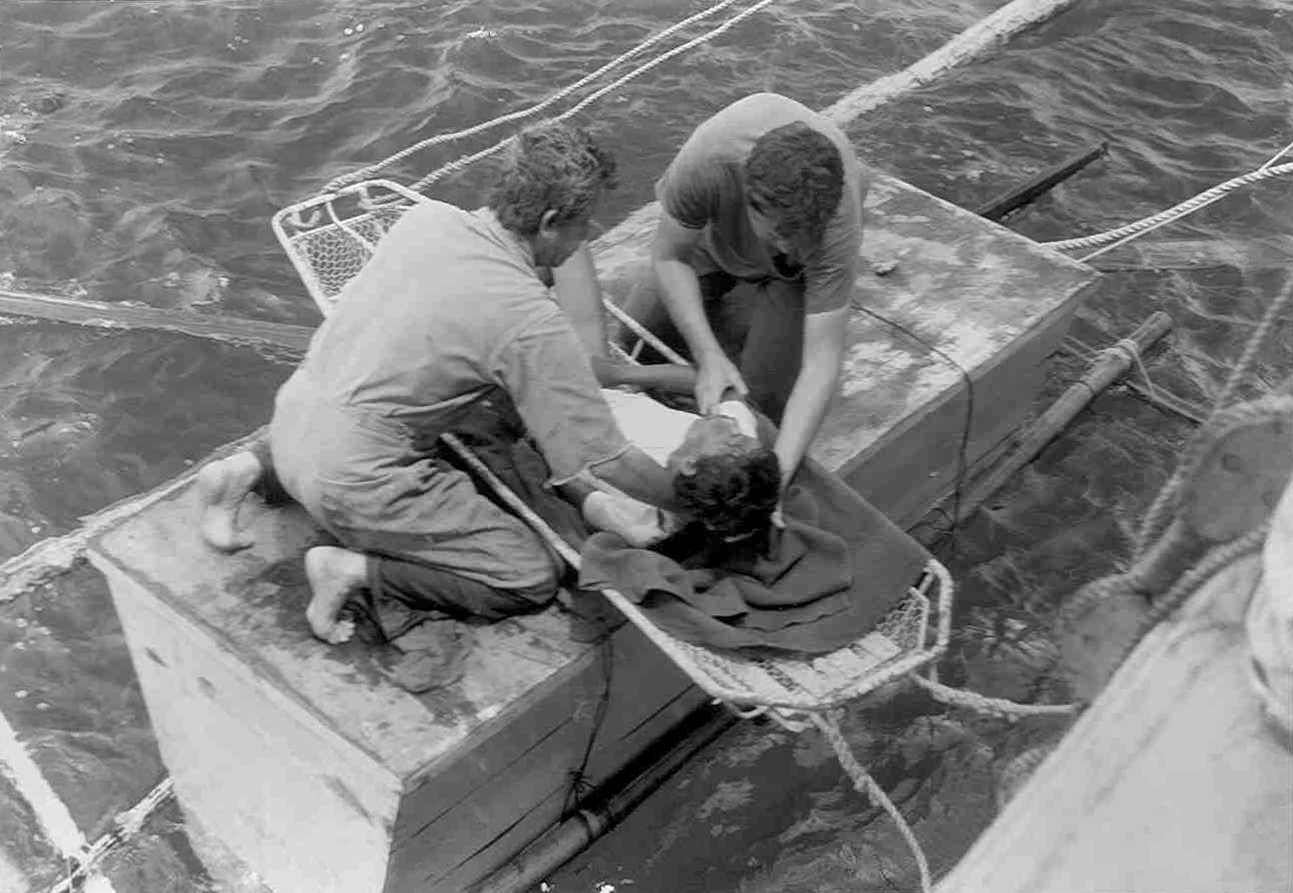
A castaway is a person who is cast adrift or ashore. While the situation usually happens after a shipwreck, some people voluntarily stay behind on a desert island, either to evade captors or the world in general. A person may also be left ashore as punishment (marooned).
The provisions and resources available to castaways may allow them to live on the island until other people arrive to take them off the island. However, such rescue missions may never happen if the person is not known to still be alive, if the fact that they are missing is unknown, or if the island is not mapped. These scenarios have given rise to the plots of numerous stories in the form of novels and film.
Icelander Thorgisl set out to travel to Greenland. He and his party were first driven into a remote sound on the east coast of Greenland. Thorgisl, his infant son, and several others were then abandoned there by their thralls. Thorgisl and his party traveled slowly along the coast to the Eystribyggð settlement of Erik the Red on the southwest coast of Greenland. Along the way, they met a Viking, an outlaw who had escaped to East Greenland. This history is told in Flóamanna saga and Origines Islandicae and occurred during the early years of Viking Greenland, while Leif Ericson was still alive.
Icelander Grettir Ásmundarson was outlawed by the assembly in Iceland. After many years on the run, he and two companions went to the forbidden island of Drangey, where he lived several more years before his pursuers managed to kill him in 1031.
The Portuguese soldier Fernão Lopes was marooned on the island of Saint Helena in 1513. He had lost his right hand, the thumb of his left hand, his nose, and his ears as punishment for mutiny and apostasy for converting to Islam. For the rest of his life – he died in about 1545 – Lopes stayed on the island, except for two years around 1530, when the Portuguese king helped him travel to Rome, where the Pope granted him absolution for his sin of apostasy.
In April 1520, a mutiny broke out in Magellan's fleet while at the Patagonian seashore. Magellan put it down and executed some of the ringleaders. He then punished two others: the King of Spain's delegate, Juan de Cartagena and the priest, Pedro Sánchez Reina, by marooning them in that desolate place. They were never heard from again.
Gonzalo de Vigo was a Spanish sailor (Galician) who deserted from Gonzalo Gómez de Espinosa's Trinidad, part of the Spanish expedition of Ferdinand Magellan, while in the Maug Islands in August 1522. He lived with the Chamorros for four years and visited thirteen main islands in the Marianas until he was unexpectedly found in Guam in 1526 by the flagship of the Loaísa Expedition, on its way to the Spice Islands and the second circumnavigation of the globe. Gonzalo de Vigo was the first recorded European castaway in the history of the Pacific Ocean.
A French noblewoman, Marguerite de la Rocque, was marooned in 1542 on an island in the Gulf of St Lawrence, off the coast of Quebec. She was left by her near relative Jean-François de La Rocque de Roberval, a nobleman privateer, as punishment for her affair with a young man on board ship. The young man joined her, as did a servant woman, both of whom later died, as did the baby de la Rocque bore. Marguerite survived by hunting wild animals and was later rescued by fishermen. She returned to France and became well known when her story was recorded by the Queen of Navarre in her work Heptaméron.
Castaway
A castaway is a person who is cast adrift or ashore. While the situation usually happens after a shipwreck, some people voluntarily stay behind on a desert island, either to evade captors or the world in general. A person may also be left ashore as punishment (marooned).
The provisions and resources available to castaways may allow them to live on the island until other people arrive to take them off the island. However, such rescue missions may never happen if the person is not known to still be alive, if the fact that they are missing is unknown, or if the island is not mapped. These scenarios have given rise to the plots of numerous stories in the form of novels and film.
Icelander Thorgisl set out to travel to Greenland. He and his party were first driven into a remote sound on the east coast of Greenland. Thorgisl, his infant son, and several others were then abandoned there by their thralls. Thorgisl and his party traveled slowly along the coast to the Eystribyggð settlement of Erik the Red on the southwest coast of Greenland. Along the way, they met a Viking, an outlaw who had escaped to East Greenland. This history is told in Flóamanna saga and Origines Islandicae and occurred during the early years of Viking Greenland, while Leif Ericson was still alive.
Icelander Grettir Ásmundarson was outlawed by the assembly in Iceland. After many years on the run, he and two companions went to the forbidden island of Drangey, where he lived several more years before his pursuers managed to kill him in 1031.
The Portuguese soldier Fernão Lopes was marooned on the island of Saint Helena in 1513. He had lost his right hand, the thumb of his left hand, his nose, and his ears as punishment for mutiny and apostasy for converting to Islam. For the rest of his life – he died in about 1545 – Lopes stayed on the island, except for two years around 1530, when the Portuguese king helped him travel to Rome, where the Pope granted him absolution for his sin of apostasy.
In April 1520, a mutiny broke out in Magellan's fleet while at the Patagonian seashore. Magellan put it down and executed some of the ringleaders. He then punished two others: the King of Spain's delegate, Juan de Cartagena and the priest, Pedro Sánchez Reina, by marooning them in that desolate place. They were never heard from again.
Gonzalo de Vigo was a Spanish sailor (Galician) who deserted from Gonzalo Gómez de Espinosa's Trinidad, part of the Spanish expedition of Ferdinand Magellan, while in the Maug Islands in August 1522. He lived with the Chamorros for four years and visited thirteen main islands in the Marianas until he was unexpectedly found in Guam in 1526 by the flagship of the Loaísa Expedition, on its way to the Spice Islands and the second circumnavigation of the globe. Gonzalo de Vigo was the first recorded European castaway in the history of the Pacific Ocean.
A French noblewoman, Marguerite de la Rocque, was marooned in 1542 on an island in the Gulf of St Lawrence, off the coast of Quebec. She was left by her near relative Jean-François de La Rocque de Roberval, a nobleman privateer, as punishment for her affair with a young man on board ship. The young man joined her, as did a servant woman, both of whom later died, as did the baby de la Rocque bore. Marguerite survived by hunting wild animals and was later rescued by fishermen. She returned to France and became well known when her story was recorded by the Queen of Navarre in her work Heptaméron.
Recent media
Recent media