



Community hub
Recent from talks
Knowledge base stats:
Talk channels stats:
Members stats:
Catacombs of Rome
The Catacombs of Rome (Italian: Catacombe di Roma) are ancient catacombs, underground burial places in and around Rome, of which there are at least forty, some rediscovered since 1578, others even as late as the 1950s.
There are more than fifty catacombs in the underground of Rome in which about 150 km of tunnels run.
Though most famous for Christian burials, either in separate catacombs or mixed together, Jews and also adherents of a variety of pagan Roman religions were buried in catacombs, beginning in the 2nd century AD, occasioned by the ancient Roman ban on burials within a city, and also as a response to overcrowding and shortage of land. The most extensive and perhaps the best known is the Christian Catacomb of Callixtus located near the Park of the Caffarella, but there are other sites, both Christian and not, scattered around the city, some of which are now engulfed by modern urban sprawl.
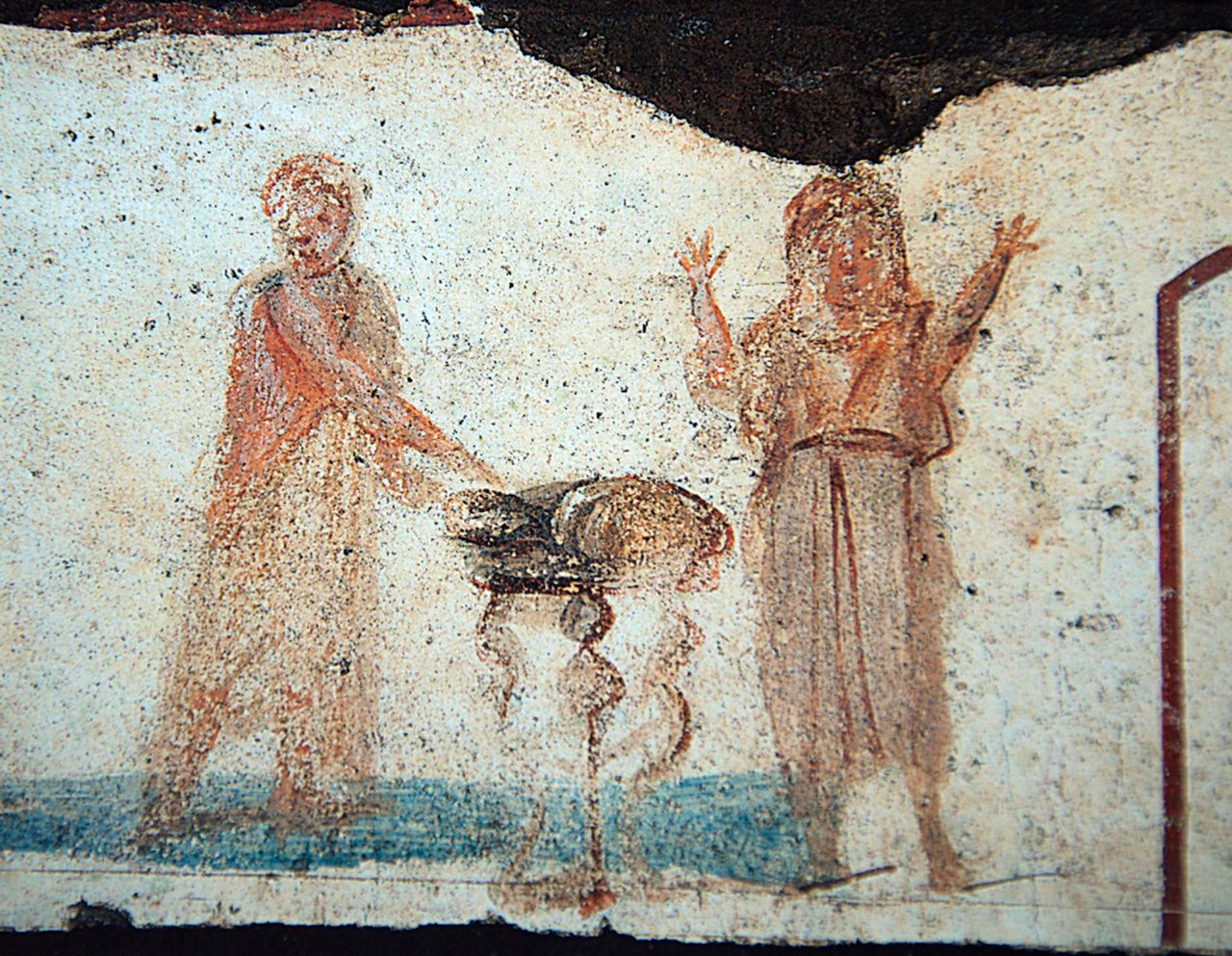
The Christian catacombs are extremely important for the history of Early Christian art, as they contain the great majority of examples from before about 400 AD, in fresco and sculpture, as well as gold glass medallions (these, like most bodies, have been removed). The Jewish catacombs are similarly important for the study of Jewish culture at this early period.
The word catacombs comes from the Latin root word catatumbas meaning either "among the tombs" or, according to other translations from the original Late Latin, "next to the quarry". The later translation stems from the first excavations done to create the catacombs system, which was conducted outside of Rome near the quarry.
The Etruscan civilization dominated a territory including the area which now includes Rome from perhaps 900 to 100 BC. Like many other European peoples, it had buried its dead in excavated underground chambers, such as the Tomb of the Capitals, and less complex tumuli. In contrast, the original Roman custom had been cremation of the human body, after which the burnt remains were kept in a pot, urn, or ash-chest, often deposited in a columbarium or dovecote. Rome faced two problems in the 2nd century CE: overpopulation and a lack of land. The city was growing, and many of the buildings were four or five stories tall. Since burials were not allowed inside the city walls, and early Christians did not agree with the pagan practice of cremating their dead, communal underground cemeteries provided a practical alternative. From about the 2nd century AD, inhumation (burial of unburnt human remains) became customary, either in graves or, for those who could afford them, in sarcophagi, often elaborately carved. By the 4th century, burial had overtaken cremation as the usual practice, and the construction of tombs had grown greater and spread throughout the empire. Jews and Christians preferred burial due to the idea of preserving the dead body for the resurrection. Considerable tracts of the ancient roads leading out of Rome and other Roman cities, like the Via Appia to this day, had monumental tombs running alongside them. These would inevitably cost a fortune to construct, whereas clearly in digging out of the catacombs would be less expensive.
Despite widespread popular modern ideas, these tunnels were probably not used for regular worship at first, but simply for burial. However, extending pre-existing Roman customs, memorial services, and celebrations of the anniversaries of Christian martyrs took place there. There are sixty known subterranean burial chambers in Rome. They were built outside the walls along main Roman roads, like the Via Appia, the Via Ostiense, the Via Labicana, the Via Tiburtina and the Via Nomentana. Names of the catacombs—like St. Calixtus and St. Sebastian, which is alongside Via Appia—refer to martyrs that may have been buried there. However, about 80% of the excavations used for Christian burials date to after the time of the persecutions.
Through research, it has been found that the population's diet consisted of freshwater fish. Sample D9-W-XVI-8, considered to be a two-year-old child, shows that children in Ancient Rome were breastfed and this child, in particular, had not yet been weaned off its mother. This results from the fact that the δ15N values had not begun to decline.
Hub AI
Catacombs of Rome AI simulator
(@Catacombs of Rome_simulator)
Catacombs of Rome
The Catacombs of Rome (Italian: Catacombe di Roma) are ancient catacombs, underground burial places in and around Rome, of which there are at least forty, some rediscovered since 1578, others even as late as the 1950s.
There are more than fifty catacombs in the underground of Rome in which about 150 km of tunnels run.
Though most famous for Christian burials, either in separate catacombs or mixed together, Jews and also adherents of a variety of pagan Roman religions were buried in catacombs, beginning in the 2nd century AD, occasioned by the ancient Roman ban on burials within a city, and also as a response to overcrowding and shortage of land. The most extensive and perhaps the best known is the Christian Catacomb of Callixtus located near the Park of the Caffarella, but there are other sites, both Christian and not, scattered around the city, some of which are now engulfed by modern urban sprawl.
The Christian catacombs are extremely important for the history of Early Christian art, as they contain the great majority of examples from before about 400 AD, in fresco and sculpture, as well as gold glass medallions (these, like most bodies, have been removed). The Jewish catacombs are similarly important for the study of Jewish culture at this early period.
The word catacombs comes from the Latin root word catatumbas meaning either "among the tombs" or, according to other translations from the original Late Latin, "next to the quarry". The later translation stems from the first excavations done to create the catacombs system, which was conducted outside of Rome near the quarry.
The Etruscan civilization dominated a territory including the area which now includes Rome from perhaps 900 to 100 BC. Like many other European peoples, it had buried its dead in excavated underground chambers, such as the Tomb of the Capitals, and less complex tumuli. In contrast, the original Roman custom had been cremation of the human body, after which the burnt remains were kept in a pot, urn, or ash-chest, often deposited in a columbarium or dovecote. Rome faced two problems in the 2nd century CE: overpopulation and a lack of land. The city was growing, and many of the buildings were four or five stories tall. Since burials were not allowed inside the city walls, and early Christians did not agree with the pagan practice of cremating their dead, communal underground cemeteries provided a practical alternative. From about the 2nd century AD, inhumation (burial of unburnt human remains) became customary, either in graves or, for those who could afford them, in sarcophagi, often elaborately carved. By the 4th century, burial had overtaken cremation as the usual practice, and the construction of tombs had grown greater and spread throughout the empire. Jews and Christians preferred burial due to the idea of preserving the dead body for the resurrection. Considerable tracts of the ancient roads leading out of Rome and other Roman cities, like the Via Appia to this day, had monumental tombs running alongside them. These would inevitably cost a fortune to construct, whereas clearly in digging out of the catacombs would be less expensive.
Despite widespread popular modern ideas, these tunnels were probably not used for regular worship at first, but simply for burial. However, extending pre-existing Roman customs, memorial services, and celebrations of the anniversaries of Christian martyrs took place there. There are sixty known subterranean burial chambers in Rome. They were built outside the walls along main Roman roads, like the Via Appia, the Via Ostiense, the Via Labicana, the Via Tiburtina and the Via Nomentana. Names of the catacombs—like St. Calixtus and St. Sebastian, which is alongside Via Appia—refer to martyrs that may have been buried there. However, about 80% of the excavations used for Christian burials date to after the time of the persecutions.
Through research, it has been found that the population's diet consisted of freshwater fish. Sample D9-W-XVI-8, considered to be a two-year-old child, shows that children in Ancient Rome were breastfed and this child, in particular, had not yet been weaned off its mother. This results from the fact that the δ15N values had not begun to decline.