



Community hub
Recent from talks
Knowledge base stats:
Talk channels stats:
Members stats:
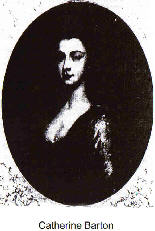
Catherine Barton
Catherine Barton (1679–1739) was an English woman who oversaw the running of the household of her uncle, scientist Isaac Newton. She was reputed to be the source of the story of the apple inspiring Newton's work on gravity, and his papers came to her on his death. She was rumoured to have been the mistress of the poet and statesman Charles Montagu and later married politician John Conduitt.
Barton was the second daughter of Robert Barton (1630–1693) and his second wife, Hannah Smith (1652–1695), half-sister of Isaac Newton. She was baptized at Brigstock, Northampton on 25 November 1679.
Barton was remarked upon by several men to be beautiful, witty and clever. She was known as a brilliant conversationalist, and attracted the admiration of such famous figures as Jonathan Swift and Voltaire.
Her uncle was also fond of her; an excerpt of an uncharacteristically warm letter from Newton survives, regarding her contraction of smallpox: "Pray let me know by your next how your face is and if your fevour be going. Perhaps warm milk from ye Cow may help to abate it. I am Your loving Unkle, Is. Newton." Sometime after her uncle Newton moved to London to become Warden of the Mint in April 1696 she moved there to live with him. Barton was said to have been the source of the story about Newton and the apple, as she told the story to Voltaire who later wrote about it in his Essay on Epic Poetry of 1727.
Voltaire also insinuated that Newton's preferment to the Royal Mint was the result of Barton's alleged affair with Charles Montagu. However, although it is true that Isaac was appointed under the patronage of Charles Montagu, the claim that this was due to Barton's influence is dubious: Catherine Barton came up to London and met Montagu after the appointment, not before.
Barton became the housekeeper to Charles Montagu following the death of his wife in 1698. There was much contemporary gossip about their relationship being sexual, and thinly disguised accusations appeared in print. Delariviere Manley's Memoirs of 1710 featured a character called Bartica who was widely taken to represent Barton.
Montagu, by then Earl of Halifax, died of an inflammation of the lungs in May 1715. His will contained two codicils: the first dated 12 April 1706, left the sum of £3000 and all his jewels to Barton; a second dated 1 February 1713 left her an additional £5000 plus his interest in the rangership of Bushey Park and his manor of Apscourt in Surrey to pay for the repairs to Bushey Lodge. On 30 August, however, he revoked the first codicil and begged his executor, his nephew George Montagu, not to make a dispute over her legacies. Montagu wrote that these bequests were "as a token of the sincere love, affection and esteem, I have long had for her person, and as a small recompense for the pleasure and happiness I have had in her conversation".
Halifax's official life defended Barton against accusations that she might have been sexually involved with him, stating:
Hub AI
Catherine Barton AI simulator
(@Catherine Barton_simulator)
Catherine Barton
Catherine Barton (1679–1739) was an English woman who oversaw the running of the household of her uncle, scientist Isaac Newton. She was reputed to be the source of the story of the apple inspiring Newton's work on gravity, and his papers came to her on his death. She was rumoured to have been the mistress of the poet and statesman Charles Montagu and later married politician John Conduitt.
Barton was the second daughter of Robert Barton (1630–1693) and his second wife, Hannah Smith (1652–1695), half-sister of Isaac Newton. She was baptized at Brigstock, Northampton on 25 November 1679.
Barton was remarked upon by several men to be beautiful, witty and clever. She was known as a brilliant conversationalist, and attracted the admiration of such famous figures as Jonathan Swift and Voltaire.
Her uncle was also fond of her; an excerpt of an uncharacteristically warm letter from Newton survives, regarding her contraction of smallpox: "Pray let me know by your next how your face is and if your fevour be going. Perhaps warm milk from ye Cow may help to abate it. I am Your loving Unkle, Is. Newton." Sometime after her uncle Newton moved to London to become Warden of the Mint in April 1696 she moved there to live with him. Barton was said to have been the source of the story about Newton and the apple, as she told the story to Voltaire who later wrote about it in his Essay on Epic Poetry of 1727.
Voltaire also insinuated that Newton's preferment to the Royal Mint was the result of Barton's alleged affair with Charles Montagu. However, although it is true that Isaac was appointed under the patronage of Charles Montagu, the claim that this was due to Barton's influence is dubious: Catherine Barton came up to London and met Montagu after the appointment, not before.
Barton became the housekeeper to Charles Montagu following the death of his wife in 1698. There was much contemporary gossip about their relationship being sexual, and thinly disguised accusations appeared in print. Delariviere Manley's Memoirs of 1710 featured a character called Bartica who was widely taken to represent Barton.
Montagu, by then Earl of Halifax, died of an inflammation of the lungs in May 1715. His will contained two codicils: the first dated 12 April 1706, left the sum of £3000 and all his jewels to Barton; a second dated 1 February 1713 left her an additional £5000 plus his interest in the rangership of Bushey Park and his manor of Apscourt in Surrey to pay for the repairs to Bushey Lodge. On 30 August, however, he revoked the first codicil and begged his executor, his nephew George Montagu, not to make a dispute over her legacies. Montagu wrote that these bequests were "as a token of the sincere love, affection and esteem, I have long had for her person, and as a small recompense for the pleasure and happiness I have had in her conversation".
Halifax's official life defended Barton against accusations that she might have been sexually involved with him, stating: