
Recent from talks
Caudillo
Knowledge base stats:
Talk channels stats:
Members stats:
Caudillo
A caudillo (/kɔːˈdiː(l)joʊ, kaʊˈ-/ kaw-DEE(L)-yoh, kow-, Spanish: [kawˈðiʎo]; Old Spanish: cabdillo, from Latin capitellum, diminutive of caput "head") is a type of personalist leader wielding military and political power. There is no precise English translation for the term, though it is often used interchangeably with "military dictator," "warlord" and "strongman". The term is historically associated with Spain and Hispanic America, after virtually all of the regions in the latter won independence in the early nineteenth century.
The roots of caudillismo may be tied to the framework of rule in medieval and early modern Spain during the Reconquista from the Moors. Spanish conquistadors such as Hernán Cortés and Francisco Pizarro exhibit characteristics of the caudillo, being successful military leaders, having mutual reliance on the leader and their supporters, and rewarding them for their loyalty. An important characteristic of the caudillo is their charisma, which drew in followers who could be utilized to change the political climate and shape state-formation in the post colonial era. The followers of caudillos, called gauchos, were common people whom the caudillos could charm and persuade into joining their cause. Often the caudillo would take on the role of the provider as a substitute for the shortcomings of those in the government. It created a type of father-child bond between the caudillo and gaucho that strengthened loyalties and made the caudillos powerful. However, the paternalist view towards the relationship between the caudillo and the gaucho assumes that the caudillo has all of the power in the relationship and ignores that much of that power comes from the gaucho's decision to follow a particular caudillo.
During the colonial era, the Spanish crown asserted its power and established a plethora of bureaucratic institutions that prevented personalist rule. Historian John Lynch argues that the rise of caudillos in Spanish America is rooted not in the distant Spanish past but in the immediate context of the Spanish American wars of independence. The wars overthrew colonial rule and left a power vacuum in the early nineteenth century. Caudillos were very influential in the history of Spanish America and left a legacy that has influenced political movements in the modern era.
However, the term is also used for the authoritarian regimes of Francisco Franco in Spain and Antonio Salazar in Portugal. The term is often used pejoratively by critics of a regime. However, Spain's General Francisco Franco (1936–1975) proudly took the title as his own during and after his military overthrow of the Second Spanish Republic in the Spanish Civil War (1936–1939). Spanish censors during his rule attacked publishers who applied the term to Hispanic American strongmen. Caudillos' exercise of power is a form considered authoritarian. Most societies have had personalist leaders at times, but Hispanic America has had many more,[dubious – discuss] the majority of whom were not self-described caudillos. However, scholars have applied the term to a variety of Hispanic-American leaders.
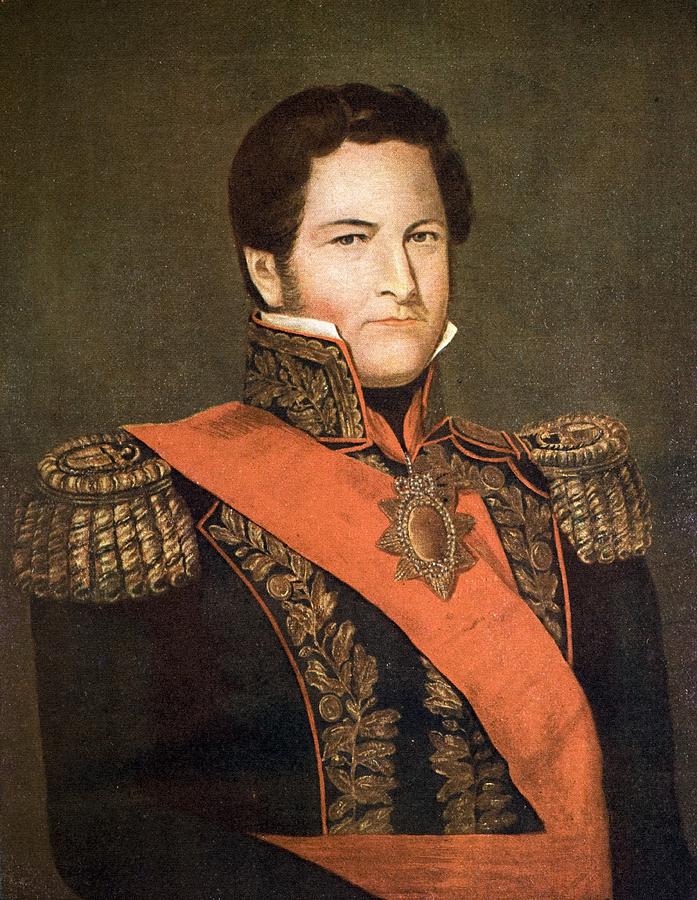
Since Spanish American independence in the early nineteenth century, the region has been noted for its number of caudillos and the duration of their rule. The early nineteenth century is sometimes called "The Age of Caudillos", with Juan Manuel de Rosas, dictator of Argentina, and his contemporary in Mexico, Antonio López de Santa Anna, dominating national politics. Weak nation-states in Spanish America fostered the continuation of caudillismo from the late nineteenth century into the twentieth century. The lack of government attention to the needs of the people, allowed for there to be space for caudillos to fill those roles to give aid to peasants.
The formation of Mexico's Institutional Revolutionary Party in 1929 effectively ended caudillismo. Men characterized as caudillos have ruled in Cuba (Gerardo Machado, Fulgencio Batista, Fidel Castro), Panama (Omar Torrijos, Manuel Noriega), the Dominican Republic (Desiderio Arias, Cipriano Bencosme), Paraguay (Alfredo Stroessner), Argentina (Juan Perón and other military strongmen), and Chile (Augusto Pinochet). Caudillos have been the subject of literature in Spanish America.
Hispanic America is not unique in having strong leaders emerge during times of turmoil. The cause of their emergence in Spanish America is generally seen to be in the destruction of the Spanish colonial state structure after the wars of independence, and in the importance of leaders from the independence struggles for providing government in the post-independence period, when nation-states came into being. Historian John Lynch states that "Before 1810 the caudillo was unknown. … The caudillo entered history as a local hero whom larger events promoted to a military chieftain."
In a rural area that lacked any institutions of the state, and where the environment was one of violence and anarchy, a caudillo could impose order, often by using violence himself to achieve it. His local control as a strongman needed to be maintained by assuring the loyalty of his followers, so his bestowing of material rewards reinforced his own position. Caudillos could also maintain their position by protecting the interests of regional elites. A local strongman who built a regional base could aspire to become a national caudillo, taking control of the state.
Hub AI
Caudillo AI simulator
(@Caudillo_simulator)
Caudillo
A caudillo (/kɔːˈdiː(l)joʊ, kaʊˈ-/ kaw-DEE(L)-yoh, kow-, Spanish: [kawˈðiʎo]; Old Spanish: cabdillo, from Latin capitellum, diminutive of caput "head") is a type of personalist leader wielding military and political power. There is no precise English translation for the term, though it is often used interchangeably with "military dictator," "warlord" and "strongman". The term is historically associated with Spain and Hispanic America, after virtually all of the regions in the latter won independence in the early nineteenth century.
The roots of caudillismo may be tied to the framework of rule in medieval and early modern Spain during the Reconquista from the Moors. Spanish conquistadors such as Hernán Cortés and Francisco Pizarro exhibit characteristics of the caudillo, being successful military leaders, having mutual reliance on the leader and their supporters, and rewarding them for their loyalty. An important characteristic of the caudillo is their charisma, which drew in followers who could be utilized to change the political climate and shape state-formation in the post colonial era. The followers of caudillos, called gauchos, were common people whom the caudillos could charm and persuade into joining their cause. Often the caudillo would take on the role of the provider as a substitute for the shortcomings of those in the government. It created a type of father-child bond between the caudillo and gaucho that strengthened loyalties and made the caudillos powerful. However, the paternalist view towards the relationship between the caudillo and the gaucho assumes that the caudillo has all of the power in the relationship and ignores that much of that power comes from the gaucho's decision to follow a particular caudillo.
During the colonial era, the Spanish crown asserted its power and established a plethora of bureaucratic institutions that prevented personalist rule. Historian John Lynch argues that the rise of caudillos in Spanish America is rooted not in the distant Spanish past but in the immediate context of the Spanish American wars of independence. The wars overthrew colonial rule and left a power vacuum in the early nineteenth century. Caudillos were very influential in the history of Spanish America and left a legacy that has influenced political movements in the modern era.
However, the term is also used for the authoritarian regimes of Francisco Franco in Spain and Antonio Salazar in Portugal. The term is often used pejoratively by critics of a regime. However, Spain's General Francisco Franco (1936–1975) proudly took the title as his own during and after his military overthrow of the Second Spanish Republic in the Spanish Civil War (1936–1939). Spanish censors during his rule attacked publishers who applied the term to Hispanic American strongmen. Caudillos' exercise of power is a form considered authoritarian. Most societies have had personalist leaders at times, but Hispanic America has had many more,[dubious – discuss] the majority of whom were not self-described caudillos. However, scholars have applied the term to a variety of Hispanic-American leaders.
Since Spanish American independence in the early nineteenth century, the region has been noted for its number of caudillos and the duration of their rule. The early nineteenth century is sometimes called "The Age of Caudillos", with Juan Manuel de Rosas, dictator of Argentina, and his contemporary in Mexico, Antonio López de Santa Anna, dominating national politics. Weak nation-states in Spanish America fostered the continuation of caudillismo from the late nineteenth century into the twentieth century. The lack of government attention to the needs of the people, allowed for there to be space for caudillos to fill those roles to give aid to peasants.
The formation of Mexico's Institutional Revolutionary Party in 1929 effectively ended caudillismo. Men characterized as caudillos have ruled in Cuba (Gerardo Machado, Fulgencio Batista, Fidel Castro), Panama (Omar Torrijos, Manuel Noriega), the Dominican Republic (Desiderio Arias, Cipriano Bencosme), Paraguay (Alfredo Stroessner), Argentina (Juan Perón and other military strongmen), and Chile (Augusto Pinochet). Caudillos have been the subject of literature in Spanish America.
Hispanic America is not unique in having strong leaders emerge during times of turmoil. The cause of their emergence in Spanish America is generally seen to be in the destruction of the Spanish colonial state structure after the wars of independence, and in the importance of leaders from the independence struggles for providing government in the post-independence period, when nation-states came into being. Historian John Lynch states that "Before 1810 the caudillo was unknown. … The caudillo entered history as a local hero whom larger events promoted to a military chieftain."
In a rural area that lacked any institutions of the state, and where the environment was one of violence and anarchy, a caudillo could impose order, often by using violence himself to achieve it. His local control as a strongman needed to be maintained by assuring the loyalty of his followers, so his bestowing of material rewards reinforced his own position. Caudillos could also maintain their position by protecting the interests of regional elites. A local strongman who built a regional base could aspire to become a national caudillo, taking control of the state.
Recent media