



Community hub
Recent from talks
Knowledge base stats:
Talk channels stats:
Members stats:
Cadmium telluride
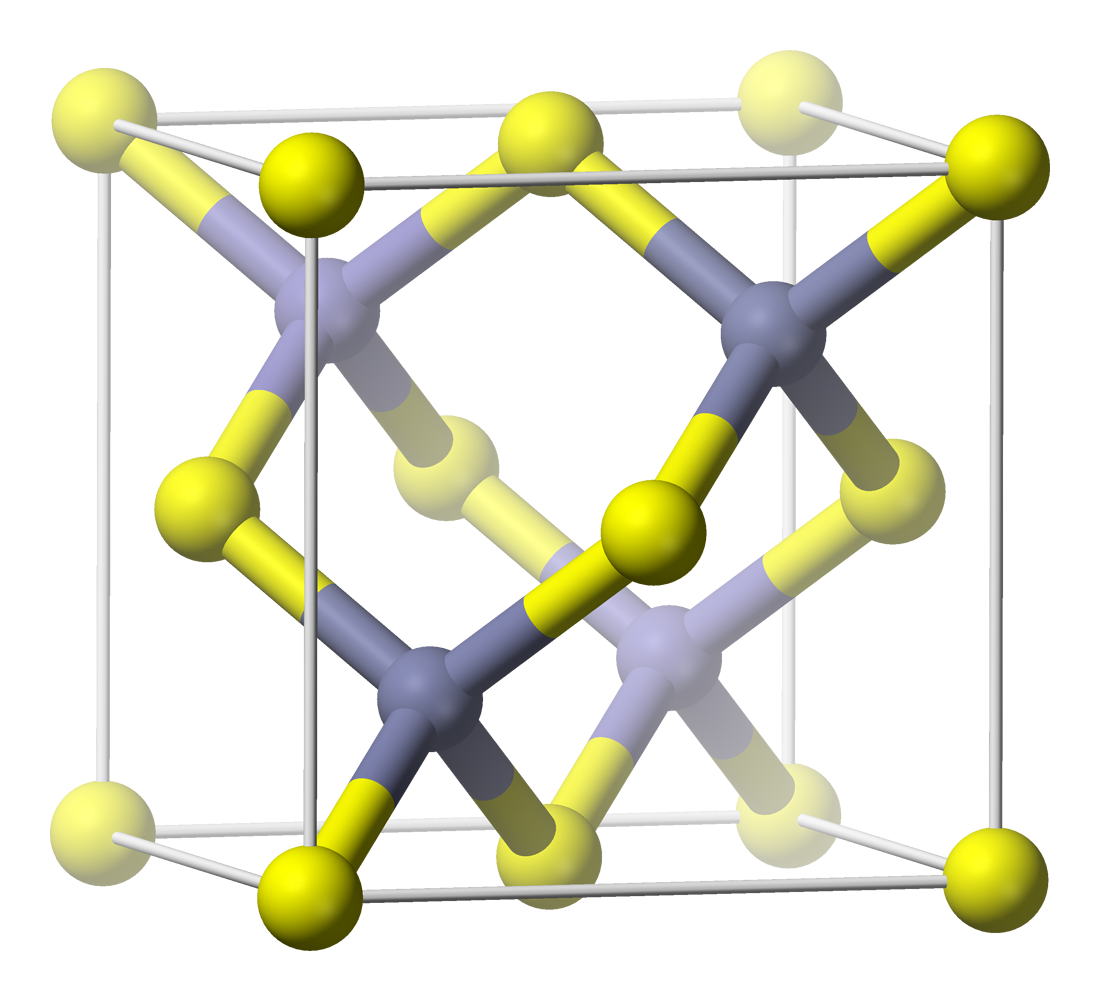
Cadmium telluride (CdTe) is a stable crystalline compound formed from cadmium and tellurium. It is mainly used as the semiconducting material in cadmium telluride photovoltaics and an infrared optical window. It is usually sandwiched with cadmium sulfide to form a p–n junction solar PV cell.
CdTe is used to make thin film solar cells, accounting for about 8% of all solar cells installed in 2011. They are among the lowest-cost types of solar cell, although a comparison of total installed cost depends on installation size and many other factors, and has changed rapidly from year to year. The CdTe solar cell market is dominated by First Solar. In 2011, around 2 GWp of CdTe solar cells were produced; For more details and discussion see cadmium telluride photovoltaics.
CdTe can be alloyed with mercury to make a versatile infrared detector material (HgCdTe). CdTe alloyed with a small amount of zinc makes an excellent solid-state X-ray and gamma ray detector (CdZnTe).
CdTe is used as an infrared optical material for optical windows and lenses and is proven to provide a good performance across a wide range of temperatures. An early form of CdTe for IR use was marketed under the trademarked name of Irtran-6, but this is obsolete.
CdTe is also applied for electro-optic modulators. It has the greatest electro-optic coefficient of the linear electro-optic effect among II-VI compound crystals (r41=r52=r63=6.8×10⁻¹² m/V).
CdTe doped with chlorine is used as a radiation detector for x-rays, gamma rays, beta particles and alpha particles. CdTe can operate at room temperature allowing the construction of compact detectors for a wide variety of applications in nuclear spectroscopy. The properties that make CdTe superior for the realization of high performance gamma- and x-ray detectors are high atomic number, large bandgap and high electron mobility ~1100 cm2/V·s, which result in high intrinsic μτ (mobility-lifetime) product and therefore high degree of charge collection and excellent spectral resolution. Due to the poor charge transport properties of holes, ~100 cm2/V·s, single-carrier-sensing detector geometries are used to produce high resolution spectroscopy; these include coplanar grids, Frisch-collar detectors and small pixel detectors.
Bulk CdTe is transparent in the infrared, from close to its band gap energy (1.5 eV at 300 K, which corresponds to infrared wavelength of about 830 nm) out to wavelengths greater than 20 μm; correspondingly, CdTe is fluorescent at 790 nm. As the size of CdTe crystals are reduced to a few nanometers or less, thus making them CdTe quantum dots, the fluorescence peak shifts through the visible range into the ultraviolet.
CdTe is insoluble in water. CdTe has a high melting point of 1,041 °C (1,906 °F) with evaporation starting at 1,050 °C (1,920 °F). CdTe has a vapor pressure of zero at ambient temperatures. CdTe is more stable than its parent compounds cadmium and tellurium and most other Cd compounds, due to its high melting point and insolubility.
Hub AI
Cadmium telluride AI simulator
(@Cadmium telluride_simulator)
Cadmium telluride
Cadmium telluride (CdTe) is a stable crystalline compound formed from cadmium and tellurium. It is mainly used as the semiconducting material in cadmium telluride photovoltaics and an infrared optical window. It is usually sandwiched with cadmium sulfide to form a p–n junction solar PV cell.
CdTe is used to make thin film solar cells, accounting for about 8% of all solar cells installed in 2011. They are among the lowest-cost types of solar cell, although a comparison of total installed cost depends on installation size and many other factors, and has changed rapidly from year to year. The CdTe solar cell market is dominated by First Solar. In 2011, around 2 GWp of CdTe solar cells were produced; For more details and discussion see cadmium telluride photovoltaics.
CdTe can be alloyed with mercury to make a versatile infrared detector material (HgCdTe). CdTe alloyed with a small amount of zinc makes an excellent solid-state X-ray and gamma ray detector (CdZnTe).
CdTe is used as an infrared optical material for optical windows and lenses and is proven to provide a good performance across a wide range of temperatures. An early form of CdTe for IR use was marketed under the trademarked name of Irtran-6, but this is obsolete.
CdTe is also applied for electro-optic modulators. It has the greatest electro-optic coefficient of the linear electro-optic effect among II-VI compound crystals (r41=r52=r63=6.8×10⁻¹² m/V).
CdTe doped with chlorine is used as a radiation detector for x-rays, gamma rays, beta particles and alpha particles. CdTe can operate at room temperature allowing the construction of compact detectors for a wide variety of applications in nuclear spectroscopy. The properties that make CdTe superior for the realization of high performance gamma- and x-ray detectors are high atomic number, large bandgap and high electron mobility ~1100 cm2/V·s, which result in high intrinsic μτ (mobility-lifetime) product and therefore high degree of charge collection and excellent spectral resolution. Due to the poor charge transport properties of holes, ~100 cm2/V·s, single-carrier-sensing detector geometries are used to produce high resolution spectroscopy; these include coplanar grids, Frisch-collar detectors and small pixel detectors.
Bulk CdTe is transparent in the infrared, from close to its band gap energy (1.5 eV at 300 K, which corresponds to infrared wavelength of about 830 nm) out to wavelengths greater than 20 μm; correspondingly, CdTe is fluorescent at 790 nm. As the size of CdTe crystals are reduced to a few nanometers or less, thus making them CdTe quantum dots, the fluorescence peak shifts through the visible range into the ultraviolet.
CdTe is insoluble in water. CdTe has a high melting point of 1,041 °C (1,906 °F) with evaporation starting at 1,050 °C (1,920 °F). CdTe has a vapor pressure of zero at ambient temperatures. CdTe is more stable than its parent compounds cadmium and tellurium and most other Cd compounds, due to its high melting point and insolubility.