



Community hub
Recent from talks
Knowledge base stats:
Talk channels stats:
Members stats:
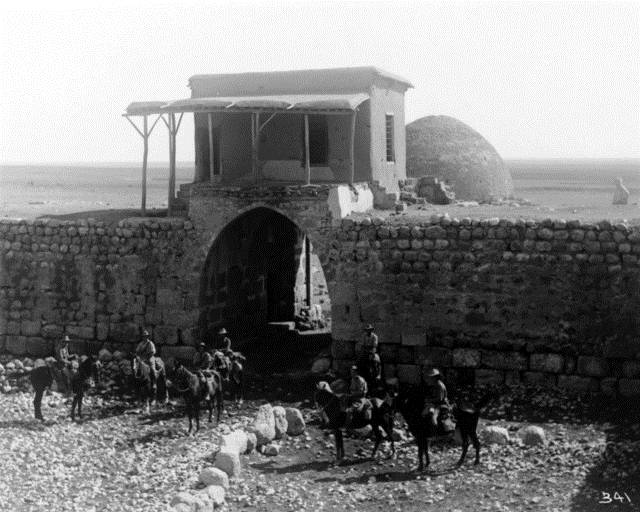
Charge at Khan Ayash
The Charge at Khan Ayash occurred on 2 October 1918 about 17 miles (27 km) north of Damascus after the pursuit to, and capture of Damascus, which followed the decisive Egyptian Expeditionary Force victory at the Battle of Megiddo on 25 September during the Sinai and Palestine Campaign of World War I. After Damascus had been encircled by Desert Mounted Corps on 30 September, the 3rd Light Horse Brigade advanced through the city on 1 October to charge and capture remnants of the Ottoman Yildirim Army Group withdrawing along the road north to Rayak and Homs.
Following the victories at the Battle of Sharon and Battle of Nablus during the Battle of Megiddo, and the Capture of Damascus, remnants of the Seventh and Eighth Armies retreated in columns towards Damascus from the Judean Hills. Rearguards at Samakh, at Tiberias and at Jisr Benat Yakub were captured by the Australian Mounted Division. Remnants of the Fourth Army also retreated in columns towards Damascus along the Pilgrims' Road from Amman. The rearguard at Irbid was attacked by the 4th Cavalry Division and Deraa was captured by the Sherifial Army.
The last formation to leave Damascus, the 146th Regiment (Fourth Army) left during the night of 30 September, was followed early the next morning; 1 October by the 10th Light Horse Regiment (3rd Light Horse Brigade), in the process accepting the surrender of the city. The Australian light horsemen followed the retreating columns north along the road to Homs during the day, encountering numerous rearguards which were attacked and captured, until they we were stopped by strong defences protecting a 2,000-strong column near Khan Ayash. Early the next morning a large column of retreating German and Ottoman combatants was seen moving towards a pass just north of Khan Ayash. Two squadrons of the 9th Light Horse Regiment (3rd Light Horse Brigade) rode north to cut the road in front of the column while the third squadron charged into the column splitting it and forcing it to surrender.
The day after the victory at the Battle of Megiddo, the pursuit to Damascus began on 26 September, when the 4th Cavalry Division advanced east across the Jordan River to Irbid and on to Deraa which was captured by Sherifial forces. The pursuit to Damascus 140 miles (230 km) away, continued with the cavalry division's right flank covered by Sherifial forces. Meanwhile, the Australian Mounted Division with the 5th Cavalry Division in reserve, began their 90 miles (140 km) pursuit to Damascus on 27 September around the northern end of the Sea of Galilee, also known as Lake Tiberias, via Jisr Benat Yakub and Kuneitra.
By 26 September the Fourth Army's Amman garrison (less the rearguard captured at Amman) had not been "heavily engaged," and "was still intact as a fighting force even though it was in rapid retreat" north along the Hejaz railway and Pilgrims Road, some miles to the east of the Jordan River.
Between 6,000 and 7,000 German and Ottoman soldiers from the Ottoman Fourth, Seventh and Eighth Armies had managed to retreat via Tiberias or Deraa, before these places were captured on 25 and 27 September, respectively. At this time, the retreating columns which moved via Deraa were at or north of Muzeirib on their way to Damascus.
Two days later, on 29 September, Mustafa Kemal Pasha, commander of the Seventh Army arrived at Kiswe, 50 miles (80 km) north of Deraa, and 9 miles (14 km) south of Damascus, with his army's leading troops. Here Liman von Sanders commanding Yildirim Army Group ordered him to withdraw to the north of Damascus, to Rayak.
By the next morning, the leading column of the Fourth Army consisting of an Ottoman cavalry division and some infantry, was approaching Kiswe, followed along the Pilgrims' Road by the 4th Cavalry Division 30 miles (48 km) behind.
Hub AI
Charge at Khan Ayash AI simulator
(@Charge at Khan Ayash_simulator)
Charge at Khan Ayash
The Charge at Khan Ayash occurred on 2 October 1918 about 17 miles (27 km) north of Damascus after the pursuit to, and capture of Damascus, which followed the decisive Egyptian Expeditionary Force victory at the Battle of Megiddo on 25 September during the Sinai and Palestine Campaign of World War I. After Damascus had been encircled by Desert Mounted Corps on 30 September, the 3rd Light Horse Brigade advanced through the city on 1 October to charge and capture remnants of the Ottoman Yildirim Army Group withdrawing along the road north to Rayak and Homs.
Following the victories at the Battle of Sharon and Battle of Nablus during the Battle of Megiddo, and the Capture of Damascus, remnants of the Seventh and Eighth Armies retreated in columns towards Damascus from the Judean Hills. Rearguards at Samakh, at Tiberias and at Jisr Benat Yakub were captured by the Australian Mounted Division. Remnants of the Fourth Army also retreated in columns towards Damascus along the Pilgrims' Road from Amman. The rearguard at Irbid was attacked by the 4th Cavalry Division and Deraa was captured by the Sherifial Army.
The last formation to leave Damascus, the 146th Regiment (Fourth Army) left during the night of 30 September, was followed early the next morning; 1 October by the 10th Light Horse Regiment (3rd Light Horse Brigade), in the process accepting the surrender of the city. The Australian light horsemen followed the retreating columns north along the road to Homs during the day, encountering numerous rearguards which were attacked and captured, until they we were stopped by strong defences protecting a 2,000-strong column near Khan Ayash. Early the next morning a large column of retreating German and Ottoman combatants was seen moving towards a pass just north of Khan Ayash. Two squadrons of the 9th Light Horse Regiment (3rd Light Horse Brigade) rode north to cut the road in front of the column while the third squadron charged into the column splitting it and forcing it to surrender.
The day after the victory at the Battle of Megiddo, the pursuit to Damascus began on 26 September, when the 4th Cavalry Division advanced east across the Jordan River to Irbid and on to Deraa which was captured by Sherifial forces. The pursuit to Damascus 140 miles (230 km) away, continued with the cavalry division's right flank covered by Sherifial forces. Meanwhile, the Australian Mounted Division with the 5th Cavalry Division in reserve, began their 90 miles (140 km) pursuit to Damascus on 27 September around the northern end of the Sea of Galilee, also known as Lake Tiberias, via Jisr Benat Yakub and Kuneitra.
By 26 September the Fourth Army's Amman garrison (less the rearguard captured at Amman) had not been "heavily engaged," and "was still intact as a fighting force even though it was in rapid retreat" north along the Hejaz railway and Pilgrims Road, some miles to the east of the Jordan River.
Between 6,000 and 7,000 German and Ottoman soldiers from the Ottoman Fourth, Seventh and Eighth Armies had managed to retreat via Tiberias or Deraa, before these places were captured on 25 and 27 September, respectively. At this time, the retreating columns which moved via Deraa were at or north of Muzeirib on their way to Damascus.
Two days later, on 29 September, Mustafa Kemal Pasha, commander of the Seventh Army arrived at Kiswe, 50 miles (80 km) north of Deraa, and 9 miles (14 km) south of Damascus, with his army's leading troops. Here Liman von Sanders commanding Yildirim Army Group ordered him to withdraw to the north of Damascus, to Rayak.
By the next morning, the leading column of the Fourth Army consisting of an Ottoman cavalry division and some infantry, was approaching Kiswe, followed along the Pilgrims' Road by the 4th Cavalry Division 30 miles (48 km) behind.