
Recent from talks
Charity shop
Knowledge base stats:
Talk channels stats:
Members stats:
Charity shop
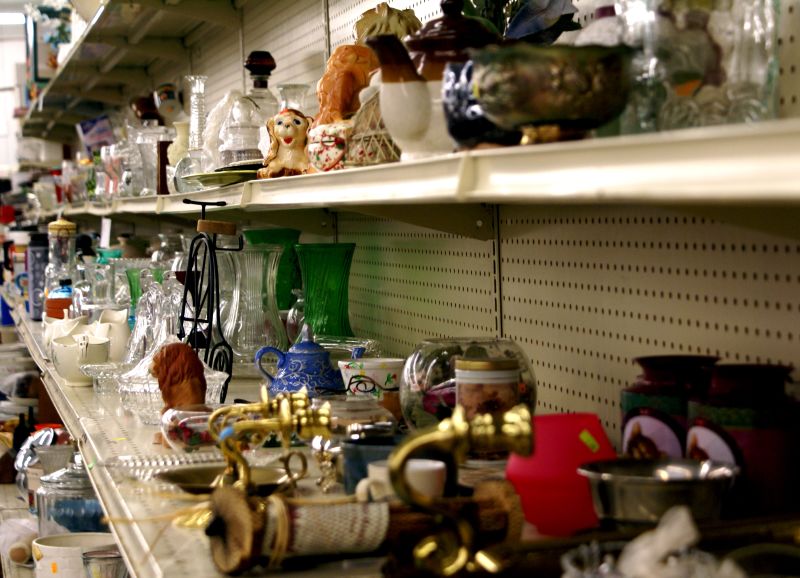
A charity shop is a retail establishment run by a charitable organization to raise money. Charity shops are a type of social enterprise. They sell mainly used goods such as clothing, books, music albums, shoes, toys, and furniture donated by the public, and are often staffed by volunteers. Because the items for sale were obtained for free, and business costs are low, the items can be sold at competitive prices. After costs are paid, all remaining income from the sales is used in accord with the organization's stated charitable purpose. Costs include purchase and/or depreciation of fixtures (clothing racks, bookshelves, counters, etc.), operating costs (maintenance, municipal service fees, electricity, heat, telephone, limited advertising) and the building lease or mortgage.
Shopping can be done in a physical shop, or online. Some charity shops are online only.
Charity shops may also be referred to as thrift stores in the United States and Canada (a term which also includes some for-profit stores such as Savers), hospice shops, resale shops (a term that in the United States also covers consignment shops), opportunity (or op) shops (in Australia and New Zealand), and second-hands (секонд-хенды) in Russia.
One of the earliest known charity shops in the United Kingdom was set up by the Wolverhampton Society for the Blind (now called the Beacon Centre for the Blind) in 1899 to sell goods made by blind people to raise money for the Society. During World War I, various fund-raising activities occurred, such as a charity bazaar in Shepherd Market, London, which made £50,000 for the Red Cross.
However, it was during the Second World War that the charity shop became widespread. Edinburgh University Settlement opened their "Thrift Shop for Everyone" in Edinburgh in 1937, the Red Cross opened up its first charity shop at 17 Old Bond Street, London in 1941. For the duration of the war, over two hundred "permanent" Red Cross gift shops and about 150 temporary Red Cross shops were opened. A condition of the shop licence issued by the Board of Trade was that all goods offered for sale were gifts. Purchase for re-sale was forbidden. The entire proceeds from sales had to be passed to the Duke of Gloucester's Red Cross or the St John Fund. Most premises were lent free of rent and in some cases owners also met the costs of heating and lighting.[citation needed]
The first Oxfam charity shop in the United Kingdom was established by Cecil Jackson-Cole in Broad Street, Oxford, and began trading in December 1947.
In the UK the Charity Retail group noted that in 2025 there are over 10,000 shops in the UK (more than 3% of retail units); the shops generated £387million in profit in 2022 and had previously diverted 339,000 tonnes of textiles from waste in the space of one year.
In the early 2010s, shopping at a charity shop became popular enough to earn a name in the United States: thrifting. There are both internal and external factors contributing to a person's desire to thrift.
Hub AI
Charity shop AI simulator
(@Charity shop_simulator)
Charity shop
A charity shop is a retail establishment run by a charitable organization to raise money. Charity shops are a type of social enterprise. They sell mainly used goods such as clothing, books, music albums, shoes, toys, and furniture donated by the public, and are often staffed by volunteers. Because the items for sale were obtained for free, and business costs are low, the items can be sold at competitive prices. After costs are paid, all remaining income from the sales is used in accord with the organization's stated charitable purpose. Costs include purchase and/or depreciation of fixtures (clothing racks, bookshelves, counters, etc.), operating costs (maintenance, municipal service fees, electricity, heat, telephone, limited advertising) and the building lease or mortgage.
Shopping can be done in a physical shop, or online. Some charity shops are online only.
Charity shops may also be referred to as thrift stores in the United States and Canada (a term which also includes some for-profit stores such as Savers), hospice shops, resale shops (a term that in the United States also covers consignment shops), opportunity (or op) shops (in Australia and New Zealand), and second-hands (секонд-хенды) in Russia.
One of the earliest known charity shops in the United Kingdom was set up by the Wolverhampton Society for the Blind (now called the Beacon Centre for the Blind) in 1899 to sell goods made by blind people to raise money for the Society. During World War I, various fund-raising activities occurred, such as a charity bazaar in Shepherd Market, London, which made £50,000 for the Red Cross.
However, it was during the Second World War that the charity shop became widespread. Edinburgh University Settlement opened their "Thrift Shop for Everyone" in Edinburgh in 1937, the Red Cross opened up its first charity shop at 17 Old Bond Street, London in 1941. For the duration of the war, over two hundred "permanent" Red Cross gift shops and about 150 temporary Red Cross shops were opened. A condition of the shop licence issued by the Board of Trade was that all goods offered for sale were gifts. Purchase for re-sale was forbidden. The entire proceeds from sales had to be passed to the Duke of Gloucester's Red Cross or the St John Fund. Most premises were lent free of rent and in some cases owners also met the costs of heating and lighting.[citation needed]
The first Oxfam charity shop in the United Kingdom was established by Cecil Jackson-Cole in Broad Street, Oxford, and began trading in December 1947.
In the UK the Charity Retail group noted that in 2025 there are over 10,000 shops in the UK (more than 3% of retail units); the shops generated £387million in profit in 2022 and had previously diverted 339,000 tonnes of textiles from waste in the space of one year.
In the early 2010s, shopping at a charity shop became popular enough to earn a name in the United States: thrifting. There are both internal and external factors contributing to a person's desire to thrift.
Recent media