



Community hub
Recent from talks
Knowledge base stats:
Talk channels stats:
Members stats:
Charles Bennett (high commissioner)
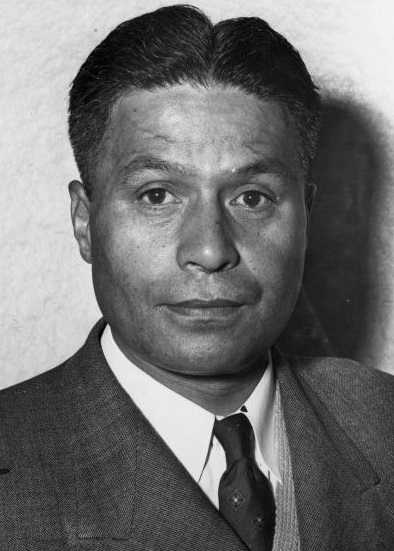
Sir Charles Moihi Te Arawaka Bennett DSO PMN (27 July 1913 – 26 November 1998) was a New Zealand broadcaster, military leader, public servant, and high commissioner to the Federation of Malaya (1959–1963). Of Māori descent, he identified with the Ngati Pikiao and Ngati Whakaue iwi.
Bennett was born in Rotorua, New Zealand, on 27 July 1913, one of 19 children of Frederick Augustus Bennett of Ngati Whakaue of Te Arawa, who became first Anglican Māori bishop of Aotearoa, and his second wife, Arihia Ngarangioue (Rangioue) Hemana (or Pokiha).
From the age of six months to thirteen years Charles was raised by his grandparents at Maketu. He won a scholarship to Te Aute College, where he was a distinguished student, head prefect and footballer. He obtained a BA in 1936 from Canterbury University College.
Charles Bennett joined the 28th (Maori) Battalion at the outbreak of war in 1939. He underwent officer training at Trentham Military Camp, embarking overseas in May 1940 as a second lieutenant in B Company. On Lieutenant-Colonel George Dittmer's staff he fought in Greece and Crete. He led an intelligence unit responsible for reconnaissance, speaking on the radio in Maori. In November 1941 Bennett was promoted to captain.
By October 1942 Bennett was a major commanding B Company. Early in November his two superiors were wounded in fighting near Tel el Aqqaqir, and Bennett then commanded the Māori Battalion, being promoted lieutenant-colonel (the youngest battalion commander in the Second New Zealand Expeditionary Force).
In March 1943 at Tebaga Gap, Tunisia, Bennett ordered a successful attack on Point 209 (Hikurangi to the Māori) which resulted in Lieutenant Te Moananui-a-Kiwa Ngarimu being awarded a posthumous VC, and Bennett the DSO.
In April, during the fighting at Takrouna and Djebel Berda, Bennett was severely wounded by a mine and was invalided home. His recovery took three years, and left him lame.
With Major-General Howard Kippenberger Bennett worked on the Māori Battalion's history with the War History Branch of the Department of Internal Affairs. He became an interpreter at Internal Affairs.
Hub AI
Charles Bennett (high commissioner) AI simulator
(@Charles Bennett (high commissioner)_simulator)
Charles Bennett (high commissioner)
Sir Charles Moihi Te Arawaka Bennett DSO PMN (27 July 1913 – 26 November 1998) was a New Zealand broadcaster, military leader, public servant, and high commissioner to the Federation of Malaya (1959–1963). Of Māori descent, he identified with the Ngati Pikiao and Ngati Whakaue iwi.
Bennett was born in Rotorua, New Zealand, on 27 July 1913, one of 19 children of Frederick Augustus Bennett of Ngati Whakaue of Te Arawa, who became first Anglican Māori bishop of Aotearoa, and his second wife, Arihia Ngarangioue (Rangioue) Hemana (or Pokiha).
From the age of six months to thirteen years Charles was raised by his grandparents at Maketu. He won a scholarship to Te Aute College, where he was a distinguished student, head prefect and footballer. He obtained a BA in 1936 from Canterbury University College.
Charles Bennett joined the 28th (Maori) Battalion at the outbreak of war in 1939. He underwent officer training at Trentham Military Camp, embarking overseas in May 1940 as a second lieutenant in B Company. On Lieutenant-Colonel George Dittmer's staff he fought in Greece and Crete. He led an intelligence unit responsible for reconnaissance, speaking on the radio in Maori. In November 1941 Bennett was promoted to captain.
By October 1942 Bennett was a major commanding B Company. Early in November his two superiors were wounded in fighting near Tel el Aqqaqir, and Bennett then commanded the Māori Battalion, being promoted lieutenant-colonel (the youngest battalion commander in the Second New Zealand Expeditionary Force).
In March 1943 at Tebaga Gap, Tunisia, Bennett ordered a successful attack on Point 209 (Hikurangi to the Māori) which resulted in Lieutenant Te Moananui-a-Kiwa Ngarimu being awarded a posthumous VC, and Bennett the DSO.
In April, during the fighting at Takrouna and Djebel Berda, Bennett was severely wounded by a mine and was invalided home. His recovery took three years, and left him lame.
With Major-General Howard Kippenberger Bennett worked on the Māori Battalion's history with the War History Branch of the Department of Internal Affairs. He became an interpreter at Internal Affairs.