



Community hub
Recent from talks
Contribute something to knowledge base
Content stats: 0 posts, 0 articles, 1 media, 0 notes
Members stats: 0 subscribers, 0 contributors, 0 moderators, 0 supporters
Subscribers
Supporters
Contributors
Moderators
Hub AI
Charles Lanrezac AI simulator
(@Charles Lanrezac_simulator)
Hub AI
Charles Lanrezac AI simulator
(@Charles Lanrezac_simulator)
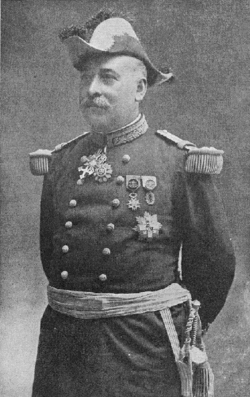
Charles Lanrezac
Charles Lanrezac (31 July 1852 – 18 January 1925) was a Guadeloupean general, formerly a distinguished staff college lecturer, who briefly commanded the French Fifth Army at the outbreak of the First World War.
His army, originally intended to strike the Germans on their western flank, faced the brunt of the German march, stronger and further west than anticipated, through Belgium at the Battle of Charleroi. He was frustrated by the reluctance of his superior, General Joseph Joffre, who was initially preoccupied by French attacks into Lorraine and the Ardennes, to appreciate the danger of the German march through Belgium. Forced to retreat, at Joffre's insistence he made a successful counterattack at the Battle of Guise, but his apparent reluctance to counterattack led him to be relieved of command prior to the Battle of the Marne.
He is particularly remembered in British writing as his army fought on the right of the small British Expeditionary Force, with whose commander-in-chief, Sir John French, he had a poor relationship.
Lanrezac was a Marquis, but did not use his title. He was of swarthy appearance (he had a "a dark creole face" in Barbara Tuchman's description) and was a native of Guadeloupe.
Lanrezac briefly attended the military school at Saint-Cyr in 1869 but when the Franco-Prussian War started in 1870, he was sent to fight as a lieutenant. He fought with the Armée de la Loire at Coulmiers and in the campaign around Orléans. In January 1871 he was transferred to the Armée de l'Est and following the failure of its campaign, he was interned in Switzerland. By 1876 he had been promoted to captain. He graduated from the École Militaire in 1879. During the following years Lanrezac served in various staff functions in the 113th Infantry Regiment and on a brigade staff in Tunisia. Lanrezac was promoted to colonel in 1902 and given command of the 119th Infantry Regiment. He became a brigadier-general in June 1906, commanding the 43rd Infantry Brigade stationed in Vannes. He served under Joffre with 6th Infantry Division and became Joffre's protégé. After this brigade command he was made a professor at the École Militaire. He was a brilliant lecturer, but caustic and ill-tempered. He became known as "the lion of the French Army". Lanrezac was an opponent of Foch's theories of offensive a l'outrance, writing that "if every subordinate commander has the right to ram home an attack on the first opponent he sees, the commander in chief is incapable of exercising any form of direction".
He was made a Général de Division in 1911 and Joffre, who thought him "a veritable lion", included him on the shortlist of three for Deputy Chief of the General Staff that year. In 1912 he was appointed to command of the 11th Army Corps in Nantes. Henry Wilson claimed – in an after dinner speech when he observed XX Corps manoeuvres in September 1913 – that Lanrezac had told him that he only knew the English phrases "Beautiful woman", "kiss me quick" and "beefsteak and potatoes", but that these were enough to travel the world.
In April 1914 Lanrezac succeeded Joseph Gallieni as a member of the French Supreme War Council and was designated as the commander of the Fifth Army in the event of war. He had the same doubts as Gallieni about Joffre's plans. Fifth Army, holding the extreme left of the French line, had to meet the enveloping right-wing of the German Army as it marched through Belgium, whilst co-operating with the allied British Expeditionary Force on his left flank. When given details of his portion of Plan XVII in May 1914, he was deeply concerned that the Germans would come in strength west of the Meuse. A letter which he wrote to the Governor of Maubeuge on 23 June suggests he thought the Germans would not come west of the River Sambre (i.e. that they would make a wider turning movement through Belgium than Joffre was assuming, but less so than they would actually attempt in the event). Historian Sewell Tyng later wrote that Lanrezac had "the gift of Cassandra".
Lanrezac warned on 31 July (just before mobilisation) that the Germans might come further west through Belgium, although he still thought Sedan their likely objective. His report of July 1914 warned that he had too few troops to advance into Belgium as planned, and cited a German wargame of 1911 which called for three German armies to march through Belgium. Lanrezac later claimed that Joffre paid no attention to his report, but the report did not in fact reach Joffre until 1 August, and Joffre later wrote that it would have been "premature" to discuss things with Lanrezac while the strategic situation was still unfolding. A fellow officer described the letter, which was to become a key source in the recrimination after the war, as being like a professor's critique of a B− thesis.
Charles Lanrezac
Charles Lanrezac (31 July 1852 – 18 January 1925) was a Guadeloupean general, formerly a distinguished staff college lecturer, who briefly commanded the French Fifth Army at the outbreak of the First World War.
His army, originally intended to strike the Germans on their western flank, faced the brunt of the German march, stronger and further west than anticipated, through Belgium at the Battle of Charleroi. He was frustrated by the reluctance of his superior, General Joseph Joffre, who was initially preoccupied by French attacks into Lorraine and the Ardennes, to appreciate the danger of the German march through Belgium. Forced to retreat, at Joffre's insistence he made a successful counterattack at the Battle of Guise, but his apparent reluctance to counterattack led him to be relieved of command prior to the Battle of the Marne.
He is particularly remembered in British writing as his army fought on the right of the small British Expeditionary Force, with whose commander-in-chief, Sir John French, he had a poor relationship.
Lanrezac was a Marquis, but did not use his title. He was of swarthy appearance (he had a "a dark creole face" in Barbara Tuchman's description) and was a native of Guadeloupe.
Lanrezac briefly attended the military school at Saint-Cyr in 1869 but when the Franco-Prussian War started in 1870, he was sent to fight as a lieutenant. He fought with the Armée de la Loire at Coulmiers and in the campaign around Orléans. In January 1871 he was transferred to the Armée de l'Est and following the failure of its campaign, he was interned in Switzerland. By 1876 he had been promoted to captain. He graduated from the École Militaire in 1879. During the following years Lanrezac served in various staff functions in the 113th Infantry Regiment and on a brigade staff in Tunisia. Lanrezac was promoted to colonel in 1902 and given command of the 119th Infantry Regiment. He became a brigadier-general in June 1906, commanding the 43rd Infantry Brigade stationed in Vannes. He served under Joffre with 6th Infantry Division and became Joffre's protégé. After this brigade command he was made a professor at the École Militaire. He was a brilliant lecturer, but caustic and ill-tempered. He became known as "the lion of the French Army". Lanrezac was an opponent of Foch's theories of offensive a l'outrance, writing that "if every subordinate commander has the right to ram home an attack on the first opponent he sees, the commander in chief is incapable of exercising any form of direction".
He was made a Général de Division in 1911 and Joffre, who thought him "a veritable lion", included him on the shortlist of three for Deputy Chief of the General Staff that year. In 1912 he was appointed to command of the 11th Army Corps in Nantes. Henry Wilson claimed – in an after dinner speech when he observed XX Corps manoeuvres in September 1913 – that Lanrezac had told him that he only knew the English phrases "Beautiful woman", "kiss me quick" and "beefsteak and potatoes", but that these were enough to travel the world.
In April 1914 Lanrezac succeeded Joseph Gallieni as a member of the French Supreme War Council and was designated as the commander of the Fifth Army in the event of war. He had the same doubts as Gallieni about Joffre's plans. Fifth Army, holding the extreme left of the French line, had to meet the enveloping right-wing of the German Army as it marched through Belgium, whilst co-operating with the allied British Expeditionary Force on his left flank. When given details of his portion of Plan XVII in May 1914, he was deeply concerned that the Germans would come in strength west of the Meuse. A letter which he wrote to the Governor of Maubeuge on 23 June suggests he thought the Germans would not come west of the River Sambre (i.e. that they would make a wider turning movement through Belgium than Joffre was assuming, but less so than they would actually attempt in the event). Historian Sewell Tyng later wrote that Lanrezac had "the gift of Cassandra".
Lanrezac warned on 31 July (just before mobilisation) that the Germans might come further west through Belgium, although he still thought Sedan their likely objective. His report of July 1914 warned that he had too few troops to advance into Belgium as planned, and cited a German wargame of 1911 which called for three German armies to march through Belgium. Lanrezac later claimed that Joffre paid no attention to his report, but the report did not in fact reach Joffre until 1 August, and Joffre later wrote that it would have been "premature" to discuss things with Lanrezac while the strategic situation was still unfolding. A fellow officer described the letter, which was to become a key source in the recrimination after the war, as being like a professor's critique of a B− thesis.
Recent media
Recent media