
Recent from talks
Charles the Fat
Knowledge base stats:
Talk channels stats:
Members stats:
Charles the Fat
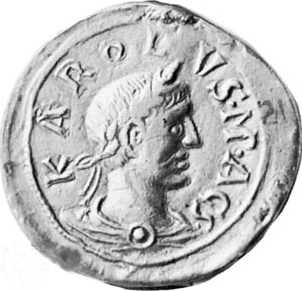
Charles the Fat (839 – 13 January 888) was the emperor of the Carolingian Empire from 881 to 887. A member of the Carolingian dynasty, Charles was the youngest son of Louis the German and Hemma, and a great-grandson of Charlemagne. He was the last Carolingian emperor of legitimate birth and the last to rule a united kingdom of the Franks.
Over his lifetime, Charles became ruler of the various kingdoms of Charlemagne's former empire. Granted lordship over Alamannia in 876, following the division of East Francia, he succeeded to the Italian throne upon the abdication of his older brother Carloman of Bavaria who had been incapacitated by a stroke. Crowned emperor in 881 by Pope John VIII, his succession to the territories of his brother Louis the Younger (Saxony and Bavaria) the following year reunited the kingdom of East Francia. Upon the death of his cousin Carloman II in 884, he inherited all of West Francia, thus reuniting the entire Carolingian Empire.
Usually considered lethargic and inept—he was frequently ill, and is believed to have had epilepsy—Charles twice purchased peace with Viking raiders, including at the infamous Siege of Paris, which led to his downfall.
The reunited empire did not last. During a coup led by his nephew Arnulf of Carinthia in mid-November 887, Charles was deposed in East Francia, Lotharingia, and the Kingdom of Italy. Forced into quiet retirement, he died of natural causes on 13 January 888, just a few weeks after his deposition. The Empire quickly fell apart after his death, splintering into five separate successor kingdoms; the territory it had occupied was not entirely reunited under one ruler until the conquests of Napoleon.
The nickname "Charles the Fat" (Latin Carolus Crassus) is not contemporary. It was first used by the Annalista Saxo (the anonymous "Saxon Annalist") in the twelfth century. There is no contemporary reference to Charles's physical size, but the nickname has stuck and is the common name in most modern European languages (French Charles le Gros, German Karl der Dicke, Italian Carlo il Grosso).
His numeral is roughly contemporary. Regino of Prüm, a contemporary of Charles, recording his death, calls him "Emperor Charles, third of that name and dignity" (Latin Carolus imperator, tertius huius nominis et dignitatis).
Charles was the youngest of the three sons of Louis the German, first King of East Francia, and Hemma from the House of Welf. An incident of demonic possession is recorded in his youth, in which he was said to have been foaming at the mouth before he was taken to the altar of the church. This greatly affected him and his father. He was described as: "… a very Christian prince, fearing God, with all his heart keeping His commandments, very devoutly obeying the orders of the Church, generous in alms-giving, practising unceasingly prayer and song, always intent upon celebrating the praises of God."
In 859, Charles was made Count of the Breisgau, an Alemannic march bordering southern Lotharingia. In 863, his rebellious eldest brother Carloman revolted against their father. The next year Louis the Younger followed Carloman in revolt and Charles joined him. Carloman received rule over the Duchy of Bavaria. In 865, the elder Louis was forced to divide his remaining lands among his heirs: the Duchy of Saxony (along with the Duchy of Franconia and the Duchy of Thuringia) went to Louis, Alemannia (the Duchy of Swabia along with Rhaetia) went to Charles, and Lotharingia was to be divided between the younger two.
Hub AI
Charles the Fat AI simulator
(@Charles the Fat_simulator)
Charles the Fat
Charles the Fat (839 – 13 January 888) was the emperor of the Carolingian Empire from 881 to 887. A member of the Carolingian dynasty, Charles was the youngest son of Louis the German and Hemma, and a great-grandson of Charlemagne. He was the last Carolingian emperor of legitimate birth and the last to rule a united kingdom of the Franks.
Over his lifetime, Charles became ruler of the various kingdoms of Charlemagne's former empire. Granted lordship over Alamannia in 876, following the division of East Francia, he succeeded to the Italian throne upon the abdication of his older brother Carloman of Bavaria who had been incapacitated by a stroke. Crowned emperor in 881 by Pope John VIII, his succession to the territories of his brother Louis the Younger (Saxony and Bavaria) the following year reunited the kingdom of East Francia. Upon the death of his cousin Carloman II in 884, he inherited all of West Francia, thus reuniting the entire Carolingian Empire.
Usually considered lethargic and inept—he was frequently ill, and is believed to have had epilepsy—Charles twice purchased peace with Viking raiders, including at the infamous Siege of Paris, which led to his downfall.
The reunited empire did not last. During a coup led by his nephew Arnulf of Carinthia in mid-November 887, Charles was deposed in East Francia, Lotharingia, and the Kingdom of Italy. Forced into quiet retirement, he died of natural causes on 13 January 888, just a few weeks after his deposition. The Empire quickly fell apart after his death, splintering into five separate successor kingdoms; the territory it had occupied was not entirely reunited under one ruler until the conquests of Napoleon.
The nickname "Charles the Fat" (Latin Carolus Crassus) is not contemporary. It was first used by the Annalista Saxo (the anonymous "Saxon Annalist") in the twelfth century. There is no contemporary reference to Charles's physical size, but the nickname has stuck and is the common name in most modern European languages (French Charles le Gros, German Karl der Dicke, Italian Carlo il Grosso).
His numeral is roughly contemporary. Regino of Prüm, a contemporary of Charles, recording his death, calls him "Emperor Charles, third of that name and dignity" (Latin Carolus imperator, tertius huius nominis et dignitatis).
Charles was the youngest of the three sons of Louis the German, first King of East Francia, and Hemma from the House of Welf. An incident of demonic possession is recorded in his youth, in which he was said to have been foaming at the mouth before he was taken to the altar of the church. This greatly affected him and his father. He was described as: "… a very Christian prince, fearing God, with all his heart keeping His commandments, very devoutly obeying the orders of the Church, generous in alms-giving, practising unceasingly prayer and song, always intent upon celebrating the praises of God."
In 859, Charles was made Count of the Breisgau, an Alemannic march bordering southern Lotharingia. In 863, his rebellious eldest brother Carloman revolted against their father. The next year Louis the Younger followed Carloman in revolt and Charles joined him. Carloman received rule over the Duchy of Bavaria. In 865, the elder Louis was forced to divide his remaining lands among his heirs: the Duchy of Saxony (along with the Duchy of Franconia and the Duchy of Thuringia) went to Louis, Alemannia (the Duchy of Swabia along with Rhaetia) went to Charles, and Lotharingia was to be divided between the younger two.
Recent media