Hubbry Logo
search
logo
1213172

Chinese Labour Corps

logo
Community Hub0 Subscribers
Read side by side
from Wikipedia

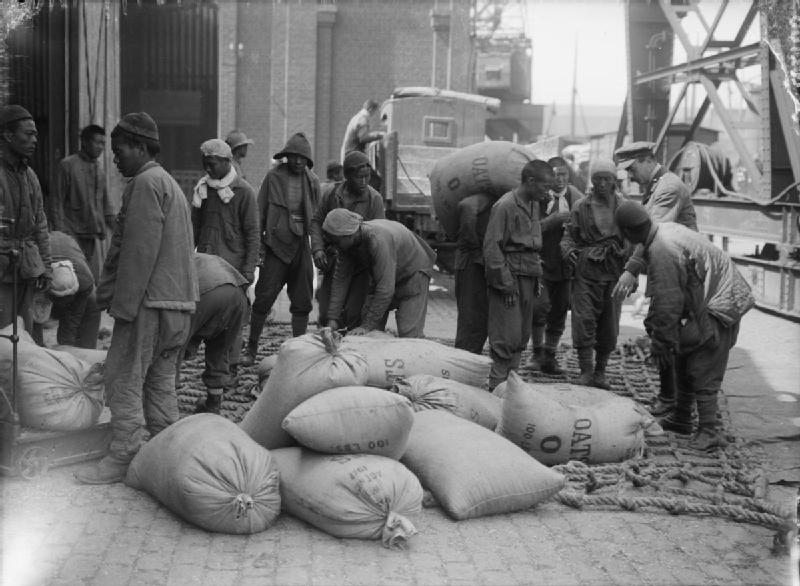
Men of the Chinese Labour Corps load sacks of oats onto a lorry at Boulogne while supervised by a British officer (12 August 1917)

The Chinese Labour Corps (CLC; French: Corps de Travailleurs Chinois; simplified Chinese: 中国劳工; traditional Chinese: 中國勞工; pinyin: Zhōngguó láogōng lǚ) was a labour corps recruited by the British government in the First World War to free troops for front line duty by performing support work and manual labour. The French government also recruited a significant number of Chinese labourers, and although those labourers working for the French were recruited separately and not part of the CLC, the term is often used to encompass both groups. In all, some 140,000 men served for both British and French forces before the war ended and most of the men were repatriated to China between 1918 and 1920.[1]

Origins

[edit]

In 1916, Field Marshal Sir Douglas Haig requested that 21,000 labourers be recruited to fill the manpower shortage caused by casualties during the First World War.[2] Recruiting labourers from other countries was not something unusual at that time. Other than the Chinese, labour corps were serving in France from Egypt, Fiji, India, Malta, Mauritius, Seychelles, and the British West Indies, as well as a labour corps from South Africa.[3] At the end of the war, an estimated over 300,000 workers from the colonies, 100,000 Egyptians, 21,000 Indians and 20,000 black South Africans were working throughout France and the Middle East by 1918.[2]

As China was initially not a belligerent nation, her citizens were not allowed by the Chinese government to participate in the fighting. As a result, the early stage of recruiting in China was somewhat sketchy, with semi-official support from local authorities. However, after China declared war against Germany and Austria-Hungary, on 14 August 1917, the Labour Department of the Chinese government began organizing the recruitment officially.[3][4]

The scheme to recruit Chinese to serve as non-military personnel was pioneered by the French government. A contract to supply 50,000 labourers was agreed upon on 14 May 1916, and the first contingent left Tientsin for Dagu and Marseille in July 1916. The British government also signed an agreement with the Chinese authorities to supply labourers. The recruiting was launched by the War Committee in London in 1916 to form a labour corps of labourers from China to serve in France and to be known as the Chinese Labour Corps.[3] A former railway engineer, Thomas J. Bourne, who had worked in China for 28 years, arrived at Weihaiwei (then a British colony) on 31 October 1916 with instructions to establish and run a recruiting base.[5]

The Chinese Labour Corps comprised Chinese men who came mostly from the Northern province of Shandong,[6] and to a lesser extent from Liaoning, Jilin, Jiangsu, Hubei, Hunan, Anhui and Gansu provinces,[3] and a minority, consisting of roughly 2,000 people, from Zhejiang province in the South. The first transport ship carrying 1,088 labourers sailed from the main depot at Weihaiwei on 18 January 1917. The journey to France took three months.[7] Most travelled to Europe (and later returned to China) via the Pacific and across Canada.[8] The tens of thousands of volunteers were driven by the poverty of the region and China's political uncertainties, and also lured by the generosity of the wages offered by the British. Each volunteer received an embarkment fee of 20 yuan, followed by 10 yuan a month to be paid over to his family in China.[9]

Two of the unit's commanders, Colonel Bryan Charles Fairfax and Colonel R.L. Purdon, had served with the 1st Chinese Regiment in the Boxer Rebellion in 1900.[citation needed]

Service

[edit]
Members of the Chinese Labour Corps and British soldiers working at a timber yard, Caëstre, July 1917.
CLC men load 9.2-inch shells onto a railway wagon at Boulogne for transport to the front line, August 1917
Labour Corps men and a British soldier cannibalise a wrecked Mark IV tank for spare parts at the central stores of the Tank Corps, Teneur, spring 1918.

A deal between the Chinese government and the allies resulted in the enlistment of thousands of Chinese who formed the Chinese Labour Corps (CLC), mainly poor Chinese men from the north who were told they would be in non-combatant roles. The Canadian government had restricted the arrival of all Asians and the CLC were secretly landed at Victoria, British Columbia. They were drilled in the former William Head quarantine station in Metchosin, British Columbia on Vancouver Island.[10] Roughly 81,000 Chinese men were then taken on Canadian Pacific Railway trains to Halifax to board steamships to England.[11] On arrival, they crossed the English Channel to France. After the War, over 40,000 returned by ship to Halifax and then by train to Vancouver; they were returned by ship to China.[12] [13] An unknown number of the labourers never made it to Europe, died and buried in unmarked graves in British Columbia (including 21 at William Head) and Ontario (one known grave, of Chou Ming Shan, in Petawawa, Ontario).[11]

A total of about 140,000 Chinese labourers served on the Western Front during and after the war.[14] Among them, 100,000 served in the British Chinese Labour Corps. About 40,000 served with the French forces, and hundreds of Chinese students served as translators.[15]

By the end of 1917, 54,000 Chinese labourers were working with the British Armed Forces in France and Belgium. In March, the Admiralty declared itself no longer able to supply the ships for transport and the British government were obliged to bring recruitment to an end. The men already serving in France completed their contracts.[7] By the time of the armistice, the CLC numbered nearly 96,000,[7] while a further 30,000 were working for the French.[2]

In May 1919, 80,000 Chinese Labour Corps were still at work.[7] The British soldier Arthur Bullock, in his wartime memoir, gives an account of the interactions between the British soldiers and Chinese workers. He also drew a sketch of one Chinese labourer, Tchung Camena Tungwa, who invited Bullock to have tea with him in Peking whenever he visited the city. (Bullock was never able to make the trip).[16] Also an armed company of the Corps were employed in 1919 with the British North Russian Relief Force at Arkhangelsk among reinforcements to assist the withdrawal of British and allied forces from the Russian Civil War.[17]

Portrait by Arthur Stanley Bullock of Tchung Camena Tungwa, member of the Chinese Labour Corps, 1919

The workers, mainly aged between 20 and 35, served as labour in the rear echelons or helped build munitions depots. They carried out essential work to support the frontline troops, such as unloading ships, building dugouts, repairing roads and railways, digging trenches, and filling sandbags.[18] Some worked in armaments factories, others in naval shipyards, for a low wage of one to three francs a day. At the time, they were seen as cheap labour, and were not allowed out of camp to fraternise locally. When the war ended, some were used for mine clearance, or to recover the bodies of soldiers and fill in miles of trenches.[18] Men fell ill from poor diets and the intense damp and cold, and on occasion, they mutinied against their French and British employers or ransacked local restaurants in search of food.[19] The harshness of the conditions in which some of these men worked is recorded by Bullock,[20] he also recalled the differences between the 'coolies' and the German prisoners of war, in terms of their attitudes to work and to each other.[21]

Chinese performers entertain Labour Corps members and British troops at an open-air theatre at Étaples (June 1918).

Throughout the war, trade union pressure prevented the introduction of Chinese labourers to the British Isles.[3] Sidney and Beatrice Webb suggested that the CLC was restricted to carrying out menial unskilled labour due to pressure from British trade unions.[22] However, some members of the corps carried out skilled and semiskilled work for the Tank Corps, including riveting[23] and engine repair.[24]

One member of the corps, First Class Ganger Liu Dien Chen, was recommended for the Military Medal for rallying his men while under shellfire in March 1918. However, he was eventually awarded the Meritorious Service Medal, as it was decided CLC members were not eligible for the Military Medal. By the end of the war, the Meritorious Service Medal for bravery had been awarded to five Chinese workers.[25]

Aftermath and legacies

[edit]
A bronze statue dedicated to the WWI Chinese labourers outside Gare de Lyon, Paris.
Entrance, Chinese cemetery at Noyelles-sur-Mer

After the armistice of 11 November, Chinese labourers, each identified by a reference number, were given transport back to China between December 1918 and September 1920.[26] Around 5,000 to 7,000 of them decided to stay in France,[27] and a disproportionate number of those who settled permanently in Paris, particularly in the area around the Gare de Lyon, came from Qingtian, a mountainous county in Zhejiang known for its history of overseas emigration. Despite representing only a small minority within the Chinese Labour Corps as a whole, Qingtianese migrants played an outsized role in shaping the earliest postwar Chinese settlement in Paris, forming the nucleus of later Chinese communities in Paris and France as a whole that would later expand through chain migration.

The workers saw first-hand that life in Europe was far from ideal, and reported this on their return to China. Chinese intellectuals of the New Culture Movement looked on their contribution to the war as a point of pride – Chen Duxiu, for instance, commented that "while the sun does not set on the British Empire, neither does it set on Chinese workers abroad." The CLC had a major impact on the educated youth who came to France to work with them as interpreters, such as James Yen, whose literacy programmes under the auspices of the YMCA showed him the worth and dignity of the Chinese common man. He worked out a 1,000-character primer, which introduced basic literacy and became the basis of his work in China.[28] Other Chinese intellectuals who worked with the CLC in France included Jiang Tingfu and Lin Yutang.

After the war, the British government issued the British War Medal in bronze to all members of the Chinese Labour Corps who entered a theatre of war,[29] while in France the members of the CLC were initially memorialised in the Panthéon de la Guerre which was painted between 1914 and 1918. The CLC was later "airbrushed from history" and became the subject of a documentary.[30]

For decades, the contribution of these Chinese men went largely uncommemorated, until military ceremonies resumed in 2002 at the Chinese cemetery of Noyelles-sur-Mer.[16] The last surviving member of the CLC, Zhu Guisheng (朱桂生), died in La Rochelle on 5 March 2002 at 106 years old. He had also served in the French Army during the Second World War.[31]

Casualties

[edit]
Gravestones in Ascq Communal Cemetery

The CLC did not directly perform in combat. According to the records kept by the British and French recruiters, around 2,000 men of the CLC died during the war, many from the 1918 flu pandemic, with some Chinese scholars estimating the total could be as high as 20,000, victims of shelling, landmines, poor treatment, or the disease.[15] Fifteen members of the corps were sentenced to death for murder during the course of the war.[25][32] In December 1917, armed guards fired on members of the 21 Company Chinese Labour Corps, killing four and wounding nine.[25]

Gravestone in Noyelles-sur-Mer

The members of the CLC who died were classified as war casualties and were buried in about 40 graveyards in the north of France and one in Belgium, with a total of about 2,000 recorded graves.[7] The largest number of graves are at Noyelles-sur-Mer on the Somme, next to the workers' camp of the British army, where a cholera outbreak and some of the fiercest battles occurred, as well. The cemetery contains 842 gravestones, each engraved with Chinese characters, guarded by two stone lions, gifts from China.[18]

One of the four following epitaphs was inscribed on the standard Commonwealth War Grave Portland stone gravestones for members of the CLC: "Faithful unto death (至死忠誠 zhì sǐ zhōngchéng)", "A good reputation endures forever (流芳百世 liúfāng bǎishì)", "A noble duty bravely done (勇往直前 yǒngwǎng zhíqián)", and "Though dead he still liveth (雖死猶生 suī sǐ yóu shēng)", which are English translations of common Chinese idioms for soldiers.[6]

Cemeteries with CLC burials

[edit]
France
Belgium
Canada
United Kingdom

In addition, 73 labourers have been accepted for commemoration by the CWGC after their deaths were discovered by the researchers of the In From The Cold Project. The majority are commemorated in the CWGC's United Kingdom Book of Remembrance, pending any discovery of their graves.[36]

See also

[edit]

Footnotes

[edit]

References and further reading

[edit]
[edit]
Revisions and contributorsEdit on WikipediaRead on Wikipedia
from Grokipedia
The Chinese Labour Corps was a contingent of nearly 96,000 Chinese workers recruited by the British Army between 1917 and 1919 to furnish vital manual labor on the Western Front during the First World War, performing duties including trench digging, road and railway construction, munitions transport, forestry operations, and battlefield salvage to release combat troops for frontline service.[1] Recruited primarily from rural northern China, especially Shandong Province, through a secretive process administered via the Weihaiwei Labour Bureau to preserve China's formal neutrality, laborers signed contracts promising rear-area work, fixed pay, rations, and medical care, though many were dispatched to hazardous zones under shellfire and endured 10-hour shifts amid segregated camps and military discipline.[2] Their logistical support proved indispensable to Allied operations, yet conditions evoked prior indentured "coolie" trades, with documented abuses like malnutrition, flogging, and contract breaches sparking strikes and mutinies.[3] Official records attribute nearly 2,000 deaths to enemy action, disease, and mishaps, though higher estimates from Chinese accounts reach 20,000, reflecting discrepancies in casualty tracking; post-armistice, delayed repatriation exposed survivors to further risks from unexploded ordnance during cleanup, while their sacrifices garnered scant recognition at the Paris Peace Conference.[1][4]

Background and Origins

Pre-War Context and Labor Shortages

The outbreak of the First World War in 1914 triggered rapid escalation in Allied casualties, with British forces incurring approximately 57,470 losses on the first day of the Battle of the Somme alone on July 1, 1916, contributing to over 420,000 total British casualties by the battle's end in November.[5] [6] These unprecedented attrition rates, compounded by earlier engagements like the Battle of Loos in 1915, created acute shortages of manpower not only for combat but also for indispensable non-combat functions, including digging trenches, repairing infrastructure, loading munitions, and managing supply lines essential to sustaining prolonged static warfare on the Western Front.[7] By mid-1916, the diversion of frontline troops to such labor-intensive tasks had become unsustainable, as it directly undermined offensive capabilities and prolonged exposure to enemy fire, necessitating external sources of workers to preserve combat troop availability.[4] China's proclamation of neutrality on August 6, 1914, shortly after the war's commencement, shielded it from direct belligerency while allowing economic and logistical opportunities for Allied powers seeking labor without violating Chinese sovereignty or international norms.[8] This status quo persisted amid China's internal political instability under the Republic of China, yet it aligned with pragmatic incentives, as impoverished rural populations in northern provinces faced famine and unemployment, making labor export a viable means of income amid global disruptions to trade.[3] Britain's longstanding lease of Weihaiwei, acquired in 1898 as a naval base in Shandong Province, provided a neutral extraterritorial enclave ideally suited for preliminary labor coordination, circumventing restrictions on recruitment within China's sovereign territory proper.[2] The imperative to import non-combat labor stemmed from the war's material demands, where Allied armies required millions of man-hours for rear-echelon support to offset the irreplaceable loss of skilled workers among enlisted men, with initial experiments in sourcing Chinese coolies for French operations in 1915 demonstrating feasibility before British adoption in 1916.[9] This approach addressed the causal bottleneck of manpower exhaustion—evident in the Somme's minimal territorial gains despite massive inputs—by reallocating soldiers to fighting roles, thereby extending the Allies' logistical endurance without immediate territorial concessions or domestic conscription expansions.[10] Early trials, limited to hundreds of workers, validated the model's efficiency in handling drudgery tasks, paving the way for scaled-up efforts amid 1916's intensified crises, though full mobilization awaited formal agreements.

Diplomatic Agreements and Formation

The secretive Anglo-Chinese agreement, signed on 30 December 1916, authorized Britain to recruit up to 100,000 Chinese laborers for non-combatant support roles on the Western Front, with provisions ensuring their status as civilians under British military oversight rather than combatants.[11][12] This pact followed initial negotiations amid China's declared neutrality, driven by Allied labor shortages after the Somme offensive, and stipulated that workers would receive wages, rations, and repatriation without involvement in hostilities.[13] France pursued a parallel bilateral arrangement, formalized in May 1916, which permitted recruitment of approximately 40,000 workers through similar non-combat clauses, though actual enlistments fell short of the initial target of 50,000 due to logistical constraints.[14][15] The Chinese government's assent stemmed from pragmatic wartime diplomacy, as President Yuan Shikai's administration—facing domestic turmoil and economic strain post-1911 Revolution—viewed labor exports as a means to generate remittances bolstering foreign reserves and to position China favorably for Allied concessions at the anticipated peace conference, including recovery of German concessions in Shandong.[16] These motivations persisted under the interim regime after Yuan's death in June 1916, with the agreement's secrecy shielding it from Japanese interference, given Tokyo's Twenty-One Demands influence over Beijing.[9] The Chinese Labour Corps (CLC) was formally established as a British Army auxiliary unit under the War Office's Directorate of Labour within the Quartermaster-General's department, integrating recruited workers into organized companies for deployment.[17] Recruitment hubs were set up in the British-leased territory of Weihaiwei to circumvent neutrality protocols, with the first contingent of 1,086 laborers—escorted by British officers—departing on 18 January 1917 aboard the SS Khyber, marking the operational launch ahead of China's formal war declaration in August 1917.[2][18] Subsequent batches followed monthly, scaling to peak strength by mid-1917.[3]

Recruitment and Mobilization

Recruitment Methods in China

Recruitment for the Chinese Labour Corps relied on a network of British-appointed agents dispatched to rural areas in northern provinces, principally Shandong and Hebei, beginning in March 1916 following diplomatic agreements with the Chinese government. These agents, often local intermediaries or former railway workers familiar with the terrain, targeted landless peasants and day laborers suffering from chronic poverty, floods, and famines that had devastated harvests in the region during 1915-1916. Promises centered on a fixed wage of one shilling per day—supplemented by keep allowances, bonuses for good conduct, and repatriation payments—contrasting sharply with local rural earnings, which averaged under 0.05 taels (approximately 0.04 yuan) daily for unskilled labor amid subsistence crises.[19][9][20] To evade Japanese oversight in Japanese-concessioned territories, including southern Shandong after the 1914 capture of Tsingtao, British authorities routed recruitment through Weihaiwei, a leased British enclave north of Shandong, established as the primary enlistment depot in November 1916 under engineer Thomas Bourne. Workers assembled there for medical inspections, numbering up to 2,000 per convoy, before embarkation, enabling over 94,000 British-recruited laborers (part of a total exceeding 140,000 Chinese workers for Allied forces) to be enlisted by late 1918 despite fluctuating quotas driven by wartime demands.[16][2][13] Economic desperation provided the primary pull, with enlistment framed as a two- to three-year overseas contract offering remittances home, yet historical analyses highlight elements of uneven voluntarism: agents sometimes understated voyage risks or service length, while village elites exerted informal pressure to meet targets for commissions or prestige, practices akin to pre-war coolie recruitment systems. Absent direct evidence of state-enforced conscription, however, participation remained largely incentive-driven, as low domestic opportunities—exacerbated by war-induced grain shortages—outweighed reported deceptions, with no mass refusals documented at assembly points.[2][2][9]

Worker Profiles and Incentives

The Chinese Labour Corps comprised primarily young men aged 20 to 35 from impoverished rural areas, particularly Shandong Province, who were mostly illiterate farmers with agrarian backgrounds and minimal prior skills beyond manual labor.[21][13] Recruits underwent strict medical screenings to ensure physical robustness for demanding tasks, reflecting selection criteria that prioritized health and endurance over education or specialized training.[13] Workers signed three-year contracts guaranteeing food, lodging, clothing, medical care, and return passage, alongside daily wages of about 1 French franc for those under British employment—substantially higher than typical rural earnings in China.[13][11] A portion of earnings, equivalent to 10 Mexican dollars monthly, was remitted to families, enabling economic support amid China's political turmoil and providing a key incentive for participation despite the uncertainties of overseas service.[9][13] The Chinese government framed enlistment as a patriotic duty to aid Allied powers and elevate national standing, yet individual drivers emphasized personal economic gain, drawn by the prospect of steady income and escape from domestic poverty and instability.[13] This agency is evident in recruitment responses fueled by regional hardships rather than coercion alone. Many laborers gained vocational skills during their tenure, including crane operation, riveting, and basic mechanical repairs, while literacy initiatives increased proficiency from over 80% illiteracy to approximately 66%.[9][13] Such acquisitions bolstered post-war prospects for some, facilitating trades like metallurgy or aeronautics maintenance and underscoring tangible benefits beyond mere survival.

Transportation and Arrival

Sea Voyage Routes and Logistics

The British Chinese Labour Corps (CLC) primarily transported its members from northern Chinese ports such as Weihaiwei via the Pacific Ocean to Vancouver, followed by a cross-continental rail journey through Canada to eastern ports like Halifax, and concluding with an Atlantic crossing to Liverpool or directly to French ports.[22][2] This circuitous path, totaling approximately three months, was adopted after initial French shipments via the Suez Canal suffered losses to German U-boats, such as the sinking of the SS Athos in February 1917, prompting British authorities to prioritize secrecy and reduced exposure in the Atlantic theater.[2] The rail segments across Canada involved sealed trains to maintain operational secrecy and prevent labor disturbances, with laborers housed in segregated cars equipped with basic facilities.[22] Atlantic crossings from Canadian ports utilized escorted convoys to mitigate U-boat threats, with naval protection ensuring the safe delivery of batches despite heightened submarine activity in 1917-1918.[1] On board ships, Chinese laborers occupied segregated lower-deck quarters, provided with staple rations including rice, preserved fish, and vegetables adapted to their dietary needs, under supervision by British officers and interpreters.[2] The first shipment of 1,088 laborers departed Weihaiwei on 18 January 1917, arriving in France by spring, with subsequent transports scaling up to support the war effort.[3] By the Armistice on 11 November 1918, approximately 96,000 Chinese laborers had reached Europe via these routes, comprising the bulk of the British CLC force.[1] French-recruited Chinese laborers, numbering around 40,000, followed shorter maritime paths primarily through the Indian Ocean and Suez Canal to Marseille, benefiting from proximity but facing similar submarine hazards without the extensive overland detour.[13] This logistical framework underscored the Allies' adaptive measures to sustain labor inflows amid naval warfare constraints.

Mortality During Transit

The transport of approximately 140,000 Chinese Labour Corps (CLC) members to Europe involved significant risks from German U-boat attacks and disease, yet documented mortality during sea voyages remained below 1% of the total mobilized. Allied records indicate that submarine sinkings accounted for the majority of transit deaths, with estimates ranging from 700 to over 1,000 fatalities across all routes, primarily affecting French-recruited labourers via the shorter Mediterranean path before Britain shifted to the safer Cape of Good Hope route.[23][13] This rate compared favorably to many Allied troop transports, where U-boat warfare sank dozens of vessels carrying soldiers, often with higher proportional losses due to combat priorities overriding civilian precautions.[9] A prominent incident occurred on 30 January 1916, when the French steamer Athos was torpedoed by the German U-boat UC-22 in the Mediterranean Sea near Malta, resulting in the deaths of 543 Chinese labourers en route to Marseilles; the vessel carried 825 Chinese workers among its passengers, highlighting the perils of wartime shipping despite escorts.[4][14] Another reported sinking on 17 February 1917 claimed between 400 and 600 lives, contributing to the aggregate toll from U-boat actions.[23] Contracts signed by recruits explicitly acknowledged these hazards, including potential enemy attack, as inherent to global wartime logistics, with no evidence of deliberate neglect in routing decisions post-Athos.[2] Disease-related deaths during transit, such as from influenza, pneumonia, or respiratory illnesses exacerbated by the 1918 pandemic, added to the count but were limited by onboard medical provisions and segregation protocols. Overcrowding and inadequate sanitation in holds posed causal risks, yet British transports included physicians and quarantine measures, yielding fewer non-combat fatalities than contemporaneous famines in recruitment provinces like Shandong, where drought and unrest claimed thousands annually.[24] Later Chinese nationalist narratives have amplified transit mortality to emphasize exploitation, contrasting with primary Allied logs that prioritize empirical incident reports over retrospective sympathy; such discrepancies underscore source biases in post-colonial historiography, where verifiable sinkings form the core evidence rather than unsubstantiated aggregates.[9][23]

Service Duties

Types of Manual Labor Performed

Members of the Chinese Labour Corps undertook diverse manual tasks to support British forces on the Western Front, including digging and repairing trenches, constructing roads and railways, and unloading munitions from ships and trains at ports such as Boulogne.[4][25] These laborers also built barracks and dugouts, filled sandbags for defensive positions, and handled ammunition supplies, often working in proximity to active front lines where they faced risks from artillery shelling.[9][23] Additional duties encompassed loading and unloading vehicles, laying railway tracks, and performing maintenance on tanks and other military equipment, with units stationed at base camps like Dannes-Camiers for logistical operations including munitions transport.[4][23] In comparison, the approximately 40,000 Chinese workers recruited by France were more commonly directed toward industrial tasks, such as assembling artillery shells in munitions factories, whereas the British Chinese Labour Corps of around 96,000 emphasized construction and field labor directly aiding frontline logistics.[26]

Organizational Structure and Oversight

The Chinese Labour Corps was structured into companies of approximately 500 men, each commanded by British officers and supported by Chinese foremen or gangers responsible for subgroup leadership.[9] [3] Overall command integrated the Corps into the British Army's hierarchy, with allegiance to the Directorate of Labour under the Quartermaster-General, ensuring coordinated oversight across logistical operations.[17] Discipline was maintained through military-style enforcement, including issuance of uniforms and conduct of drills, subjecting the civilian laborers to army regulations for order and efficiency.[9] Rotations to rear areas provided periodic rest, mitigating fatigue while preserving operational continuity.[9] Language barriers between British officers and Chinese workers were mitigated via interpreters, pidgin English, and a limited number of bilingual British officers recruited for command roles.[9] The YMCA augmented oversight by stationing staff in camps to handle translations, deliver welfare services, and facilitate communication, thereby reducing misunderstandings in daily operations.[9] [3] Adaptations to the structure included permanent task allocations to specialized departments, granting work gangs some operational autonomy under foremen, with a central pool enabling flexible reassignments as needs arose.[9]

Conditions and Treatment

Daily Living and Welfare

Chinese Labour Corps members resided in segregated hutted camps proximate to work sites, with groups of up to 500 men per hut; while basic shelter was provided, some endured sleeping on cold, damp ground amid wartime scarcities.[3] [27] Daily rations comprised 1½ pounds of rice, ½ pound of dried meat or fish, ½ pound of vegetables, ½ ounce of tea, and ½ ounce of oil, yielding approximately 3,000 calories—substantially more reliable than the chronic shortages and famines afflicting rural Chinese peasants, where caloric intake often fell below sustenance levels during the 1910s.[3] [2] Medical provisions included dedicated field hospitals accommodating up to 1,500 patients, offering treatment for ailments like beriberi and trachoma, albeit with priority accorded to Allied troops and occasional shortages prompting supplemental vegetable gardens planted by labourers themselves.[3] [27] Wages averaged 1 franc per day for ordinary labourers, with gangers receiving slightly more; deductions for rations and lodging facilitated savings, which many remitted home or repatriated, exceeding typical peasant earnings in China.[2] [3] The YMCA enhanced welfare through 140 canteens supplying recreation, alongside educational programs teaching English and mathematics, sports, films, and a Chinese-language newspaper, countering idleness in off-hours and fostering skills transferable post-war.[3] [28] Under British administration, these arrangements balanced logistical imperatives against labourer needs, though French-recruited contingents typically enjoyed superior pay and laxer oversight.[13]

Discipline, Racism, and Conflicts

The Chinese Labour Corps operated under strict military-style discipline, organized into companies commanded by British officers and overseen by non-commissioned officers, with rule violations subject to courts-martial. Breaches such as strikes or refusals to work were treated as mutinies, leading to trials where punishments ranged from imprisonment to, in rare cases, execution; however, most sentences for disciplinary offenses resulted in confinement rather than death, with executions—numbering around 10 to 15—primarily for murders committed during robberies or disputes rather than desertion or insubordination.[29][3][13] Between 1916 and 1918, the Corps experienced at least 25 strikes, often triggered by grievances over pay, working conditions, or delays in remittances home, which constituted mutinies under their contractual military obligations. A notable incident occurred in December 1917 at Fontinettes near Calais, where members of the 21st Company protested, prompting armed guards to open fire and kill four laborers while wounding nine others. British oversight was generally firmer than French, which afforded higher pay (about 5 francs per day versus 1 franc) and looser rules, potentially contributing to comparatively fewer desertions under British command, though overall rates remained low amid the Corps' estimated 140,000 members; violence from guards occurred in response to unrest but was not disproportionate given the infrequency of major disorders.[30][31][13] Racism permeated interactions, particularly from British and Allied troops, manifesting in segregated wired camps that confined laborers like prisoners, verbal abuse, and occasional physical assaults by soldiers viewing the Chinese as inferior "coolies." Such prejudices, rooted in imperial attitudes, exacerbated tensions but were not uniform; some officers noted the laborers' diligence, and conflicts arose more from war-induced stresses—long hours, exposure to artillery, and cultural isolation—than inherent indiscipline. Critics, including later historians, have likened the system to coerced coolie labor, citing deceptive recruitment and harsh controls, yet contracts stipulated voluntary service with wages superior to those in warlord-riven China, where many recruits originated from impoverished rural areas, suggesting discipline was pragmatically enforced to maintain productivity in a high-stakes logistical role.[13][2][29]

Contributions to Allied Victory

Logistical and Operational Impact

The Chinese Labour Corps (CLC) played a pivotal role in Allied rear-echelon logistics during the final year of World War I, enabling the British Expeditionary Force to sustain intensive operations against German positions. By performing tasks such as unloading ships at key ports like Boulogne and Dunkirk, handling munitions, repairing roads and railways, and constructing infrastructure, CLC workers alleviated the burden on British and Dominion troops, who could thus be redirected to combat roles.[9] [23] This substitution was particularly vital amid manpower shortages, as local French labor had become depleted and unreliable due to war fatigue.[9] At its peak in August 1918, the British-recruited CLC numbered approximately 96,000 men, organized into companies that supported the logistical demands of the Hundred Days Offensive.[9] Their efforts ensured the timely delivery of supplies and ammunition, which were essential for the rapid advances that characterized Allied successes from August to November 1918, contributing directly to the collapse of German defenses and the armistice.[1] By freeing an equivalent number of soldiers from non-combat duties—roughly on the scale of several divisions—the CLC enhanced operational tempo and resource allocation, affirming a causal link to the Allied victory on the Western Front.[9] Although the CLC's contributions did not directly influence diplomatic outcomes, their service underscored China's material investment in the Entente cause, which Beijing hoped would bolster its claims at the Paris Peace Conference; however, the subsequent Shandong concessions to Japan at Versailles negated these expectations.[9]

Efficiency and Specific Achievements

The Chinese Labour Corps exhibited high efficiency in key logistical operations, notably unloading ships at ports like Boulogne, where they completed tasks in a fraction of the time taken by other labor groups, thereby accelerating supply chains critical to the Allied effort.[3] This diligence freed British soldiers from burdensome manual work, enabling greater focus on frontline duties, as highlighted in wartime assessments from publications like The Times.[32] Specific achievements included rapid road and railway repairs that supported troop movements and logistics during offensives, with CLC units employing labor-intensive techniques adapted from civilian practices to restore infrastructure damaged by artillery. Following battles such as the Somme in 1916 and Passchendaele in 1917, they cleared debris and unexploded ordnance from forward areas, mitigating hazards and facilitating advances under ongoing shellfire.[33] Allied officers issued commendations for the CLC's reliability, with five members receiving the Meritorious Service Medal for bravery in non-combat roles, such as salvaging munitions amid enemy fire—acts underscoring their outsized contributions despite their civilian status as economic recruits.[34][35] These documented successes, drawn from military records, contrast with later historiographical tendencies to underemphasize non-European labor inputs, revealing the CLC's causal role in sustaining Allied operational tempo.[36]

Casualties and Commemorations

Causes and Scale of Losses

The Chinese Labour Corps (CLC) suffered approximately 2,000 deaths during its service in World War I, according to British records, representing less than 2% of the roughly 140,000 total recruits dispatched to the Western Front.[37][13] This mortality rate was comparable to that among other non-combatant civilian labor forces employed by the Allies, such as Indian or African laborers, reflecting the inherent risks of wartime support roles rather than direct engagement.[13] Deaths were disproportionately concentrated in late 1918, coinciding with the global influenza pandemic, which exacerbated respiratory illnesses like pneumonia among workers exposed to harsh European winters and frontline-adjacent conditions.[38] The primary causes of fatalities were infectious diseases, accounting for the majority of losses, with influenza and pneumonia cited as leading killers due to factors such as crowded living quarters, inadequate sanitation in transient camps, and the physical toll of manual labor in damp, muddy environments.[37][38] Accidental injuries followed, stemming from industrial mishaps during tasks like ammunition handling, railway repairs, and battlefield clearance, where workers encountered unexploded ordnance or heavy machinery failures.[37] British medical services provided vaccinations and treatments where available, including quarantine measures for outbreaks, though these proved insufficient against the 1918 flu wave's virulence.[2] Combat-related deaths were minimal, comprising a small fraction of the total; for instance, isolated incidents of shelling or mine detonations during post-battle cleanup claimed lives, but no large-scale engagements occurred as the CLC operated under strict non-combatant protocols enforced by Allied command.[13] This low exposure to direct fire underscores that losses arose predominantly from environmental and occupational hazards rather than enemy action, distinguishing the CLC's sacrifices from those of frontline troops.[37]

Burials, Cemeteries, and Memorials

The Commonwealth War Graves Commission (CWGC) maintains records for over 2,000 members of the Chinese Labour Corps buried or commemorated in its cemeteries and memorials across France and Belgium.[39] These sites include both individual graves and concentrated cemeteries, with headstones featuring inscriptions in English and Chinese, reflecting their classification as war casualties entitled to the same commemorative standards as Allied combatants.[1] The largest dedicated site is Noyelles-sur-Mer Chinese Cemetery, containing 841 graves of Chinese labourers who died primarily from the 1918 influenza pandemic while awaiting repatriation.[40] Within this cemetery stands the Noyelles-sur-Mer Chinese Memorial, commemorating an additional 39 men whose graves remain unknown.[41] Other notable CWGC locations include Ayette Indian and Chinese Cemetery and Saint-Étienne-au-Mont Communal Cemetery, where sections preserve Chinese burials alongside those of other nationalities.[42][43] Preservation efforts intensified during the First World War centenary (2014–2018), with restorations such as the 2023 refurbishment of the Chinese Memorial at Saint-Étienne-au-Mont highlighting ongoing maintenance.[44] Commemorative campaigns, including a 2014 push for a London memorial and a 2018 UK plaque unveiling, raised public awareness of these sites.[4][45] These initiatives underscore the empirical documentation and physical safeguarding of the labourers' resting places by official bodies like the CWGC.

Repatriation and Aftermath

Post-Armistice Roles and Delays

Following the Armistice of 11 November 1918, members of the Chinese Labour Corps (CLC) were retained for essential post-war cleanup operations on the Western Front, including the salvage of battlefield materials such as scrap metal, ammunition, and equipment, as well as initial mine clearance efforts to neutralize unexploded ordnance scattered across former combat zones.[46][33] These tasks extended into 1919 and early 1920, driven by the practical necessity of restoring infrastructure and recovering resources amid the vast debris of the conflict, with CLC workers handling lighter daily shifts of six to seven hours compared to wartime demands.[2] Repatriation faced significant delays due to logistical constraints, including shortages of shipping capacity exacerbated by global demobilization priorities and the ongoing need for skilled labor in salvage and clearance, postponing large-scale returns until the autumn of 1919.[9] British authorities extended many CLC contracts beyond their original terms to facilitate these operations, while French forces similarly prolonged engagements for comparable reconstruction work, resulting in the final British repatriations occurring on 6 April 1920.[2] Some labourers opted to overstay voluntarily, attracted by continued wages that provided sustained income despite the hazards of handling unstable ordnance.[47] These extended roles exposed workers to additional risks from unexploded shells and contaminated sites, contributing to further casualties even after hostilities ceased, though the emphasis on salvage yielded economic benefits through scrap recovery valued in millions of pounds for the Allies.[33] The delays underscored the Allies' reliance on CLC expertise for efficient post-war recovery, prioritizing operational continuity over immediate demobilization.[46]

Return Journeys and Economic Remittances

The repatriation journeys of the Chinese Labour Corps followed a reverse trans-Pacific and transcontinental route similar to their outbound travel, with laborers shipped from European ports to Halifax, Nova Scotia, then transported by rail across Canada to Vancouver, British Columbia, before embarking on vessels bound for ports in northern China, such as those in Shandong province.[48][2] Ships like the Empress of Asia made multiple voyages from Vancouver, repatriating nearly 7,000 men between 1919 and 1920 alone.[48] This process, which began immediately after the Armistice in November 1918, prioritized orderly evacuation amid logistical challenges, including camp management and health screenings to prevent disease transmission. Of the approximately 96,000 British-recruited laborers at peak strength, around 90% returned to China by late 1920, with the remainder either deceased, deserted, or retained briefly for reconstruction tasks.[1] Mortality during return voyages remained low—comparable to outbound rates of under 1%—owing to peacetime conditions that eliminated risks like U-boat attacks, though isolated incidents of illness persisted.[23] Evacuation rates accelerated to about 15,000 per month by mid-1919, clearing most camps by October of that year.[13] Returning laborers carried home significant savings from their wages, totaling over £6 million by 1919 (equivalent to roughly £400 million in contemporary terms), which provided an immediate economic infusion to rural areas, especially in Shandong.[49] These funds, accumulated through frugal living and deductions for board, were typically used for land acquisition, family support, or starting small enterprises, thereby bolstering local commerce and agriculture in recruitment heartlands.[49] Additionally, a portion of returnees transferred vocational skills gained in France, such as basic mechanics, repair work, and literacy— with estimates indicating two-thirds could read and write upon repatriation—facilitating minor technological adaptations in their communities.[9]

Legacy and Historical Assessment

Effects on Chinese Society and Diaspora

The remittances sent home by Chinese Labour Corps (CLC) workers provided tangible economic relief to families in rural northern China, where portions of their standard monthly wage of 10 Chinese dollars were allocated for family support, helping to offset local poverty amid wartime disruptions.[9] Upon repatriation between 1919 and 1922, returnees—predominantly from agrarian backgrounds with initial literacy rates below 20%—benefited from YMCA-led education campaigns in Europe, achieving approximate literacy for two-thirds by journey's end, which enabled some to launch grassroots educational initiatives in their villages, including drives for mass schooling and limited women's education.[9][50] This experience cultivated a heightened personal agency among returnees, elevating their local social standing and spurring modest aspirations for community improvement, though their primarily manual labor origins and basic literacy constrained deeper ties to contemporaneous intellectual currents like the May Fourth Movement.[50][9] Acquired technical skills in logistics, construction, and machinery handling encouraged urban migration among some returnees, facilitating entry into China's nascent industrial workforce and small-scale ventures, while collective savings repatriated—estimated at £6 million—offered seed capital for family enterprises despite national economic turmoil.[9][23] Exposure to European infrastructure and work organization similarly prompted entrepreneurial adaptations in hometowns, such as improved farming techniques or local repair services, though broader societal transformation remained incremental given the scale of returning workers relative to China's population.[9] In Europe, roughly 3,000 CLC members elected to stay post-Armistice, primarily in France, where they established foundational Chinese immigrant enclaves, including proto-Chinatowns in Paris districts that evolved into enduring diaspora hubs.[23] These settlers leveraged wartime-acquired proficiencies in rebuilding efforts to pursue self-employment in trades like laundering and catering, laying groundwork for expanded urban Chinese communities in cities such as London and Liverpool.[23] Lingering health effects from European exposures, including respiratory ailments contracted during harsh frontline labor, affected some diaspora members' long-term productivity, yet overall, this contingent's presence diversified early 20th-century European Chinese networks beyond maritime trade routes.[9]

Debates on Exploitation vs. Opportunity

Critics of the Chinese Labour Corps (CLC) have portrayed its recruitment and conditions as exploitative, drawing parallels to the 19th-century coolie trade through deceptive contracts and harsh treatment under racial hierarchies. Historians such as Emily Sanders argue that British agents omitted key risks, such as proximity to combat zones, and altered contract language from "under fire" to vague "military operations," leading to exposures like German bombings that killed dozens on September 4–5, 1917. Treatment included barbed-wire enclosures likened to prisons, physical punishments like caning, and segregated camps with inadequate food causing beriberi, alongside at least 10 executions under British authority for strikes or escapes. These accounts, often from postcolonial perspectives, emphasize systemic racism and labor extraction akin to indentured servitude, with total deaths estimated at 2,000–20,000, primarily from the 1918 influenza pandemic rather than deliberate neglect.[2][13] Empirical evidence counters systemic exploitation claims by highlighting voluntary agency amid China's rural poverty. Contracts explicitly stated workers were "willing" participants, and neutrality until August 14, 1917, precluded conscription, enabling rapid recruitment of approximately 140,000 men—94,000 for Britain alone—through individual agreements in Shandong and Weihaiwei starting August 1916. While some misinformation occurred via intermediaries, high enlistment rates reflect perceived benefits over domestic alternatives, where rural daily earnings hovered below equivalent of 0.2 francs; CLC pay of 1 franc per day for British-recruited laborers, plus 10 Mexican dollars monthly to families, equated to 3–5 times higher effective income including rations and clothing. Unlike the coolie trade's widespread kidnappings and indefinite bondage, CLC terms limited service to three years without combat obligations, with most repatriated by September 1920 despite post-armistice delays.[13][2][9] Proponents of the opportunity narrative stress tangible gains for participants and China. Workers remitted funds bolstering family economies, acquired vocational skills in mechanics, crane operation, and aeronautics, and saw literacy rise from an estimated 20% initial rate to 66% upon return, aided by YMCA programs. Survivor writings and post-war actions, such as donations to Chinese flood relief, indicate pride in contributions to Allied logistics, fostering nationalism that influenced the May Fourth Movement. Diplomatically, the Republican government under Liang Shiyi leveraged CLC deployment for short-term legitimacy and hopes of territorial concessions at Versailles, though betrayed by Japan’s Shandong gains. These outcomes underscore causal realism: wartime labor demands intersected with economic desperation, yielding net positives like capital accumulation absent in unvarnished victimhood framings from biased academic sources.[9][13] A balanced assessment reveals no equivalence to slavery, as contracts were largely honored regarding pay and non-combat roles, with abuses stemming from wartime exigencies rather than intent to enslave. Hardships were real but comparable to those of European civilians or POWs, and individual agency—evident in strikes and escapes—precludes monolithic exploitation. Participant agency, high voluntary turnout, and post-service advancements affirm the CLC as a pragmatic exchange offering upward mobility in an era of famine and instability, outweighing deceptions critiqued disproportionately in left-leaning historiography that downplays poverty-driven choices.[2][9]

References

User Avatar
No comments yet.