
Recent from talks
Chuck Fleetwood-Smith
Knowledge base stats:
Talk channels stats:
Members stats:
Chuck Fleetwood-Smith
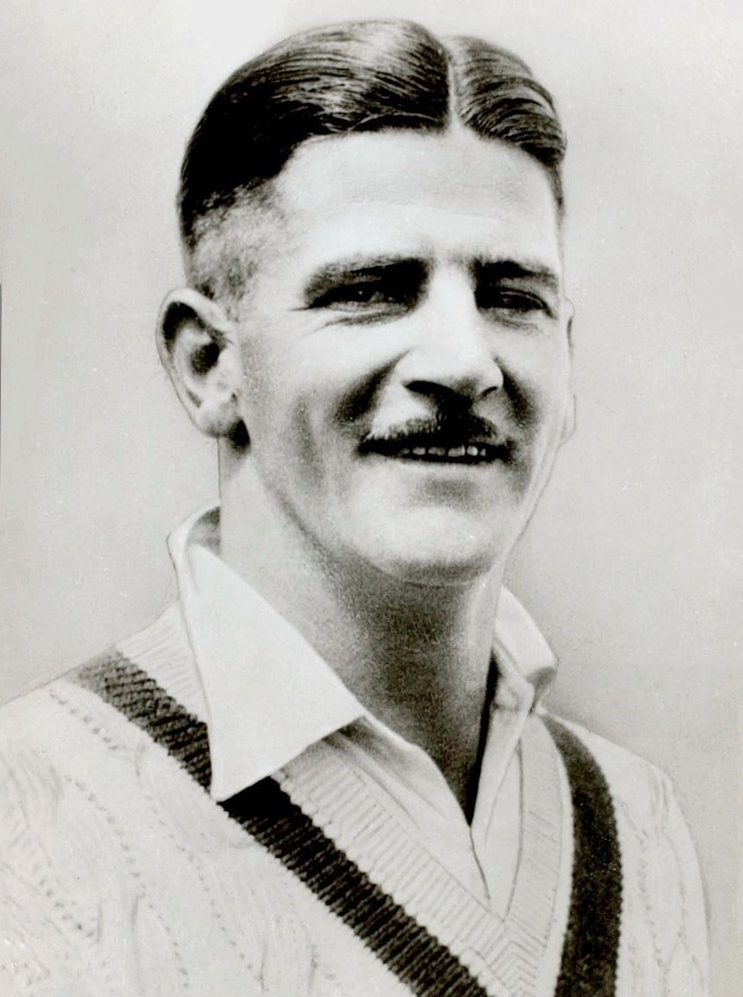
Leslie O'Brien "Chuck" Fleetwood-Smith (30 March 1908 – 16 March 1971) was a cricketer who played for Victoria and Australia. Known universally as "Chuck", he was the "wayward genius" of Australian cricket during the 1930s. A slow bowler who could spin the ball harder and further than his contemporaries, Fleetwood-Smith was regarded as a rare talent, but his cricket suffered from a lack of self-discipline that also characterised his personal life. In addition, his career coincided with those of Bill O'Reilly and Clarrie Grimmett, two spinners named in the ten inaugural members of the Australian Cricket Hall of Fame; as a result he played only ten Test matches but left a lasting impression with one delivery in particular. His dismissal of Wally Hammond in the fourth Test of the 1936–37 Ashes series has been compared to Shane Warne's ball of the century. He has the unwanted record of conceding the most runs by a bowler in a Test match innings.
Holding little regard for the other disciplines of the game, batting and fielding, he attracted a lot of attention with his rare style of bowling: left-arm wrist spin. Few bowlers of this type have appeared in senior cricket; certainly, Fleetwood-Smith was the first such bowler to influence Australian cricket and play for the Test team.
Fleetwood-Smith was ambidextrous and could bowl with either arm during his youth. His choice of an unconventional bowling style reflected his reputation as an eccentric. After his playing days finished, Fleetwood-Smith succumbed to alcoholism and spent many years homeless on the streets of Melbourne, sometimes sleeping rough a few hundred metres from the stadium where he played many of his best matches, the Melbourne Cricket Ground. His arrest in 1969 brought attention to his plight and a number of influential people rallied to his cause.
The third child of Fleetwood Smith and his wife Frances (née Swan), Fleetwood-Smith was born at Stawell in the Northern Grampians area of western Victoria. The family was well known in the district for their long involvement with the local newspaper, and for Fleetwood Smith's association with the organising committee of the Stawell Gift. During his infancy, Fleetwood-Smith was given the nickname "Chuck", a contraction of the polo term "chukka". After attending primary school in Stawell, he enrolled at Xavier College when the family moved to Melbourne in 1917. In the early 1920s, he was a member of Xavier's powerful First XI, which included the future Test player Leo O'Brien, Joe Plant and Karl Schneider, who played first-class cricket while still at the school, but died of leukaemia at the age of 23. The team won the Victorian Public Schools premiership in 1924, but Fleetwood-Smith left the school soon after. It is believed that he was expelled, although the school records are incomplete and do not mention this. Fleetwood-Smith, and fellow Old Xaverians, Leo O'Brien, Stuart King and Joe Plant later represented Victoria v South Australia in a Sheffield Shield match at the MCG in February 1933.
Returning to Stawell, where his family had relocated a year earlier, Fleetwood-Smith completed his education locally and turned out for the Stawell cricket team in the Wimmera league. In three seasons from 1927 to 1928, he captured 317 wickets for Stawell and took seven wickets in a representative match, playing for the Country Colts against the City Colts. He came to the attention of cricket clubs in Melbourne while representing the league in a Country Week tournament. Around this time, his father decided to combine his first and last names, and the family styled themselves as Fleetwood-Smith.
Fleetwood-Smith moved to Melbourne to play with St Kilda in the district cricket competition for the 1930–31 season. It was a challenging choice for a young bowler as the team possessed an outstanding spin attack—Test bowlers Bert Ironmonger and Don Blackie were members of the club. He became a regular in the club's First XI during his second season and in one match claimed 16 wickets for 82 runs (16/82) against Carlton, prompting his selection for the Victorian second team. The remainder of the summer was meteoric for Fleetwood-Smith. He made his first-class debut against Tasmania and captured ten wickets; in his first international against the touring South Africans he returned 6/80 in the first innings; and on his Sheffield Shield debut, he took 11 wickets for the match against South Australia. He led the first-class bowling averages for Victoria and capped the season by playing in St Kilda's premiership team. In the winter of 1932, Fleetwood-Smith joined a private tour of the United States and Canada, organised by the former Test spin bowler Arthur Mailey. Playing 51 matches, he totalled 249 wickets at an average of less than eight runs each as his unique style bewildered the local batsmen.
This rapid rise made Fleetwood-Smith a prospect for the Test team in 1932–33 when England toured and played the famous Bodyline series. However, in Ironmonger, Bill O'Reilly and Clarrie Grimmett, the Australian team possessed a strong spin bowling attack and Fleetwood-Smith needed to supplant one of the trio to gain selection. Although he took 50 first-class wickets for the season (at 21.90 average, including 9/36 in an innings against Tasmania), his bowling received rough treatment from Don Bradman in a match against New South Wales. In the tour match against England that followed, Wally Hammond was given specific instructions to attack the inexperienced Fleetwood-Smith and remove him from consideration for the Test matches, which he accomplished during an innings of 203. The England manager, Plum Warner, later wrote that too much attention was given to this performance and he was sanguine about Fleetwood-Smith's potential as a Test bowler. Despite Grimmett's absence from the Australian team—he was dropped after the third Test—the Australian selectors opted not to gamble by choosing Fleetwood-Smith. Instead, they called on the all-rounders Ernie Bromley and "Perka" Lee.
The following season, Fleetwood-Smith transferred from St Kilda to the Melbourne club as they had found him employment. He collected 41 wickets for Victoria in seven matches, with a best match return of 12/158 against South Australia. This earned him a place in the Australian team for the 1934 tour of England. With Grimmett returned to favour, Fleetwood-Smith was unable to gain selection in the Test matches despite taking 106 first-class wickets (at a cost of 19.20 runs each) on the tour. Initially sceptical of his ability, Wisden thought that his bowling was "erratic" during the early part of the tour, but that he improved dramatically during the second half of the season. Against Sussex, Northants and HDG Leveson-Gower's XI, he took ten wickets for the match. In the latter game, he bowled an inspired spell to Maurice Leyland, the most prolific English batsman of the Test series. Leyland had great success in dealing with O'Reilly and Grimmett, but could not fathom Fleetwood-Smith's various deliveries.
Hub AI
Chuck Fleetwood-Smith AI simulator
(@Chuck Fleetwood-Smith_simulator)
Chuck Fleetwood-Smith
Leslie O'Brien "Chuck" Fleetwood-Smith (30 March 1908 – 16 March 1971) was a cricketer who played for Victoria and Australia. Known universally as "Chuck", he was the "wayward genius" of Australian cricket during the 1930s. A slow bowler who could spin the ball harder and further than his contemporaries, Fleetwood-Smith was regarded as a rare talent, but his cricket suffered from a lack of self-discipline that also characterised his personal life. In addition, his career coincided with those of Bill O'Reilly and Clarrie Grimmett, two spinners named in the ten inaugural members of the Australian Cricket Hall of Fame; as a result he played only ten Test matches but left a lasting impression with one delivery in particular. His dismissal of Wally Hammond in the fourth Test of the 1936–37 Ashes series has been compared to Shane Warne's ball of the century. He has the unwanted record of conceding the most runs by a bowler in a Test match innings.
Holding little regard for the other disciplines of the game, batting and fielding, he attracted a lot of attention with his rare style of bowling: left-arm wrist spin. Few bowlers of this type have appeared in senior cricket; certainly, Fleetwood-Smith was the first such bowler to influence Australian cricket and play for the Test team.
Fleetwood-Smith was ambidextrous and could bowl with either arm during his youth. His choice of an unconventional bowling style reflected his reputation as an eccentric. After his playing days finished, Fleetwood-Smith succumbed to alcoholism and spent many years homeless on the streets of Melbourne, sometimes sleeping rough a few hundred metres from the stadium where he played many of his best matches, the Melbourne Cricket Ground. His arrest in 1969 brought attention to his plight and a number of influential people rallied to his cause.
The third child of Fleetwood Smith and his wife Frances (née Swan), Fleetwood-Smith was born at Stawell in the Northern Grampians area of western Victoria. The family was well known in the district for their long involvement with the local newspaper, and for Fleetwood Smith's association with the organising committee of the Stawell Gift. During his infancy, Fleetwood-Smith was given the nickname "Chuck", a contraction of the polo term "chukka". After attending primary school in Stawell, he enrolled at Xavier College when the family moved to Melbourne in 1917. In the early 1920s, he was a member of Xavier's powerful First XI, which included the future Test player Leo O'Brien, Joe Plant and Karl Schneider, who played first-class cricket while still at the school, but died of leukaemia at the age of 23. The team won the Victorian Public Schools premiership in 1924, but Fleetwood-Smith left the school soon after. It is believed that he was expelled, although the school records are incomplete and do not mention this. Fleetwood-Smith, and fellow Old Xaverians, Leo O'Brien, Stuart King and Joe Plant later represented Victoria v South Australia in a Sheffield Shield match at the MCG in February 1933.
Returning to Stawell, where his family had relocated a year earlier, Fleetwood-Smith completed his education locally and turned out for the Stawell cricket team in the Wimmera league. In three seasons from 1927 to 1928, he captured 317 wickets for Stawell and took seven wickets in a representative match, playing for the Country Colts against the City Colts. He came to the attention of cricket clubs in Melbourne while representing the league in a Country Week tournament. Around this time, his father decided to combine his first and last names, and the family styled themselves as Fleetwood-Smith.
Fleetwood-Smith moved to Melbourne to play with St Kilda in the district cricket competition for the 1930–31 season. It was a challenging choice for a young bowler as the team possessed an outstanding spin attack—Test bowlers Bert Ironmonger and Don Blackie were members of the club. He became a regular in the club's First XI during his second season and in one match claimed 16 wickets for 82 runs (16/82) against Carlton, prompting his selection for the Victorian second team. The remainder of the summer was meteoric for Fleetwood-Smith. He made his first-class debut against Tasmania and captured ten wickets; in his first international against the touring South Africans he returned 6/80 in the first innings; and on his Sheffield Shield debut, he took 11 wickets for the match against South Australia. He led the first-class bowling averages for Victoria and capped the season by playing in St Kilda's premiership team. In the winter of 1932, Fleetwood-Smith joined a private tour of the United States and Canada, organised by the former Test spin bowler Arthur Mailey. Playing 51 matches, he totalled 249 wickets at an average of less than eight runs each as his unique style bewildered the local batsmen.
This rapid rise made Fleetwood-Smith a prospect for the Test team in 1932–33 when England toured and played the famous Bodyline series. However, in Ironmonger, Bill O'Reilly and Clarrie Grimmett, the Australian team possessed a strong spin bowling attack and Fleetwood-Smith needed to supplant one of the trio to gain selection. Although he took 50 first-class wickets for the season (at 21.90 average, including 9/36 in an innings against Tasmania), his bowling received rough treatment from Don Bradman in a match against New South Wales. In the tour match against England that followed, Wally Hammond was given specific instructions to attack the inexperienced Fleetwood-Smith and remove him from consideration for the Test matches, which he accomplished during an innings of 203. The England manager, Plum Warner, later wrote that too much attention was given to this performance and he was sanguine about Fleetwood-Smith's potential as a Test bowler. Despite Grimmett's absence from the Australian team—he was dropped after the third Test—the Australian selectors opted not to gamble by choosing Fleetwood-Smith. Instead, they called on the all-rounders Ernie Bromley and "Perka" Lee.
The following season, Fleetwood-Smith transferred from St Kilda to the Melbourne club as they had found him employment. He collected 41 wickets for Victoria in seven matches, with a best match return of 12/158 against South Australia. This earned him a place in the Australian team for the 1934 tour of England. With Grimmett returned to favour, Fleetwood-Smith was unable to gain selection in the Test matches despite taking 106 first-class wickets (at a cost of 19.20 runs each) on the tour. Initially sceptical of his ability, Wisden thought that his bowling was "erratic" during the early part of the tour, but that he improved dramatically during the second half of the season. Against Sussex, Northants and HDG Leveson-Gower's XI, he took ten wickets for the match. In the latter game, he bowled an inspired spell to Maurice Leyland, the most prolific English batsman of the Test series. Leyland had great success in dealing with O'Reilly and Grimmett, but could not fathom Fleetwood-Smith's various deliveries.
Recent media