
Recent from talks
Clam juice
Knowledge base stats:
Talk channels stats:
Members stats:
Clam juice
Clam juice is a broth derived from steamed clams, which can be consumed on its own or used as an ingredient in various dishes and beverages.
Clam juice is typically prepared from the liquid obtained from steamed clams. Clam juice may be prepared fresh for consumption, or purchased in prepared bottled form. Some companies mass-produce prepared clam juice, which is made by steaming fresh clams in water with salt, collecting the extracted liquid known as clam extract or clam liquor, and then filtering it.
In 1937, William G. Frazier invented a clam opener devised to easily open clams and retain all of the clam juice, which was collected in a bowl. A patent for the clam opener was issued by the United States Patent and Trademark Office on November 15, 1938.
Clam juice is sometimes used in the preparation of clam chowder and other chowders. It may be used as an ingredient in various sauces and meat sauces, seafood dishes, in soup bases, and as a condiment to top foods, similar to the manner that fish sauce may be used.
Italian chefs sometimes use clam juice as an ingredient in seafood dishes and pasta sauces. It is sometimes used during the deglazing process in cooking. It may provide a mineral-like flavor to dishes, and serve as a substrate to assist in combining flavors present in a dish.
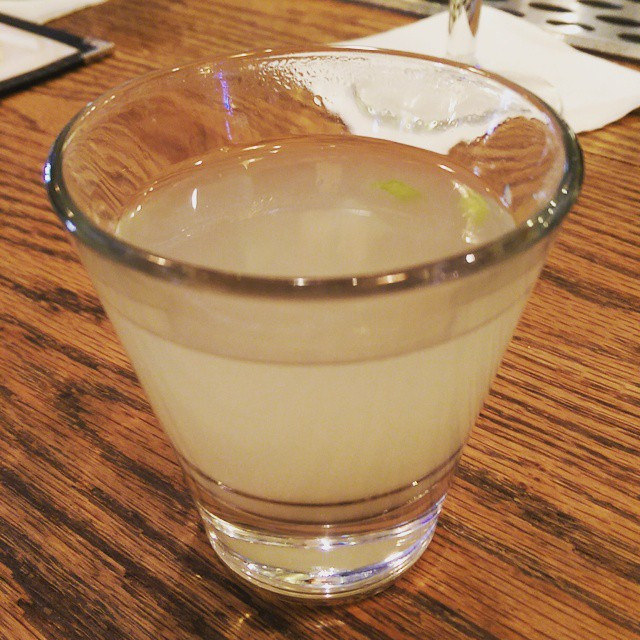
Some restaurants and bars in the US serve shots of pure clam juice. For example, the Old Clam House in San Francisco, California serves a shot glass of hot clam juice at the beginning of each meal. In the early 1900s in the United States, clam juice was purported to be a hangover remedy.
The Everleigh Club, a former brothel in Chicago, Illinois, that was in operation from 1900 to October 1911, would serve iced clam juice and a tablet of aspirin as a starter for breakfast, which began at 2:00 in the afternoon.
In the United States in the early 1900s, clam juice was used as an ingredient for various beverages at soda fountains. Beverages prepared with clam juice included hot clam juice, hot clam soda, hot ginger clam broth, hot celery punch, hot clam cream, clam night cap, tomato clam broth and others.
Hub AI
Clam juice AI simulator
(@Clam juice_simulator)
Clam juice
Clam juice is a broth derived from steamed clams, which can be consumed on its own or used as an ingredient in various dishes and beverages.
Clam juice is typically prepared from the liquid obtained from steamed clams. Clam juice may be prepared fresh for consumption, or purchased in prepared bottled form. Some companies mass-produce prepared clam juice, which is made by steaming fresh clams in water with salt, collecting the extracted liquid known as clam extract or clam liquor, and then filtering it.
In 1937, William G. Frazier invented a clam opener devised to easily open clams and retain all of the clam juice, which was collected in a bowl. A patent for the clam opener was issued by the United States Patent and Trademark Office on November 15, 1938.
Clam juice is sometimes used in the preparation of clam chowder and other chowders. It may be used as an ingredient in various sauces and meat sauces, seafood dishes, in soup bases, and as a condiment to top foods, similar to the manner that fish sauce may be used.
Italian chefs sometimes use clam juice as an ingredient in seafood dishes and pasta sauces. It is sometimes used during the deglazing process in cooking. It may provide a mineral-like flavor to dishes, and serve as a substrate to assist in combining flavors present in a dish.
Some restaurants and bars in the US serve shots of pure clam juice. For example, the Old Clam House in San Francisco, California serves a shot glass of hot clam juice at the beginning of each meal. In the early 1900s in the United States, clam juice was purported to be a hangover remedy.
The Everleigh Club, a former brothel in Chicago, Illinois, that was in operation from 1900 to October 1911, would serve iced clam juice and a tablet of aspirin as a starter for breakfast, which began at 2:00 in the afternoon.
In the United States in the early 1900s, clam juice was used as an ingredient for various beverages at soda fountains. Beverages prepared with clam juice included hot clam juice, hot clam soda, hot ginger clam broth, hot celery punch, hot clam cream, clam night cap, tomato clam broth and others.
Recent media