
Recent from talks
Clarke gang
Knowledge base stats:
Talk channels stats:
Members stats:
Clarke gang
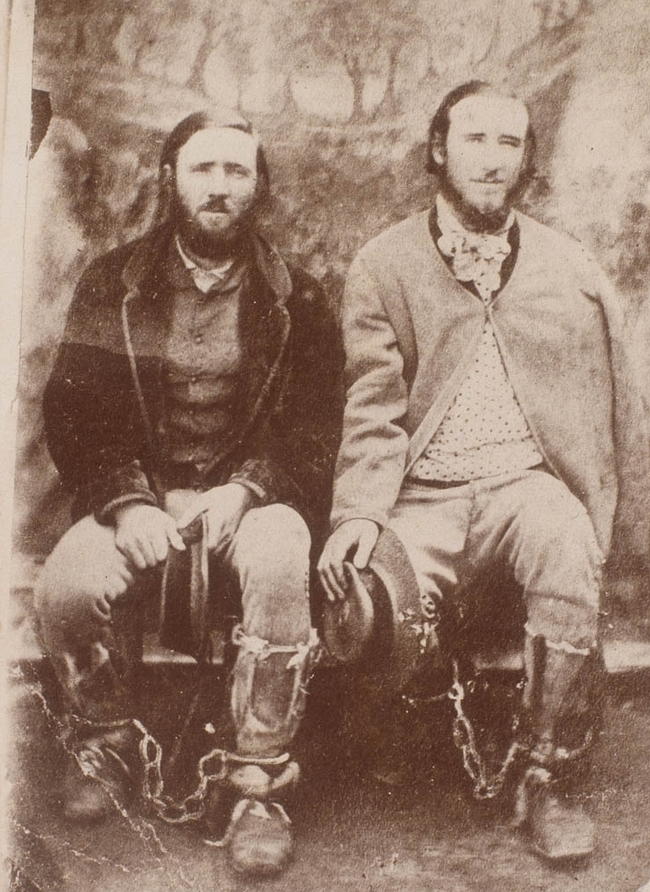
The Clarke gang was a group of bushrangers active in the mid-1860s in the southern goldfields of New South Wales, Australia. The membership of the gang fluctuated over time, the two core members being brothers Thomas and John Clarke, from the Braidwood district.
The Clarke brothers, along with several relatives and associates, were responsible for a reported 71 robberies and hold-ups, as well as the death of at least one policeman; they are also the primary suspects in the killing of a squad of four policemen sent to capture them. They additionally shot several others, four of whom died from their wounds, including one gang member and a man they erroneously thought to be a police tracker. Their crimes formed part of a bushranging epidemic that inspired the Government of New South Wales to enact the Felons' Apprehension Act (1866), a law that introduced the concept of outlawry in the colony and authorised citizens to kill bushrangers on sight. Thomas was proclaimed an outlaw on 31 May 1866.
By the end of 1866, most members of the gang had either been captured and imprisoned or killed in shootouts with the police. John and Thomas were captured following a shootout in April 1867. They were hanged two months later at Darlinghurst Gaol, Sydney. Their execution marked the end of the last major outbreak of organised gang bushranging in New South Wales.
Some modern-day writers have described the Clarkes as the most bloodthirsty bushrangers of all, and according to one journalist, "Their crimes were so shocking that they never made their way into bushranger folklore — people just wanted to forget about them."
The Clarkes' father Jack, a shoemaker transported to Sydney in 1828 for seven years aboard the Morley, arrived in the Braidwood district as a convict assigned to a pastoralist. By then an ex-convict, he married Mary Connell—at 'Mount Elrington', where he was working and her parents were free immigrant servants—and took up a leasehold in the Jingeras, which proved too small to support his family of five children. He took to selling sly-grog (illegal alcohol), initiated his sons Tom and John into cattle duffing (cattle rustling) and raised them to believe in his view of the fair and equitable distribution of property. They constantly raided crops and livestock, aided by their uncles Pat and Tom Connell. Their gang, the Jerrabat Gully Rakers, were regarded as scientists in the art of cattle duffing and horse stealing. The Clarke gang of relatives and friends were well trained in bushcraft and heavily armed.
They plundered publicans, storekeepers, farmers and travellers. They ambushed gold shipments from Nerrigundah and Araluen and the coaches that traveled from Sydney and the Illawarra. Until November 1866, they marauded almost virtually unchecked in a triangle through the Jingeras from Braidwood to Bega, and up the coast to Moruya and Nelligen. On 9 April 1866, Nerrigundah was raided by the gang. After holding up some passers by at Guelph Creek — wounding one, John Emmott, by gunshot and beating up another — they attacked the store and tavern, taking 40 captives and robbing them. Constable Miles O'Grady was mortally wounded, when he and Constable Smythe tried to intervene. O'Grady shot dead William Fletcher, a new recruit to the gang, and the rest of the gang fled
On 1 June 1866, the gang raided the village of Michelago. They robbed the store for supplies and held some inhabitants captive at the inn, while the gang became drunk, before setting their captives free and—after several hours more of carousing and brawling among themselves—leaving the village.
On 9 January 1867, a party of special constables—John Carroll, Patrick Kennagh, Eneas McDonnell and John Phegan—were ambushed and killed near Jinden Station. They had been tied to a tree and then shot. The Clarke brothers were implicated in the murders. A blood-soaked pound note was pinned to Carroll, the leader, as a warning to anyone else intent on pursuing them.
Hub AI
Clarke gang AI simulator
(@Clarke gang_simulator)
Clarke gang
The Clarke gang was a group of bushrangers active in the mid-1860s in the southern goldfields of New South Wales, Australia. The membership of the gang fluctuated over time, the two core members being brothers Thomas and John Clarke, from the Braidwood district.
The Clarke brothers, along with several relatives and associates, were responsible for a reported 71 robberies and hold-ups, as well as the death of at least one policeman; they are also the primary suspects in the killing of a squad of four policemen sent to capture them. They additionally shot several others, four of whom died from their wounds, including one gang member and a man they erroneously thought to be a police tracker. Their crimes formed part of a bushranging epidemic that inspired the Government of New South Wales to enact the Felons' Apprehension Act (1866), a law that introduced the concept of outlawry in the colony and authorised citizens to kill bushrangers on sight. Thomas was proclaimed an outlaw on 31 May 1866.
By the end of 1866, most members of the gang had either been captured and imprisoned or killed in shootouts with the police. John and Thomas were captured following a shootout in April 1867. They were hanged two months later at Darlinghurst Gaol, Sydney. Their execution marked the end of the last major outbreak of organised gang bushranging in New South Wales.
Some modern-day writers have described the Clarkes as the most bloodthirsty bushrangers of all, and according to one journalist, "Their crimes were so shocking that they never made their way into bushranger folklore — people just wanted to forget about them."
The Clarkes' father Jack, a shoemaker transported to Sydney in 1828 for seven years aboard the Morley, arrived in the Braidwood district as a convict assigned to a pastoralist. By then an ex-convict, he married Mary Connell—at 'Mount Elrington', where he was working and her parents were free immigrant servants—and took up a leasehold in the Jingeras, which proved too small to support his family of five children. He took to selling sly-grog (illegal alcohol), initiated his sons Tom and John into cattle duffing (cattle rustling) and raised them to believe in his view of the fair and equitable distribution of property. They constantly raided crops and livestock, aided by their uncles Pat and Tom Connell. Their gang, the Jerrabat Gully Rakers, were regarded as scientists in the art of cattle duffing and horse stealing. The Clarke gang of relatives and friends were well trained in bushcraft and heavily armed.
They plundered publicans, storekeepers, farmers and travellers. They ambushed gold shipments from Nerrigundah and Araluen and the coaches that traveled from Sydney and the Illawarra. Until November 1866, they marauded almost virtually unchecked in a triangle through the Jingeras from Braidwood to Bega, and up the coast to Moruya and Nelligen. On 9 April 1866, Nerrigundah was raided by the gang. After holding up some passers by at Guelph Creek — wounding one, John Emmott, by gunshot and beating up another — they attacked the store and tavern, taking 40 captives and robbing them. Constable Miles O'Grady was mortally wounded, when he and Constable Smythe tried to intervene. O'Grady shot dead William Fletcher, a new recruit to the gang, and the rest of the gang fled
On 1 June 1866, the gang raided the village of Michelago. They robbed the store for supplies and held some inhabitants captive at the inn, while the gang became drunk, before setting their captives free and—after several hours more of carousing and brawling among themselves—leaving the village.
On 9 January 1867, a party of special constables—John Carroll, Patrick Kennagh, Eneas McDonnell and John Phegan—were ambushed and killed near Jinden Station. They had been tied to a tree and then shot. The Clarke brothers were implicated in the murders. A blood-soaked pound note was pinned to Carroll, the leader, as a warning to anyone else intent on pursuing them.
Recent media