
Recent from talks
Early Modern Irish
Knowledge base stats:
Talk channels stats:
Members stats:
Early Modern Irish
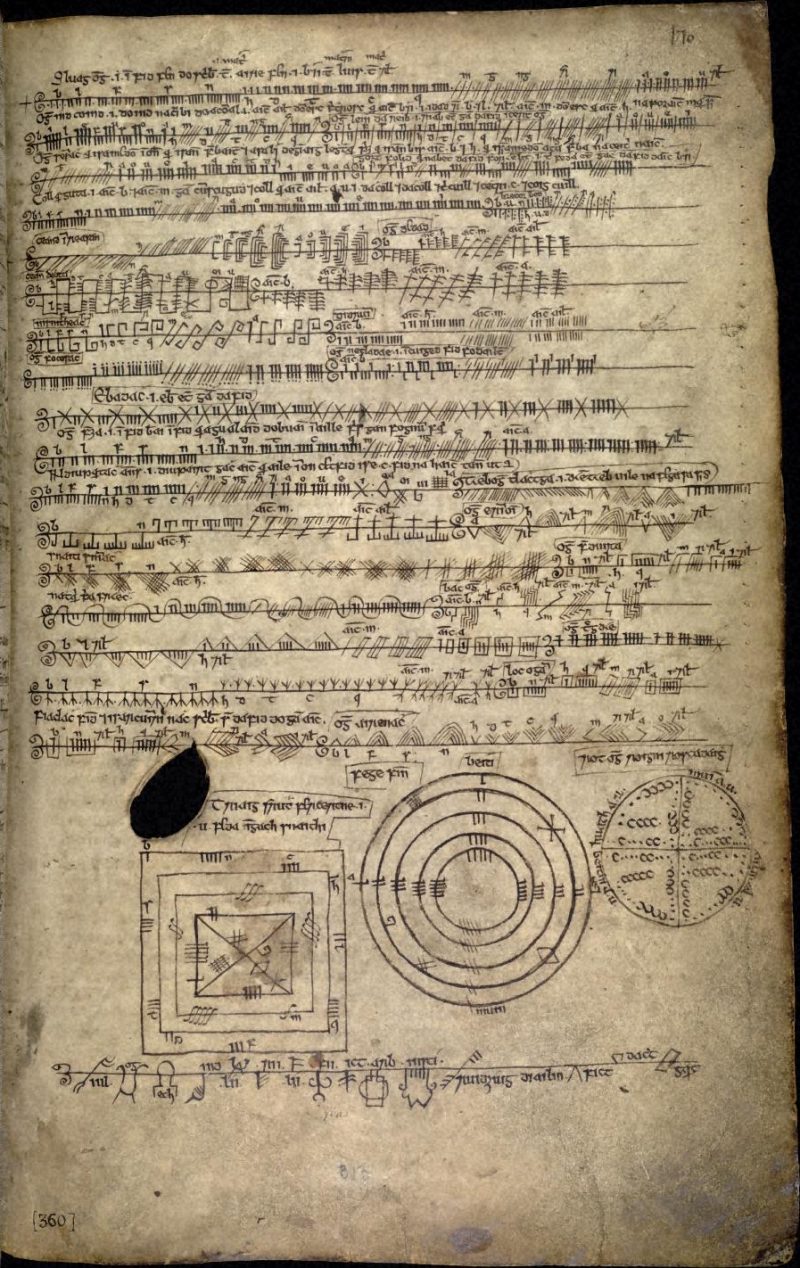
Early Modern Irish (Irish: Gaeilge Chlasaiceach, lit. 'Classical Irish') represented a transition between Middle Irish and Modern Irish. Its literary form, Classical Gaelic, was used in Ireland and Scotland from the 13th to the 18th century.
Classical Gaelic or Classical Irish (Gaoidhealg) was a shared literary form of Gaelic that was in use by poets in Scotland and Ireland from the 13th century to the 18th century.
Although the first written signs of Scottish Gaelic having diverged from Irish appear as far back as the 12th century annotations of the Book of Deer, Scottish Gaelic did not have a separate standardised form and did not appear in print on a significant scale until the 1767 translation of the New Testament into Scottish Gaelic; however, in the 16th century, John Carswell's Foirm na n-Urrnuidheadh, an adaptation of John Knox's Book of Common Order, was the first book printed in either Scottish or Irish Gaelic.
Before that time, the vernacular dialects of Ireland and Scotland were considered to belong to a single language, and in the late 12th century a highly formalized standard variant of that language was created for the use in bardic poetry. The standard was created by medieval Gaelic poets based on the vernacular usage of the late 12th century and allowed a lot of dialectal forms that existed at that point in time, but was kept conservative and had been taught virtually unchanged throughout later centuries. The grammar and metrical rules were described in a series of grammatical tracts and linguistic poems used for teaching in bardic schools.
The Tudor dynasty sought to subdue its Irish citizens. The Tudor rulers attempted to do this by restricting the use of the Irish language while simultaneously promoting the use of the English language. English expansion in Ireland, outside of the Pale, was attempted under Mary I, but ended with poor results. Queen Elizabeth I was proficient in several languages and is reported to have expressed a desire to understand Irish. A primer was prepared on her behalf by Christopher Nugent, 6th Baron Delvin.
The grammar of Early Modern Irish is laid out in a series of grammatical tracts written by native speakers and intended to teach the most cultivated form of the language to student bards, lawyers, doctors, administrators, monks, and so on in Ireland and Scotland. The tracts were edited and published by Osborn Bergin as a supplement to Ériu between 1916 and 1955 under the title Irish Grammatical Tracts. and some with commentary and translation by Lambert McKenna in 1944 as Bardic Syntactical Tracts.
The neuter gender is gone (formerly neuter nouns transition mostly to masculine, occasionally feminine categories) – but some historically neuter nouns may still optionally cause eclipsis of a following complement (eg. lá n-aon "one day"), as they did in Old Irish. The distinction between preposition + accusative to show motion toward a goal (e.g. san gcath "into the battle") and preposition + dative to show non–goal-oriented location (e.g. san chath "in the battle") is lost during this period in the spoken language, as is the distinction between nominative and accusative case in nouns, but they are kept in Classical Gaelic. The Classical Gaelic standard also requires the use of accusative for direct object of the verb if it is different in form from the nominative.
Verb endings are also in transition. The ending -ann (which spread from conjunct forms of Old Irish n-stem verbs like benaid, ·ben "(he) hits, strikes"), today the usual 3rd person ending in the present tense, was originally just an alternative ending found only in verbs in dependent position, i.e. after particles such as the negative, but it started to appear in independent forms in 15th century prose and was common by 17th century. Thus Classical Gaelic originally had molaidh "[he] praises" versus ní mhol or ní mholann "[he] does not praise", whereas later Early Modern and Modern Irish have molann sé and ní mholann sé. This innovation was not followed in Scottish Gaelic, where the ending -ann has never spread, but the present and future tenses were merged: glacaidh e "he will grasp" but cha ghlac e "he will not grasp".
Hub AI
Early Modern Irish AI simulator
(@Early Modern Irish_simulator)
Early Modern Irish
Early Modern Irish (Irish: Gaeilge Chlasaiceach, lit. 'Classical Irish') represented a transition between Middle Irish and Modern Irish. Its literary form, Classical Gaelic, was used in Ireland and Scotland from the 13th to the 18th century.
Classical Gaelic or Classical Irish (Gaoidhealg) was a shared literary form of Gaelic that was in use by poets in Scotland and Ireland from the 13th century to the 18th century.
Although the first written signs of Scottish Gaelic having diverged from Irish appear as far back as the 12th century annotations of the Book of Deer, Scottish Gaelic did not have a separate standardised form and did not appear in print on a significant scale until the 1767 translation of the New Testament into Scottish Gaelic; however, in the 16th century, John Carswell's Foirm na n-Urrnuidheadh, an adaptation of John Knox's Book of Common Order, was the first book printed in either Scottish or Irish Gaelic.
Before that time, the vernacular dialects of Ireland and Scotland were considered to belong to a single language, and in the late 12th century a highly formalized standard variant of that language was created for the use in bardic poetry. The standard was created by medieval Gaelic poets based on the vernacular usage of the late 12th century and allowed a lot of dialectal forms that existed at that point in time, but was kept conservative and had been taught virtually unchanged throughout later centuries. The grammar and metrical rules were described in a series of grammatical tracts and linguistic poems used for teaching in bardic schools.
The Tudor dynasty sought to subdue its Irish citizens. The Tudor rulers attempted to do this by restricting the use of the Irish language while simultaneously promoting the use of the English language. English expansion in Ireland, outside of the Pale, was attempted under Mary I, but ended with poor results. Queen Elizabeth I was proficient in several languages and is reported to have expressed a desire to understand Irish. A primer was prepared on her behalf by Christopher Nugent, 6th Baron Delvin.
The grammar of Early Modern Irish is laid out in a series of grammatical tracts written by native speakers and intended to teach the most cultivated form of the language to student bards, lawyers, doctors, administrators, monks, and so on in Ireland and Scotland. The tracts were edited and published by Osborn Bergin as a supplement to Ériu between 1916 and 1955 under the title Irish Grammatical Tracts. and some with commentary and translation by Lambert McKenna in 1944 as Bardic Syntactical Tracts.
The neuter gender is gone (formerly neuter nouns transition mostly to masculine, occasionally feminine categories) – but some historically neuter nouns may still optionally cause eclipsis of a following complement (eg. lá n-aon "one day"), as they did in Old Irish. The distinction between preposition + accusative to show motion toward a goal (e.g. san gcath "into the battle") and preposition + dative to show non–goal-oriented location (e.g. san chath "in the battle") is lost during this period in the spoken language, as is the distinction between nominative and accusative case in nouns, but they are kept in Classical Gaelic. The Classical Gaelic standard also requires the use of accusative for direct object of the verb if it is different in form from the nominative.
Verb endings are also in transition. The ending -ann (which spread from conjunct forms of Old Irish n-stem verbs like benaid, ·ben "(he) hits, strikes"), today the usual 3rd person ending in the present tense, was originally just an alternative ending found only in verbs in dependent position, i.e. after particles such as the negative, but it started to appear in independent forms in 15th century prose and was common by 17th century. Thus Classical Gaelic originally had molaidh "[he] praises" versus ní mhol or ní mholann "[he] does not praise", whereas later Early Modern and Modern Irish have molann sé and ní mholann sé. This innovation was not followed in Scottish Gaelic, where the ending -ann has never spread, but the present and future tenses were merged: glacaidh e "he will grasp" but cha ghlac e "he will not grasp".
Recent media