
Recent from talks
Cleopatra Thea
Knowledge base stats:
Talk channels stats:
Members stats:
Cleopatra Thea
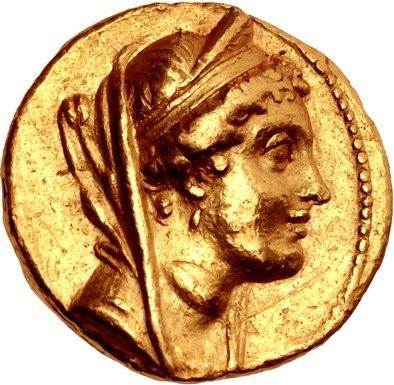
Cleopatra I or Cleopatra Thea (Koine Greek: Κλεοπάτρα Θεά, which means "Cleopatra the Goddess"; c. 164 – 121 BC), surnamed Eueteria (εὐετηρῐ́ᾱ lit. 'good-harvest/fruitful season') was a ruler of the Hellenistic Seleucid Empire. She was queen consort of Syria from 150 to about 125 BC as the wife of three Kings of Syria: Alexander Balas, Demetrius II Nicator, and Antiochus VII Sidetes. She ruled Syria from 125 BC after the death of Demetrius II Nicator, eventually in co-regency with her son Antiochus VIII Grypus until 121 or 120 BC.
Cleopatra Thea was born, probably ca. 164 BC, to Ptolemy VI and Cleopatra II, and grew up in Egypt. She may have been engaged to her uncle Ptolemy VIII, king of Cyrene, in 154, but he eventually married her sister Cleopatra III.
In 152 BC, her father, who had come into conflict with the Seleucid king Demetrius I Soter, chose to promote Antiochus IV's son Alexander Balas against him and supported him with troops and officers. When Alexander triumphed over Demetrius in 150 BC, he requested Ptolemy's daughter as a warranty of alliance. The two kings met, amid sumptuous ceremonies, in Ptolemais Akko, and Alexander received Cleopatra in marriage. The marriage soon produced a son named Antiochus Dionysus.
In 147 BC, Demetrius Soter's son Demetrius II invaded Cilicia. Two years later Ptolemy VI brought his army into Syria, ostensibly to help Alexander Balas fight the invaders. Having installed garrisons in the Seleucid coastal cities, he eventually betrayed Alexander outright by seizing Antioch. There he reunited with Cleopatra. In accordance with her father's new political program, she divorced Alexander and married Demetrius II instead. The marriage deal stated that Ptolemy would help Demetrius take the throne from Alexander; in exchange, Egypt would receive the province of Coele-Syria, which had been Seleucid territory since Antiochus III took it from Ptolemy V in 200 BC. Alexander quelled the Cilician revolt and returned home, confronting Ptolemy and Demetrius in the plain of the river Oeneparas, close to Antioch. In the ensuing battle, Alexander was defeated and Ptolemy was wounded so badly that he died a few days later. Demetrius repudiated his alliance with Egypt and expelled or massacred all of Ptolemy's garrisons in Syria as far as Gaza, reinstating a fragile Seleucid control over the province. The Syrians had hostile memories of his father, and he faced rebellions in Antioch as soon as 144 BC. Demetrius instituted purges, but these aggravated the discontent instead of stifling it.
Diodotus, a former general of Alexander and probable participant in the Antiochene rebellion, abducted Cleopatra's first son Antiochus VI and used him as a figurehead for a secessionist kingdom in Coele-Syria. In 142/1 BC, Diodotus murdered the boy and proclaimed himself as king. During these years of brutal civil war, Cleopatra and Demetrius had at least three children, Seleucus, Antiochus and a daughter called Laodike.
In 139 BC, Demetrius II was captured in battle against the kingdom of Parthia, which held him prisoner until 129 BC. Diodotus took the opportunity to conquer all of the Seleucid kingdom except the city of Seleucia in Pieria, where Cleopatra sought refuge. She sent for Demetrius's younger brother, Antiochus VII Sidetes, proposing that he should marry her and become the new king. Accepting the offer, Antiochus VII defeated and killed Diodotus in 138 BC, ending the civil wars which had been ongoing since 152. Cleopatra Thea had at least one son with the king, Antiochus IX Cyzicenus. The names of any other children are uncertain.
During his reign, Cleopatra's third husband reestablished Seleucid authority in the kingdom west of the Euphrates. Between 134 and 130 BC he waged a war to reclaim all the satrapies his predecessors had lost to the Parthians. The Parthian king Phraates II decided to release Demetrius II, who had been married to his sister Rhodogune, and to send him to Syria, thus provoking a civil war between the brothers and compelling Antiochus VII to retreat. In the winter of 130/129 Phraates killed Antiochus in an ambush near Ectabane, but Demetrius managed to enter his kingdom before the Parthians could retrieve him.
Cleopatra received Demetrius peaceably, but took the precaution of sending Antiochus IX (her son by Antiochus VII) to Cyzicus, out of the king's immediate reach; she was said to be secretly furious at Demetrius taking a Parthian wife and having children with her. In 128 BC, Demetrius took an army to Egypt to help Cleopatra's mother, Cleopatra II, with her ongoing struggle against her brother and husband Ptolemy VIII Physcon. He was forced to retreat near Pelousion because his soldiers refused to obey him, and Cleopatra Thea, then in Antioch, rebelled against him and established her son Antiochus as king. In the same year, Antioch was occupied by Alexander II Zabinas, a false child of Alexander Balas sent with troops by Ptolemy to wage war against Demetrius in Syria. Cleopatra Thea fled the city, and probably went to Ptolemais, where she had married Alexander Balas some twenty years earlier.
Hub AI
Cleopatra Thea AI simulator
(@Cleopatra Thea_simulator)
Cleopatra Thea
Cleopatra I or Cleopatra Thea (Koine Greek: Κλεοπάτρα Θεά, which means "Cleopatra the Goddess"; c. 164 – 121 BC), surnamed Eueteria (εὐετηρῐ́ᾱ lit. 'good-harvest/fruitful season') was a ruler of the Hellenistic Seleucid Empire. She was queen consort of Syria from 150 to about 125 BC as the wife of three Kings of Syria: Alexander Balas, Demetrius II Nicator, and Antiochus VII Sidetes. She ruled Syria from 125 BC after the death of Demetrius II Nicator, eventually in co-regency with her son Antiochus VIII Grypus until 121 or 120 BC.
Cleopatra Thea was born, probably ca. 164 BC, to Ptolemy VI and Cleopatra II, and grew up in Egypt. She may have been engaged to her uncle Ptolemy VIII, king of Cyrene, in 154, but he eventually married her sister Cleopatra III.
In 152 BC, her father, who had come into conflict with the Seleucid king Demetrius I Soter, chose to promote Antiochus IV's son Alexander Balas against him and supported him with troops and officers. When Alexander triumphed over Demetrius in 150 BC, he requested Ptolemy's daughter as a warranty of alliance. The two kings met, amid sumptuous ceremonies, in Ptolemais Akko, and Alexander received Cleopatra in marriage. The marriage soon produced a son named Antiochus Dionysus.
In 147 BC, Demetrius Soter's son Demetrius II invaded Cilicia. Two years later Ptolemy VI brought his army into Syria, ostensibly to help Alexander Balas fight the invaders. Having installed garrisons in the Seleucid coastal cities, he eventually betrayed Alexander outright by seizing Antioch. There he reunited with Cleopatra. In accordance with her father's new political program, she divorced Alexander and married Demetrius II instead. The marriage deal stated that Ptolemy would help Demetrius take the throne from Alexander; in exchange, Egypt would receive the province of Coele-Syria, which had been Seleucid territory since Antiochus III took it from Ptolemy V in 200 BC. Alexander quelled the Cilician revolt and returned home, confronting Ptolemy and Demetrius in the plain of the river Oeneparas, close to Antioch. In the ensuing battle, Alexander was defeated and Ptolemy was wounded so badly that he died a few days later. Demetrius repudiated his alliance with Egypt and expelled or massacred all of Ptolemy's garrisons in Syria as far as Gaza, reinstating a fragile Seleucid control over the province. The Syrians had hostile memories of his father, and he faced rebellions in Antioch as soon as 144 BC. Demetrius instituted purges, but these aggravated the discontent instead of stifling it.
Diodotus, a former general of Alexander and probable participant in the Antiochene rebellion, abducted Cleopatra's first son Antiochus VI and used him as a figurehead for a secessionist kingdom in Coele-Syria. In 142/1 BC, Diodotus murdered the boy and proclaimed himself as king. During these years of brutal civil war, Cleopatra and Demetrius had at least three children, Seleucus, Antiochus and a daughter called Laodike.
In 139 BC, Demetrius II was captured in battle against the kingdom of Parthia, which held him prisoner until 129 BC. Diodotus took the opportunity to conquer all of the Seleucid kingdom except the city of Seleucia in Pieria, where Cleopatra sought refuge. She sent for Demetrius's younger brother, Antiochus VII Sidetes, proposing that he should marry her and become the new king. Accepting the offer, Antiochus VII defeated and killed Diodotus in 138 BC, ending the civil wars which had been ongoing since 152. Cleopatra Thea had at least one son with the king, Antiochus IX Cyzicenus. The names of any other children are uncertain.
During his reign, Cleopatra's third husband reestablished Seleucid authority in the kingdom west of the Euphrates. Between 134 and 130 BC he waged a war to reclaim all the satrapies his predecessors had lost to the Parthians. The Parthian king Phraates II decided to release Demetrius II, who had been married to his sister Rhodogune, and to send him to Syria, thus provoking a civil war between the brothers and compelling Antiochus VII to retreat. In the winter of 130/129 Phraates killed Antiochus in an ambush near Ectabane, but Demetrius managed to enter his kingdom before the Parthians could retrieve him.
Cleopatra received Demetrius peaceably, but took the precaution of sending Antiochus IX (her son by Antiochus VII) to Cyzicus, out of the king's immediate reach; she was said to be secretly furious at Demetrius taking a Parthian wife and having children with her. In 128 BC, Demetrius took an army to Egypt to help Cleopatra's mother, Cleopatra II, with her ongoing struggle against her brother and husband Ptolemy VIII Physcon. He was forced to retreat near Pelousion because his soldiers refused to obey him, and Cleopatra Thea, then in Antioch, rebelled against him and established her son Antiochus as king. In the same year, Antioch was occupied by Alexander II Zabinas, a false child of Alexander Balas sent with troops by Ptolemy to wage war against Demetrius in Syria. Cleopatra Thea fled the city, and probably went to Ptolemais, where she had married Alexander Balas some twenty years earlier.
Recent media