
Recent from talks
Clifton Sprague
Knowledge base stats:
Talk channels stats:
Members stats:
Clifton Sprague
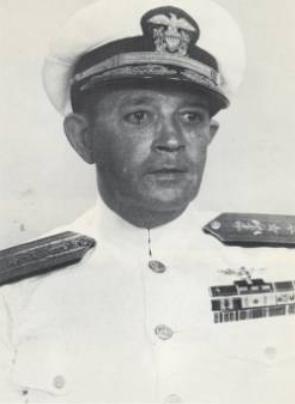
Clifton Albert Frederick Sprague (January 8, 1896 – April 11, 1955) was a World War II–era officer in the United States Navy.
Sprague was born in Dorchester, Massachusetts, and attended the Roxbury Latin School. He entered the United States Naval Academy in 1914. There he was given the nickname "Ziggy". Due to the American involvement in World War I he graduated and received his commission as an ensign one year early, on June 28, 1917, finishing forty-third out of 199. His wife was the sister of The Great Gatsby author F. Scott Fitzgerald.
Admiral Clifton "Ziggy" Sprague was no relation to his Naval Academy classmate Admiral Thomas L. "Tommy" Sprague. Both Admirals Sprague were commanders in the Battle of Leyte Gulf.
His first assignment was on the gunboat Wheeling (PG-14), where he served as gunnery officer, communications officer, navigator, and executive officer. Wheeling served as a convoy escort in the Atlantic and Mediterranean during the war. While assigned to Wheeling he was promoted to lieutenant (junior grade) and lieutenant. After the war in October 1919, Sprague was assigned as the reserve commanding officer of the destroyer Manley (DD-74) for two months. Thereafter he was assigned to the new battleship Tennessee (BB-43) and served as 6th broadside battery officer for one year.
On December 3, 1920, Sprague joined 33 other classmates at Naval Air Station Pensacola, Florida, as a student pilot. His first flight was on January 11, 1921, when he piloted a Curtiss N-9 aircraft for twenty minutes. Sprague earned the designation Naval Aviator No. 2934 on August 11, 1921. Due to his great proficiency, within two months he was designated as commanding officer of Aircraft Squadron 3 at Pensacola.
From March 1922 to November 1923, Sprague was assigned to Aircraft Squadron VS-1 with the Atlantic Fleet based on the seaplane tender Wright. He reported to his next duty station Naval Air Station Anacostia, near Washington, D.C., in November 1923, where he served as a test pilot, operations officer, and executive officer. As a test pilot he conducted experimental and research work at the Naval Aircraft Factory in Philadelphia, Pennsylvania, in 1923, where he contributed to the development of aircraft carrier catapult systems. From March 1926 to February 1928 he assisted inventor Carl Norden in the laboratory and as a test pilot at Naval Air Station Hampton Roads, Virginia, resulting in improvements to the Mark 1 carrier arresting gear system for Lexington (CV-2) and Saratoga (CV-3).
Sprague reported to Lexington in March 1928, where he assumed the duties of flight deck officer and assistant air officer. In January 1929 Lexington along with Langley and Saratoga participated in Fleet Problem IX, a simulated aerial attack on the Panama Canal. Sprague's tour on Lexington ended in April 1929. Returning to the U.S. Naval Academy in May 1929, Sprague served as executive officer of VN-8-D5. On June 10, 1930, he was promoted to lieutenant commander. His tour at the Naval Academy ended in November 1931.
Sprague served as squadron commander of VP-8 in Panama in December 1931 to April 1934. The squadron was based on the seaplane tender Wright (AV-1) homeported at the Norfolk Navy Yard. In 1933 the squadron was moved to Hawaii, where Sprague became the first navy pilot to fly a thirteen-hour round-trip from Hawaii to Midway Island in February 1934. From May 1934 to July 1936, Sprague served as air operations officer at Naval Air Station Norfolk, Virginia, where his department serviced several aircraft carrier squadrons.
Hub AI
Clifton Sprague AI simulator
(@Clifton Sprague_simulator)
Clifton Sprague
Clifton Albert Frederick Sprague (January 8, 1896 – April 11, 1955) was a World War II–era officer in the United States Navy.
Sprague was born in Dorchester, Massachusetts, and attended the Roxbury Latin School. He entered the United States Naval Academy in 1914. There he was given the nickname "Ziggy". Due to the American involvement in World War I he graduated and received his commission as an ensign one year early, on June 28, 1917, finishing forty-third out of 199. His wife was the sister of The Great Gatsby author F. Scott Fitzgerald.
Admiral Clifton "Ziggy" Sprague was no relation to his Naval Academy classmate Admiral Thomas L. "Tommy" Sprague. Both Admirals Sprague were commanders in the Battle of Leyte Gulf.
His first assignment was on the gunboat Wheeling (PG-14), where he served as gunnery officer, communications officer, navigator, and executive officer. Wheeling served as a convoy escort in the Atlantic and Mediterranean during the war. While assigned to Wheeling he was promoted to lieutenant (junior grade) and lieutenant. After the war in October 1919, Sprague was assigned as the reserve commanding officer of the destroyer Manley (DD-74) for two months. Thereafter he was assigned to the new battleship Tennessee (BB-43) and served as 6th broadside battery officer for one year.
On December 3, 1920, Sprague joined 33 other classmates at Naval Air Station Pensacola, Florida, as a student pilot. His first flight was on January 11, 1921, when he piloted a Curtiss N-9 aircraft for twenty minutes. Sprague earned the designation Naval Aviator No. 2934 on August 11, 1921. Due to his great proficiency, within two months he was designated as commanding officer of Aircraft Squadron 3 at Pensacola.
From March 1922 to November 1923, Sprague was assigned to Aircraft Squadron VS-1 with the Atlantic Fleet based on the seaplane tender Wright. He reported to his next duty station Naval Air Station Anacostia, near Washington, D.C., in November 1923, where he served as a test pilot, operations officer, and executive officer. As a test pilot he conducted experimental and research work at the Naval Aircraft Factory in Philadelphia, Pennsylvania, in 1923, where he contributed to the development of aircraft carrier catapult systems. From March 1926 to February 1928 he assisted inventor Carl Norden in the laboratory and as a test pilot at Naval Air Station Hampton Roads, Virginia, resulting in improvements to the Mark 1 carrier arresting gear system for Lexington (CV-2) and Saratoga (CV-3).
Sprague reported to Lexington in March 1928, where he assumed the duties of flight deck officer and assistant air officer. In January 1929 Lexington along with Langley and Saratoga participated in Fleet Problem IX, a simulated aerial attack on the Panama Canal. Sprague's tour on Lexington ended in April 1929. Returning to the U.S. Naval Academy in May 1929, Sprague served as executive officer of VN-8-D5. On June 10, 1930, he was promoted to lieutenant commander. His tour at the Naval Academy ended in November 1931.
Sprague served as squadron commander of VP-8 in Panama in December 1931 to April 1934. The squadron was based on the seaplane tender Wright (AV-1) homeported at the Norfolk Navy Yard. In 1933 the squadron was moved to Hawaii, where Sprague became the first navy pilot to fly a thirteen-hour round-trip from Hawaii to Midway Island in February 1934. From May 1934 to July 1936, Sprague served as air operations officer at Naval Air Station Norfolk, Virginia, where his department serviced several aircraft carrier squadrons.
Recent media