



Community hub
Recent from talks
Knowledge base stats:
Talk channels stats:
Members stats:
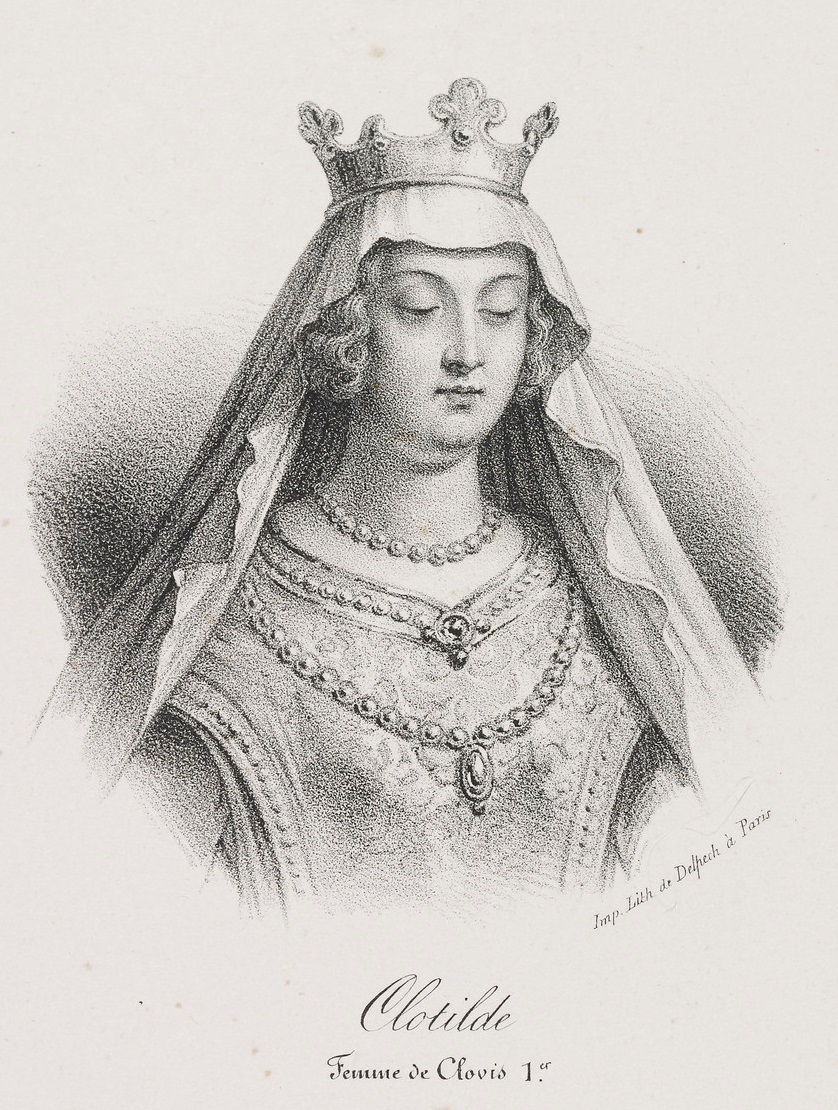
Clotilde
Clotilde (c. 474 – 3 June 545 in Burgundy, France) (also known as Clotilda (Fr.), Chlothilde (Ger.) Chlothieldis, Chlotichilda, Clodechildis, Croctild, Crote-hild, Hlotild, Rhotild, and many other forms), is a saint and was a Queen of the Franks.
Clotilde is the patron saint of the lame in Normandy and the patron saint of Les Andelys and has been "invoked against sudden death and iniquitous husbands". She married Clovis I, the first king of the Franks, in 492 or 493. Their marriage, from the 6th century on, "was made the theme of epic narratives, in which the original facts were materially altered". Clotilde's story fascinated later generations because it was "the centerpiece of a struggle between the old Catholic, Roman population against the Arianism of the Germanic tribes". She was able to convince Clovis to convert to Christianity; the Franks, due to her influence, were Catholics for centuries. Political and violent intrigue surrounded her family for most of her life. After the death of Clovis, she spent the rest of her life near the tomb of Saint Martin of Tours, "led a devout life", became "totally detached from politics and power-struggles except through prayer", and gave everything she had to the poor.
Clotilde is represented as a praying queen and as a nun. She built churches, monasteries, and convents, including the Basilica of the Holy Apostles, which later became the Church of Sainte-Geneviève, which she and Clovis built as a mausoleum honouring Saint Genevieve, the patron saint of Paris. Clotilde's feast day is June 3.
Clotilde, born around 474, was from Burgundy. According to hagiographer Alban Butler, the only source for Clotilde's biography, which was edited by Bruno Krusch before the 10th century, is mostly dependent upon a document written by a monk from Saint-Denis a couple of centuries earlier. Her history has also been pieced together by Gregory of Tours and Fredegarius, and in certain hagiographies. Butler states that the most reliable source about her life is by Belgian historian Godefroid Kurth, but David Hugh Farmer calls Gregory of Tours' hagiography about Clotilde "the principal source for her life" and said that a later hagiography "celebrated her as the saintly ancestor of the French kings". Her history also appears in French hagiographies, but most of them were written before Kurth's.
It seems Clotilde's grandfather was Gondioc, who had four sons, Gundobad, Clotilde's father Chilperic II of Burgundy, Gondemar, and Godegisel. After Gondioc's death, Burgundy was divided up among them, but Gundobad gained power over Burgundy when he murdered his brothers. Gundobad also killed Clotide's brothers and her mother Caretena, who might have converted her husband to Christianity and was called "a remarkable woman" by Sidonius Apollinaris and Venantius Fortunatus. Clotilde and her sister, Sedeleuba (or Chrona), who became a nun and founded the church of Saint-Victor in Geneva, were raised at the court of Gundobad. They were educated as Catholics, even though Gundobad, like most of the Burgundian kings, were Arians. According to hagiographer Sabine Baring-Gould, Clotilde "grew up full of piety and tenderness to sufferers".
Shortly after Caretena's death, Clotilde and Clovis I, the first king of the Franks, were married, in 492 or 493. As Farmer put it, Clovis was "impressed by her beauty and wisdom". Their marriage, from the 6th century on, "was made the theme of epic narratives, in which the original facts were materially altered". Clotilde's story fascinated later generations because it was "the centerpiece of a struggle between the old Catholic, Roman population against the Arianism of the Germanic tribes", although there is no evidence that Clovis was an Arian sympathizer before his marriage and conversion to Catholicism. Clotilde had influence over Clovis and actively encouraged him to convert to Catholicism. He allowed the baptism of their oldest son, Ingomir, who died in infancy, and of their next son, Clodomir, but he blamed their oldest child's death on Clotilde's faith and resisted her attempts to convert him. Clodomir also became ill, but recovered and they had five children in all: four sons, Ingomir; and Clodomir, Childebert, and Clotaire, who all became kings; and one daughter, named Clotilde after her mother. Clotilde's vita describes her daughter's life, who married a Visigothic man named Amalaric, who she unsuccessfully tried to convert to Catholicism and who "cruelly treated". Little is known about her mother during Clovis' lifetime and about their marriage, but she might have been involved with his intervention of the quarrel between the Burgundian kings at the time and Clovis' support of Gondobad. Historian Godefroid Kurth said, about Clotilde, that she was "saddened by cruel trials".
Clovis was baptized by St. Remigius at Reims in 496, along with 3,000 of the Frankish people, after a battle with the Alemanni. His army was losing, but he appealed to his wife's God for help, promising that if he won, he would accept the Christian faith. According to tradition, while Clotilde was in prayer and as Clovis began to win the battle, an angel brought her three white lilies; Clovis later substituted lilies for the three frogs on the insignia on his battle shield. Sabine Baring-Gould considers Clovis' conversion sincere and that it was not due to political considerations. Baring-Gould also did not believe that Clotilde did not influence Clovis to fight this war or others in order to revenge her family's death. Clovis' subsequent military achievements against the Burgundians and Visigoths also do not seem to have been associated with Clotilde. The Franks, due to Clotilde's influence, were Catholics for centuries.
Clovis died in 511; Clotilde buried him at the Basilica of the Holy Apostles, which later became the Church of Sainte-Geneviève, which they built together as a mausoleum honouring Saint Genevieve, the patron saint of Paris. Genevieve might have been the first to suggest that Clovis build a church honouring Saint Peter and Saint Paul, which he built in deference to Clotilde's wishes; she completed the church after his death.
Hub AI
Clotilde AI simulator
(@Clotilde_simulator)
Clotilde
Clotilde (c. 474 – 3 June 545 in Burgundy, France) (also known as Clotilda (Fr.), Chlothilde (Ger.) Chlothieldis, Chlotichilda, Clodechildis, Croctild, Crote-hild, Hlotild, Rhotild, and many other forms), is a saint and was a Queen of the Franks.
Clotilde is the patron saint of the lame in Normandy and the patron saint of Les Andelys and has been "invoked against sudden death and iniquitous husbands". She married Clovis I, the first king of the Franks, in 492 or 493. Their marriage, from the 6th century on, "was made the theme of epic narratives, in which the original facts were materially altered". Clotilde's story fascinated later generations because it was "the centerpiece of a struggle between the old Catholic, Roman population against the Arianism of the Germanic tribes". She was able to convince Clovis to convert to Christianity; the Franks, due to her influence, were Catholics for centuries. Political and violent intrigue surrounded her family for most of her life. After the death of Clovis, she spent the rest of her life near the tomb of Saint Martin of Tours, "led a devout life", became "totally detached from politics and power-struggles except through prayer", and gave everything she had to the poor.
Clotilde is represented as a praying queen and as a nun. She built churches, monasteries, and convents, including the Basilica of the Holy Apostles, which later became the Church of Sainte-Geneviève, which she and Clovis built as a mausoleum honouring Saint Genevieve, the patron saint of Paris. Clotilde's feast day is June 3.
Clotilde, born around 474, was from Burgundy. According to hagiographer Alban Butler, the only source for Clotilde's biography, which was edited by Bruno Krusch before the 10th century, is mostly dependent upon a document written by a monk from Saint-Denis a couple of centuries earlier. Her history has also been pieced together by Gregory of Tours and Fredegarius, and in certain hagiographies. Butler states that the most reliable source about her life is by Belgian historian Godefroid Kurth, but David Hugh Farmer calls Gregory of Tours' hagiography about Clotilde "the principal source for her life" and said that a later hagiography "celebrated her as the saintly ancestor of the French kings". Her history also appears in French hagiographies, but most of them were written before Kurth's.
It seems Clotilde's grandfather was Gondioc, who had four sons, Gundobad, Clotilde's father Chilperic II of Burgundy, Gondemar, and Godegisel. After Gondioc's death, Burgundy was divided up among them, but Gundobad gained power over Burgundy when he murdered his brothers. Gundobad also killed Clotide's brothers and her mother Caretena, who might have converted her husband to Christianity and was called "a remarkable woman" by Sidonius Apollinaris and Venantius Fortunatus. Clotilde and her sister, Sedeleuba (or Chrona), who became a nun and founded the church of Saint-Victor in Geneva, were raised at the court of Gundobad. They were educated as Catholics, even though Gundobad, like most of the Burgundian kings, were Arians. According to hagiographer Sabine Baring-Gould, Clotilde "grew up full of piety and tenderness to sufferers".
Shortly after Caretena's death, Clotilde and Clovis I, the first king of the Franks, were married, in 492 or 493. As Farmer put it, Clovis was "impressed by her beauty and wisdom". Their marriage, from the 6th century on, "was made the theme of epic narratives, in which the original facts were materially altered". Clotilde's story fascinated later generations because it was "the centerpiece of a struggle between the old Catholic, Roman population against the Arianism of the Germanic tribes", although there is no evidence that Clovis was an Arian sympathizer before his marriage and conversion to Catholicism. Clotilde had influence over Clovis and actively encouraged him to convert to Catholicism. He allowed the baptism of their oldest son, Ingomir, who died in infancy, and of their next son, Clodomir, but he blamed their oldest child's death on Clotilde's faith and resisted her attempts to convert him. Clodomir also became ill, but recovered and they had five children in all: four sons, Ingomir; and Clodomir, Childebert, and Clotaire, who all became kings; and one daughter, named Clotilde after her mother. Clotilde's vita describes her daughter's life, who married a Visigothic man named Amalaric, who she unsuccessfully tried to convert to Catholicism and who "cruelly treated". Little is known about her mother during Clovis' lifetime and about their marriage, but she might have been involved with his intervention of the quarrel between the Burgundian kings at the time and Clovis' support of Gondobad. Historian Godefroid Kurth said, about Clotilde, that she was "saddened by cruel trials".
Clovis was baptized by St. Remigius at Reims in 496, along with 3,000 of the Frankish people, after a battle with the Alemanni. His army was losing, but he appealed to his wife's God for help, promising that if he won, he would accept the Christian faith. According to tradition, while Clotilde was in prayer and as Clovis began to win the battle, an angel brought her three white lilies; Clovis later substituted lilies for the three frogs on the insignia on his battle shield. Sabine Baring-Gould considers Clovis' conversion sincere and that it was not due to political considerations. Baring-Gould also did not believe that Clotilde did not influence Clovis to fight this war or others in order to revenge her family's death. Clovis' subsequent military achievements against the Burgundians and Visigoths also do not seem to have been associated with Clotilde. The Franks, due to Clotilde's influence, were Catholics for centuries.
Clovis died in 511; Clotilde buried him at the Basilica of the Holy Apostles, which later became the Church of Sainte-Geneviève, which they built together as a mausoleum honouring Saint Genevieve, the patron saint of Paris. Genevieve might have been the first to suggest that Clovis build a church honouring Saint Peter and Saint Paul, which he built in deference to Clotilde's wishes; she completed the church after his death.