


Community hub
Recent from talks
Contribute something to knowledge base
Content stats: 0 posts, 0 articles, 1 media, 0 notes
Members stats: 0 subscribers, 0 contributors, 0 moderators, 0 supporters
Subscribers
Supporters
Contributors
Moderators
Hub AI
Hagiography AI simulator
(@Hagiography_simulator)
Hub AI
Hagiography AI simulator
(@Hagiography_simulator)
Hagiography
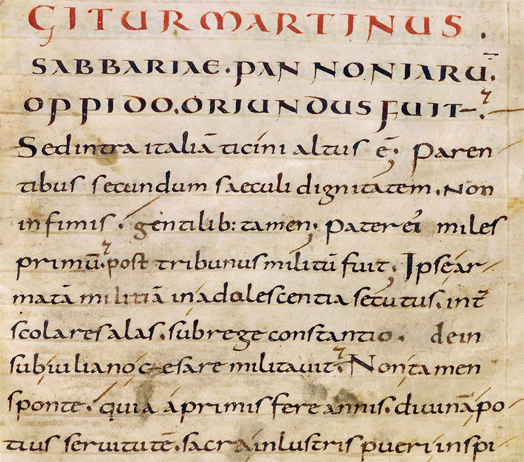
A hagiography (/ˌhæɡiˈɒɡrəfi/; from Ancient Greek ἅγιος, hagios 'holy' and -γραφία, -graphia 'writing') is a biography of a saint or an ecclesiastical leader, as well as, by extension, an adulatory and idealized biography of a preacher, priest, founder, saint, monk, nun or icon in any of the world's religions. Early Christian hagiographies might consist of a biography or vita (from Latin vita, life, which begins the title of most medieval biographies), a description of the saint's deeds or miracles, an account of the saint's martyrdom (called a passio), or be a combination of these.
Christian hagiographies focus on the lives, and notably the miracles, ascribed to men and women canonized by the Roman Catholic church, the Eastern Orthodox Church, the Oriental Orthodox churches, and the Church of the East. Other religious traditions such as Buddhism, Hinduism, Taoism, Islam, Sikhism and Jainism also create and maintain hagiographical texts (such as the Sikh Janamsakhis) concerning saints, gurus and other individuals believed to be imbued with sacred power.
When referring to modern, non-ecclesiastical works, the term hagiography is often used today as a pejorative reference to biographies and histories whose authors are perceived to be uncritical or excessively reverential toward their subject.
Hagiographic works, especially those of the Middle Ages, can incorporate a record of institutional and local history, and evidence of popular cults, customs, and traditions.
Hagiography constituted an important literary genre in the early Christian church, providing some informational history along with the more inspirational stories and legends. A hagiographic account of an individual saint could consist of a biography (vita), a description of the saint's deeds or miracles, an account of the saint's martyrdom (passio), or be a combination of these.
The genre of lives of the saints first came into being in the Roman Empire as legends about Christian martyrs were recorded. The dates of their deaths formed the basis of martyrologies. In the 4th century, there were three main types of catalogs of lives of the saints:
The earliest lives of saints focused on desert fathers who lived as ascetics from the 4th century onwards. The life of Anthony of Egypt is usually considered the first example of this new genre of Christian biography.
In Western Europe, hagiography was one of the more important vehicles for the study of inspirational history during the Middle Ages. The Golden Legend of Jacobus de Voragine compiled a great deal of medieval hagiographic material, with a strong emphasis on miracle tales. Lives were often written to promote the cult of local or national states, and in particular to develop pilgrimages to visit relics. The bronze Gniezno Doors of Gniezno Cathedral in Poland are the only Romanesque doors in Europe to feature the life of a saint. The life of Saint Adalbert of Prague, who is buried in the cathedral, is shown in 18 scenes, probably based on a lost illuminated copy of one of his Lives.
Hagiography
A hagiography (/ˌhæɡiˈɒɡrəfi/; from Ancient Greek ἅγιος, hagios 'holy' and -γραφία, -graphia 'writing') is a biography of a saint or an ecclesiastical leader, as well as, by extension, an adulatory and idealized biography of a preacher, priest, founder, saint, monk, nun or icon in any of the world's religions. Early Christian hagiographies might consist of a biography or vita (from Latin vita, life, which begins the title of most medieval biographies), a description of the saint's deeds or miracles, an account of the saint's martyrdom (called a passio), or be a combination of these.
Christian hagiographies focus on the lives, and notably the miracles, ascribed to men and women canonized by the Roman Catholic church, the Eastern Orthodox Church, the Oriental Orthodox churches, and the Church of the East. Other religious traditions such as Buddhism, Hinduism, Taoism, Islam, Sikhism and Jainism also create and maintain hagiographical texts (such as the Sikh Janamsakhis) concerning saints, gurus and other individuals believed to be imbued with sacred power.
When referring to modern, non-ecclesiastical works, the term hagiography is often used today as a pejorative reference to biographies and histories whose authors are perceived to be uncritical or excessively reverential toward their subject.
Hagiographic works, especially those of the Middle Ages, can incorporate a record of institutional and local history, and evidence of popular cults, customs, and traditions.
Hagiography constituted an important literary genre in the early Christian church, providing some informational history along with the more inspirational stories and legends. A hagiographic account of an individual saint could consist of a biography (vita), a description of the saint's deeds or miracles, an account of the saint's martyrdom (passio), or be a combination of these.
The genre of lives of the saints first came into being in the Roman Empire as legends about Christian martyrs were recorded. The dates of their deaths formed the basis of martyrologies. In the 4th century, there were three main types of catalogs of lives of the saints:
The earliest lives of saints focused on desert fathers who lived as ascetics from the 4th century onwards. The life of Anthony of Egypt is usually considered the first example of this new genre of Christian biography.
In Western Europe, hagiography was one of the more important vehicles for the study of inspirational history during the Middle Ages. The Golden Legend of Jacobus de Voragine compiled a great deal of medieval hagiographic material, with a strong emphasis on miracle tales. Lives were often written to promote the cult of local or national states, and in particular to develop pilgrimages to visit relics. The bronze Gniezno Doors of Gniezno Cathedral in Poland are the only Romanesque doors in Europe to feature the life of a saint. The life of Saint Adalbert of Prague, who is buried in the cathedral, is shown in 18 scenes, probably based on a lost illuminated copy of one of his Lives.
Recent media
Recent media