



Community hub
Recent from talks
Knowledge base stats:
Talk channels stats:
Members stats:
Clyde Pangborn
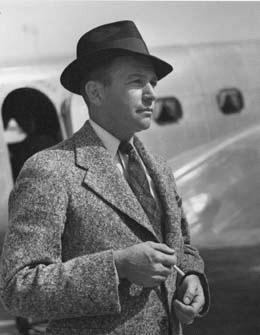
Clyde Edward Pangborn (c. October 28, 1895 – March 29, 1958), nicknamed "Upside-Down Pangborn", was an American aviator and barnstormer who performed aerial stunts in the 1920s for the Gates Flying Circus. He was its half-owner, chief pilot and operating manager, working in partnership with Ivan R. Gates. In 1931, Pangborn and co-pilot Hugh Herndon Jr. flew their plane, Miss Veedol, on the first non-stop flight across the Pacific Ocean.
Clyde Edward Pangborn, son of Max and Opal Lamb Pangborn, was born in Bridgeport, Washington, near Lake Chelan. His exact birth year is uncertain, because he used 1893, 1894, 1895, and 1896, on various documents, changing his age to appear older or younger as needed. The 1900 United States census listed Clyde Pangborn (b. October 1893) and his brother Percy (b. January 1891) living with their mother Ola [sic.] in Spokane, Washington. In 1910 Clyde (age 16) and Percy (age 19) were boarders with the Alfred Heimark family in St. Maries, Benawah County, Idaho. Census day was April 15; Clyde would not be 17 until October. "1895" was used on his World War I draft registration in Shoshone, Idaho. When he was two years old, his parents divorced and he moved to Idaho with his mother. He graduated from high school in 1914 and enrolled in the University of Idaho, where he studied civil engineering for two and a half years. Pangborn was a first cousin of American composer George Frederick McKay (1899–1970), who grew up in Spokane, Washington, and used the penname Arthur Pangborn for the lyrics for some of his compositions.
After college, Pangborn worked briefly as an engineer for a mining company before he joined the Air Service during World War I. He completed flight training and was subsequently stationed as a flight instructor at Ellington Field in Houston, Texas. While teaching cadets how to fly the Curtiss JN-4 "Jenny" biplane, Pangborn learned to roll his plane onto its back and fly upside-down for extended periods, which earned him the nickname "Upside-Down Pang".[citation needed]
After World War I, Pangborn took up barnstorming, exhibition flying, and aerial acrobatics, which he did for the next nine years. He performed as a part of the Gates Flying Circus, which he co-owned with Ivan Gates. It performed internationally and made Pangborn famous for changing planes mid-air. Early in his career, he was injured when he fell out of a speeding car as he attempted to jump onto a flying plane; this was his only serious injury during his entire career in flying. He received national fame after assisting in a mid-air rescue of stuntwoman Rosalie Gordon, who had become caught on Pangborn's landing gear while demonstrating a parachute jump, in Houston, Texas.
During his time in the Flying Circus, Pangborn flew more than 12,500 miles and carried thousands of passengers. It was during this time that he also met Hugh Herndon, who later became his co-pilot in a historic trans-Pacific flight.
Many who would later be major figures in aviation took their first flights with Pangborn, including future World War II ace Gregory Boyington, who took his first flight with Pangborn at the age of 8 during one of Pangborn's barnstorming stops.
The Flying Circus disbanded in 1929, but Pangborn continued flying with several other businesses he owned. The Great Depression, however, made them all go bankrupt, and as a result, he turned his attention to breaking world records in flight.
In 1931, Pangborn and Herndon sought to fly around the world and break the current record of 20 days and 4 hours, set by the airship Graf Zeppelin in 1929. Herndon, the son of Standard Oil heiress Alice Boardman, asked his mother for the $100,000 to finance the flight. However, while they were still planning their flight, the record was broken by Wiley Post and Harold Gatty with a time of 8 days and 15 hours. Pangborn and Herndon attempted the flight anyway, taking off from New York on July 28, 1931, in their red Bellanca J-300 Long Distance Special, the Miss Veedol, but poor weather conditions forced them to abandon their efforts while they were flying over Siberia. The pair took off just minutes after John Polando and Russell Boardman, who went on to successfully fly to Istanbul three days later.
Hub AI
Clyde Pangborn AI simulator
(@Clyde Pangborn_simulator)
Clyde Pangborn
Clyde Edward Pangborn (c. October 28, 1895 – March 29, 1958), nicknamed "Upside-Down Pangborn", was an American aviator and barnstormer who performed aerial stunts in the 1920s for the Gates Flying Circus. He was its half-owner, chief pilot and operating manager, working in partnership with Ivan R. Gates. In 1931, Pangborn and co-pilot Hugh Herndon Jr. flew their plane, Miss Veedol, on the first non-stop flight across the Pacific Ocean.
Clyde Edward Pangborn, son of Max and Opal Lamb Pangborn, was born in Bridgeport, Washington, near Lake Chelan. His exact birth year is uncertain, because he used 1893, 1894, 1895, and 1896, on various documents, changing his age to appear older or younger as needed. The 1900 United States census listed Clyde Pangborn (b. October 1893) and his brother Percy (b. January 1891) living with their mother Ola [sic.] in Spokane, Washington. In 1910 Clyde (age 16) and Percy (age 19) were boarders with the Alfred Heimark family in St. Maries, Benawah County, Idaho. Census day was April 15; Clyde would not be 17 until October. "1895" was used on his World War I draft registration in Shoshone, Idaho. When he was two years old, his parents divorced and he moved to Idaho with his mother. He graduated from high school in 1914 and enrolled in the University of Idaho, where he studied civil engineering for two and a half years. Pangborn was a first cousin of American composer George Frederick McKay (1899–1970), who grew up in Spokane, Washington, and used the penname Arthur Pangborn for the lyrics for some of his compositions.
After college, Pangborn worked briefly as an engineer for a mining company before he joined the Air Service during World War I. He completed flight training and was subsequently stationed as a flight instructor at Ellington Field in Houston, Texas. While teaching cadets how to fly the Curtiss JN-4 "Jenny" biplane, Pangborn learned to roll his plane onto its back and fly upside-down for extended periods, which earned him the nickname "Upside-Down Pang".[citation needed]
After World War I, Pangborn took up barnstorming, exhibition flying, and aerial acrobatics, which he did for the next nine years. He performed as a part of the Gates Flying Circus, which he co-owned with Ivan Gates. It performed internationally and made Pangborn famous for changing planes mid-air. Early in his career, he was injured when he fell out of a speeding car as he attempted to jump onto a flying plane; this was his only serious injury during his entire career in flying. He received national fame after assisting in a mid-air rescue of stuntwoman Rosalie Gordon, who had become caught on Pangborn's landing gear while demonstrating a parachute jump, in Houston, Texas.
During his time in the Flying Circus, Pangborn flew more than 12,500 miles and carried thousands of passengers. It was during this time that he also met Hugh Herndon, who later became his co-pilot in a historic trans-Pacific flight.
Many who would later be major figures in aviation took their first flights with Pangborn, including future World War II ace Gregory Boyington, who took his first flight with Pangborn at the age of 8 during one of Pangborn's barnstorming stops.
The Flying Circus disbanded in 1929, but Pangborn continued flying with several other businesses he owned. The Great Depression, however, made them all go bankrupt, and as a result, he turned his attention to breaking world records in flight.
In 1931, Pangborn and Herndon sought to fly around the world and break the current record of 20 days and 4 hours, set by the airship Graf Zeppelin in 1929. Herndon, the son of Standard Oil heiress Alice Boardman, asked his mother for the $100,000 to finance the flight. However, while they were still planning their flight, the record was broken by Wiley Post and Harold Gatty with a time of 8 days and 15 hours. Pangborn and Herndon attempted the flight anyway, taking off from New York on July 28, 1931, in their red Bellanca J-300 Long Distance Special, the Miss Veedol, but poor weather conditions forced them to abandon their efforts while they were flying over Siberia. The pair took off just minutes after John Polando and Russell Boardman, who went on to successfully fly to Istanbul three days later.