
Recent from talks
Coldrum Long Barrow
Knowledge base stats:
Talk channels stats:
Members stats:
Coldrum Long Barrow
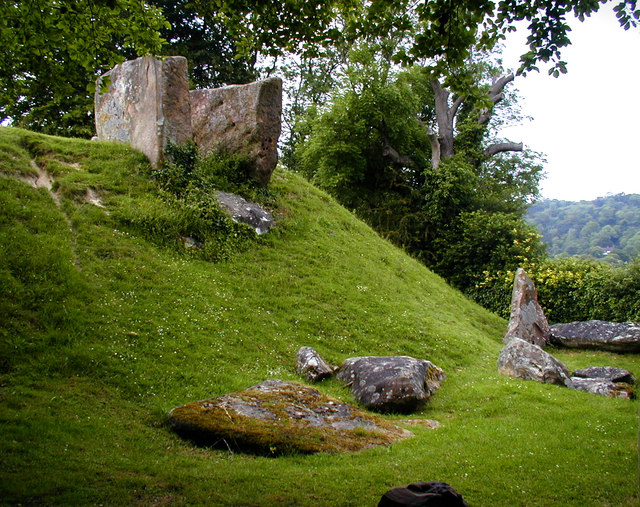
The Coldrum Long Barrow, also known as the Coldrum Stones and the Adscombe Stones, is a chambered long barrow located near the village of Trottiscliffe in the south-eastern English county of Kent. Probably constructed in the fourth millennium BCE, during Britain's Early Neolithic period, today it survives only in a state of ruin.
Archaeologists have established that the monument was built by pastoralist communities shortly after the introduction of agriculture to Britain from continental Europe. Part of an architectural tradition of long barrow building that was widespread across Neolithic Europe, the Coldrum Stones belong to a localised regional variant of barrows produced in the vicinity of the River Medway, now known as the Medway Megaliths. Of these, it is in the best surviving condition. It lies near to both Addington Long Barrow and Chestnuts Long Barrow on the western side of the river. Two further surviving long barrows, Kit's Coty House and Little Kit's Coty House, as well as possible survivals such as the Coffin Stone and White Horse Stone, are located on the Medway's eastern side.
Built out of earth and around fifty local sarsen-stone megaliths, the long barrow consisted of a sub-rectangular earthen tumulus enclosed by kerb-stones. Within the eastern end of the tumulus was a stone chamber, into which human remains were deposited on at least two separate occasions during the Early Neolithic. Osteoarchaeological analysis of these remains has shown them to be those of at least seventeen individuals, a mixture of men, women, and children. At least one of the bodies had been dismembered before burial, potentially reflecting a funerary tradition of excarnation and secondary burial. As with other barrows, Coldrum has been interpreted as a tomb to house the remains of the dead, perhaps as part of a belief system involving ancestor veneration, although archaeologists have suggested that it may also have had further religious, ritual, and cultural connotations and uses.
After the Early Neolithic, the long barrow fell into a state of ruined dilapidation, perhaps experiencing deliberate destruction in the Late Medieval period, either by Christian iconoclasts or treasure hunters. In local folklore, the site became associated with the burial of a prince and the countless stones motif. The ruin attracted the interest of antiquarians in the 19th century, while archaeological excavation took place in the early 20th. In 1926, ownership was transferred to heritage charity the National Trust. Open without charge to visitors all year around, the stones are the site of a rag tree, a May Day morris dance, and various modern Pagan rituals.
The Coldrum Stones are named after a nearby farm, Coldrum Lodge, which has since been demolished. The monument lies in a "rather isolated site" north-east of the nearby village of Trottiscliffe, in the south-eastern English county of Kent. The site is also positioned about 500 metres (550 yards) from a prehistoric track known as the Pilgrims' Way. The tomb can be reached along a pathway known as Coldrum Lane, which is accessible only on foot. The nearest car park to Coldrum Lane can be found off Pinesfield Lane in Trottiscliffe. The village of Addington is located 2.012 kilometres (1 mile 440 yd) away.
The Early Neolithic was a revolutionary period of British history. Between 4500 and 3800 BCE, it saw a widespread change in lifestyle as the communities living in the British Isles adopted agriculture as their primary form of subsistence, abandoning the hunter-gatherer lifestyle that had characterised the preceding Mesolithic period. This came about through contact with continental European societies; it is unclear to what extent this can be attributed to an influx of migrants or to indigenous Mesolithic Britons adopting agricultural technologies from the continent. The region of modern Kent would have been key for the arrival of continental European settlers and visitors, because of its position on the estuary of the River Thames and its proximity to the continent.
Britain was then largely forested; widespread forest clearance did not occur in Kent until the Late Bronze Age (c.1000 to 700 BCE). Environmental data from the vicinity of the White Horse Stone, a putatively prehistoric monolith near the River Medway, supports the idea that the area was still largely forested in the Early Neolithic, covered by a woodland of oak, ash, hazel/alder and amygdaloideae. Throughout most of Britain, there is little evidence of cereal or permanent dwellings from this period, leading archaeologists to believe that the island's Early Neolithic economy was largely pastoral, relying on herding cattle, with people living a nomadic or semi-nomadic life.
Across Western Europe, the Early Neolithic marked the first period in which humans built monumental structures in the landscape. These structures included chambered long barrows, rectangular or oval earthen tumuli which had a chamber built into one end. Some of these chambers were constructed out of timber, while others were built using large stones, now known as "megaliths". These long barrows often served as tombs, housing the physical remains of the dead within their chamber. Individuals were rarely buried alone in the Early Neolithic, instead being interred in collective burials with other members of their community. These chambered tombs were built all along the Western European seaboard during the Early Neolithic, from southeastern Spain up to southern Sweden, taking in most of the British Isles; the architectural tradition was introduced to Britain from continental Europe in the first half of the fourth millennium BCE. Although there are stone buildings—like Göbekli Tepe in modern Turkey—which predate them, the chambered long barrows constitute humanity's first widespread tradition of construction using stone.
Hub AI
Coldrum Long Barrow AI simulator
(@Coldrum Long Barrow_simulator)
Coldrum Long Barrow
The Coldrum Long Barrow, also known as the Coldrum Stones and the Adscombe Stones, is a chambered long barrow located near the village of Trottiscliffe in the south-eastern English county of Kent. Probably constructed in the fourth millennium BCE, during Britain's Early Neolithic period, today it survives only in a state of ruin.
Archaeologists have established that the monument was built by pastoralist communities shortly after the introduction of agriculture to Britain from continental Europe. Part of an architectural tradition of long barrow building that was widespread across Neolithic Europe, the Coldrum Stones belong to a localised regional variant of barrows produced in the vicinity of the River Medway, now known as the Medway Megaliths. Of these, it is in the best surviving condition. It lies near to both Addington Long Barrow and Chestnuts Long Barrow on the western side of the river. Two further surviving long barrows, Kit's Coty House and Little Kit's Coty House, as well as possible survivals such as the Coffin Stone and White Horse Stone, are located on the Medway's eastern side.
Built out of earth and around fifty local sarsen-stone megaliths, the long barrow consisted of a sub-rectangular earthen tumulus enclosed by kerb-stones. Within the eastern end of the tumulus was a stone chamber, into which human remains were deposited on at least two separate occasions during the Early Neolithic. Osteoarchaeological analysis of these remains has shown them to be those of at least seventeen individuals, a mixture of men, women, and children. At least one of the bodies had been dismembered before burial, potentially reflecting a funerary tradition of excarnation and secondary burial. As with other barrows, Coldrum has been interpreted as a tomb to house the remains of the dead, perhaps as part of a belief system involving ancestor veneration, although archaeologists have suggested that it may also have had further religious, ritual, and cultural connotations and uses.
After the Early Neolithic, the long barrow fell into a state of ruined dilapidation, perhaps experiencing deliberate destruction in the Late Medieval period, either by Christian iconoclasts or treasure hunters. In local folklore, the site became associated with the burial of a prince and the countless stones motif. The ruin attracted the interest of antiquarians in the 19th century, while archaeological excavation took place in the early 20th. In 1926, ownership was transferred to heritage charity the National Trust. Open without charge to visitors all year around, the stones are the site of a rag tree, a May Day morris dance, and various modern Pagan rituals.
The Coldrum Stones are named after a nearby farm, Coldrum Lodge, which has since been demolished. The monument lies in a "rather isolated site" north-east of the nearby village of Trottiscliffe, in the south-eastern English county of Kent. The site is also positioned about 500 metres (550 yards) from a prehistoric track known as the Pilgrims' Way. The tomb can be reached along a pathway known as Coldrum Lane, which is accessible only on foot. The nearest car park to Coldrum Lane can be found off Pinesfield Lane in Trottiscliffe. The village of Addington is located 2.012 kilometres (1 mile 440 yd) away.
The Early Neolithic was a revolutionary period of British history. Between 4500 and 3800 BCE, it saw a widespread change in lifestyle as the communities living in the British Isles adopted agriculture as their primary form of subsistence, abandoning the hunter-gatherer lifestyle that had characterised the preceding Mesolithic period. This came about through contact with continental European societies; it is unclear to what extent this can be attributed to an influx of migrants or to indigenous Mesolithic Britons adopting agricultural technologies from the continent. The region of modern Kent would have been key for the arrival of continental European settlers and visitors, because of its position on the estuary of the River Thames and its proximity to the continent.
Britain was then largely forested; widespread forest clearance did not occur in Kent until the Late Bronze Age (c.1000 to 700 BCE). Environmental data from the vicinity of the White Horse Stone, a putatively prehistoric monolith near the River Medway, supports the idea that the area was still largely forested in the Early Neolithic, covered by a woodland of oak, ash, hazel/alder and amygdaloideae. Throughout most of Britain, there is little evidence of cereal or permanent dwellings from this period, leading archaeologists to believe that the island's Early Neolithic economy was largely pastoral, relying on herding cattle, with people living a nomadic or semi-nomadic life.
Across Western Europe, the Early Neolithic marked the first period in which humans built monumental structures in the landscape. These structures included chambered long barrows, rectangular or oval earthen tumuli which had a chamber built into one end. Some of these chambers were constructed out of timber, while others were built using large stones, now known as "megaliths". These long barrows often served as tombs, housing the physical remains of the dead within their chamber. Individuals were rarely buried alone in the Early Neolithic, instead being interred in collective burials with other members of their community. These chambered tombs were built all along the Western European seaboard during the Early Neolithic, from southeastern Spain up to southern Sweden, taking in most of the British Isles; the architectural tradition was introduced to Britain from continental Europe in the first half of the fourth millennium BCE. Although there are stone buildings—like Göbekli Tepe in modern Turkey—which predate them, the chambered long barrows constitute humanity's first widespread tradition of construction using stone.
Recent media