



Community hub
Recent from talks
Knowledge base stats:
Talk channels stats:
Members stats:
Controller-General of Finances
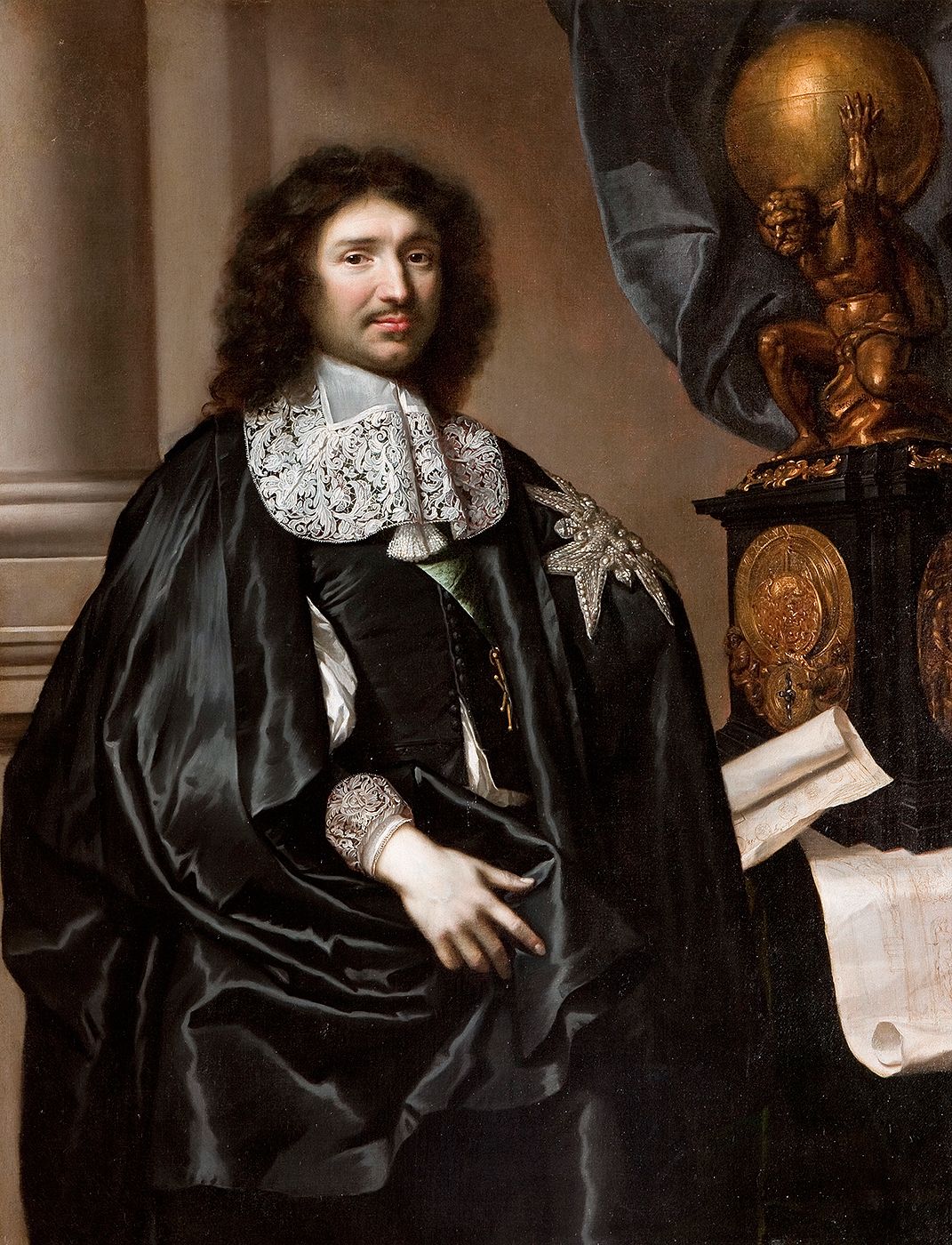
The Controller-General or Comptroller-General of Finances (French: Contrôleur général des finances) was the name of the minister in charge of finances in the Kingdom of France from 1661 to 1791. It replaced the former position of Superintendent of Finances (Surintendant des finances), which was abolished with the downfall of Nicolas Fouquet. It did not hold any real political power until 1665, when First Minister Jean-Baptiste Colbert, who had acted upon financial matters since Fouquet's embezzlement charge, was appointed to the office.
The term "contrôleur général" in reference to a position of royal accounting and financial oversight had existed in various forms prior to 1547, but the direct predecessor to the 17th century "Controller-General" was created in 1547, with two position-holders whose job was to verify the accounts of the Royal Treasurer (Trésorier de l'Échiquier), then the head of the royal financial system. The name of the charge of the controllers came from their account book, or contre-rôle (literally "counter-roll", meaning scroll copy), in which they kept their accounts in order to compare them with those of the Royal Treasurer. The office was thus, in the beginning, not a senior rank governmental position, but merely an accounting audit charge.
In the period following 1547, the financial administration in France continued to evolve, resulting in 1552 in the creation of Intendants of Finances (Intendants des Finances), of which one was to become in 1561 the leading Superintendent of Finances (Surintendant des Finances) with cabinet rank. In 1661, the last Superintendent of Finances, Nicolas Fouquet, was arrested by order of King Louis XIV and charged with embezzlement, so that subsequently Jean-Baptiste Colbert became head of the royal financial and tax collection administration, at first with the title of intendant général, then, from 1665, with the title of Contrôleur général des Finances. The title Superintendent of Finances was abolished.
Under Colbert's competent and dynamic administration, the Controller-General's responsibilities were greatly redefined. Louis XIV suppressed the two already existing positions holding the title of Controller-General as he wanted to replace these with a sole homonym office with cabinet rank in charge of all the finances and taxes of France. Furthermore, this new position was no longer transmissible as the head of state could revoke the respective commission at his pleasure at any time. In addition, the new position was far better connected with the Royal Finance Counsel (Conseil royal des finances) than the previous charge of Superintendent. In these ways, the Contrôleur général des Finances became a true senior governmental post.
The function of Controller-General would continue until 1791, with an interruption at the era of the Polysynody (1715–1718) under the regency of Philippe d'Orléans during the childhood of King Louis XV, when all ministerial offices were replaced by councils composed of members of the high aristocracy. Occasionally, the de facto Minister of Finance served instead as President of the Royal Council of Finance, who had a superior rank to a mere Controller-General of Finances, or, in the case of Jacques Necker, who, being a Protestant, could not serve as Controller-General, as Director-General of Finances and of the Treasury (Directeur général du Trésor royal and Directeur général des Finances from 1776 to 1781 and again from 1788 until 1790), in ceremonial terms a position ranked below the previous two.
The position was renamed Minister of Finances in 1791 which, along with all other ministerial positions, was abolished in 1794, but restored with the advent of the French Directory in 1795. Nowadays the position is called (with exceptions) Ministre de l'Économie et des Finances (Minister of the Economy and Finance).
The responsibilities of the Controller-General were the most extensive of all the administrative positions of the Ancien Régime. According to the official description of 1665, the Controller-General had the power "to report in our Counsel of all affairs which are of concern to our service and of any others" ("faire rapport en notre Conseil de toutes les affaires qui concerneront notre service et de toutes autres indifféremment").
Colbert, first of the Controllers-General with subsequent power, was also head of two other senior government posts equivalent to present-day ministers (from a total of six): Secretary of State of the Navy and Secretary of State of the Maison du Roi (Royal Household), both from 1669 till his death in 1683. In addition to those cabinet posts, he had also several important posts as administration chief, such as Surintendant des Manufactures et Bâtiments du Roi (Superintendent of the King's Manufacturers and Buildings; 1664–1683).
Hub AI
Controller-General of Finances AI simulator
(@Controller-General of Finances_simulator)
Controller-General of Finances
The Controller-General or Comptroller-General of Finances (French: Contrôleur général des finances) was the name of the minister in charge of finances in the Kingdom of France from 1661 to 1791. It replaced the former position of Superintendent of Finances (Surintendant des finances), which was abolished with the downfall of Nicolas Fouquet. It did not hold any real political power until 1665, when First Minister Jean-Baptiste Colbert, who had acted upon financial matters since Fouquet's embezzlement charge, was appointed to the office.
The term "contrôleur général" in reference to a position of royal accounting and financial oversight had existed in various forms prior to 1547, but the direct predecessor to the 17th century "Controller-General" was created in 1547, with two position-holders whose job was to verify the accounts of the Royal Treasurer (Trésorier de l'Échiquier), then the head of the royal financial system. The name of the charge of the controllers came from their account book, or contre-rôle (literally "counter-roll", meaning scroll copy), in which they kept their accounts in order to compare them with those of the Royal Treasurer. The office was thus, in the beginning, not a senior rank governmental position, but merely an accounting audit charge.
In the period following 1547, the financial administration in France continued to evolve, resulting in 1552 in the creation of Intendants of Finances (Intendants des Finances), of which one was to become in 1561 the leading Superintendent of Finances (Surintendant des Finances) with cabinet rank. In 1661, the last Superintendent of Finances, Nicolas Fouquet, was arrested by order of King Louis XIV and charged with embezzlement, so that subsequently Jean-Baptiste Colbert became head of the royal financial and tax collection administration, at first with the title of intendant général, then, from 1665, with the title of Contrôleur général des Finances. The title Superintendent of Finances was abolished.
Under Colbert's competent and dynamic administration, the Controller-General's responsibilities were greatly redefined. Louis XIV suppressed the two already existing positions holding the title of Controller-General as he wanted to replace these with a sole homonym office with cabinet rank in charge of all the finances and taxes of France. Furthermore, this new position was no longer transmissible as the head of state could revoke the respective commission at his pleasure at any time. In addition, the new position was far better connected with the Royal Finance Counsel (Conseil royal des finances) than the previous charge of Superintendent. In these ways, the Contrôleur général des Finances became a true senior governmental post.
The function of Controller-General would continue until 1791, with an interruption at the era of the Polysynody (1715–1718) under the regency of Philippe d'Orléans during the childhood of King Louis XV, when all ministerial offices were replaced by councils composed of members of the high aristocracy. Occasionally, the de facto Minister of Finance served instead as President of the Royal Council of Finance, who had a superior rank to a mere Controller-General of Finances, or, in the case of Jacques Necker, who, being a Protestant, could not serve as Controller-General, as Director-General of Finances and of the Treasury (Directeur général du Trésor royal and Directeur général des Finances from 1776 to 1781 and again from 1788 until 1790), in ceremonial terms a position ranked below the previous two.
The position was renamed Minister of Finances in 1791 which, along with all other ministerial positions, was abolished in 1794, but restored with the advent of the French Directory in 1795. Nowadays the position is called (with exceptions) Ministre de l'Économie et des Finances (Minister of the Economy and Finance).
The responsibilities of the Controller-General were the most extensive of all the administrative positions of the Ancien Régime. According to the official description of 1665, the Controller-General had the power "to report in our Counsel of all affairs which are of concern to our service and of any others" ("faire rapport en notre Conseil de toutes les affaires qui concerneront notre service et de toutes autres indifféremment").
Colbert, first of the Controllers-General with subsequent power, was also head of two other senior government posts equivalent to present-day ministers (from a total of six): Secretary of State of the Navy and Secretary of State of the Maison du Roi (Royal Household), both from 1669 till his death in 1683. In addition to those cabinet posts, he had also several important posts as administration chief, such as Surintendant des Manufactures et Bâtiments du Roi (Superintendent of the King's Manufacturers and Buildings; 1664–1683).