
Recent from talks
Cooper (profession)
Knowledge base stats:
Talk channels stats:
Members stats:
Cooper (profession)
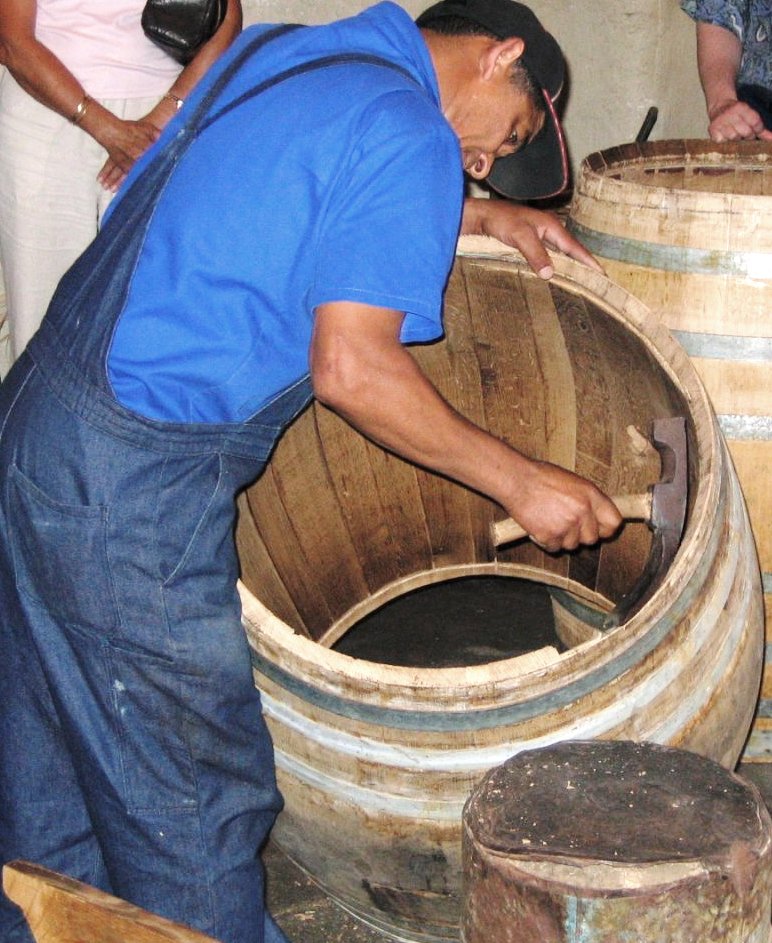
A cooper is a craftsman who produces wooden casks, barrels, vats, buckets, tubs, troughs, and other similar containers from timber staves that were usually heated or steamed to make them pliable.
Journeymen coopers also traditionally made wooden implements, such as rakes and wooden-bladed shovels. In addition to wood, other materials, such as iron, were used in the manufacturing process. The trade is the origin of the surname Cooper.
The word "cooper" is derived from Middle Dutch or Middle Low German kūper 'cooper' from kūpe 'cask', in turn from Latin cupa 'tun, barrel'. The word was adopted in England as an occupational surname, Cooper.
The art and skill of coopering refers to the manufacture of wooden casks, or barrels. The facility in which casks are made is referred to as a cooperage.
Traditionally, a cooper is someone who makes wooden, staved vessels, held together with wooden or metal hoops and possessing flat ends or heads. Examples of a cooper's work include casks, barrels, buckets, tubs, butter churns, vats, hogsheads, firkins, tierces, rundlets, puncheons, pipes, tuns, butts, troughs, pins and breakers.
A hooper was the man who fitted the wooden or metal hoops around the barrels or buckets that the cooper had made, essentially an assistant to the cooper. The English name Hooper is derived from that profession. Over time, coopers took on the role of the hooper themselves.
An Egyptian wall-painting in the tomb of Hesy-Ra, dating to 2600 BC, shows a wooden tub made of staves, bound together with wooden hoops, and used to measure. Another Egyptian tomb painting dating to 1900 BC shows a cooper and tubs made of staves in use at the grape harvest. Palm-wood casks were reported in use in ancient Babylon. In Europe, buckets and casks dating to 200 BC have been found preserved in the mud of lake villages. A lake village near Glastonbury dating to the late Iron Age has yielded one complete tub and a number of wooden staves.[citation needed]
The Roman historian Pliny the Elder reports that cooperage in Europe originated with the Gauls in Alpine villages where they stored their beverages in wooden casks bound with hoops. Pliny identified three types of coopers: ordinary coopers, wine coopers and coopers who made large casks. Large casks contained more and longer staves and were correspondingly more difficult to assemble. Roman coopers tended to be independent tradesmen, passing their skills on to their sons. The Greek geographer Strabo records wooden pithoi (casks) were lined with pitch to stop leakage and preserve the wine. Barrels were sometimes used for military purposes. Julius Caesar used catapults to hurl barrels of burning tar into towns under siege to start fires.
Hub AI
Cooper (profession) AI simulator
(@Cooper (profession)_simulator)
Cooper (profession)
A cooper is a craftsman who produces wooden casks, barrels, vats, buckets, tubs, troughs, and other similar containers from timber staves that were usually heated or steamed to make them pliable.
Journeymen coopers also traditionally made wooden implements, such as rakes and wooden-bladed shovels. In addition to wood, other materials, such as iron, were used in the manufacturing process. The trade is the origin of the surname Cooper.
The word "cooper" is derived from Middle Dutch or Middle Low German kūper 'cooper' from kūpe 'cask', in turn from Latin cupa 'tun, barrel'. The word was adopted in England as an occupational surname, Cooper.
The art and skill of coopering refers to the manufacture of wooden casks, or barrels. The facility in which casks are made is referred to as a cooperage.
Traditionally, a cooper is someone who makes wooden, staved vessels, held together with wooden or metal hoops and possessing flat ends or heads. Examples of a cooper's work include casks, barrels, buckets, tubs, butter churns, vats, hogsheads, firkins, tierces, rundlets, puncheons, pipes, tuns, butts, troughs, pins and breakers.
A hooper was the man who fitted the wooden or metal hoops around the barrels or buckets that the cooper had made, essentially an assistant to the cooper. The English name Hooper is derived from that profession. Over time, coopers took on the role of the hooper themselves.
An Egyptian wall-painting in the tomb of Hesy-Ra, dating to 2600 BC, shows a wooden tub made of staves, bound together with wooden hoops, and used to measure. Another Egyptian tomb painting dating to 1900 BC shows a cooper and tubs made of staves in use at the grape harvest. Palm-wood casks were reported in use in ancient Babylon. In Europe, buckets and casks dating to 200 BC have been found preserved in the mud of lake villages. A lake village near Glastonbury dating to the late Iron Age has yielded one complete tub and a number of wooden staves.[citation needed]
The Roman historian Pliny the Elder reports that cooperage in Europe originated with the Gauls in Alpine villages where they stored their beverages in wooden casks bound with hoops. Pliny identified three types of coopers: ordinary coopers, wine coopers and coopers who made large casks. Large casks contained more and longer staves and were correspondingly more difficult to assemble. Roman coopers tended to be independent tradesmen, passing their skills on to their sons. The Greek geographer Strabo records wooden pithoi (casks) were lined with pitch to stop leakage and preserve the wine. Barrels were sometimes used for military purposes. Julius Caesar used catapults to hurl barrels of burning tar into towns under siege to start fires.
Recent media