
Recent from talks
Cosmic egg
Knowledge base stats:
Talk channels stats:
Members stats:
Cosmic egg
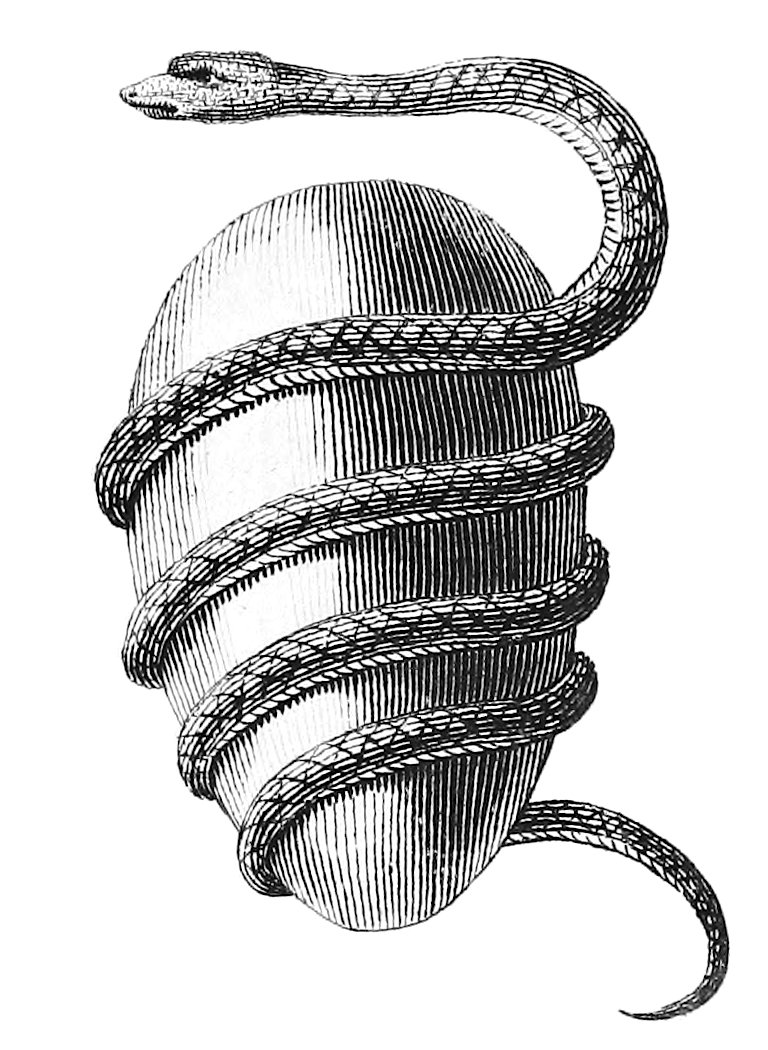
The cosmic egg, world egg or mundane egg is a mythological motif found in the cosmogonies of many cultures and civilizations, including in Proto-Indo-European mythology. Typically, there is an egg which, upon "hatching", either gives rise to the universe itself or gives rise to a primordial being who, in turn, creates the universe. The egg is sometimes lain on the primordial waters of the Earth. Typically, the upper half of the egg, or its outer shell, becomes the heaven (firmament) and the lower half, or the inner yolk, becomes the Earth. The motif likely stems from simple elements of an egg, including its ability to offer nourishment and give rise to new life, as is reflected by the Latin proverb omne vivum ex ovo ('all life comes from an egg').
The term "cosmic egg" is also used in the modern study of cosmology in the context of emergent Universe scenarios.
In Dogon mythology from Burkina Faso, the creator-god Amma takes the form of an egg. The egg is divided into four sections representing the four elements: air, fire, water, and earth. This also establishes the four cardinal directions. Failing to create the Earth on her first attempt, Amma plants a seed in herself that forms two placentas, each containing a pair of twins. One twin, Ogo, breaks out and unsuccessfully tries to create a universe. Amma however is able to create the Earth now from a part of Ogo's placenta. Ogo's twin, Nommo, is killed by Amma and parts of the body are scattered across the world to give it order. The parts were then reconstituted to revive Nommo. Nommo creates four spirits that become the ancestors of the Dogon people. These spirits are sent with Nommo into an ark to populate the world.
The creation account proceeds as follows:
In the beginning, Amma dogon, alone, was in the shape of an egg: the four collar bones were fused, dividing the egg into air, earth, fire, and water, establishing also the four cardinal directions. Within this cosmic egg was the material and the structure of the universe, and the 266 signs that embraced the essence of all things. The first creation of the world by Amma was, however, a failure. The second creation began when Amma planted a seed within herself, a seed that resulted in the shape of man. But in the process of its gestation, there was a flaw, meaning that the universe would now have within it the possibilities for incompleteness. Now the egg became two placentas, each containing a set of twins, male and female. After sixty years, one of the males, Ogo, broke out of the placenta and attempted to create his own universe, in opposition to that being created by Amma. But he was unable to say the words that would bring such a universe into being. He then descended, as Amma transformed into the earth the fragment of placenta that went with Ogo into the void. Ogo interfered with the creative potential of the earth by having incestuous relations with it. His counterpart, Nommo, a participant in the revolt, was then killed by Amma, the parts of his body cast in all directions, bringing a sense of order to the world. When, five days later, Amma brought the pieces of Nommo's body together, restoring him to life, Nommo became ruler of the universe. He created four spirits, the ancestors of the Dogon people; Amma sent Nommo and the spirits to earth in an ark, and so the earth was restored. Along the way, Nommo uttered the words of Amma, and the sacred words that create were made available to humans. In the meantime, Ogo was transformed by Amma into Yuguru, the Pale Fox, who would always be alone, always be incomplete, eternally in revolt, ever wandering the earth seeking his female soul.
Various versions of the cosmic egg myth are related to the creator, Pangu. Heaven and earth are said to have originally existed in a formless state, like the egg of a chicken. The egg opens and unfolds after 18,000 years: the light part rose to become heaven and the heavy part sank to become the earth. A version of this myth deriving from the Zhejiang Province holds that Pangu, experiencing discomfort in being contained in a dark and stuffy egg, shatters it into pieces, after which heaven and earth form by the same process (with the addition that parts of the shell then form the sun, moon, and stars).
In one Vedic myth recorded in the Jaiminīya Brāhmaṇa, the earliest phase of the cosmos involves a primordial ocean out of which an egg arose. Once the egg split, it began the process of forming heaven (out of the upper part) and earth (out of the lower part) over the course of one hundred divine years. Another text, the Śatapatha Brāhmaṇa, also has the sequence of a primordial ocean and then an egg, but this time, the god Prajapati emerges from the egg after one year. He creates the cosmos and then the gods and antigods from his speech and breath. The Rigveda speaks of a golden embryo (called the hiraṇyagarbha) which is located on a "high waters" out of which all else develops. Finally, a version of the story appears in the Chāndogya Upaniṣad.
In the Nihon Shoki, a chaotic state existed at the beginning that was in the shape of an egg.
Hub AI
Cosmic egg AI simulator
(@Cosmic egg_simulator)
Cosmic egg
The cosmic egg, world egg or mundane egg is a mythological motif found in the cosmogonies of many cultures and civilizations, including in Proto-Indo-European mythology. Typically, there is an egg which, upon "hatching", either gives rise to the universe itself or gives rise to a primordial being who, in turn, creates the universe. The egg is sometimes lain on the primordial waters of the Earth. Typically, the upper half of the egg, or its outer shell, becomes the heaven (firmament) and the lower half, or the inner yolk, becomes the Earth. The motif likely stems from simple elements of an egg, including its ability to offer nourishment and give rise to new life, as is reflected by the Latin proverb omne vivum ex ovo ('all life comes from an egg').
The term "cosmic egg" is also used in the modern study of cosmology in the context of emergent Universe scenarios.
In Dogon mythology from Burkina Faso, the creator-god Amma takes the form of an egg. The egg is divided into four sections representing the four elements: air, fire, water, and earth. This also establishes the four cardinal directions. Failing to create the Earth on her first attempt, Amma plants a seed in herself that forms two placentas, each containing a pair of twins. One twin, Ogo, breaks out and unsuccessfully tries to create a universe. Amma however is able to create the Earth now from a part of Ogo's placenta. Ogo's twin, Nommo, is killed by Amma and parts of the body are scattered across the world to give it order. The parts were then reconstituted to revive Nommo. Nommo creates four spirits that become the ancestors of the Dogon people. These spirits are sent with Nommo into an ark to populate the world.
The creation account proceeds as follows:
In the beginning, Amma dogon, alone, was in the shape of an egg: the four collar bones were fused, dividing the egg into air, earth, fire, and water, establishing also the four cardinal directions. Within this cosmic egg was the material and the structure of the universe, and the 266 signs that embraced the essence of all things. The first creation of the world by Amma was, however, a failure. The second creation began when Amma planted a seed within herself, a seed that resulted in the shape of man. But in the process of its gestation, there was a flaw, meaning that the universe would now have within it the possibilities for incompleteness. Now the egg became two placentas, each containing a set of twins, male and female. After sixty years, one of the males, Ogo, broke out of the placenta and attempted to create his own universe, in opposition to that being created by Amma. But he was unable to say the words that would bring such a universe into being. He then descended, as Amma transformed into the earth the fragment of placenta that went with Ogo into the void. Ogo interfered with the creative potential of the earth by having incestuous relations with it. His counterpart, Nommo, a participant in the revolt, was then killed by Amma, the parts of his body cast in all directions, bringing a sense of order to the world. When, five days later, Amma brought the pieces of Nommo's body together, restoring him to life, Nommo became ruler of the universe. He created four spirits, the ancestors of the Dogon people; Amma sent Nommo and the spirits to earth in an ark, and so the earth was restored. Along the way, Nommo uttered the words of Amma, and the sacred words that create were made available to humans. In the meantime, Ogo was transformed by Amma into Yuguru, the Pale Fox, who would always be alone, always be incomplete, eternally in revolt, ever wandering the earth seeking his female soul.
Various versions of the cosmic egg myth are related to the creator, Pangu. Heaven and earth are said to have originally existed in a formless state, like the egg of a chicken. The egg opens and unfolds after 18,000 years: the light part rose to become heaven and the heavy part sank to become the earth. A version of this myth deriving from the Zhejiang Province holds that Pangu, experiencing discomfort in being contained in a dark and stuffy egg, shatters it into pieces, after which heaven and earth form by the same process (with the addition that parts of the shell then form the sun, moon, and stars).
In one Vedic myth recorded in the Jaiminīya Brāhmaṇa, the earliest phase of the cosmos involves a primordial ocean out of which an egg arose. Once the egg split, it began the process of forming heaven (out of the upper part) and earth (out of the lower part) over the course of one hundred divine years. Another text, the Śatapatha Brāhmaṇa, also has the sequence of a primordial ocean and then an egg, but this time, the god Prajapati emerges from the egg after one year. He creates the cosmos and then the gods and antigods from his speech and breath. The Rigveda speaks of a golden embryo (called the hiraṇyagarbha) which is located on a "high waters" out of which all else develops. Finally, a version of the story appears in the Chāndogya Upaniṣad.
In the Nihon Shoki, a chaotic state existed at the beginning that was in the shape of an egg.
Recent media