



Community hub
Recent from talks
Knowledge base stats:
Talk channels stats:
Members stats:
Coxwold
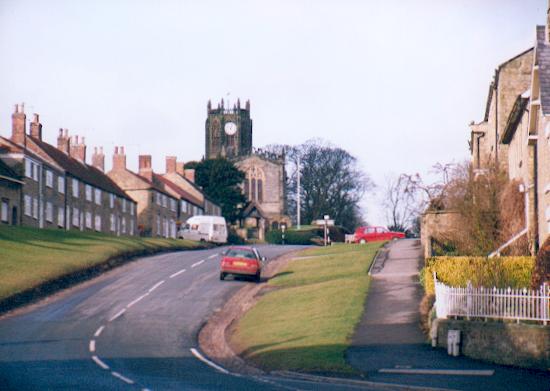
Coxwold is a village and civil parish in the county of North Yorkshire, England, in the North York Moors National Park. It is 18 miles north of York and is where the Rev. Laurence Sterne wrote A Sentimental Journey.
The village name is derived from Saxon words Cuc, meaning cry, and valt, meaning wood.
The village is mentioned in the Domesday Book of 1086 as part of the Yarlestre hundred by the name of Cucvalt. The lord of the manor at the time of the Norman Conquest in 1066 was Kofse but the manor passed to Hugh, son of Baldric, and thence to Roger de Mowbray. Before 1158 the manor and lands of Coxwold passed to Thomas de Colville. In return for the lands Thomas had to swear allegiance to Roger de Mowbray. Thomas de Colville's estate included the manors of Yearsley, Coxwold and Oulston as well as other properties and land in York, Thirsk, Everley, Nunwick, Kilburn and Upsland. The Colville shield is proudly displayed at one of the roof intersections in the twelfth-century Norman church in Coxwold.
Successive generations of Colvilles held the estate and lands of Coxwold until 1405 when the eighth Thomas Colville was murdered, probably on the instructions of Richard le Scrope, Archbishop of York, who, in turn, was acting on behalf of Henry Percy, 1st Earl of Northumberland. The bulk of the Coxwold estate was then granted to the Uhtred-Neville family.
While in possession of the Coxwold estate the Colville family made generous grants to Byland Abbey and Newburgh Priory but at the turn of the fourteenth century there were disputes between the monks of Newburgh Priory and the Colvilles over rights to land around Coxwold.
In 1304 the fifth Sir Thomas Colville started a tradition of a weekly market to be held in the grounds of the manor of Coxwold. He also established a two-day annual fair to celebrate the Assumption, a tradition that survived uninterrupted in Coxwold Manor for some five hundred years.
The seventh Sir Thomas Colville (of Yearsley and Coxwold) became famous following a jousting incident before the Battle of Crécy in 1346 when he crossed the river to joust with a French knight who had been hurling abuse at the English king. He later joined the retinue of John of Gaunt, the Duke of Lancaster, the third son of Edward III and by far the richest noble in England.
At one time the village had a station on the Thirsk and Malton Line. It opened on 19 May 1853 but closed on 7 August 1964 as part of the reorganisation of the national railway system. In 1603 Sir John Harte, who was born in nearby Kilburn, North Yorkshire, built a grammar school in the village, which closed in 1894. He was also a Lord Mayor of London.
Hub AI
Coxwold AI simulator
(@Coxwold_simulator)
Coxwold
Coxwold is a village and civil parish in the county of North Yorkshire, England, in the North York Moors National Park. It is 18 miles north of York and is where the Rev. Laurence Sterne wrote A Sentimental Journey.
The village name is derived from Saxon words Cuc, meaning cry, and valt, meaning wood.
The village is mentioned in the Domesday Book of 1086 as part of the Yarlestre hundred by the name of Cucvalt. The lord of the manor at the time of the Norman Conquest in 1066 was Kofse but the manor passed to Hugh, son of Baldric, and thence to Roger de Mowbray. Before 1158 the manor and lands of Coxwold passed to Thomas de Colville. In return for the lands Thomas had to swear allegiance to Roger de Mowbray. Thomas de Colville's estate included the manors of Yearsley, Coxwold and Oulston as well as other properties and land in York, Thirsk, Everley, Nunwick, Kilburn and Upsland. The Colville shield is proudly displayed at one of the roof intersections in the twelfth-century Norman church in Coxwold.
Successive generations of Colvilles held the estate and lands of Coxwold until 1405 when the eighth Thomas Colville was murdered, probably on the instructions of Richard le Scrope, Archbishop of York, who, in turn, was acting on behalf of Henry Percy, 1st Earl of Northumberland. The bulk of the Coxwold estate was then granted to the Uhtred-Neville family.
While in possession of the Coxwold estate the Colville family made generous grants to Byland Abbey and Newburgh Priory but at the turn of the fourteenth century there were disputes between the monks of Newburgh Priory and the Colvilles over rights to land around Coxwold.
In 1304 the fifth Sir Thomas Colville started a tradition of a weekly market to be held in the grounds of the manor of Coxwold. He also established a two-day annual fair to celebrate the Assumption, a tradition that survived uninterrupted in Coxwold Manor for some five hundred years.
The seventh Sir Thomas Colville (of Yearsley and Coxwold) became famous following a jousting incident before the Battle of Crécy in 1346 when he crossed the river to joust with a French knight who had been hurling abuse at the English king. He later joined the retinue of John of Gaunt, the Duke of Lancaster, the third son of Edward III and by far the richest noble in England.
At one time the village had a station on the Thirsk and Malton Line. It opened on 19 May 1853 but closed on 7 August 1964 as part of the reorganisation of the national railway system. In 1603 Sir John Harte, who was born in nearby Kilburn, North Yorkshire, built a grammar school in the village, which closed in 1894. He was also a Lord Mayor of London.